 Ferndale
 Siding Installation for Cordata Homes
Cordata sits inland from the water compared to the shoreline communities closer to Bellingham Bay, in the growth corridor between Ferndale and the rest of north Whatcom County. A lot of the neighborhood was built out from the 1990s onward, so it has a different housing mix than an older, established Ferndale block: newer subdivisions with builder-grade siding that's now aging into replacement territory, sitting alongside older farmhouses and acreage properties from before the area filled in. That mix matters when we're scoping a siding installation, because a 25-to-30-year-old subdivision home and a much older farmhouse can need very different work even though they're a few blocks apart.
We install James Hardie fiber cement siding exclusively. Cordata's setting — enough tree cover and shaded lots to grow moss year-round, plus the same driving rain and marine humidity that shapes exterior work across Whatcom County — is exactly the kind of climate that fiber cement was engineered to handle.
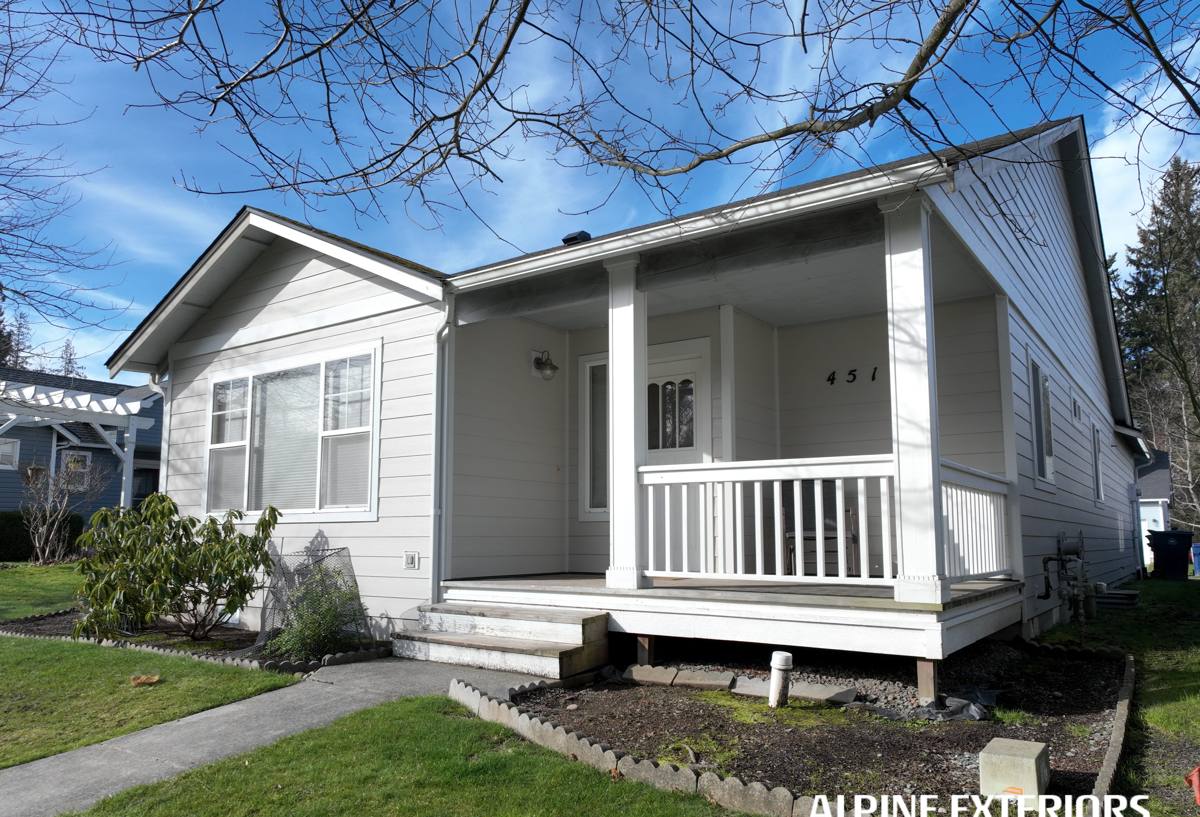
What Cordata's Climate Does to a Home's Exterior
Marine Humidity and Driving Rain, With Less Direct Salt Spray
Being set back from the shoreline, Cordata doesn't take the same direct salt spray that a waterfront property closer to Bellingham Bay or the Strait deals with. But it's still inside the same marine air mass, and that humid, salt-tinged air moves inland with the weather. Combine that with the driving, wind-pushed rain that's typical here — rain that hits siding sideways more often than it falls straight down — and you get moisture pressure on walls, trim, and window flashing that a drier inland climate simply doesn't produce.
Shade, Tree Cover, and a Long Moss Season
Many Cordata lots have more mature tree cover than newer, more open developments elsewhere in the county, and that shade is a mixed blessing for siding. It keeps walls cooler in summer, but it also keeps them wetter, longer, after every rain event. North-facing walls and anything tucked under overhanging branches tend to stay damp well after the rest of the house has dried out, and that's where moss and mildew take hold first and stay longest through the county's extended wet season.
Newer Construction, Aging Builder-Grade Siding
Because so much of Cordata was developed in a fairly compressed window, a lot of homes here are hitting the same age and the same original siding problems around the same time. Builder-grade vinyl and early-generation engineered wood products installed during that boom are now 20 to 30 years in, and that's often right where fading, warping, or moisture damage starts showing up in earnest. If one house on a block is due for a re-side, the neighbors built the same year usually aren't far behind.
Freeze-Thaw and Winter Exposure
Cordata gets its share of hard frosts and the occasional freezing week each winter, and any siding material that's already absorbed moisture is vulnerable to that cycle — water trapped in a porous surface expands as it freezes and accelerates cracking. It's a secondary stress on top of the humidity and rain, but it's real, and it's part of why a wall assembly that manages moisture correctly in the first place matters more here than in a drier climate.
Why James Hardie Is What We Install
We narrowed our siding offering to one system after years of exterior work across Whatcom County, watching which materials actually held up to sustained marine humidity, moss growth, and freeze-thaw cycling, and which ones quietly turned into maintenance problems five or ten years out. For a Cordata property dealing with shaded, damp wall conditions and an aging stock of original siding, the case for fiber cement holds up:
- Non-combustible core: Fiber cement doesn't feed a fire the way wood-based siding products can, which matters for household safety and insurance underwriting.
- Factory-applied ColorPlus finish: The color is baked on under controlled factory conditions rather than brushed on in the field, so it resists fading, chalking, and moisture intrusion far longer than site-applied paint — a real advantage on shaded walls that stay damp longer.
- Climate-engineered HZ product lines: Hardie builds different formulations for different climate zones, including versions engineered for sustained moisture exposure, which is a genuine match for a shaded, humid Cordata lot.
- Dimensional stability: Fiber cement doesn't swell, cup, or warp the way engineered wood siding can after repeated wet-season cycles, which is exactly the failure mode showing up in a lot of the neighborhood's original siding right now.
- Strong transferable warranty: Hardie backs its products with a solid warranty structure when installation follows spec, which gives a homeowner real protection instead of a marketing claim.
We don't install LP SmartSide, vinyl siding, Cemplank, Allura, primed spruce, or cedar. Those products all have a place in the broader market, and there are plenty of Cordata homes wearing vinyl or engineered wood that have held up reasonably well. But we made a professional decision to stand behind one system we trust completely rather than offer a cheaper option that tends to shift maintenance and moisture risk back onto the homeowner a decade down the road — especially on shaded lots where that risk shows up faster.
Choosing the Right Hardie Product for a Cordata Home
| Product Line | Best Use | Why It Fits This Area |
|---|---|---|
| HardiePlank lap siding | Standard single-family homes, including most of Cordata's subdivision-era stock | Traditional lap profile sheds driving rain effectively when overlapped and flashed correctly |
| HardiePanel vertical siding | Accent walls, gables, and contemporary designs | Clean lines that work well on the newer builds common in this part of the county |
| HardieShingle siding | Craftsman-style homes and accent sections | Textured look without the moisture absorption of real wood shingle in a shaded, damp setting |
| HardieTrim boards | Corners, window and door casing, fascia | Factory-finished trim resists the same humidity and freeze-thaw cycling as the field siding |
Profile and color are up to the homeowner, but the product family and installation approach stay consistent — we spec what fits the actual exposure of a given Cordata lot rather than defaulting to whatever's fastest to install.
What Correct Installation Looks Like Here
Choosing Hardie only gets a Cordata home halfway there. The rest comes down to installation detail: fastening patterns appropriate to the local exposure, correct clearance from grade and landscaping so siding isn't wicking up moisture from damp, shaded ground, joints that are lapped and sealed rather than butted and caulked over, and a house wrap and flashing system doing the real work of keeping water out. On a shaded lot that stays damp longer after every storm, cutting corners on any one of these steps tends to show up within a wet season or two rather than years down the line.
Repair vs. Full Replacement
Not every siding issue on a Cordata home calls for a full tear-off. An isolated section of storm damage, a failed piece of trim around a window, or moss staining that hasn't gotten past the surface can often be repaired or cleaned without touching the rest of the wall. But if the original builder-grade siding is warping, delaminating, or letting water track behind it — which is common in homes from this neighborhood's main construction boom — patching usually just delays a bigger job while hidden rot keeps spreading. We'll give you a straight answer about which situation you're actually in.
Our Installation Process
- Walk-through and assessment: We inspect the existing siding, trim, and any moisture staining or soft spots, paying particular attention to shaded and north-facing walls.
- Substrate check: Once old siding comes off, we look at the sheathing underneath for rot or hidden moisture damage before anything new goes up.
- Weather barrier and flashing: Correct house wrap and flashing details go in first — this is the layer that actually keeps water out, not the siding itself.
- Hardie installation to spec: Fastening, clearance from grade, and joint treatment are done to manufacturer specification, not shortcuts.
- Trim and finish work: Corners, casing, and fascia are finished to match, using factory-finished Hardie trim rather than field-painted alternatives.
- Final walk-through: We review the finished work with you before calling the job done.
Siding Readiness Checklist
- Walls checked for soft spots, staining, or gaps at seams and corners
- Shaded and north-facing walls inspected for moss, mildew, or persistent dark staining
- Trim and flashing around windows and doors checked for cracking or separation
- Grade and landscaping clearance confirmed so siding isn't sitting against damp soil or mulch beds
- Age and condition of original siding compared against typical failure timelines for the home's construction era
- Any nearby tree limbs or overgrowth trimmed back from siding to reduce trapped moisture
Cost Factors for Cordata Siding Installation
| Factor | What It Affects | Why It Matters Here |
|---|---|---|
| Tear-off vs. overlay | Labor scope and substrate access | Tear-off is usually necessary on original builder-grade siding to check for moisture damage underneath |
| Substrate condition | Repair costs before new siding goes on | Shaded, damp walls are more prone to hidden sheathing damage than sunnier, drier exposures |
| Tree and landscaping clearance | Prep work before installation | Overgrown shrubs or low limbs against the house need to be addressed for the new siding to perform |
| Home size and roofline complexity | Labor time and material needs | Larger subdivision-era homes with multiple gables take more time than a simple rectangular footprint |
| Trim and detail work | Overall project scope | Matching existing architectural detail on a subdivision home adds labor beyond flat wall coverage |
Exact numbers depend on the specific property, which is why we walk the home in person before giving a real figure instead of quoting from a generic price list.
Why a Local Crew That Already Works Cordata Matters
A crew that's worked this part of Whatcom County knows how a shaded, humid lot behaves differently from an open, sun-exposed one just a few streets over, and how a home built during Cordata's main growth years tends to age compared to an older Ferndale farmhouse. That knowledge shows up in practical decisions on install day — which walls need extra flashing attention, where moss has been quietly doing damage longer than it looks, and which fastening details are worth the added time. It also means we're not guessing at how the neighborhood's housing stock was originally built; we've already seen what tends to go wrong with it.
If your Cordata home needs new siding, a second opinion on aging original siding, or an honest read on whether you're looking at a repair or a full re-side, we're glad to take a look. Reach out using the form below to schedule a free, no-pressure estimate.