 Ferndale
 Why Fairhaven's Setting Is Tougher on Siding Than Most Neighborhoods
Homes in and around the Fairhaven area sit close enough to the water that the air itself works against exterior materials every single day. Salt-laden moisture off the water settles on siding, trim, and fasteners year-round, not just during storms. Add Whatcom County's long, wet fall-through-spring stretch and you have a climate that never really gives siding a chance to fully dry out between weather events. That combination — constant low-grade moisture plus salt exposure plus a short, cool sun season — is a harder test than most siding products, and most installations, are built to pass.
We've worked enough homes in this part of the service area to know the failure patterns aren't random. They show up in the same places, for the same reasons, on the same types of siding. That pattern is exactly why we standardized on one product and one installation standard instead of offering whatever's cheapest.
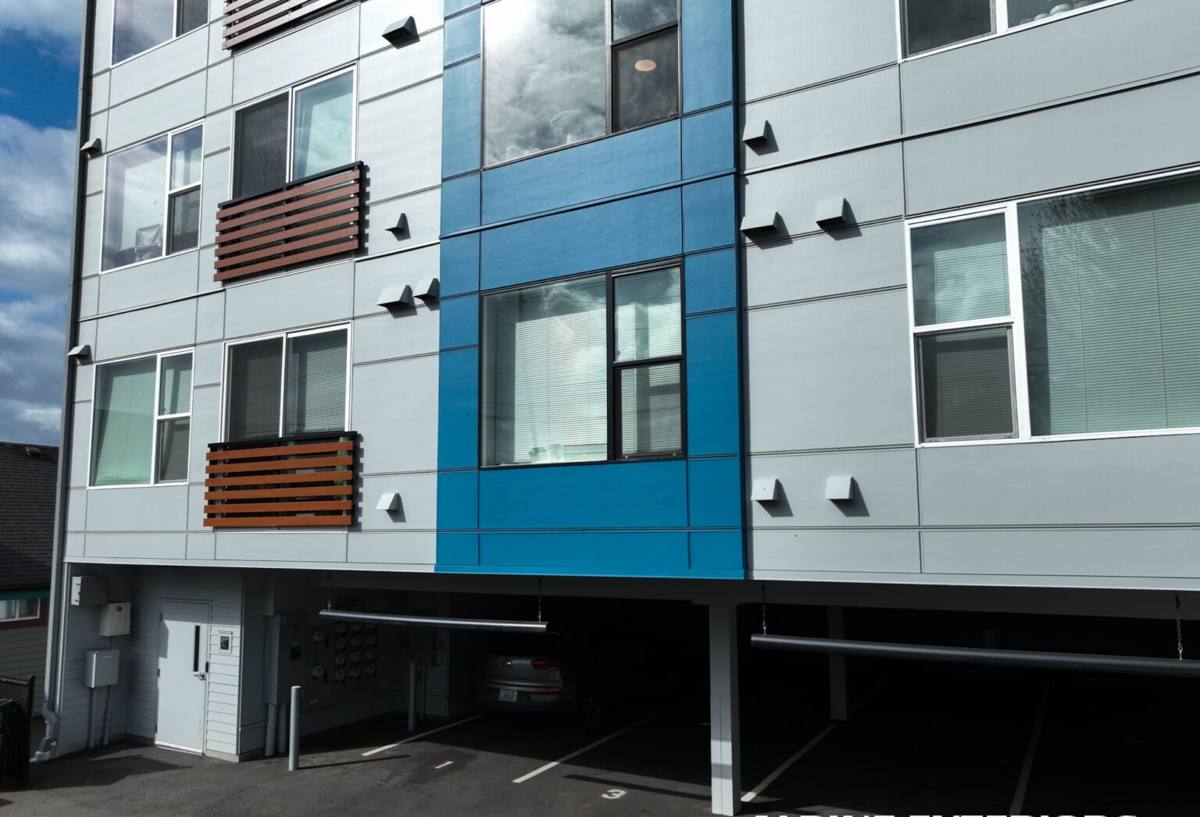
What Salt Air, Driving Rain, and Moss Actually Do to a Wall
Salt Air
Airborne salt is corrosive to exposed metal — fasteners, flashing edges, hardware — and it accelerates the breakdown of paint and coatings faster than an inland climate would. Once a coating starts to chalk or thin, the substrate underneath is exposed to everything else on this list with no protection left.
Driving Rain
Wind off the water doesn't just bring rain down — it pushes it sideways, straight into vertical seams, window trim, and butt joints that a calmer climate would barely test. Any gap in flashing, caulking, or panel overlap that would be a non-issue somewhere drier becomes a real entry point for water here.
A Long Moss Season
Western Washington's mild, wet stretch gives moss and algae months of uninterrupted growing conditions, especially on shaded, north-facing, or tree-covered walls. Moss holds moisture directly against the siding surface long after the rain itself has stopped, which extends how many hours per week a wall actually stays wet. On older wood-based sidings, that's often the beginning of the end.
None of these three factors is dramatic on its own. Together, applied continuously for years, they're what turns a 20-year siding job into a 10-year problem.
Why We Only Install James Hardie Fiber Cement Here
We don't offer vinyl, LP SmartSide, primed spruce, or cedar — not because those products don't have legitimate uses elsewhere, but because we've made a professional call about what holds up under Fairhaven's specific conditions without turning into a maintenance project. Each of the alternatives depends on something that this climate tends to work against:
- Vinyl can warp or distort in temperature swings and, if the drainage plane behind it isn't installed correctly, traps moisture rather than shedding it — a real risk in a climate that stays damp this long.
- LP SmartSide and similar engineered wood products perform well when their factory coating and field-applied caulking stay intact, but any breach lets moisture into a wood-strand substrate that swells and doesn't fully recover.
- Primed spruce and cedar are attractive natural materials, but they rely entirely on paint film to keep water out. In a climate with this much sustained moisture and moss pressure, that paint film has to be maintained more often than most homeowners plan for, or the wood underneath starts to soften.
James Hardie fiber cement is non-combustible and dimensionally stable — it doesn't swell, rot, or feed moss and algae the way wood-based products can. The HZ5 product line is engineered specifically for wetter, more variable climates like the Pacific Northwest, and the factory-applied ColorPlus finish is baked on under controlled conditions, so it resists fading and moisture intrusion far better than a coat of paint applied on-site in the field. It also comes with a strong, transferable manufacturer warranty — something worth real money if you ever sell the house.
What a Correct Siding Replacement Actually Involves
New boards on the outside of a house are the visible part of the job, but they're not what determines whether the job lasts. In a climate like Fairhaven's, the details underneath the siding matter more than they would somewhere drier, because there's less margin for error:
- A continuous, properly lapped water-resistive barrier behind the siding — not just house wrap stapled up and covered
- Correct flashing at every window, door, and deck ledger, installed to shed water outward and downward
- Kick-out flashing anywhere a roofline meets a wall, so runoff is directed into the gutter instead of behind the siding
- A drainage gap and weep path so any moisture that does get behind the cladding can actually get back out
- Manufacturer-specified fastener type, spacing, and embedment — not just "however the old siding was nailed"
- Proper clearance from grade, roofing, decks, and patios so the bottom edge of the siding isn't sitting in standing water or snow
- Factory-cut edges sealed per the manufacturer's instructions wherever field cuts expose raw material
Skip any one of these and the siding itself can be flawless while the wall behind it still fails. This is the actual difference between a siding job that lasts and one that needs attention again in a handful of years.
Our Process for a Fairhaven Siding Replacement
- Inspection. We look at the existing siding, sheathing, and trim for moisture damage, soft spots, and the specific wear patterns typical of this area — not just the obviously bad spots.
- Sheathing and structural check. Anything soft, delaminated, or rotted gets addressed before new siding goes up. Covering a compromised wall with new material just hides the problem.
- Water-resistive barrier and flashing. This is installed to the standard above, with particular attention to roof-wall intersections, window/door openings, and any spot exposed to wind-driven rain off the water.
- Hardie installation. Panels or lap siding go on per James Hardie's fastening and clearance specifications for our climate zone, not a generic install.
- Trim, sealant, and finish detail. ColorPlus finish arrives factory-cured, so field touch-up is limited to cut edges and specified joints — far less exposed paint film than a site-finished product.
- Final walkthrough. We go over the finished job with the homeowner before calling it done.
Comparing Siding Materials for This Kind of Climate
| Material | Moisture/Salt Behavior | Moss & Algae Resistance | Maintenance Burden |
|---|---|---|---|
| Vinyl | Can trap moisture behind it if drainage isn't correct; hardware can corrode in salt air | Moderate — smooth surface, but grime and moss still cling in shaded areas | Low, but limited repair options if damaged |
| LP SmartSide / engineered wood | Vulnerable once coating or caulking is breached; strand substrate swells when wet | Moderate to high risk on shaded walls | Regular caulk and paint inspection required |
| Cedar / primed wood | Fully dependent on paint film; softens once film fails | High — natural wood is more hospitable to moss and algae | Highest — repainting and spot repair on a recurring cycle |
| James Hardie fiber cement | Dimensionally stable; not prone to swelling or rot | Low — doesn't feed organic growth the way wood does | Occasional wash; no repainting cycle with ColorPlus finish |
What Affects the Cost of a Siding Replacement Here
Every home is different, but the same handful of factors drive most of the price variation we see on jobs in this area:
| Factor | Why It Matters |
|---|---|
| Sheathing/rot repair needed | Damage found once old siding comes off adds material and labor before new siding can even start |
| Home size and number of stories | More wall area and taller walls both add material and labor/access time |
| Siding profile chosen | Lap siding, panel systems, and shingle-style Hardie products differ in material and install labor |
| Trim and architectural detail | Corners, dormers, and multiple roof-wall intersections all add flashing and trim work |
| Site access | Tight lots, slopes, or proximity to the water can affect staging and scaffolding |
| Removal and disposal | Old siding, especially if it's wood-based and moisture-damaged, adds disposal cost |
Full siding replacements on homes of this type generally land in a broad range of roughly $15,000 to $40,000 or more, depending on the factors above. An accurate number only comes from an actual look at your home — anything given without an inspection is a guess.
Signs Your Fairhaven Home May Need Siding Replacement Soon
- Moss or algae returns within a few months of being cleaned off
- Soft, spongy, or slightly bouncy spots when you press on the siding, especially low on the wall or in shaded areas
- Paint that's peeling, chalking, or failing faster than it used to between repaints
- Visible warping, cupping, or buckling in individual boards or panels
- Rust streaks bleeding from fastener heads
- Widening gaps, cracks, or separation at seams and trim joints
- Noticeably higher heating bills that suggest air and moisture are getting past the wall
- Siding that's the same material the home was originally built with, decades ago
Any one of these on its own might just need monitoring. Several together, especially on a home that's had the same siding since it was built, usually means the material is past the point where repair makes sense.
Why It Matters That We Already Work This Neighborhood
A crew that only occasionally works near the water treats every job as a generic installation. A crew that regularly works in Fairhaven and the rest of the Ferndale area knows which walls take the worst of the wind-driven rain, which sides of a house grow moss fastest, and where the extra flashing detail actually earns its keep rather than being an afterthought. That familiarity shows up in fewer callbacks and a job that's built for the specific weather it has to survive, not just weather in general.
If your siding is showing any of the signs above, or you'd simply like an honest look at where it stands, we're happy to come take a look. The estimate is free, there's no pressure, and you'll get a straight answer about whether replacement makes sense now or can reasonably wait.