 Ferndale
 Why Siding Wears Differently Around Nooksack
Homes east of Ferndale toward Nooksack don't sit right on the water, but they still take a beating from the same weather system that soaks the rest of Whatcom County. Driving rain off the Pacific pushes inland and sits against exterior walls for days at a time. Salt-tinged coastal air migrates further inland than most homeowners assume, especially on west-facing walls that catch weather straight off Bellingham Bay and the Strait of Georgia. Add the tree cover and shade that's common on larger Nooksack lots, and you get long stretches where siding simply doesn't dry out between storms. That's the setup for moss, mildew, and slow water damage that many homeowners don't notice until it's expensive.
Siding replacement out here isn't a cosmetic upgrade. It's the thing standing between your framing and a climate that rains sideways for months at a stretch. Get the material and the installation right, and it's decades before you think about it again. Get either one wrong, and you're looking at rot, mold, and a redo years before it should be necessary.
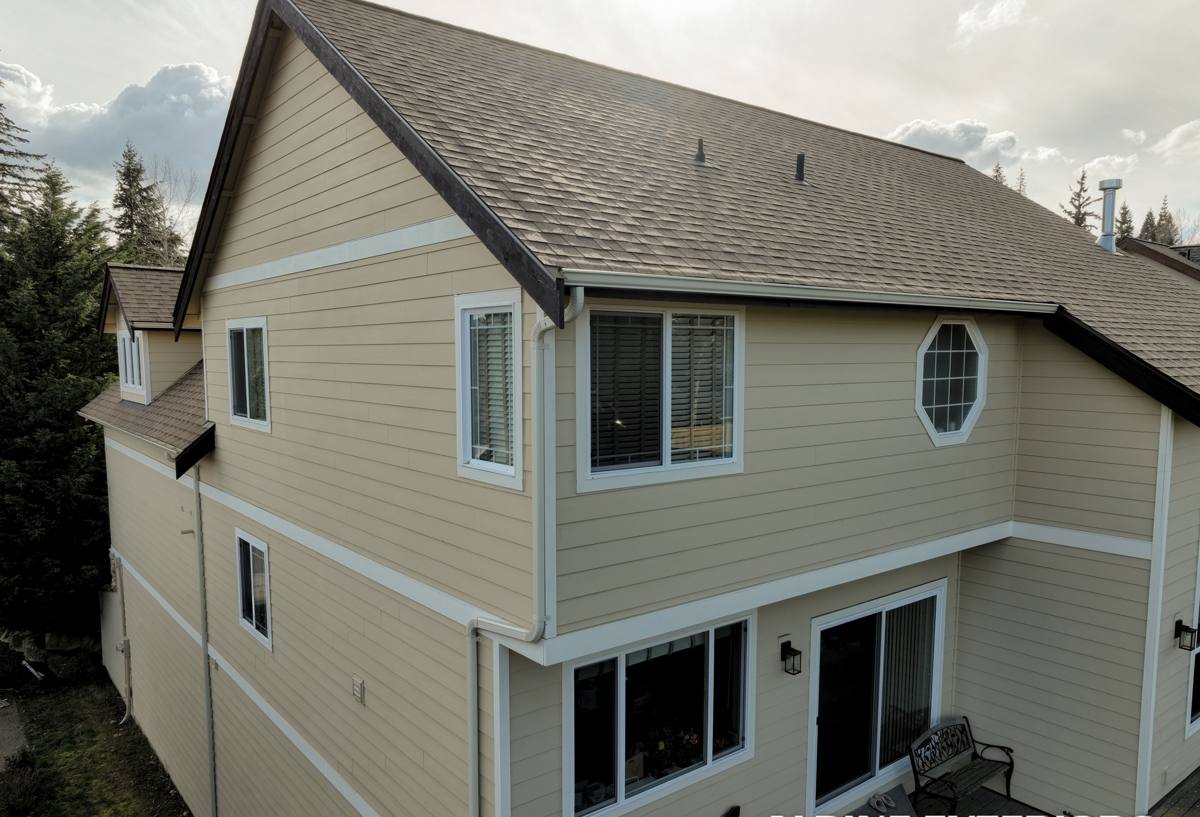
Signs a Nooksack Home Needs Siding Replaced, Not Patched
Not every siding problem calls for a full tear-off. But in this climate, small issues compound fast because moisture doesn't get a chance to dry out. Here's what tells us a repair won't hold:
- Soft or spongy spots when you press on the siding, especially near the bottom courses and around window trim
- Moss or dark green-black staining that comes back within weeks of being cleaned off
- Paint that's bubbling, peeling, or won't hold a fresh coat no matter how well it's prepped
- Visible warping, cupping, or gaps at the seams where boards meet
- A musty smell in rooms along an exterior wall, which usually means moisture has already gotten past the siding
- Siding that's original to a home built more than 20-25 years ago, particularly if it's wood, LP, or an older composite product
If you're only seeing one or two of these on a single wall, a repair might genuinely be enough. If you're seeing several, or the damage is spread across more than one elevation, that's usually a sign the underlying moisture barrier and flashing have already failed — and patching the visible siding without addressing what's behind it just hides the problem for another season.
What a Correct Siding Replacement Actually Involves
Full Tear-Off and Sheathing Inspection
We don't install new siding over old. Every project starts with a full tear-off down to the sheathing, because that's the only way to actually see what's happening underneath. In a climate this wet, it's common to find soft sheathing, rusted fasteners, or trapped moisture behind old siding that looked fine from the street. Any compromised sheathing gets replaced before anything else happens — installing new siding over damaged sheathing just resets the clock on the same failure.
Weather-Resistive Barrier and Flashing
This is the layer that actually keeps water out, and it's also the layer most often shortcut on a rushed job. We install a proper weather-resistive barrier and flash every window, door, and penetration correctly, with materials and laps designed to shed water downward and outward. In a region that gets driving, wind-blown rain for months at a time, flashing detail is not optional trim work — it's the difference between siding that lasts 40+ years and siding that fails from the inside in ten.
Proper Fastening and Clearances
James Hardie siding has specific fastening patterns, nail penetration depth, and clearance requirements (from grade, roofing, and other transitions) that are spelled out in the manufacturer's installation instructions. Skipping these doesn't always show up right away, but it shows up eventually — as cracking, moisture intrusion at the bottom edge, or warranty claims that get denied because the install didn't follow spec. We install to the manufacturer's written instructions, not to "how we've always done it."
Material Comparison for Whatcom County Conditions
Homeowners in Nooksack and Ferndale ask us to compare siding materials often enough that it's worth laying out plainly. This is how the common options actually perform in a climate defined by sustained moisture, moss growth, and salt-influenced air:
| Material | Moisture Behavior | Moss/Mildew Resistance | Long-Term Maintenance |
|---|---|---|---|
| James Hardie fiber cement | Non-combustible, engineered to resist moisture-driven damage; won't rot | Factory ColorPlus finish resists mildew growth better than field-painted surfaces | Occasional wash; repaint not required for the life of the finish |
| Vinyl siding | Can warp or buckle with heat/cold cycling; seams allow moisture behind panels | Moderate; moss and algae still take hold in shaded, damp areas | Low, but cracks and fades over time and can't be repainted easily |
| LP SmartSide / engineered wood | Wood-based core is vulnerable if the factory finish is breached at cuts or edges | Prone to moss and mildew if not maintained and recoated on schedule | Requires ongoing edge sealing and repainting to protect the core |
| Cedar or primed wood | Absorbs and releases moisture constantly; highest risk of rot in this climate | Needs regular treatment to resist moss and fungal growth | Highest maintenance; repainting/staining every few years |
This is exactly why we standardized on James Hardie and don't install the alternatives. It's not that the other products don't work anywhere — it's that in sustained Pacific Northwest moisture, the maintenance burden and failure points on wood-based and vinyl products are real, and we'd rather build a business on siding we don't have to apologize for in ten years.
Why We Only Install James Hardie
James Hardie fiber cement is engineered specifically for climates like this one. The HZ5 product line is formulated for regions with harsh, wet weather, which describes Whatcom County accurately. It's non-combustible, doesn't support rot the way wood-based products can, and the ColorPlus factory finish is baked on under controlled conditions rather than applied on-site — which means better adhesion and color retention than field-applied paint, especially on a house that spends half the year damp.
Hardie also backs the product with a strong, transferable warranty, which matters if you ever sell the home. Buyers and their inspectors know the brand, and a documented, correctly-installed Hardie job is something you can point to rather than something you have to explain away. We install one product system because we can guarantee the details — fastening, flashing, clearances, and finish — every single time, rather than juggling installation specs across five different manufacturers.
Our Process for Nooksack Projects
1. On-Site Assessment
We walk the exterior with you, check for soft spots, moisture damage, and problem areas specific to your home's exposure — which walls take the most weather, where trees keep siding shaded and damp longer, and where old flashing may already be failing.
2. Written Scope and Product Selection
You get a clear scope of work and a Hardie product/color recommendation suited to your home and its exposure, along with an honest estimate range before any work starts.
3. Tear-Off, Repair, and Install
Full removal of old siding, sheathing repair where needed, correct weather barrier and flashing installation, then Hardie siding installed to manufacturer spec — fastening, clearances, and caulking done right the first time.
4. Final Walkthrough
We walk the finished job with you, point out what was done and why, and make sure you know what little maintenance is actually required going forward.
Why Local Experience in This Area Matters
A crew that works Ferndale and Nooksack regularly already knows which walls take the worst of the weather, how far salt-influenced air actually travels inland here, and where moss problems tend to start on homes with heavy tree cover. That's not something you get from a general contractor who does one job in Whatcom County a year. It shows up in small decisions — flashing details, drainage planning, product line selection — that don't matter in a dry climate but matter enormously in this one.
It also matters for warranty support and follow-up. A local crew is still around, and still reachable, years after the install if you ever have a question about your siding or need documentation for a home sale.
What Siding Replacement Costs Depend On
Every home is different, but the real cost drivers on a Nooksack-area project are consistent:
| Factor | Why It Matters |
|---|---|
| Home size and wall complexity | More corners, gables, and trim details mean more labor and material cuts |
| Sheathing condition | Rot or moisture damage found during tear-off requires repair before siding goes on |
| Siding profile and Hardie product line | Lap width, shingle-style panels, and trim boards vary in material cost |
| Color selection | Standard ColorPlus colors versus custom finishes affect lead time and price |
| Access and site conditions | Tree cover, slopes, and tight lot lines affect scaffolding and staging time |
We give you real numbers after we've actually looked at your house — not a phone estimate based on square footage alone.
After the Install: What Upkeep Actually Looks Like
One of the real advantages of Hardie in a wet, moss-prone climate is how little it asks of you afterward. A periodic rinse to knock off pollen, moss spores, and grime is typically all that's needed — no repainting cycle, no annual sealing. Keep gutters clear so water isn't sheeting down the siding face, and keep vegetation trimmed back from walls so air can circulate and siding can actually dry between rain events. That's the whole list.
If you're seeing early signs of trouble on your current siding, or you're just ready to stop dealing with moss and repaint cycles for good, we're happy to take a look. A free, no-pressure estimate gives you a straight answer on what your home actually needs — use the form below to get started.