 Ferndale
 Storm Damage Roof Repair Built for Lynden's Weather
Lynden sits inland from the Strait of Georgia but still takes the full brunt of Whatcom County's marine weather: long stretches of driving rain, winter windstorms that funnel down the Nooksack Valley, and a moss season that can run eight months or longer. None of that is unusual for this part of Washington — but it does mean a roof here ages differently than one in a drier climate, and storm damage here often hides more than it shows. We repair storm-damaged roofs for homeowners throughout the Lynden area, and this page walks through what that actually involves.
This isn't a generic overview of roof repair. It's specific to what driving rain, wind, and moss do to roofs in this corner of Whatcom County, and what a correct repair looks like once the storm has passed.
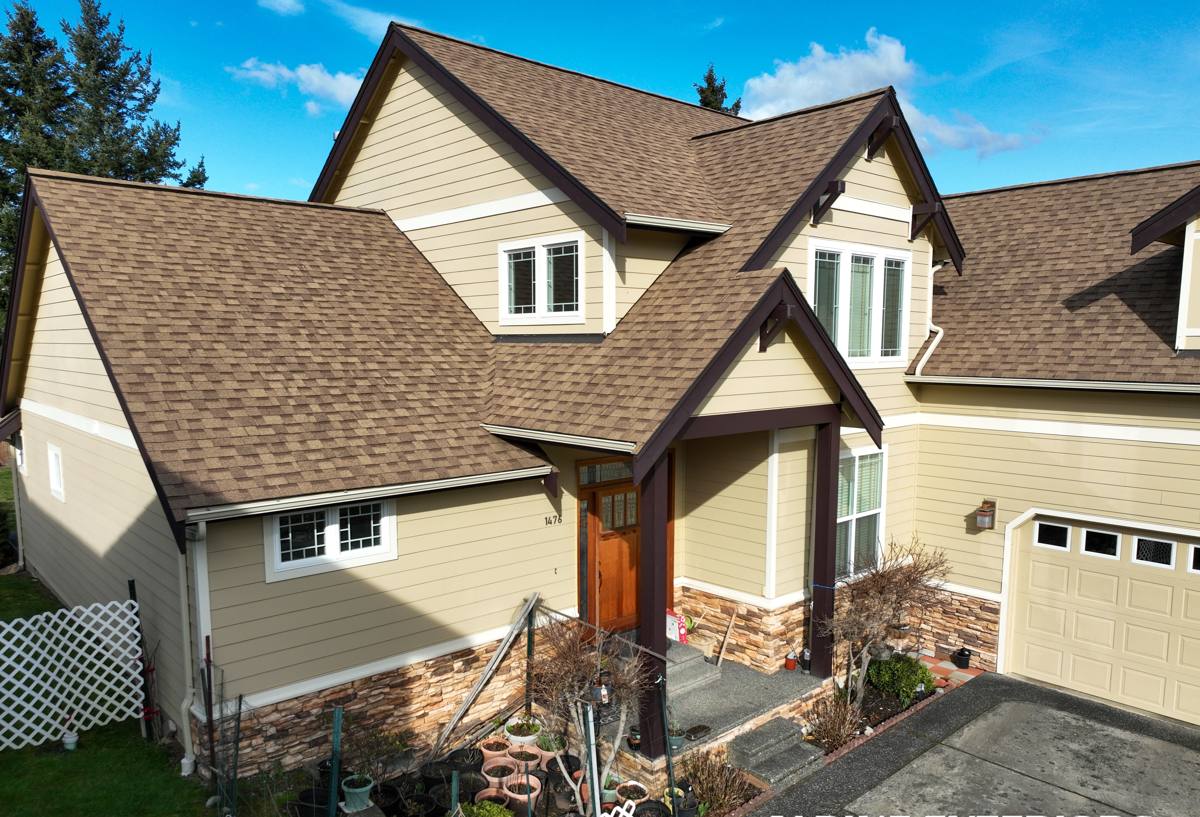
What Lynden's Climate Does to a Roof
Driving Rain and Wind-Driven Water
Storms in this region rarely drop rain straight down. Wind pushes it sideways, which means water finds its way under shingle tabs, around flashing, and into any gap that would stay dry in a calmer climate. A roof that's fine in light rain can leak badly in a wind-driven storm because the water is attacking horizontal seams instead of running off vertically.
Wind Loading and Uplift
Gusts off a passing front can lift shingle edges, crack ridge caps, and peel back sections of underlayment that were already weakened by age or improper nailing. Wind damage is often patchy rather than total — a few courses on one slope, a torn ridge vent, a lifted starter strip — which is why a careful inspection matters more than a quick look from the ground.
Moss and Sustained Moisture
Whatcom County's long wet season gives moss and algae months to establish themselves on north-facing and shaded slopes. Moss holds moisture against the roof surface, lifts shingle edges as it grows, and accelerates granule loss. A roof that's already moss-compromised is far more vulnerable in a storm, because the moss has already been prying up the shingles' seal for months before the wind even arrives.
Salt Air's Slower Toll
Lynden is far enough from the water that salt exposure is milder than it is right on Bellingham Bay, but it's not zero. Metal flashing, fasteners, and gutter hardware still corrode faster here than they would inland in a drier state, and corroded metal is one of the first things to fail when a storm puts real stress on a roof.
What Counts as Storm Damage
Homeowners often assume storm damage means a hole in the roof or missing shingles you can see from the driveway. In practice, most of what we find is less obvious:
- Shingle tabs lifted or creased by wind, still in place but no longer sealed
- Cracked or torn ridge caps and hip shingles
- Flashing pulled loose around chimneys, vents, or skylights
- Granule loss concentrated on one slope, exposing the asphalt mat
- Gutter and downspout damage from wind or falling debris
- Soft or discolored decking visible from the attic side, indicating a slow leak
- Moss mats that have lifted shingle edges enough for wind to get underneath
Several of these won't show up as an active leak right away. That's the trap — a roof can look intact after a storm and still be compromised in a way that turns into a real leak during the next one.
Our Storm Damage Repair Process
1. Inspection and Documentation
We start with a full roof inspection, not just a look at the spot the homeowner is worried about. Storm damage is rarely confined to one area, and wind in particular tends to affect an entire slope even when only a few shingles look obviously wrong. We document what we find with photos, which matters if you're filing an insurance claim.
2. Temporary Protection
If there's active water intrusion or exposed decking, the first priority is stopping further damage — tarping, temporary flashing, or sealing exposed areas until the permanent repair can be scheduled. This step is about preventing a manageable repair from turning into a much larger one.
3. Scoping the Real Repair
We separate cosmetic damage from structural and moisture-related damage. A few cracked ridge caps might be a straightforward patch. Damaged decking under a compromised section, or moss that's been trapping moisture for a season or more, usually means pulling back a larger area to repair it properly rather than covering a problem with new shingles.
4. The Repair Itself
Correct storm repair means matching existing shingle courses so the patch doesn't stand out, replacing underlayment in any area that was opened up, re-flashing anywhere water was getting in, and re-securing anything the wind loosened — not just the pieces that failed outright. We also address any moss present in the repair area rather than repairing around it, since leaving it in place undermines the work.
5. Follow-Up Recommendations
After the repair, we tell you honestly if we saw conditions elsewhere on the roof — moss buildup on a north slope, aging flashing, clogged gutters — that are likely to cause the next problem. That's not an upsell; it's the same information we'd want if it were our own roof.
Repair or Replace: How We Help You Decide
Not every storm-damaged roof needs to be replaced, and not every roof is worth repairing again. The honest answer depends on a few factors:
| Factor | Leans Toward Repair | Leans Toward Replacement |
|---|---|---|
| Roof age | Under 12–15 years | Nearing or past expected shingle lifespan |
| Extent of damage | Isolated to one slope or area | Widespread across multiple slopes |
| Decking condition | Solid, dry, no rot found | Soft spots or rot in multiple areas |
| Moss/algae history | Minor, treatable | Long-term buildup with granule loss |
| Prior repairs | First or second repair | Multiple past patches, recurring leaks |
We'll give you a straight recommendation based on what we actually find, not a default answer. A well-maintained roof that took isolated storm damage is usually a good repair candidate. A roof that's already near the end of its service life and took storm damage on top of years of moss exposure often makes more sense to replace, since a repair on a compromised roof tends to fail again in the next storm.
Working With Insurance
Many storm damage repairs in this area are at least partially covered by homeowner's insurance, depending on your policy and the cause of damage. We can document damage clearly enough for an adjuster to review, and we're glad to walk the roof with an adjuster if that's helpful. We won't inflate a scope of work to chase a bigger claim, and we won't tell you something is storm-related if it's actually long-term wear — that approach causes problems for homeowners down the line and isn't something we'll put our name on.
Our Repair Standards
A few things we hold to on every storm repair, regardless of how small the job is:
- Matching shingle repairs to existing courses and, where possible, existing product lines
- Replacing underlayment in any section opened up during the repair, not just the visible shingles
- Re-flashing rather than re-sealing with caulk alone, since caulk is a short-term fix on a long-term problem
- Addressing moss in the repaired area as part of the job, not leaving it for later
- Checking attic ventilation near the repair, since poor ventilation accelerates both moss growth and moisture damage
We're selective about algae-resistant shingle products when a repair calls for a larger section of new material, given how much moss pressure roofs see in this climate. It's a judgment call based on the specific roof, not a blanket rule, and we'll explain the trade-offs — cost, appearance matching, and long-term maintenance — before we make a recommendation either way.
Why a Crew That Already Works Lynden Matters
Storm damage repair isn't a one-size-fits-all trade. A crew that repairs roofs across Whatcom County through multiple wet seasons knows what wind-driven rain actually does to a roof here versus what the textbook describes, and knows moss patterns well enough to spot a problem before it becomes a leak. That matters more in storm repair than almost any other roofing work, because half the job is correctly diagnosing what actually failed and why — not just patching what's visible.
A few things worth asking any contractor before you hire them for storm repair:
- Do they inspect the whole roof, or just the area you pointed out?
- Will they document damage clearly enough to support an insurance claim if needed?
- Do they explain repair-vs-replace honestly, including when repair is the right call?
- Are they familiar with how moss and wind interact on roofs in this specific climate?
- Do they carry proper licensing and insurance for work in Washington?
Protecting Your Roof Between Storms
Storm damage is easier to repair correctly when a roof isn't already compromised by neglected maintenance. A few habits make a real difference in this climate:
- Clear gutters and downspouts before the fall storm season, so wind-driven rain has somewhere to go
- Have moss removed and treated on shaded or north-facing slopes rather than letting it accumulate over multiple seasons
- Trim back tree limbs that overhang the roof, since falling branches are a common source of storm damage here
- Get a roof looked at after any major windstorm, even if nothing looks obviously wrong from the ground
None of this prevents every storm problem, but it narrows the gap between a minor repair and a major one.
If a recent storm has left you with lifted shingles, a slow leak, or just a nagging feeling that your roof took a hit, we're happy to take a look. The estimate is free, there's no pressure to move forward, and you'll get a straight answer about what we find — use the form below to get started.