 Ferndale
 Storm Damage Roof Repair Built for Sudden Valley's Conditions
Homes around Sudden Valley take a different kind of beating than a house sitting out in the open. The lake, the surrounding tree cover, and the marine air moving in off the Puget Sound corridor all combine to create a roofing environment that's damp more often than it's dry, shaded more often than it's sunny, and exposed to wind gusts that funnel differently through the tree line than they do on flat, open ground. When a storm comes through Whatcom County, the damage on a Sudden Valley roof often looks different from the damage on a roof in downtown Ferndale or out on the flats near the river — and it needs to be diagnosed and repaired accordingly.
This page covers what we actually do when a Sudden Valley homeowner calls us after a windstorm, a heavy rain event, or just a general "something doesn't look right up there" feeling. It's not a generic storm-repair overview — it's how we approach this specific service in this specific area.
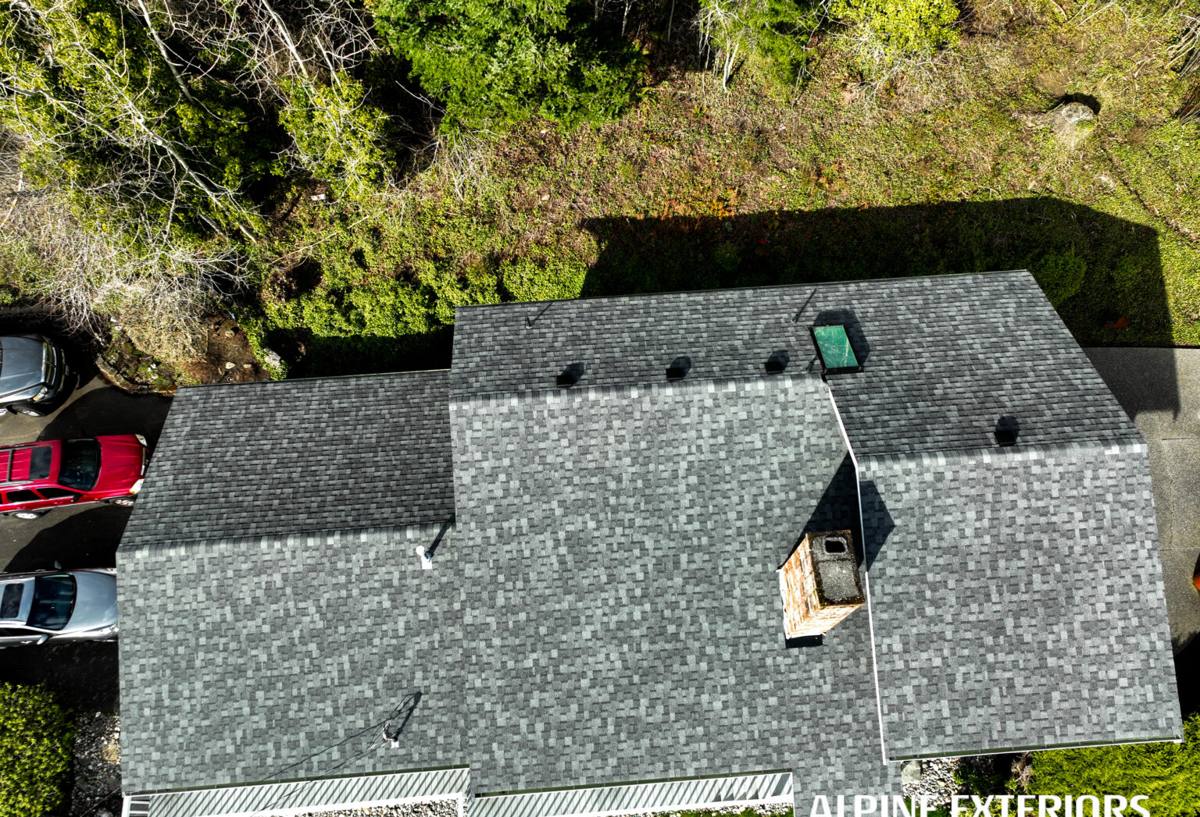
Why Sudden Valley Roofs Take Storm Damage Differently
Tree Cover Changes the Wind Load
A lot of Sudden Valley properties sit close to mature trees or are tucked into wooded lots near the lake. That's a mixed blessing for a roof. The trees block some direct wind, but they also create turbulence — gusts get redirected and speed up in unpredictable ways around gaps in the canopy, and falling limbs and debris are a real and recurring source of impact damage that a homeowner further out in open farmland simply doesn't deal with as often.
Shade Means Moss, and Moss Means a Long Season
Whatcom County already has a long moss season thanks to our wet, mild climate, but shaded, tree-lined lots like many in Sudden Valley have it worse. Moss and moisture-loving growth hold water against the roofing material for extended periods, which softens shingles, degrades underlayment over time, and — critically — hides the early signs of storm damage under a layer of green growth. A cracked shingle or a lifted tab is much harder to spot on a mossy roof than a clean one.
Salt Air Adds to the Wear
Even inland from the immediate shoreline, this part of Whatcom County gets salt-laden air moving in off the water. Over years, that salt air accelerates corrosion on exposed metal roofing components — flashing, fasteners, vent stacks, and gutter hardware. A storm that wouldn't damage new, unaffected metal can be enough to finish off flashing that's already been quietly weakening for a decade.
What Storm Damage Actually Looks Like Here
After a wind or rain event, we're typically looking for a specific set of problems on Sudden Valley roofs:
- Lifted, cracked, or missing shingles, often on the side of the roof that faces the prevailing wind or a gap in the tree line
- Impact damage from wind-thrown branches and debris — sometimes obvious, sometimes just a bruised or dented spot that will fail later
- Flashing pulled loose or bent around chimneys, skylights, and roof-to-wall transitions
- Granule loss on asphalt shingles, which shows up as bare, shiny patches and accelerates aging even if the shingle hasn't failed yet
- Gutter and downspout damage that redirects water onto fascia and siding instead of away from the house
- Moss-covered areas where water is pooling instead of shedding, which can mask a leak that started well before the storm
- Soft spots or staining on the interior ceiling below the roof deck, which usually means water has already gotten past the surface layer
Some of this is visible from the ground. A lot of it isn't — especially on a shaded, moss-prone roof — which is why a proper storm inspection means actually getting up there, not just looking from the driveway.
Our Storm Damage Inspection Process
Step 1: Ground-Level and Interior Check First
Before anyone gets on the roof, we walk the property and check the interior ceilings, attic space if accessible, and any areas where water staining or drips have been reported. This tells us where to focus once we're up top and gives us a baseline for whether water has already made it into the structure.
Step 2: Full Roof Surface Inspection
We inspect the entire roof surface, not just the area a homeowner points us to. Storm damage rarely stays confined to one spot, and a wind event that damaged one slope often stressed flashing or fasteners elsewhere too. We're checking shingles, flashing, vents, gutters, and — because of how common it is out here — the extent of any moss growth and whether it's contributing to the problem.
Step 3: Photo Documentation
We document what we find as we go. If you're planning to file an insurance claim, this documentation matters — adjusters want to see clear evidence connecting the damage to a specific storm event, not just general wear.
Step 4: A Straight Answer, in Writing
You get a written summary of what we found, what's storm-related versus what's pre-existing wear, and what we'd recommend — whether that's a targeted repair, a broader repair, or in some cases, telling you honestly that it can wait. We don't pad a repair scope to make a job bigger than it needs to be.
Repair Versus Replacement: How We Make That Call
Not every storm-damaged roof needs full replacement, and not every roof that "looks bad" from moss coverage is actually failing. We base the recommendation on the roofing material's remaining service life, the extent and location of the damage, and whether the underlying deck and underlayment are still sound.
| Factor | Leans Toward Repair | Leans Toward Replacement |
|---|---|---|
| Age of roofing material | Under roughly two-thirds of expected lifespan | Near or past expected lifespan |
| Extent of damage | Localized to one area or slope | Spread across multiple areas |
| Underlayment/deck condition | Dry, intact where exposed | Soft, stained, or water-damaged |
| Moss/moisture history | Minor, surface-level growth | Long-term moss with signs of trapped moisture |
| Flashing condition | Isolated section needs resealing or replacement | Widespread corrosion or failure |
We'll walk through this with you directly rather than leaving you to guess. If a repair is the honest answer, that's what we'll recommend — a roof doesn't need to be replaced just because it took storm damage.
What a Correct Storm Repair Actually Involves
A quality storm repair on a Sudden Valley roof isn't just swapping out the shingles a homeowner can see are missing. It typically includes:
- Removing and replacing damaged shingles with matching or closely matched material
- Inspecting and repairing the underlayment beneath any removed shingles before new material goes down
- Re-securing or replacing damaged flashing at penetrations and transitions, since flashing failure is one of the most common causes of a leak that shows up weeks after the actual storm
- Addressing moss and debris in the repair area so the new material isn't immediately sitting under the same moisture load that contributed to the original damage
- Checking and clearing gutters and downspouts near the repair so water has somewhere to go
- A final water test or close visual check at seams and flashing before we call the job done
Skipping any of these steps is how a "fixed" roof ends up leaking again during the next storm. We treat the repair as a system, not a patch.
Insurance Claims: What We Can and Can't Do
We're not insurance adjusters and we don't represent your insurance company — but we do a lot of storm-related work in Whatcom County, and we know what documentation actually helps a claim move smoothly. If you're filing a claim, we can provide photos, a written damage assessment, and a repair scope that an adjuster can review. What we won't do is inflate a scope of work to chase a bigger payout, or tell you damage is storm-related when it's really just age and wear. Getting that distinction right protects you if the claim gets a second look.
Why It Matters That We Already Work in Sudden Valley
Roofing crews that mostly work flat, open, low-tree-cover neighborhoods can genuinely misjudge a Sudden Valley roof — underestimating how much moss has compromised the underlayment, or misreading impact damage as normal wear because they're not used to seeing branch strikes as a regular cause of failure. Working this area regularly means we know what to expect before we're even on the ladder: the tree cover pattern, the moisture load, the way wind moves through the wooded lots near the lake, and how salt air has aged the metal components on homes of a given age. That local pattern recognition is part of what makes an inspection accurate instead of a guess.
Protecting Your Roof Between Storms
A few habits go a long way toward reducing storm damage in the first place, especially given the moss season and tree cover common around Sudden Valley:
- Keep overhanging limbs trimmed back from the roofline where it's safe and practical to do so
- Have gutters cleared before the fall storm season so water isn't backing up under the roof edge
- Address moss growth before it thickens — a light, well-timed treatment is far less invasive than removing established growth
- Get flashing and vent boots checked periodically, since these small components fail quietly and are usually the actual source of a "mystery" leak
- After any significant wind event, do a visual check from the ground and call for an inspection if anything looks off, rather than waiting for an interior leak to confirm it
Get a Straight Look at Your Roof
If a recent storm has you wondering about the condition of your roof, we're glad to come take a real look — not a rushed drive-by guess. We'll walk you through exactly what we find, what it means, and what your honest options are. Reach out for a free, no-pressure estimate using the form below.