 Ferndale
 Decks Built for Sudden Valley's Particular Climate
Sudden Valley sits in the trees above Lake Whatcom, and that setting is part of what makes it a great place to live — and part of what makes deck building here different from a build on an open, sunny lot. Heavy tree canopy means more shade on the structure through most of the day, which means slower drying after every rain. Add in Whatcom County's long wet season and the marine-influenced weather that rolls in off the Salish Sea and the Puget Sound lowlands, and you get a climate that keeps wood and composite surfaces damp for extended stretches — exactly the conditions that grow moss, feed mildew, and quietly rot fasteners and framing that weren't built with this in mind.
A deck built for a dry inland climate, or even a build following generic national code minimums, often isn't built for what happens here over ten or fifteen winters. The framing, the fastener hardware, the decking material, and the drainage details all need to account for a deck that spends a good part of the year wet, shaded, and slow to dry out. That's the standard we build to on every Sudden Valley project.
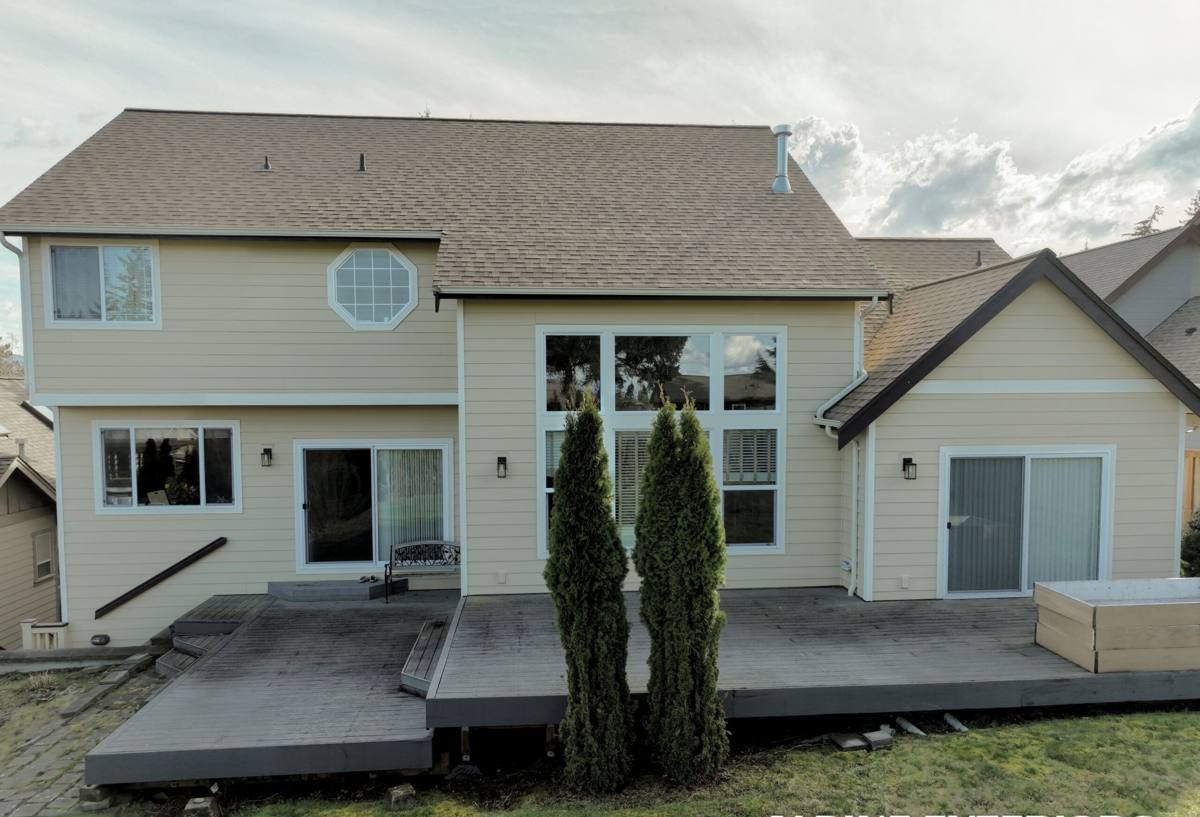
What a Correct Deck Build Actually Involves
Framing and Structure
The framing is the part of a deck nobody sees once it's finished, and it's also the part that determines whether the deck is still sound in fifteen years or starting to sag and bounce in five. On a shaded, moisture-prone lot that means:
- Pressure-treated framing lumber rated for ground contact where posts and beams sit close to grade
- Joist spacing tightened to the decking manufacturer's spec rather than the loosest code minimum, especially under composite boards, which flex more between supports than solid wood
- Proper ledger board attachment and flashing where the deck ties into the house, so water is directed away from the wall assembly instead of into it
- Footings sized and set below frost depth, with extra attention on sloped Sudden Valley lots where a footing that looks adequate on paper can end up under-supported once the grade is factored in
Decking Material Choices
The decking surface is what takes the daily abuse — foot traffic, standing water, shade, and moss spores looking for somewhere damp to settle. There's no single right answer for every homeowner; it's a real trade-off between upfront cost, appearance, and how much maintenance you're willing to put in over the years.
| Material | Upfront Cost | Moss/Moisture Behavior | Maintenance |
|---|---|---|---|
| Pressure-treated wood | Lowest | Absorbs moisture, needs sealing to resist moss and rot | Annual cleaning and re-sealing recommended in this climate |
| Cedar | Moderate | Naturally rot-resistant but still absorbs moisture and grays/moss-stains without upkeep | Periodic cleaning and finish renewal |
| Capped composite | Higher | Doesn't absorb moisture into the core; surface can still host moss/algae if left dirty and shaded | Occasional washing, no sealing or staining |
| PVC decking | Highest | Fully moisture-resistant material, least hospitable surface for moss to take hold | Lowest ongoing maintenance |
Under heavy shade like a lot of Sudden Valley properties have, we lean toward recommending capped composite or PVC to homeowners who want to minimize the moss battle — not because wood is a bad material, but because a shaded, damp deck is where wood's maintenance requirements show up fastest. If you love the look and feel of real wood and are willing to stay on top of cleaning and sealing, we'll build that just as correctly.
Moss, Mildew, and the Maintenance Reality of a Shaded Deck
Moss doesn't damage decking directly the way rot does, but it holds moisture against the surface and makes boards slick and slippery — a real safety issue on stairs and landings. Left long enough, the moisture moss traps can work into seams, fastener holes, and any spot where a board's protective coating has worn thin, and that's where the actual damage starts. On a Sudden Valley lot with significant tree cover, a deck can go from clean to visibly mossy in a single wet season if it's never cleaned.
Good design reduces how often you have to fight this battle. Board spacing that allows real airflow underneath, decking run in the direction that sheds water fastest off the surface, and keeping the deck surface a few inches below any door threshold so water doesn't pool at the house — all of it adds up to a deck that dries out faster between rains and grows moss more slowly. We factor this into the layout on every job, not just the material choice.
Railings, Stairs, and Code Requirements
Any deck more than a modest height above grade needs a code-compliant guardrail system, and stairs need proper rise-and-run ratios, handrails, and graspable rail profiles. This isn't optional detailing — it's inspected, and it's also the difference between a deck that's safe to use in the wet, low-light months and one that isn't. On sloped Sudden Valley properties, stair runs are often longer than on a flat lot, which means more attention to consistent rise heights and secure stringer support so the stairs don't develop the bounce or flex that shows up first at the treads.
Whatcom County requires permits for most new deck construction and for significant repairs or rebuilds, with the exact threshold depending on height and size. We handle the permit process and inspections as part of the job rather than leaving it for the homeowner to sort out.
Our Process, From First Look to Finished Deck
Site Visit and Design
We walk the property, look at slope, drainage, tree cover, and how the deck will tie into the house, and talk through what you actually want to use the space for — entertaining, a hot tub, simple outdoor seating. On a wooded or sloped lot, this is also where we flag anything that will affect footing depth or post height before it becomes a surprise later.
Permitting
We put together the drawings the county needs, submit for permit, and schedule inspections at the required stages. If your property is part of a homeowners' association with its own design review process, we're used to working within that as well and can provide whatever plans or specs the association needs to see.
Build
Footings and framing go in first and get inspected before anything is covered up. Then decking, railings, and stairs. We build to the manufacturer's installation spec for whatever decking material you've chosen, not just to code minimums, because that's what actually keeps warranties valid and boards performing the way they're supposed to.
Final Walkthrough
We walk the finished deck with you, go over basic care for whatever material you chose, and make sure everything is solid before we call it done.
Why a Crew That Already Works Sudden Valley Matters
A deck built by someone unfamiliar with the area can look fine the day it's finished and still be set up to struggle here — undersized footings for the slope, decking laid out without accounting for the shade pattern, or a material choice that wasn't really suited to how wet and shaded the lot stays. Having built and repaired decks around Ferndale and the surrounding Whatcom County communities, including properties around Sudden Valley, we've seen firsthand which details matter most in this specific setting: the framing choices that hold up through a long wet season, the layouts that actually shed water and resist moss, and the realistic conversation about which decking materials fit a homeowner's tolerance for maintenance versus upfront cost. That local track record is also why we're comfortable standing behind the work.
Deck Maintenance Checklist for This Climate
- Sweep debris and needles off the deck regularly — trapped organic matter holds moisture and feeds moss growth
- Clean the surface at least once a year with a deck-safe cleaner; pressure wash carefully on wood to avoid damaging the grain
- Re-seal or re-stain wood decking on the schedule the product calls for, typically every one to three years depending on sun and shade exposure
- Check fastener heads and railing connections annually for corrosion or loosening, especially on older decks built with standard hardware
- Keep gutters and downspouts clear of anything draining onto or near the deck structure
- Trim back overhanging branches where practical to improve sun exposure and airflow across the deck surface
What a Sudden Valley Deck Project Typically Costs
Every deck is different, so we don't quote a number without seeing the site, but the biggest cost drivers are consistent from project to project.
| Factor | Why It Moves the Price |
|---|---|
| Size and shape | More square footage and multiple levels or angles mean more framing, more decking, more labor |
| Height above grade | Taller decks need deeper footings, longer posts, and more substantial railing and stair systems |
| Slope of the lot | Sloped Sudden Valley lots often need engineered footings and longer stair runs than a flat-lot build |
| Decking material | Pressure-treated wood costs least upfront; capped composite and PVC cost more but need far less ongoing maintenance |
| Railing style | Basic code-compliant rail versus a custom or glass-panel rail system changes both material and labor cost |
| Permit and inspection scope | Larger or taller decks trigger more inspection stages, which affects timeline more than raw cost |
As a broad range, a straightforward pressure-treated deck typically lands well below a similarly sized composite or PVC deck with upgraded railing — but the honest way to think about it is upfront cost versus years of maintenance, not just the number on the estimate.
Timing Your Deck Project Around Whatcom County Weather
Framing and footing work can be scheduled through most of the year, but decking installation, staining, and sealing all go better in drier stretches. We plan builds around the weather window rather than rushing a finish coat onto damp boards, because a finish applied to wood that hasn't fully dried doesn't bond the way it should — and on a shaded Sudden Valley lot, that mistake shows up as premature peeling or trapped moisture within a season or two.
If you're planning a new deck or replacing one that's past its prime, we'd be glad to take a look and put together a straightforward, no-pressure estimate — just fill out the form below.