 Ferndale
 Deck Replacement Built for Sudden Valley's Conditions
Sudden Valley sits up in the trees above Lake Whatcom, and that setting cuts both ways. The lake and the surrounding forest are why people love it there, but they're also why decks in this community wear out faster than decks in drier, more open parts of Whatcom County. Between the marine air moving in off the water, the long stretches of driving rain we get most of the year, and tree cover that keeps everything shaded and damp long after a storm passes, a deck here is fighting moisture almost constantly. Add a moss season that can run from fall through spring, and you've got a structure that needs to be built and maintained differently than a deck on a dry, sunny lot.
We work in Sudden Valley regularly, and the pattern is consistent: decks that were built to a generic spec — undersized footings, the wrong fastener, decking laid tight with no drainage thought — start failing years before they should. A deck built correctly for this specific environment can go decades without needing to be torn out and started over.
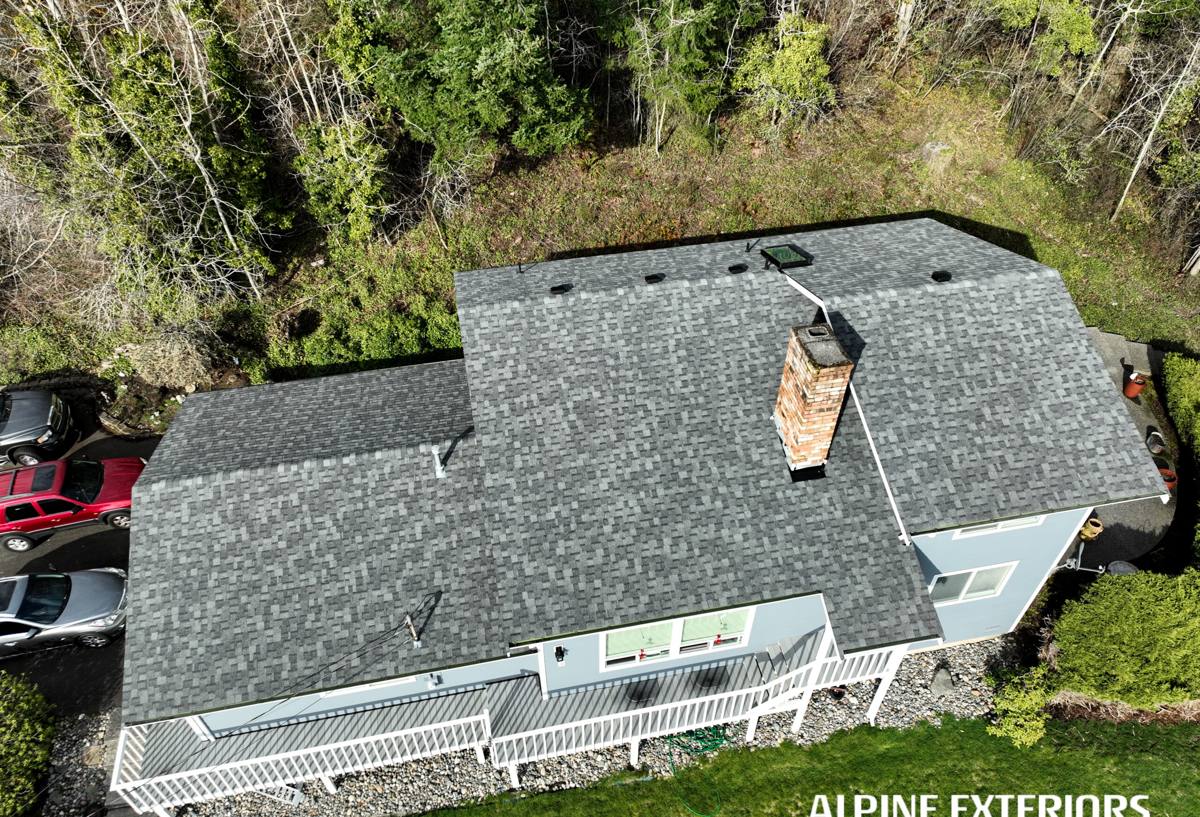
How This Climate Actually Damages a Deck
Moisture that never fully dries
Tree canopy and lake humidity mean surfaces in Sudden Valley stay damp longer after rain than they would in open sun. That extra dry-out time is what lets moss, algae, and mildew get a foothold on decking boards, and it's what drives rot in framing that isn't properly ventilated or flashed.
Driving rain finds the gaps
Wind-driven rain doesn't just fall on a deck — it gets pushed sideways into ledger connections, under railing posts, and into any seam that isn't sealed. Over time, water intrusion at the ledger board (where the deck attaches to the house) is one of the most common causes of a deck losing structural integrity, and it's often invisible from the top until the damage is advanced.
Metal fasteners and salt-influenced air
Whatcom County's proximity to salt water means hardware that isn't rated for it corrodes faster than homeowners expect. Fasteners, joist hangers, and structural screws that look fine for a season can be badly corroded within a few years if the wrong grade of hardware was used.
Extended moss season
Moss doesn't just make a deck slippery and unsightly — its root structure holds moisture directly against the wood surface, accelerating rot in exactly the spots where boards meet each other or meet the framing below.
Signs a Sudden Valley Deck Needs Replacing, Not Patching
Not every aging deck needs a full replacement. But there are signs that tell us a repair would just be delaying the inevitable:
- Soft or spongy spots in the decking or framing when you walk on them
- A screwdriver or awl sinks easily into joists, beams, or the ledger board
- Visible gaps, rust streaks, or corrosion around fasteners and connectors
- Railings that flex or feel loose at the posts
- Persistent moss or algae staining that comes back within weeks of cleaning
- The deck was built without proper flashing at the ledger (common on older homes)
- Multiple sections of decking cupping, splitting, or separating at the same time
If it's just a handful of boards, a repair can make sense. If the framing, ledger, or footings are compromised, replacement is the honest recommendation — patching a failing structure just moves the cost down the road while adding risk in the meantime.
What a Correct Deck Replacement Actually Involves
A deck replacement isn't just pulling up old boards and screwing down new ones. Done right for this climate, it includes:
Structural inspection first
Before any material choices get made, we check the footings, posts, beams, and ledger connection. If the existing footings are undersized or frost-affected, or the ledger flashing is missing or failing, that gets addressed as part of the job — not left in place under a new deck surface.
Ledger flashing and waterproofing
This is the single most important detail on a house-attached deck in a wet climate. Proper flashing directs water away from the house structure instead of letting it wick into the rim joist. We treat this as non-negotiable, regardless of the decking material chosen above it.
Corrosion-resistant hardware
All structural connectors, joist hangers, and fasteners should be rated for the moisture and salt-air exposure common in this part of Whatcom County. This is a small percentage of total project cost and one of the biggest factors in how long the frame lasts.
Airflow and drainage underneath
Decking should be spaced and the substructure ventilated so water can drain and air can circulate. A deck built tight to the ground or against a foundation wall with no airflow will hold moisture and shorten the life of everything above it.
Decking Material Options for a Lake-Area Property
Material choice matters more here than in a drier climate, because moisture exposure and shade are constant. Here's how the common options actually perform under Sudden Valley conditions:
| Material | How it handles this climate | Maintenance burden |
|---|---|---|
| Pressure-treated wood | Affordable, but needs consistent sealing to resist moisture and moss; shaded areas need more frequent attention | Annual cleaning and periodic re-sealing |
| Cedar | Naturally moisture- and insect-resistant, ages well visually, but still needs maintenance in constant shade/moisture | Regular cleaning, occasional oiling or sealing |
| Composite decking | Resists rot and moisture well; capped composite sheds moss and algae more easily than wood | Periodic washing, no sealing needed |
| PVC/capped composite | Best moisture and moss resistance of common options; performs well in constant shade | Occasional washing only |
We don't push one material on every job. A cedar deck maintained properly can look and perform beautifully for years; a composite deck trades a higher upfront cost for lower long-term upkeep. The right call depends on how much maintenance a homeowner actually wants to do, the amount of shade and moisture the specific lot gets, and budget. What we won't do is install decking without addressing the framing and flashing underneath it — that's where failures actually start, regardless of what's on top.
Our Deck Replacement Process
- On-site assessment — we inspect the existing deck's framing, footings, ledger connection, and overall condition, and talk through what you actually use the space for.
- Honest scope and material discussion — repair vs. full replacement, material options, and a straightforward estimate with no pressure to upsell.
- Demolition and disposal — full removal of the old structure, including checking what's underneath once boards are off.
- Structural rebuild — footings, framing, ledger flashing, and hardware sized and rated correctly for this environment.
- Decking and railing installation — installed per the chosen material's manufacturer specs, with attention to spacing and drainage.
- Final walkthrough — we go over the finished deck with you and explain any maintenance specific to the material you chose.
Permits and Community Considerations
Deck replacements in Whatcom County typically require a building permit, especially when framing, footings, or the ledger connection are being rebuilt rather than just the surface boards. We handle the permitting process as part of the job so it isn't left on the homeowner's plate.
Many properties in Sudden Valley are part of a community association, and some exterior projects — including decks — may be subject to design or architectural review before work begins. If your property falls under an association, it's worth checking those requirements early; we're happy to work around whatever timeline that review process requires.
What Affects the Cost of a Deck Replacement
| Factor | Why it matters |
|---|---|
| Deck size and shape | More square footage and multiple levels or angles increase material and labor |
| Framing condition | Rotted joists, beams, or ledger connections found during demo add rebuild cost |
| Decking material | Pressure-treated is the lowest upfront cost; composite and PVC cost more but reduce upkeep |
| Railing style | Basic wood railing costs less than metal cable, glass panel, or composite railing systems |
| Height and access | Elevated decks or difficult site access (common on sloped lake-area lots) add labor time |
| Permit and inspection requirements | Structural rebuilds require permitting, which adds a modest but necessary cost |
We give real, itemized numbers after we've actually seen the deck — not a phone-quote guess. On a site like Sudden Valley, slope and tree cover can change access and staging enough to matter, so we always want eyes on the job before pricing it.
Keeping a New Deck Performing in This Climate
Whatever material you choose, a few habits go a long way toward protecting the investment:
- Sweep off leaves and debris regularly, especially in fall — trapped organic matter holds moisture against the surface
- Rinse or wash the deck at least once or twice a year to keep moss and algae from establishing
- Check railing posts and stair connections annually for looseness
- Keep gutters and downspouts near the deck clear so runoff isn't dumping extra water onto or under it
- Re-seal wood decking on the schedule the product calls for — don't wait until it's visibly weathered
- Trim back overhanging branches where possible to reduce shade and speed up dry-out time
Why Local Experience in Sudden Valley Matters
A crew that's worked on Sudden Valley properties before already knows what to expect: the shaded, damp lots, the sloped access on some sites, and the moss and moisture patterns that are worse here than in more open parts of Ferndale and the surrounding area. That experience shows up in the small decisions — where to add extra flashing, which hardware grade to spec, how to handle drainage on a lot that doesn't get much direct sun. It's the difference between a deck that needs to be replaced again in eight years and one that's still solid in twenty-five.
If your deck is showing its age, or you just want an honest opinion on whether it needs replacing or can be repaired, we're glad to take a look. Reach out for a free, no-pressure estimate using the form below.