 Ferndale
 Siding Built for Where Sudden Valley Actually Sits
Sudden Valley homes take a different kind of weathering than a house tucked into a dry inland valley somewhere else in the country. The marine air off the water moves through here for most of the year, driving rain comes in sideways more often than straight down, and the shaded, tree-lined lots that make this community attractive also mean siding stays damp longer after every storm. That combination — salt-laden moisture, wind-driven rain, and shade that slows drying — is exactly the profile that wears out the wrong siding material fastest.
We install siding across Whatcom County, and Sudden Valley comes with its own checklist: north-facing walls that barely see sun from October through March, mature tree cover that keeps moss and algae established year-round, and homes built across several different decades with a mix of original siding, past repairs, and sometimes more than one re-side already on the books. Getting a siding installation right here means designing for moisture management first and appearance second — not the other way around.
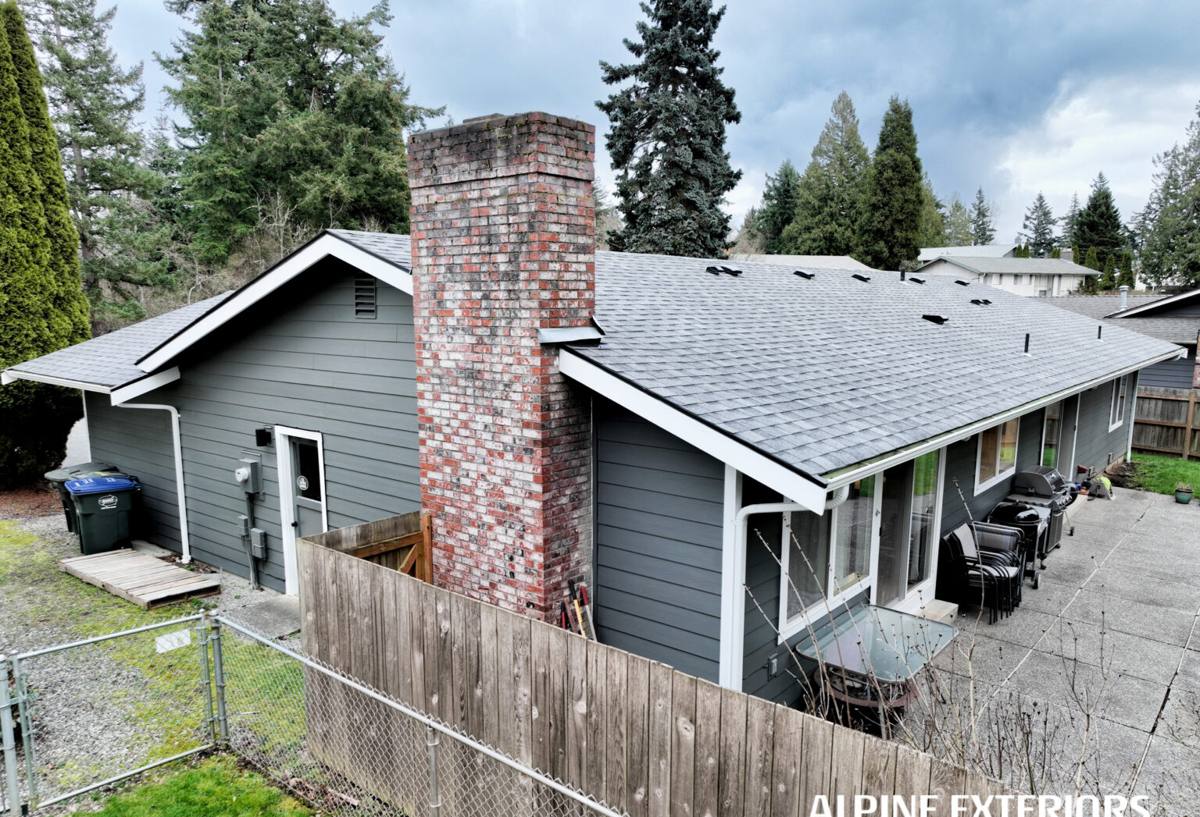
What Local Homes Need From Their Siding
Moisture Management Comes First
In a dry climate, siding mostly needs to look good and hold paint. Here, siding needs to shed water fast, dry out between rain events, and resist the slow saturation that comes from weeks of overcast, damp air. That means the water-resistive barrier behind the siding, the flashing details around every window and door, and the drainage gap behind the cladding all matter more than the color or the profile you pick.
Moss and Algae Resistance
Whatcom County's long wet season and shaded lots give moss and algae exactly what they need to take hold: constant moisture and limited direct sun. Once organic growth gets a foothold in seams, laps, or caulk lines, it holds moisture against the substrate and accelerates whatever degradation is already happening underneath. Siding with a factory-applied finish that resists staining, plus installation details that don't trap water in the first place, cuts down on how often a homeowner has to get up there and scrub.
Durability Against Wind-Driven Rain
Rain that comes in at an angle finds every gap a straight-down rain never would — under-lapped corners, short caulk joints, fastener heads that weren't set right. A correct installation accounts for that from the start, rather than relying on caulk and touch-up paint to patch problems after the fact.
What a Correct Siding Installation Actually Involves
A lot of what determines whether siding lasts 10 years or 40 happens before a single piece of cladding goes up. Here's what we consider non-negotiable on every Sudden Valley project:
- Full removal of old siding and inspection of the sheathing underneath for rot, soft spots, or prior water damage
- A properly lapped and sealed water-resistive barrier, installed shingle-style so every course drains onto the one below it
- Correct flashing at every window, door, deck ledger, and roof-to-wall transition — the highest-risk spots for leaks
- A drainage gap or rainscreen strategy so water that gets behind the siding has somewhere to go besides sitting against the wall
- Manufacturer-specified fasteners, set to the correct depth — overdriven nails are one of the most common causes of premature siding failure
- Correct joint and butt-seam treatment so seams shed water instead of wicking it in
- Caulking only where the manufacturer calls for it — not as a substitute for proper flashing
Skip any one of these and the siding can still look fine for a year or two. The failures that follow — trapped moisture, rot in the sheathing, paint failure, siding that swells or delaminates — usually show up long after the crew that cut corners is gone.
Our Process for Sudden Valley Projects
1. On-Site Assessment
We walk the exterior with you, note which elevations take the most weather (usually the north and west sides here), check trim, flashing, and any areas showing moss buildup or staining, and talk through what we find before any tear-off starts.
2. Tear-Off and Substrate Check
Old siding comes off in sections so we can inspect the sheathing as we go, rather than discovering rot after the whole wall is already exposed. Any damaged sheathing gets replaced before anything new goes up — installing new siding over compromised sheathing just hides the problem for a while.
3. Weather Barrier and Flashing
This is the step that determines how the house performs in a driving rainstorm five or ten years from now. We install the water-resistive barrier and flashing to shed water at every penetration and transition, sequenced so upper layers always overlap lower ones.
4. Installation
Siding goes up to manufacturer spec — correct fastener type, spacing, and depth; correct clearances at grade, decks, and roofline; correct joint treatment. We don't deviate from the manufacturer's installation instructions to save time, because that's exactly what voids warranty coverage and shortens the life of the siding.
5. Trim, Paint Touch-Up, and Walkthrough
Trim and accessory pieces get finished to match, any factory finish touch-up is done with the manufacturer's matched product, and we walk the job with you before calling it done.
Why We Only Install James Hardie Fiber Cement
We standardized on James Hardie siding for every home we work on, including in Sudden Valley, for reasons that come directly out of what this climate does to a house over time.
- Non-combustible core — fiber cement doesn't feed a fire the way wood-based or foam-backed products can, which matters as much for insurance conversations as for safety.
- Engineered for wet climates — Hardie's HZ5 product line is specifically formulated for regions with prolonged moisture exposure, which describes most of Whatcom County for a good chunk of the year.
- ColorPlus factory finish — baked-on in a controlled environment rather than field-applied, so the finish resists fading, chipping, and the staining that comes from prolonged damp and shade.
- Doesn't rot or swell — fiber cement doesn't absorb water the way wood-based composite sidings can, which matters directly for moss-prone, shaded lots.
- Strong transferable warranty — meaningful protection that follows the house, not just the original owner.
We don't install LP SmartSide, vinyl, Cemplank, Allura, primed spruce, or cedar. Each of those has situations where it can perform reasonably well, but none of them combine non-combustible material, factory-cured finish durability, and long-term moisture performance the way Hardie fiber cement does — and in a climate that stays damp as long as this one does, that combination is the whole ballgame.
Cost Factors for a Sudden Valley Siding Job
| Factor | Why It Affects Cost |
|---|---|
| Home size and elevation count | More square footage and more complex rooflines mean more cutting, flashing, and labor hours |
| Existing siding condition | Rotted sheathing found during tear-off adds repair costs that can't be quoted until the old siding is off |
| Siding profile chosen | Lap siding, shingle-style panels, and board-and-batten each carry different material and labor costs |
| Trim and accessory scope | Full trim replacement costs more than reusing sound existing trim |
| Access and site conditions | Slopes, tree cover, and limited staging area around some Sudden Valley lots can add labor time |
| Color and finish | Factory ColorPlus finishes cost more upfront than primed siding but eliminate a repaint cycle |
We give a firm, written quote after the on-site assessment — not a phone estimate — because the condition of what's underneath the existing siding is the biggest variable on almost every re-side.
Signs a Sudden Valley Home Needs New Siding
- Persistent moss or algae staining that comes back within weeks of cleaning
- Paint that's peeling, bubbling, or chalking, especially on shaded or north-facing walls
- Soft spots, warping, or visible swelling in the siding boards
- Cracked or missing caulk at seams and trim joints
- Visible gaps at corners or butt joints that weren't there a few years ago
- Interior signs like musty smells, damp drywall, or staining near exterior walls
- Siding that's simply reached the end of its practical service life, even if it still looks acceptable from the street
Any one of these on its own isn't necessarily urgent. Several together, especially combined with visible moisture problems, usually means the siding is no longer doing its job of keeping water out of the wall assembly.
Why Hiring a Crew That Already Works Sudden Valley Matters
A siding crew that's worked this specific area knows which elevations take the worst weather, how shaded, tree-covered lots affect drying time and moss growth, and what kind of substrate condition to expect on homes of different ages in this community. That experience shows up in the details — where extra flashing attention goes, how the drainage plane is sequenced, which corners of a house get the most careful joint work. It also means fewer surprises with access, staging, and coordinating around HOA or neighborhood expectations that come with working in an established community like this one.
None of that replaces a correct installation process — the fundamentals matter everywhere. But local experience is what keeps a crew from treating a Sudden Valley home like it's sitting in a dry, sunny climate where those fundamentals matter less.
Ready to Talk About Your Siding?
If your Sudden Valley home is showing moss buildup, paint failure, or siding that's simply reached the end of its life, we're happy to take a look and give you an honest assessment of what's going on and what it would take to fix it right. Request a free, no-pressure estimate using the form below and we'll get back to you to schedule a time.