 Ferndale
 Building a Deck in Blaine Means Building for the Coast
Blaine sits right up against Semiahmoo Bay and Drayton Harbor, which means any deck built here is going to spend its life dealing with salt-laden air, wind-driven rain, and long stretches of gray, damp weather that don't let wood or metal dry out for weeks at a time. A deck design that works fine forty miles inland in Whatcom County can fail early in Blaine simply because nobody accounted for the marine environment. That's not a knock on any particular product — it's just physics. Salt air accelerates corrosion in fasteners and hardware, driving rain finds its way into end grain and joints that aren't detailed correctly, and the region's long moss season keeps horizontal surfaces damp and slick far longer than a drier climate would.
A correctly built deck in Blaine isn't fundamentally different in concept from a deck anywhere else — footings, framing, decking, railings — but every one of those components has to be selected and installed with the coastal conditions in mind. That's the lens we bring to every custom deck we build in this area.
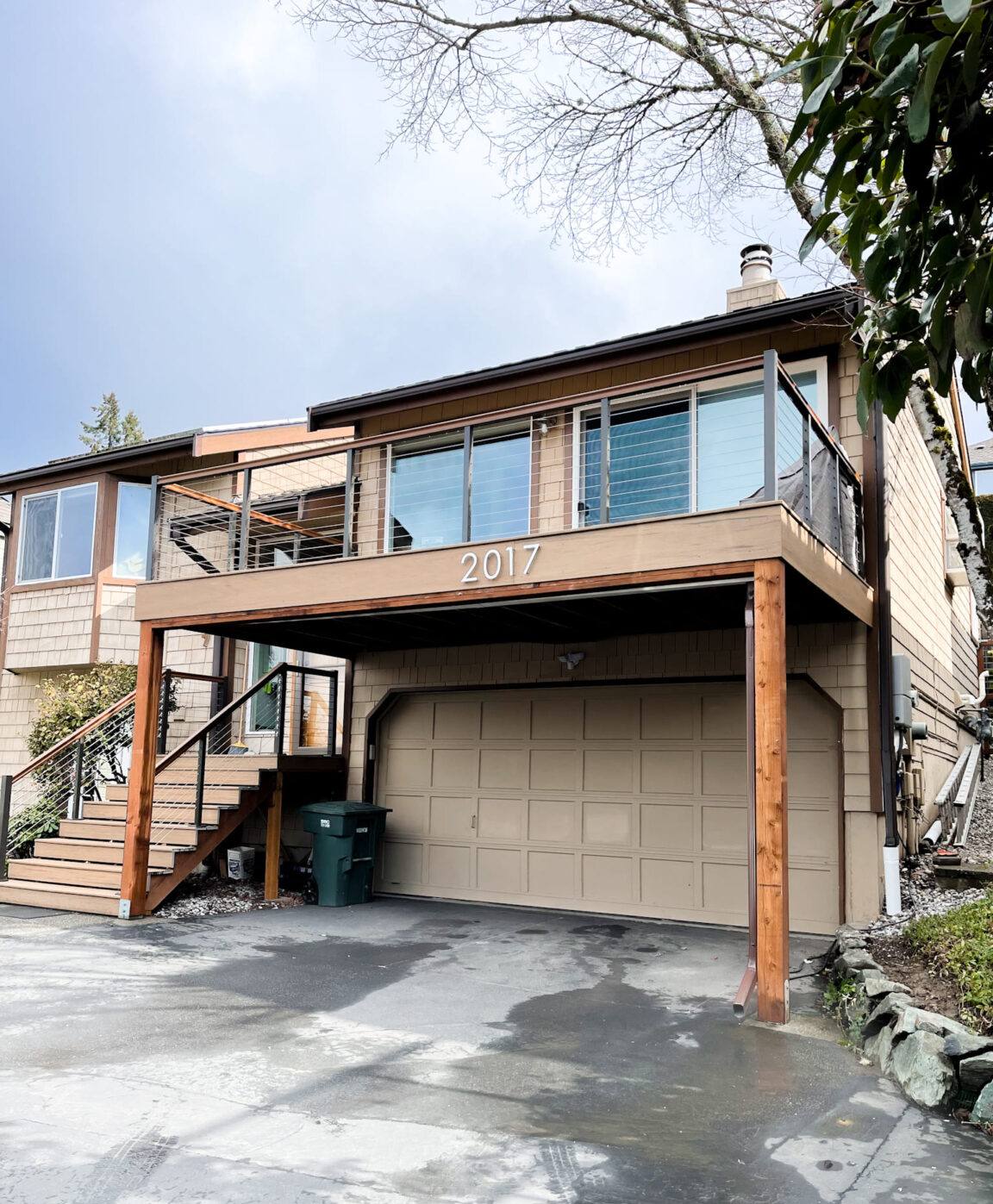
What Salt Air Actually Does to a Deck
Salt air is corrosive to bare and even galvanized steel over time, which is why fastener and hardware selection matters more here than it would in a dry inland climate. Standard deck screws and joist hangers that are rated for general exterior use can start showing rust streaks and pitting years before they would in a non-coastal environment. Once a fastener starts to corrode, it loses holding strength, and that's a structural issue, not just a cosmetic one.
Where This Shows Up First
- Fastener heads and joist hanger nails, especially near the harbor-facing side of a home
- Any exposed metal railing post brackets or structural connectors
- Hinges, latches, and hardware on built-in deck features like gates or benches
- Screw heads in decking boards that see standing water or don't drain quickly
The fix isn't complicated, but it does require using the right grade of stainless or coated fasteners and hardware from the start, rather than defaulting to whatever is cheapest at the box store. It costs a little more up front and saves a lot of grief later.
Driving Rain and Deck Framing Details
Blaine gets its share of wind-driven rain coming off the water, and that changes how a deck needs to be flashed and framed where it meets the house. Ledger board attachment is the single most important structural detail on any attached deck, and in a wet climate it's also the detail most likely to fail quietly, behind the scenes, if it's not flashed properly.
We pay close attention to a few things on every ledger attachment:
- Proper flashing that directs water out and away from the house sheathing, not just a bead of caulk behind the ledger
- Correct lag bolt or through-bolt spacing rated for the deck's actual load, not just what "looks like enough"
- A gap or capillary break between the ledger and the siding so water doesn't wick behind the deck
Skipping or shortcutting this step is one of the most common causes of hidden rot we find when we're called out to repair or rebuild an older deck in this area. It's invisible until it isn't, and by the time it shows up as a soft spot in the decking or a sagging ledger, the damage has usually spread into the house framing itself.
Decking Material Options for a Coastal, Mossy Climate
There's no single "best" decking material — the right choice depends on how much upkeep a homeowner wants to do, budget, and how much direct weather exposure the deck gets. Here's how the common options actually perform in Blaine's conditions:
| Material | Moisture & Salt Air Behavior | Moss/Algae Resistance | Maintenance Load |
|---|---|---|---|
| Pressure-treated lumber | Good if properly sealed; end grain and cut edges need re-treating | Needs regular cleaning; moss takes hold if left unwashed | Higher — annual cleaning and periodic re-sealing |
| Cedar | Naturally moisture-resistant, but still needs sealing near the coast | Moderate; benefits from yearly cleaning | Moderate to higher |
| Composite decking | Very good — doesn't absorb water or rot | Can still grow surface algae/moss film if not cleaned; texture matters | Lower — occasional washing, no sealing |
| PVC/capped polymer | Excellent — fully moisture-sealed material | Low with a smooth cap; still benefits from seasonal cleaning | Lowest |
We're honest with homeowners about trade-offs rather than pushing one product line. Composite and capped-polymer boards cost more up front but reduce the ongoing maintenance burden significantly, which matters in a climate where moss season runs long. Real wood costs less initially and has a look a lot of people prefer, but it demands a real maintenance commitment to hold up here — skipping a year of sealing in this climate shows up fast.
Fasteners and Framing Lumber
Whatever decking material goes on top, the framing underneath should be pressure-treated lumber rated for ground contact where applicable, and every fastener — hangers, hanger nails, structural screws — should be rated for coastal or salt-air exposure, not just general exterior use. This is one area we won't cut corners on regardless of decking budget, because framing failures are expensive and dangerous, while decking-surface choices are mostly about looks and upkeep.
Moss, Algae, and Drainage — Designing the Surface to Shed Water
Long moss season in this part of Washington isn't just a cosmetic nuisance — a mossy, algae-covered deck surface gets slick and dangerous, especially on stairs. Good deck design fights this in a few ways beyond just material choice:
- Proper board spacing so water drains through rather than pooling
- Correct slope away from the house, even if it's subtle, so water doesn't sit
- Avoiding low spots created by uneven joists or settled footings
- Keeping stair treads and high-traffic areas in materials or finishes with better grip when wet
No decking product is completely immune to surface growth in a climate this damp — the difference is how much cleaning it takes to keep ahead of it, and whether the deck's structure is actively working against drainage.
Footings and Structural Considerations
Blaine's soil and drainage conditions vary block to block, and footing depth and design need to account for local frost depth and drainage, not a generic assumption. We check the specific site conditions before finalizing footing design rather than defaulting to a one-size-fits-all spec, since a footing that works fine on well-drained soil can shift or heave on a lot with poor drainage.
Our Process, Start to Finish
- Free on-site estimate — we look at the actual site, sun/wind exposure, drainage, and how the deck ties into the house before quoting anything
- Design and material conversation — honest trade-offs on decking material, railings, and layout based on budget and maintenance appetite
- Permitting — pulling the required permits for the jurisdiction the property falls under
- Demo of existing structure, if applicable, with attention to what the removal reveals about hidden rot or past shortcuts
- Framing and ledger attachment, with proper flashing and coastal-rated fasteners throughout
- Decking, railing, and finish work
- Final walkthrough with the homeowner before we call it done
We don't skip the estimate step or quote a deck sight-unseen, because the site conditions here — slope, drainage, sun exposure, distance from the water — genuinely change what the right build looks like.
Maintenance Checklist for a Blaine Deck
Whatever material a homeowner chooses, a bit of seasonal upkeep goes a long way in this climate:
- Sweep debris and standing organic matter off the deck surface regularly, especially in fall
- Clean moss and algae film at least once a year, more often on shaded or north-facing decks
- Check fastener heads and hardware annually for early rust or corrosion signs
- Inspect the ledger board area and flashing for any signs of moisture intrusion
- Reseal wood decking on the manufacturer's recommended schedule — don't stretch it out in this climate
- Keep gutters and downspouts near the deck clear so runoff isn't dumping extra water onto or near the structure
Why It Matters to Hire a Crew That Already Works in Blaine
A lot of deck-building advice and standard specs are written for a generic climate that doesn't really exist in Whatcom County's coastal communities. A crew that regularly works in Blaine already knows which fastener grades hold up here, how the local soil and drainage tend to behave, and where the common failure points are on older decks in this specific area — because we've seen them firsthand on repair calls. That local track record translates into fewer surprises, fewer callbacks, and a deck that's built for the conditions it will actually face rather than a textbook average.
If you're planning a new custom deck or replacing one that's showing its age, we're happy to take a look and give you a straightforward, no-pressure estimate — just fill out the form below and we'll get in touch.