 Ferndale
 Why Board & Batten Still Fits Lynden Homes
Board and batten has never really gone out of style in Whatcom County's rural and small-town communities, and Lynden is a good example of why. The vertical lines read as farmhouse, barn, and Craftsman all at once, which is a big part of why it shows up on new builds and remodels alike out this way. It also happens to be one of the few siding profiles that looks equally at home on a two-story farmhouse-style build and on a single-story ranch that just needs a facelift.
But board and batten is not a neutral choice from a performance standpoint. The wide flat boards and narrow vertical battens create a lot of exposed seams and a lot of vertical joints where water wants to travel. In a dry climate that's a cosmetic detail. In Whatcom County, where the marine air off the coast reaches inland communities like Lynden along with the rest of the Ferndale service area, it's a functional detail that determines whether the siding lasts 10 years or 40.
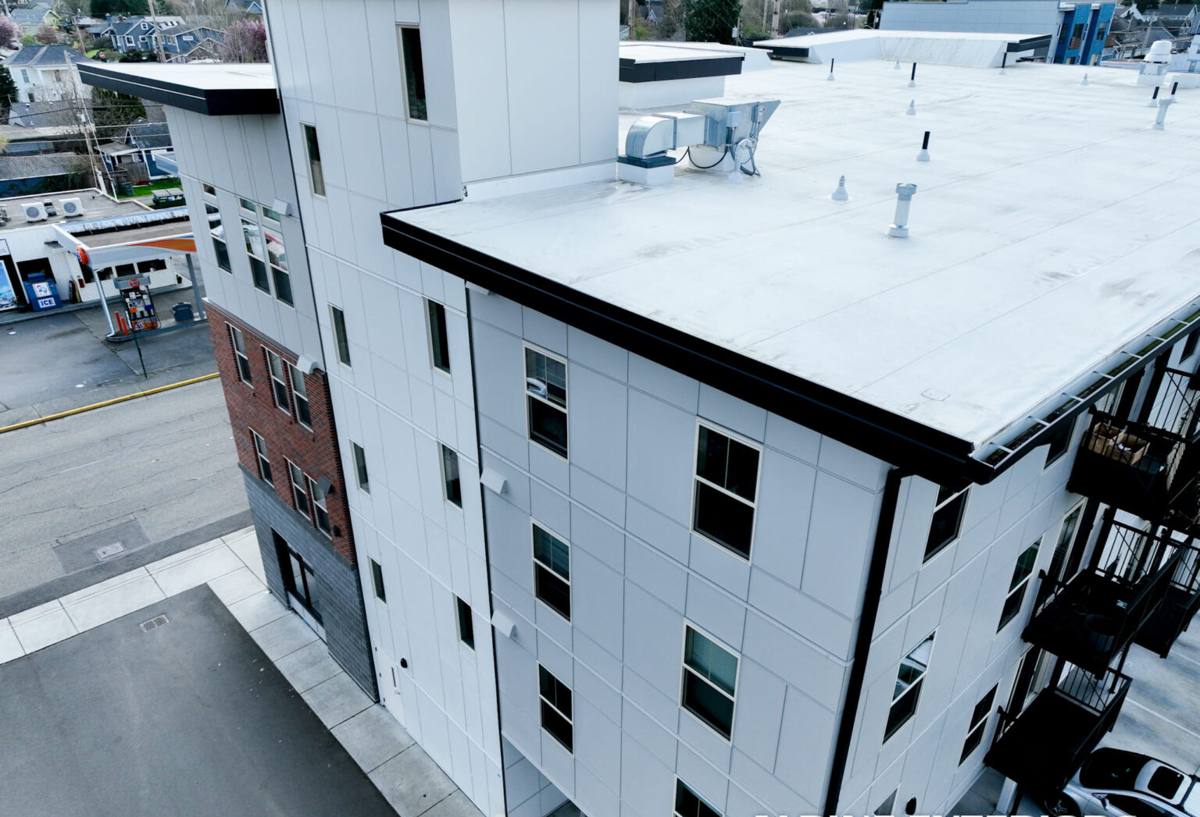
What This Climate Actually Does to Vertical Siding
Driving rain and vertical seams
Board and batten has more linear feet of vertical joint than almost any other siding profile. Wind-driven rain off winter storms doesn't just fall straight down here — it gets pushed sideways into those joints. If the battens aren't detailed with the right gap, flashing, and drainage path behind them, water finds its way behind the cladding and into the wall assembly, where it can sit for weeks in our wet shoulder seasons.
Salt air and fastener corrosion
Whatcom County's marine air carries fine salt content that travels well inland, and it's harder on exposed metal than most homeowners expect. Standard fasteners, unclad trim, and cheap flashing corrode faster here than they would in a dry inland climate. Board and batten uses more fasteners per square foot than lap siding because of the batten strips, so this is not a minor detail — it's one of the main things that separates a job that looks good for five years from one that looks good for thirty.
Moss, shade, and moisture retention
Lynden's tree cover and long damp season mean north- and east-facing walls stay shaded and moist for a large part of the year. Moss and algae don't just look bad — they hold moisture directly against the siding surface for extended periods, which is exactly the condition that rots wood-based products and lifts paint film. Any board and batten job here has to be planned with this in mind, not treated as an afterthought once the moss shows up.
What a Correct Board & Batten Installation Involves
Rainscreen and drainage gap
A batten fastened flat against the wall with no gap traps moisture against the sheathing every time it rains. Correct installation uses a furring strip or engineered drainage gap behind the panel so any water that gets past the surface can drain and dry out instead of sitting against the wall assembly. This one detail matters more in Whatcom County's climate than almost anything else on the job.
Flashing and seam treatment
Every horizontal joint, window head, and transition needs proper flashing — not just caulk. Caulk is a maintenance item that eventually fails; flashing is a permanent water management detail. A board and batten wall with dozens of vertical battens has more seams to get right than most other profiles, which is exactly where corner-cutting shows up first.
Fastening and expansion allowance
Fiber cement panels and battens expand and contract slightly with temperature and moisture swings. Fasteners need to be placed and spaced to the manufacturer's specification, not just "close enough," or you end up with popped nails, hairline cracking at fastener points, and boards that work themselves loose over a decade of freeze-thaw and wet-dry cycling.
Why We Install James Hardie for This Application — and Nothing Else
We don't offer board and batten in vinyl, LP SmartSide, primed spruce, or unfinished cedar. That's a deliberate standard, not a lack of options. Each of those materials has real strengths, but each also has a weak point that shows up specifically in vertical-seam siding in a wet marine climate:
- Vinyl board and batten relies on interlocking channels that can loosen and rattle, and it has no real fire resistance — a real consideration in Whatcom County's mix of wooded and rural lots.
- Engineered wood siding (like LP SmartSide) performs well when detailing and caulking are kept up every year, but any lapse in that maintenance lets moisture into the wood fiber core, and vertical board and batten has more seams for that lapse to happen at.
- Primed spruce and unfinished cedar look great on day one but need refinishing on a schedule, and shaded, moss-prone walls are exactly where that finish fails first and rot gets a foothold.
James Hardie fiber cement is non-combustible, doesn't swell or rot from moisture the way wood-based products can, and comes prefinished with the ColorPlus factory finish — a baked-on finish that holds color far longer than field-applied paint, which matters when battens are hard to reach and repaint every few years. Hardie also engineers its board and batten products for climate — the Pacific Northwest formulation is built around freeze-thaw cycling and sustained moisture exposure, not a one-size-fits-all national spec. It carries a strong, transferable manufacturer warranty when installed to Hardie's own specification, which is the installation standard we hold every board and batten job to.
Comparing Board & Batten Materials
| Material | Moisture Behavior | Maintenance Burden | Fire Resistance | Typical Longevity |
|---|---|---|---|---|
| James Hardie fiber cement | Does not swell, rot, or absorb water like wood | Low — factory finish, no yearly refinishing | Non-combustible | Decades with correct install |
| Engineered wood (LP SmartSide) | Vulnerable at cut edges and seams if caulking lapses | Moderate — annual caulk/paint checks | Combustible wood-based core | Good with strict upkeep |
| Vinyl board and batten | Sheds water on the surface but panels can warp/loosen | Low, but limited repair options | Combustible, can deform in heat | Moderate, fades over time |
| Cedar / primed spruce | Absorbs moisture; prone to rot in shaded, damp areas | High — refinishing on a set cycle | Combustible | Shorter without diligent upkeep |
How We Handle a Lynden Board & Batten Project
On-site assessment
We start by looking at what's actually happening on the wall — existing siding condition, sheathing moisture where it's exposed, shade patterns, gutter performance, and how the house has weathered so far. Board and batten decisions get made off what we find, not off a generic template.
Removal and substrate check
Old siding comes off carefully so we can inspect the sheathing underneath before anything new goes up. Covering damaged or wet sheathing with new siding just hides a problem that gets worse behind the wall — we address it before it's closed back up.
Install and finish
Rainscreen or furring goes up first, then flashing at every horizontal transition, then panels and battens fastened to spec. Trim, corners, and transitions get finished last, checked against the plan before we call the job done.
Why a Crew That Already Works This Area Matters
A siding crew that has actually worked houses in Lynden and the surrounding Ferndale service area already knows what the local moisture and shade patterns do to a wall over a few winters. That's not something you can fully learn from a spec sheet — it's learned from seeing which details hold up here and which ones don't. It also means we're not guessing at local permitting norms or what a Whatcom County inspector expects to see on a board and batten rainscreen detail. Familiarity with the area translates directly into fewer surprises and a job that's built for the conditions it actually has to survive, not generic conditions from a national installation manual.
Maintenance Checklist for Board & Batten Homes in This Climate
- Rinse moss and algae off shaded walls before it builds up a thick mat — a soft wash, not pressure that can force water behind seams
- Check gutters and downspouts twice a year so overflow isn't running down battens directly
- Look at caulking and sealant lines at trim and window transitions each fall, before the wet season sets in
- Watch for any darkening or soft spots at the base of battens, which can signal moisture getting trapped behind the panel
- Keep vegetation and sprinkler spray pulled back a few inches from the wall to reduce sustained dampness against the siding
If you're weighing board and batten for a home in the Lynden area, we're happy to take a look and walk you through what it would actually take on your specific house — no pressure, no generic estimate off a photo. Reach out for a free on-site estimate and we'll tell you straight what your walls need.