 Ferndale
 Window Installation Built for Custer's Coastal Climate
Custer sits in the rural stretch of Whatcom County between Ferndale and the Canadian border, close enough to Birch Bay and the Strait of Georgia that salt-laden air is a regular part of the weather, not an occasional visitor. Add in driving rain off the water, open farmland with few windbreaks, and a moss season that can stretch from October through April, and you've got a set of conditions that are genuinely tougher on windows than what a house twenty miles inland deals with. A window installation here isn't just about picking a product and cutting a hole in the wall — it's about understanding how this specific climate attacks the weak points of a window system over years, not weeks.
This page covers what Custer homes actually need from a window installation, what a correct job looks like from the inside out, and how our process is built around the realities of working on homes exposed to Whatcom County's coastline.
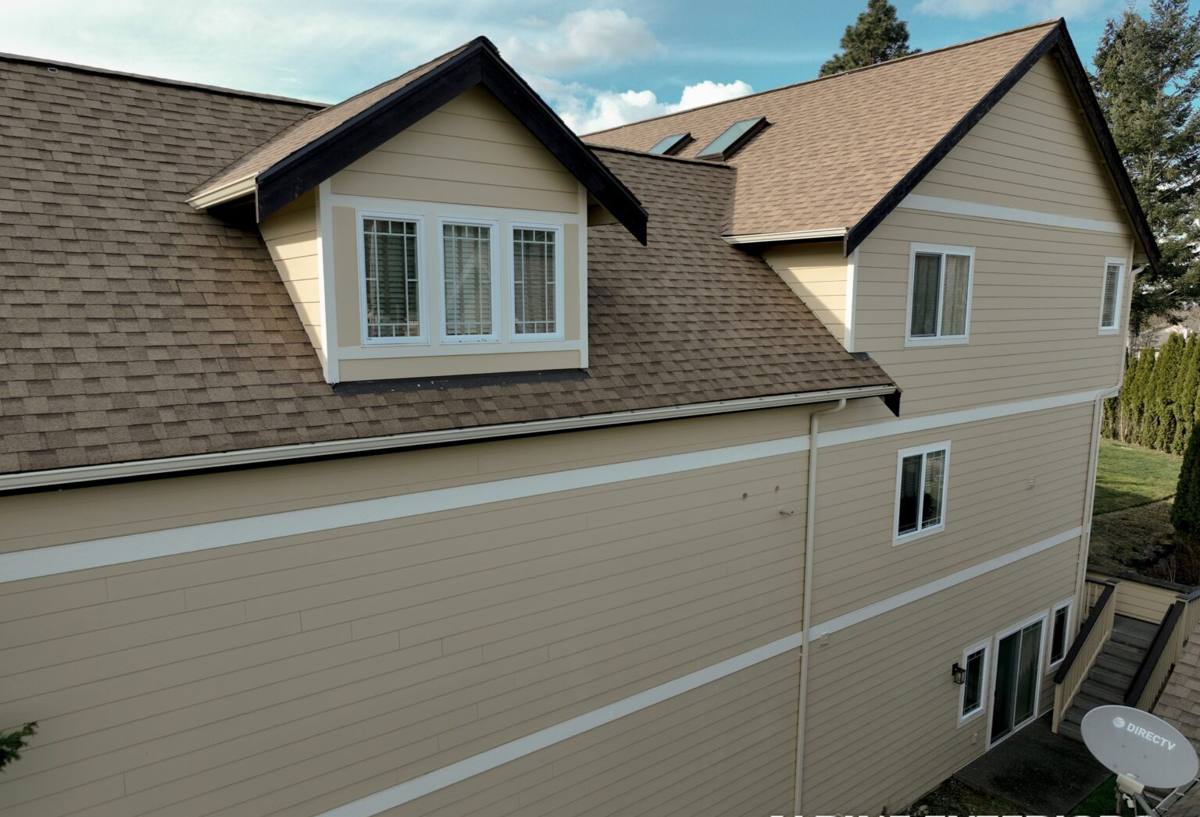
What Salt Air, Rain, and Moss Do to Windows Over Time
None of these factors destroy a window overnight. They work slowly, which is exactly why so many homeowners don't notice a problem until it's already inside the wall cavity.
Salt Air
Airborne salt settles on glass, frames, and hardware. On metal components — hinges, locks, screen frames — it accelerates corrosion. On vinyl and painted surfaces it can dull finishes and, more importantly, it breaks down exterior sealants faster than in a drier inland climate. A sealant bead that might last 12-15 years elsewhere can start failing sooner this close to the water.
Driving, Wind-Driven Rain
Rain that falls straight down is easy for any window to shed. Rain pushed sideways by wind off the bay is a different problem — it tests the flashing, the sill pan, and the seal around the entire perimeter of the window, not just the top. This is where a poorly installed window fails first: not through the glass, but around it.
Moss and Algae
Whatcom County's long wet season keeps north-facing and shaded elevations damp for months at a time. Moss and algae take hold on trim, sills, and anywhere water sits instead of draining. Once established, that growth holds moisture against wood trim and caulk lines, which shortens the life of both.
Why This Hits Custer Homes a Bit Harder
Custer's mix of open agricultural land and proximity to Birch Bay and Semiahmoo Bay means many properties have fewer windbreaks than a house tucked into a Ferndale neighborhood. Wind-driven rain reaches exterior walls with less to slow it down, and salt exposure is more consistent. None of this means windows here are doomed — it means the installation details that are "nice to have" elsewhere are non-negotiable here.
Signs a Custer Home Needs New Windows
- Fogging or a permanent haze between the panes (failed seal on double- or triple-pane glass)
- Soft or discolored wood trim around the window, especially at the bottom corners
- Visible daylight or a noticeable draft when the window is closed and locked
- Hardware — locks, cranks, hinges — that's corroded, stiff, or won't latch properly
- Moss or dark staining building up on the sill or lower frame year after year
- Paint or finish that keeps failing in the same spot no matter how often it's touched up
- Noticeably higher heating bills without another obvious cause
- Windows that are original to a home built decades ago and have never been replaced
Choosing Window Materials for Coastal Whatcom County
There's no single "best" window material for every home — it depends on budget, exposure, and how the house is built. Here's how the common options actually perform under Custer's conditions.
| Material | Salt-Air / Moisture Resistance | Maintenance Needs | Typical Lifespan |
|---|---|---|---|
| Vinyl | Good — won't rust or rot, unaffected by salt corrosion | Low; occasional cleaning | 20-30 years |
| Fiberglass | Very good — dimensionally stable, resists warping in wet/dry cycles | Low | 30-40 years |
| Wood-clad (wood interior, clad exterior) | Depends on cladding quality and installation detailing at joints | Moderate; exterior cladding needs monitoring, interior wood may need refinishing | 20-30 years with maintenance |
| Aluminum | Poor in salt air without a marine-grade finish; prone to pitting and corrosion | Higher; finish and hardware need regular attention | Varies widely with finish quality |
For most Custer homes, vinyl or fiberglass frames make the most practical sense given the salt exposure — they simply have less to corrode. Wood-clad windows can still work well on the right home, but the cladding-to-frame seams need to be detailed carefully, since that's where moisture finds its way in first. We'll talk through the honest trade-offs for your specific house rather than pushing one material across the board.
What a Correct Window Installation Actually Involves
This is the part that separates a window that lasts decades from one that starts leaking within a few years — and it has almost nothing to do with the window itself.
Sill Pan and Flashing Sequence
Before the window ever goes in, the rough opening needs a sloped sill pan so any water that gets past the window drains back out, not into the wall. Flashing tape and building paper (or house wrap) need to be layered in the correct shingle-style order — bottom pieces overlapped by the ones above — so water always sheds downward and outward, never into a seam.
Integration with the Weather-Resistive Barrier
The window's flashing has to tie into the home's existing weather barrier correctly. A window can be perfectly installed on its own and still leak if it isn't properly integrated with the surrounding wall assembly — this is one of the most common mistakes in lower-quality installs.
Shimming, Squaring, and Fastening
A window that isn't shimmed level and square will bind, won't seal evenly, and puts stress on the frame that shortens its life. Fasteners go where the manufacturer specifies — not just "close enough" — because that spacing affects how the window handles wind load.
Insulation Without Overfilling
The gap between the window frame and the rough opening gets insulated with a low-expansion foam or backer rod, not packed solid. Overfilled gaps can actually bow the frame inward, which affects how well the window opens, closes, and seals.
Exterior Sealant and Trim
The final exterior bead of sealant is the last line of defense, not the first — it should never be doing the job that flashing was supposed to do. Trim gets reinstalled or replaced so water sheds away from the window rather than pooling against it.
Our Window Installation Process
- On-site assessment — we look at the existing window openings, framing condition, and any signs of past moisture intrusion before recommending anything.
- Measurement and product selection — exact measurements for each opening, and an honest conversation about material, glass package, and budget.
- Site protection — flooring, landscaping, and interior spaces near the work area are protected before removal starts.
- Careful removal — old windows come out with attention to the condition of the rough opening underneath, since that's often where problems are hiding.
- Repair as needed — any soft framing, old failed flashing, or water damage found during removal gets addressed before the new window goes in, not covered up.
- Installation — sill pan, flashing, shimming, insulation, and sealant done in the correct sequence described above.
- Interior and exterior finish work — trim, caulking, and touch-up so the finished window looks right from both sides.
- Final walkthrough — every window is opened, closed, and locked to confirm smooth operation before we call the job done.
Cost Factors for Window Installation in Custer
Every home is different, so we won't quote a number without seeing the job — but these are the main factors that move the price up or down.
| Factor | Why It Affects Cost |
|---|---|
| Number of windows | More openings means more labor and material, though per-window cost often drops slightly on larger jobs |
| Window size and type | Standard double-hung windows cost less than large picture windows, bay windows, or egress-code bedroom windows |
| Frame material | Vinyl is generally the most budget-friendly; fiberglass and wood-clad cost more upfront |
| Retrofit vs. full-frame replacement | Full-frame replacement (removing trim and flashing down to the studs) costs more than an insert replacement but is often the right call when framing or flashing is compromised |
| Accessibility | Second-story windows, tight rural driveways, or difficult access add labor time |
| Condition of the existing opening | Rot or old water damage found during removal adds repair cost, but skipping that repair costs far more later |
Why Hire a Crew That Already Works in Custer
A crew that's worked across Whatcom County's coastal communities has already seen how the local weather ages windows on homes like yours — what fails first, what holds up, and which installation shortcuts cause problems five years down the road instead of five months. That matters here specifically because Custer's mix of older farmhouses, newer builds, and homes with direct exposure toward Birch Bay all age differently under the same salt-and-rain conditions.
Local experience also means knowing what Whatcom County permitting and code requirements apply to window replacement — egress sizing for bedrooms, for example — so the job is done right the first time instead of getting flagged later. And when a job needs a callback or a weather-driven repair, a contractor already working in the area can get to you faster than one dispatching from farther away.
Caring for New Windows in a Salty, Moss-Prone Climate
A properly installed window still benefits from a bit of seasonal attention out here:
- Rinse salt film off glass and frames periodically, especially on elevations facing the water
- Keep weep holes (the small drainage openings along the bottom of the frame) clear of dirt, moss, and debris so water can escape
- Check exterior caulk lines once a year, ideally before the fall rains set in, and touch up any cracking before it becomes a leak path
- Trim back vegetation that keeps a window shaded and damp, since that's exactly where moss and algae take hold fastest
- Test operation of locks and hardware seasonally — a lock that's starting to stick is often the first sign of corrosion
None of this is complicated, but skipping it is how a well-installed window ends up with an avoidable problem a decade in.
Get an Honest Look at Your Windows
If you're not sure whether your Custer home needs a full window replacement, a few upgraded units, or just better sealing around what you already have, we're happy to take a look and give you a straight answer. Reach out for a free, no-pressure estimate — the form below gets you started.