 Ferndale
 Why Decks Near Semiahmoo Wear Out Faster Than Inland Decks
A deck built five miles inland in Whatcom County and a deck built near the water in the Semiahmoo area are not the same project, even if the plans look identical on paper. Proximity to saltwater changes what a deck is up against day to day. Salt-laden air corrodes fasteners and hardware faster than plain moisture does. Wind off the water drives rain sideways into ledger connections and rail posts that a more sheltered deck would rarely see wet. And Whatcom County's long, damp shoulder seasons mean horizontal surfaces stay wet for days at a time, which is exactly the condition moss and algae need to take hold.
None of this means a deck near Semiahmoo can't last. It means the build has to account for those conditions from the framing up, not just at the surface. A lot of the decks we get called out to replace look fine from a distance and are structurally compromised underneath — because the original build used standard hardware, minimal flashing, or decking that simply wasn't suited to a marine-influenced climate.
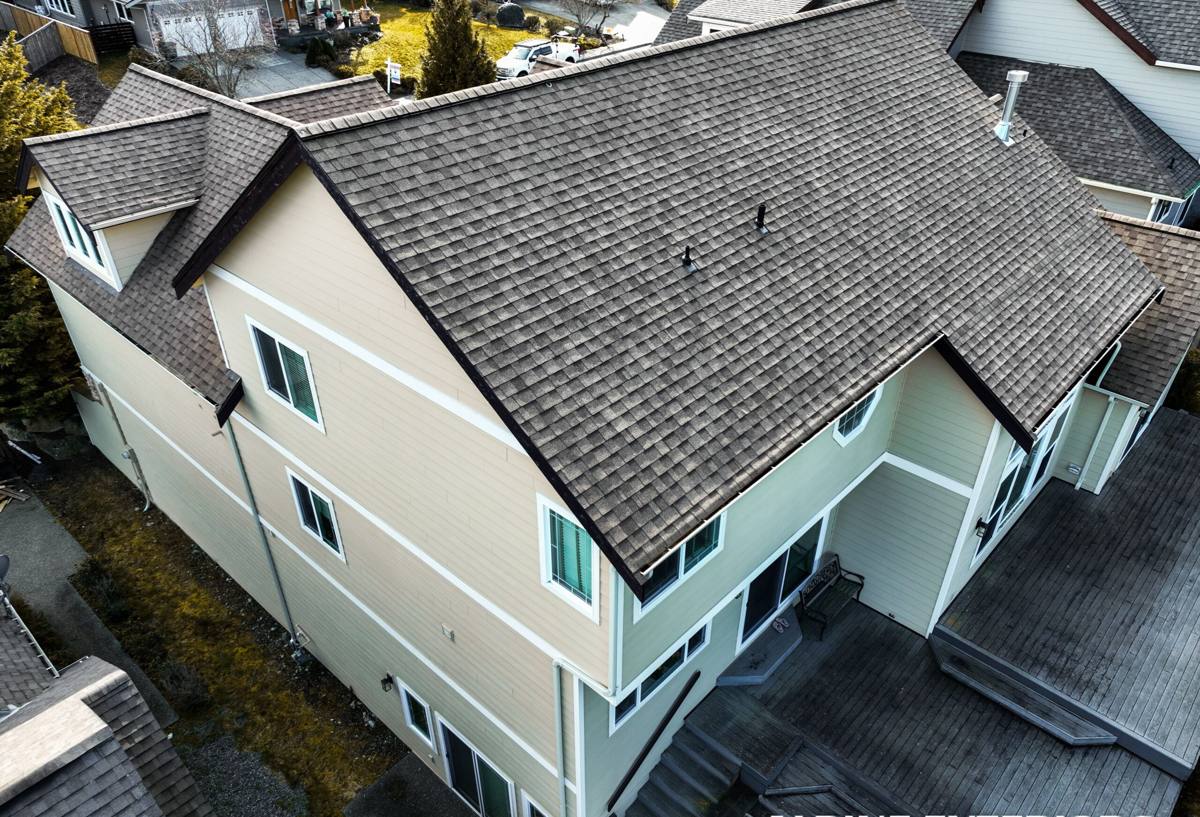
Signs a Deck Needs Replacing, Not Just Repairing
Homeowners often ask whether a deck can be patched instead of torn out. Sometimes it can. But there's a point where repair stops being cost-effective and starts being a temporary fix over a bigger problem. Here's what we look for during an evaluation:
- Soft or spongy decking, especially near the house or at butt joints between boards
- Rust streaking or corrosion around joist hangers, bolts, or ledger fasteners
- Gaps or separation where the ledger board meets the house
- Persistent moss or black staining on the deck surface that returns within weeks of cleaning
- Wobble or movement in the railing posts
- Visible rot at post bases or where framing members meet grade
- A deck older than 15–20 years that has never been re-flashed or had hardware upgraded
If one or two of these show up in isolated spots, repair is often reasonable. When several show up together, especially rot at structural connections, replacement is usually the more honest recommendation — patching around compromised framing just moves the failure point somewhere else.
What a Correct Deck Replacement Actually Involves
Ledger Flashing and Attachment
The connection between the deck and the house is the single most common failure point we see, and it's almost always a moisture problem rather than a structural one. Proper flashing — installed so water sheds away from the house rather than behind the ledger board — matters more here than in drier parts of the state. We treat ledger flashing as non-negotiable, not an upsell.
Footings and Framing
Footings need to be sized and set below frost depth per local code, and framing lumber should be rated for ground contact where it's within splash range of soil or standing water. In areas exposed to salt air, we also pay closer attention to how framing is spaced and vented underneath — trapped moisture under a deck with poor airflow is a slow rot problem waiting to happen.
Fasteners and Hardware
This is where a lot of decks near the water fail early. Standard galvanized fasteners can corrode faster in salt air than their rated lifespan suggests. We use stainless steel or high-grade coated fasteners and connectors rated for coastal exposure on decks in this area — it costs more up front and it's the difference between hardware that's still sound in fifteen years and hardware that's rusting through in five.
Decking Surface and Drainage
Whatever decking material is chosen, the boards need consistent gapping for drainage and airflow, and the layout should avoid low spots where water and debris can pool. Pooling is what feeds moss growth and accelerates surface wear, regardless of material.
Choosing a Decking Material for This Climate
There's no single "right" material for every homeowner — it depends on budget, maintenance tolerance, and how close the deck sits to salt air and standing moisture. Here's how the common options actually perform in this environment:
| Material | Salt Air / Moisture Behavior | Maintenance | Typical Lifespan | Relative Cost |
|---|---|---|---|---|
| Pressure-treated pine | Prone to cupping and checking with repeated wet-dry cycles; needs sealing to hold up | Annual cleaning, re-sealing every 1–2 years | 10–15 years | $ |
| Cedar | Naturally rot-resistant but surface greys and softens faster in salt air without upkeep | Regular cleaning, periodic oiling/staining | 15–20 years | $$ |
| Composite (capped) | Handles moisture and salt exposure well; resists rot by design | Occasional washing, no sealing needed | 25–30 years | $$$ |
| PVC decking | Fully synthetic, best resistance to moisture and salt-driven wear | Lowest — soap-and-water cleaning | 25–30+ years | $$$ |
We're upfront with homeowners that composite and PVC cost more per square foot installed than wood, but in a marine-influenced climate that cost difference often gets recovered in avoided maintenance and sealing over the life of the deck. Wood isn't a bad choice — it just requires a genuine maintenance commitment out here, more than it would inland.
How Our Deck Replacement Process Works
- On-site evaluation — we assess the existing deck's framing, footings, and moisture damage before quoting anything, not just the visible surface
- Honest scope — we tell you plainly what's failing, what's salvageable, and what full replacement actually requires
- Permitting — deck replacements typically require permitting through the county or local jurisdiction; we handle that process
- Demolition and disposal — old decking, framing, and hardware removed and hauled off
- Framing and flashing — footings, joists, and ledger flashing built to hold up under coastal exposure
- Decking installation — your chosen material installed with proper gapping, fastening, and drainage
- Final walkthrough — we go over the finished deck with you before calling the job done
Built for Salt Air and a Long Moss Season
Whatcom County's moss season isn't a minor annoyance — for a horizontal wood or composite surface, it's one of the more persistent maintenance issues homeowners deal with. Moss holds moisture against the decking surface, and on wood it accelerates softening and rot in exactly the spots where boards already take the most foot traffic. Our approach on replacements is to reduce the conditions moss needs to establish itself in the first place: consistent board spacing for airflow, a layout that avoids pooling, and material choices that don't give moss the porous surface it thrives on.
Combine that with salt air off the water and you get a maintenance environment that's genuinely tougher on decks than most of the state deals with. We don't treat that as a reason to oversell premium materials to every homeowner — some budgets and use cases are well served by treated wood with a real maintenance routine. But we do build the structural parts of every deck — flashing, fasteners, framing — to coastal standards regardless of what decking surface goes on top.
Why a Ferndale-Based Crew That Already Works Semiahmoo Matters
A crew that only occasionally works this far north of their home base doesn't always have a feel for how fast salt air and moss actually work on a deck here versus a project twenty miles inland. Working regularly in and around the Semiahmoo area means we've seen how ledger connections, hardware, and decking materials hold up — or don't — in this specific stretch of Whatcom County, and we build accordingly rather than defaulting to a generic spec.
Being based in Ferndale also means we're not driving a long way for a warranty callback or a quick check after a bad windstorm. Local availability matters more for a deck than for a lot of exterior work, because deck problems tend to show up gradually and are easiest to address before they become structural.
Simple Maintenance That Extends Deck Life
Whatever material a deck is built with, a few habits make a real difference in this climate:
- Sweep debris and standing leaves off the deck regularly through fall and winter
- Rinse or scrub visible moss growth promptly rather than letting it establish
- Check and clear gaps between boards so water keeps draining freely
- Inspect fasteners and hardware yearly for rust staining or looseness
- Reseal or restain wood decking on schedule — don't wait until it's visibly grey and dry
- Keep gutters and downspouts near the deck clear so runoff isn't dumping onto the structure
If you're not sure whether your deck needs a full replacement or just some overdue maintenance, we're happy to take a look and give you a straight answer either way. Reach out for a free, no-pressure estimate — the form below gets you started.