 Ferndale
 Why Decks Here Take a Different Kind of Beating
A deck built on Lummi Island doesn't face the same conditions as one built twenty miles inland. Being surrounded by Puget Sound means salt-laden air is a daily presence, not an occasional storm event. Combine that with Whatcom County's long stretch of driving rain from fall through spring, and you get a moisture and corrosion load that most decking materials and fasteners simply weren't designed around. Add a moss season that can run half the year in shaded or north-facing spots, and you have three separate threats working on the same structure at once: salt attacking metal, water attacking wood fiber and finishes, and moss holding both against the surface long after a sunnier location would have dried out.
None of this means a deck on Lummi Island can't last for decades. It means the build has to account for those conditions from the framing up, not just at the surface level with a coat of stain.
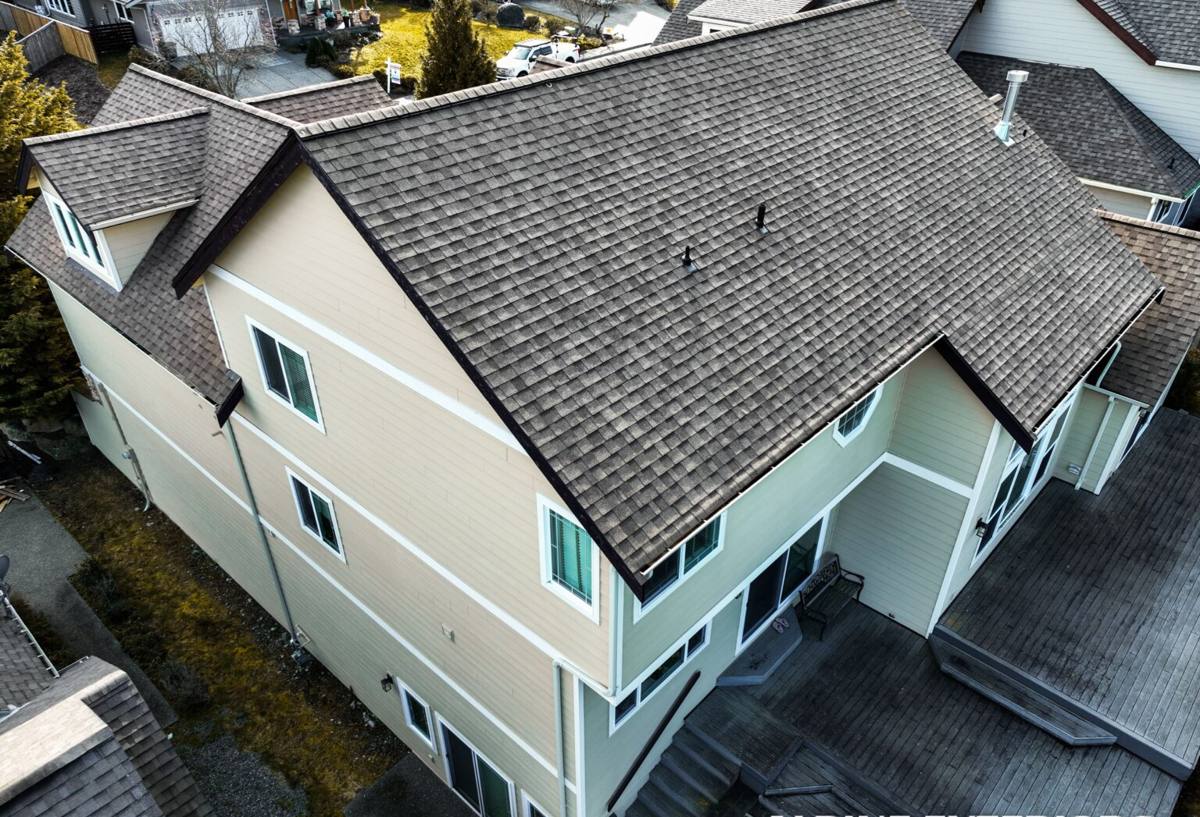
What a Deck Built for This Environment Needs to Get Right
We look at a deck as a system, not a stack of boards. Every part of that system interacts with salt, rain, and moss differently, and a weak link in any one of them shortens the life of the whole thing.
Moisture management starts below the decking
Water that gets trapped between joists and decking, or pools where a ledger board meets the house, is what actually rots a deck — not rain hitting the top surface. Proper flashing at the ledger, correct joist spacing and blocking, and a decking layout that lets water shed and air move underneath are more important to longevity than the brand of board on top.
Fasteners have to match the exposure
Salt air accelerates galvanic corrosion in fasteners far faster than most manufacturers' generic ratings assume. A screw or bracket rated for general outdoor use inland can start showing rust streaks within a couple of seasons this close to the water. We match hardware to the environment, not just to the decking product's minimum spec sheet.
Surfaces need to shed moss, not just resist it
Moss doesn't just look bad — it holds moisture against wood and composite surfaces, and its root structure can etch into softer materials over time. Deck orientation, gap spacing between boards, and how much shade the structure sits in all affect how much moss pressure a deck will see, and that should shape material choice and maintenance planning before the first board goes down.
Choosing a Decking Material That Fits the Climate
There's no single "best" decking material — there's a best material for a given budget, sun exposure, and maintenance appetite. Here's how the common options actually perform under Lummi Island conditions specifically.
| Material | Salt air / corrosion behavior | Moss and moisture behavior | Maintenance load |
|---|---|---|---|
| Pressure-treated wood | Needs stainless or coated fasteners to avoid streaking and premature corrosion | Absorbs moisture readily; moss and mildew take hold faster without regular cleaning | Highest — annual cleaning, periodic re-staining or sealing |
| Cedar | Naturally rot- and insect-resistant, but fasteners still need matching | Better natural resistance to moss than treated wood, still needs upkeep in shaded areas | Moderate to high — needs periodic oiling or sealing to hold color and resist checking |
| Composite decking | Composite core itself doesn't corrode; hardware selection still matters | Resists rot but can still host surface moss/algae; needs occasional washing | Low — no staining or sealing, periodic cleaning only |
| Capped/PVC decking | Fully synthetic cap resists moisture and salt intrusion best of the group | Smoothest surface for moss resistance; still benefits from seasonal cleaning | Lowest — cleaning only, no finish to maintain |
Wood costs less up front and can look excellent, but it asks for more of your time every year in this climate. Composite and capped composite cost more initially but shift the long-term burden away from maintenance and toward upfront investment. We'll walk through the honest trade-offs for your specific site — sun exposure, budget, and how much upkeep you actually want to do — rather than push one product line as a default.
Handrails and structural connectors
Whatever decking material you choose, the metal connecting everything — joist hangers, post bases, handrail brackets — should be rated for coastal or high-moisture exposure. This is one of the most common places we see corners cut on older decks in this area, and it's usually the reason a deck that "looks fine" turns out to have a structural problem underneath.
The Structure Underneath Matters More Than the Surface
A beautiful deck surface on a poorly built substructure is a short-term result. Posts need proper footings sized for our soil and frost conditions, beams need adequate bearing, and joist spacing needs to match the decking material's actual span rating — composite and PVC products often require tighter joist spacing than lumber, and skipping that step is a common shortcut that shows up as bounce or sag within a few years. We also pay close attention to ledger attachment where a deck connects to the house, since that connection point takes on both structural load and a disproportionate share of water exposure.
Permits, Access, and Scheduling on Lummi Island
Building on Lummi Island comes with a few practical realities that don't apply to a mainland Ferndale job. Material deliveries and crew scheduling need to work around ferry sailings, which means a well-run project plans deliveries in fewer, larger trips rather than making multiple last-minute runs. Whatcom County permitting requirements apply here the same as anywhere else in the county, and depending on your lot's proximity to the shoreline, there may be additional review involved — something worth confirming early rather than discovering mid-project. We handle this coordination as part of the job, not as an extra the homeowner has to manage.
Our Deck Building Process
- On-site assessment — we look at sun exposure, drainage, existing structure (if replacing a deck), and access for equipment and materials.
- Design and material selection — we walk through decking, fastener, and railing options with honest cost and maintenance trade-offs for your specific site.
- Permitting — we handle the Whatcom County permit process and any shoreline-related review that applies to your property.
- Material staging — deliveries are planned around ferry scheduling so the job isn't delayed waiting on supplies.
- Framing and structural work — footings, posts, beams, and joists built to span and load requirements for the decking chosen, with corrosion-appropriate hardware throughout.
- Decking, railing, and finish work — installed with attention to drainage, ventilation underneath, and gap spacing suited to moss and moisture conditions.
- Final walkthrough — we go over basic care and what to watch for so you know what normal wear looks like versus something worth a call.
Keeping a Lummi Island Deck Looking Good Year After Year
Even the right materials and build quality benefit from a bit of seasonal attention. A little consistency goes a long way against salt, rain, and moss working on a deck all at once.
- Sweep debris and standing water off the surface regularly, especially in shaded areas where moss takes hold fastest
- Rinse salt residue off railings and hardware periodically, particularly after storms with wind off the water
- Check fastener heads and brackets once a year for early rust streaking, which is easier to address early than after it spreads
- Keep gutters and downspouts clear so runoff isn't dumping extra water onto or near the deck structure
- Re-stain or reseal wood decking on the schedule the product actually requires, not just when it visibly needs it
- Trim back vegetation that's shading the deck and keeping it damp longer than it should be
Why Local Experience on Lummi Island Actually Matters
A crew that's only worked inland jobs may not think twice about standard hardware ratings, standard fastener specs, or a "normal" maintenance schedule — because inland, those standards hold up fine. On Lummi Island, cutting those same corners shows up faster: in rust streaks within a couple of seasons, in moss that won't stay off a poorly ventilated surface, or in a ledger connection that was flashed for average conditions rather than salt-air conditions. Working regularly in this specific environment means knowing which shortcuts don't hold up here, even when they'd be fine somewhere else in the county.
If you're planning a new deck or replacing one that's showing its age, we're happy to take a look and talk through what makes sense for your site, your budget, and how much upkeep you want to take on. Reach out for a free, no-pressure estimate using the form below.