 Ferndale
 Why Sudden Valley Decks Need a Local Approach
Sudden Valley sits in a part of Whatcom County where trees grow close to the house, humidity lingers longer than it does in open areas, and a deck spends a good chunk of the year shaded and damp instead of sun-dried. That combination is harder on a deck than most homeowners expect. A design and material list that works fine on an open, sunny lot in a drier part of the county can struggle here — slower drying means more time for moss, mildew, and rot to get a foothold before anyone notices a problem.
We build decks for homes throughout the Ferndale area, and the ones in wooded, shaded settings like Sudden Valley get built a little differently than the rest. That's not a sales pitch — it's just what the site conditions call for. The framing, the flashing, the fastener choice, and even the gap between boards all get adjusted for a lot that stays wetter, longer.
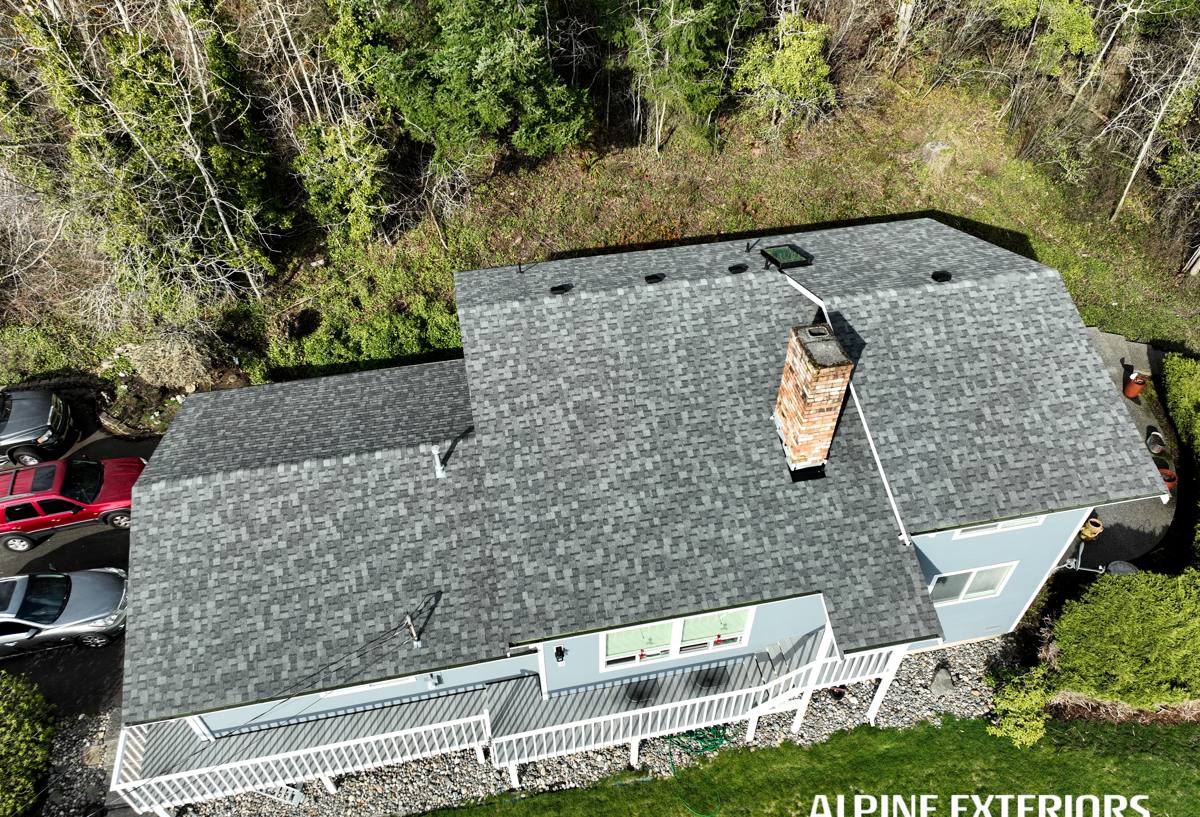
What This Climate Does to a Deck
Moss and Algae
Whatcom County has a long moss season, and shaded, wooded lots make it longer still. Moss doesn't just look bad — it holds moisture against the decking surface, which is exactly what wood and even some composite products don't want. Left alone, moss-covered boards stay damp for days after a rain instead of drying out in a few hours, and that constant moisture is what eventually leads to soft spots, rot at fastener holes, and a slick, unsafe walking surface.
Driving Rain
Storms off the water bring rain that comes in sideways, not straight down. That matters at every point where the deck meets the house — the ledger board, any rim joist flashing, and door thresholds. A deck that's fine in a light, vertical rain can still take on water at these joints during a wind-driven storm if the flashing details weren't done right the first time.
Salt Air
Proximity to Puget Sound and Bellingham Bay means a steady amount of salt in the air across this part of Whatcom County. Salt speeds up corrosion on anything metal — fasteners, joist hangers, railing hardware. Standard hardware-store screws that would last for years inland can start showing rust streaks and weakening within a few seasons out here.
Ledger Attachment and Flashing
The ledger board — the board that attaches the deck framing to the house — is where the majority of deck failures we see actually start. It's also the single most important detail to get right, and it's completely hidden once the deck is finished, so it's easy for a rushed job to cut corners here without an owner ever knowing until years later.
A correct ledger installation includes proper flashing (typically metal flashing under the house's weather barrier and a second layer over the ledger itself) so that water is shed away from the house rather than channeled behind the siding. Lag bolts or structural screws need to hit solid framing, not just sheathing, and be spaced and sized to code for the deck's actual load. On a wooded, shaded lot where wood stays damp longer, we also pay closer attention to the gap and flashing detail between the ledger and the siding so water has somewhere to go instead of sitting against the house.
Footings, Framing, and Drainage
Wooded lots often have less consistent soil than open, graded lots — tree roots, organic material, and variable drainage are all common. Footings need to go below the frost depth and bear on solid, undisturbed soil, not on loose fill or root mass that will shift over time. We also grade and slope the ground under the deck itself so water drains away rather than pooling underneath, which matters more here than on a sunnier lot because shaded ground under a deck dries out very slowly on its own.
Framing lumber should be rated for ground contact where it's close to grade, and any cut ends or drilled holes need to be re-sealed on site — a factory-treated board that gets cut in the field has bare wood exposed at that cut unless it's treated again.
Choosing the Right Decking Material
There's no single "best" decking material — it's a real trade-off between upfront cost, appearance, and how much upkeep you're willing to do. In a shaded, moss-prone setting like Sudden Valley, moisture behavior matters more than it would on a dry, sunny lot, so we walk through this honestly with every homeowner rather than defaulting to whatever's easiest to install.
| Material | Upfront Cost | Moisture & Moss Behavior | Maintenance | Typical Lifespan |
|---|---|---|---|---|
| Pressure-treated lumber | Lowest | Can hold moisture and grow moss if not cleaned; prone to checking and warping over time | Annual cleaning, periodic sealing/staining | 10–15 years |
| Cedar | Moderate | Naturally rot-resistant but still needs to dry out between rains; shaded areas are harder on it | Regular cleaning and re-staining to keep its color and protect the surface | 15–20 years |
| Composite (capped) | Higher | Doesn't absorb water like wood, but debris and moss can still sit on the surface if not cleaned | Periodic washing; no staining or sealing | 25–30 years |
| PVC decking | Highest | Fully moisture-resistant surface; best option for consistently shaded, damp areas | Occasional washing | 25–30+ years |
For a lot that stays shaded and damp most of the year, we generally steer homeowners toward composite or PVC decking, or if they want real wood, cedar over pressure-treated pine for the visible decking surface. Wood isn't a bad choice — it just asks for more consistent maintenance in a climate like this one, and that's worth knowing before you commit to it, not after.
Fasteners, Hardware, and Code Requirements
Given the salt air off the Sound, we use hot-dip galvanized or stainless steel fasteners and joist hangers rather than standard coated screws, particularly for anything structural or close to grade. It costs a little more up front and saves you from rust streaks and weakened connections a few years down the road.
Whatcom County follows the Washington State amendments to the International Residential Code for deck construction, which cover footing depth, ledger attachment, guardrail height (36 inches minimum for most residential decks), baluster spacing, and stair rise/run requirements. Most new decks and significant deck replacements require a permit and inspection. We handle the permit application and schedule inspections as part of the job, so you're not the one tracking down county paperwork.
How We Build Your Deck
- Site visit — we look at your lot's grade, tree cover, sun exposure, and how the deck will tie into the house before recommending anything.
- Design and material selection — we walk through decking, railing, and fastener options with honest trade-offs, not just the cheapest or easiest option to install.
- Permit and engineering — we submit the permit application to Whatcom County and handle any structural details required for approval.
- Footings and framing — footings set below frost depth, framing graded for proper drainage underneath.
- Ledger, flashing, and decking installation — the parts that matter most for keeping water out of your house and off your framing.
- Railings and finishing details — code-compliant guardrails and stairs, hardware checked and tightened.
- Final walkthrough and inspection — we go over the finished deck with you and coordinate the county inspection.
Keeping a Sudden Valley Deck Looking Good
A well-built deck in this climate still needs a little seasonal attention — that's true of any decking material, not just wood. Here's what actually keeps a deck in good shape on a shaded, wooded lot:
- Sweep leaves, needles, and debris off the deck regularly, especially in fall — trapped debris holds moisture against the surface longer than open rain does.
- Wash the deck surface once or twice a year to remove moss and algae before it gets established, rather than after it's visible and slick.
- Check and re-seal any cut or drilled wood surfaces (like where hardware was added later) that weren't factory-treated.
- Keep gutters and downspouts near the deck clear so roof runoff isn't dumping extra water onto or near the structure.
- Look underneath the deck once a year for standing water, soft framing, or rust on hardware — problems here are far easier to catch early than after they've spread.
- Trim back overhanging branches where practical to let more light and air reach the deck surface.
Why Hire a Crew That Already Works in Sudden Valley
Building a deck that holds up in a shaded, wooded, moisture-heavy setting isn't complicated, but it does take getting the details right the first time — the flashing behind the siding, the fastener grade, the footing depth, the drainage under the structure. Skip any one of those and the deck can look fine for a few years while a problem quietly builds underneath. A crew that's already built and repaired decks in Sudden Valley and similar Whatcom County neighborhoods has seen how these lots behave over multiple wet seasons, not just on install day, and that experience shows up in the choices we make before the first board goes down.
If you're planning a new deck or need to replace one that's showing its age, we're happy to come out, look at your lot, and give you a straight, no-pressure estimate — just fill out the form below.