 Ferndale
 Blaine's Coastal Climate Is Rough on Decks
Blaine sits right on the water near the Canadian border, and that location comes with a specific set of problems for anything built outdoors. Salt-laden air off the Salish Sea accelerates corrosion on fasteners, hardware, and metal connectors faster than it happens a few miles inland. Add Whatcom County's long, wet winters — driving rain that gets pushed sideways by wind, plus months of low sun angle that keeps shaded decking damp — and you get a climate that's genuinely harder on a deck than most of the country deals with.
Moss and algae aren't cosmetic problems here — they're moisture problems. A deck surface that stays damp for weeks at a time because it's shaded or doesn't drain well will grow a slick green film that's a slip hazard and, over time, breaks down wood fiber and traps moisture against fasteners. We see this pattern constantly on decks in and around Blaine: framing that's structurally fine but decking, ledger connections, or hardware that failed years before it should have because the original build wasn't set up for this specific climate.
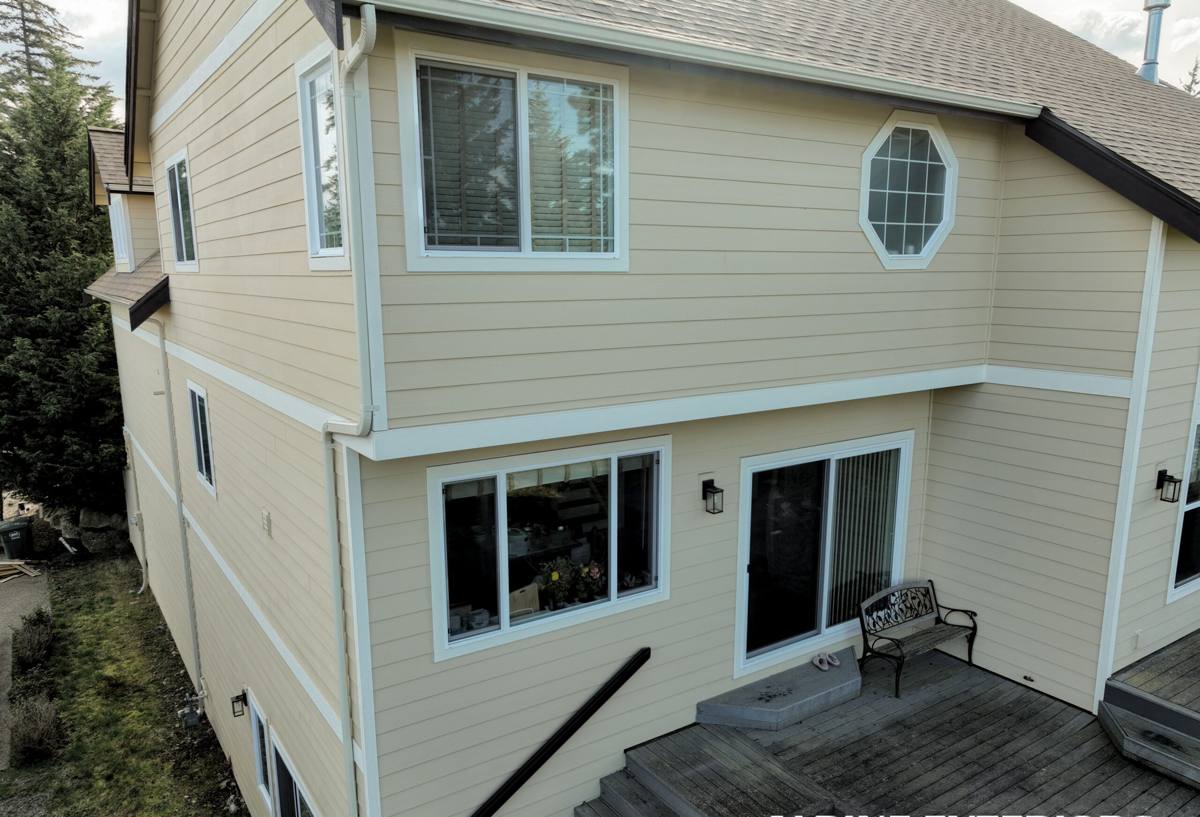
Repair or Replace? Reading the Signs
Not every tired-looking deck needs a full tear-off. But in a salt-air, high-moisture environment, problems that look surface-level often aren't. Here's what we check before recommending replacement over repair:
- Soft or spongy spots in the decking or near the ledger board — usually means moisture has already reached the framing underneath
- Rust streaking around fasteners or post bases — a sign standard hardware is corroding, not just staining
- Visible gaps, cupping, or splitting boards across a large portion of the deck rather than one or two boards
- A ledger board attachment with no visible flashing, or flashing that's failed — this is the single most common source of hidden rot we find
- Persistent moss or black algae staining that comes back within a season of cleaning
- Posts or footings that show movement, or a deck that feels different underfoot than it used to
If the framing and structure are sound, we'll say so — a resurface with better decking and hardware can extend a deck's life for a fraction of the cost of a rebuild. If the ledger connection or framing has taken on water, replacement is the honest recommendation, because covering rot with new boards just hides the problem for another year or two.
What a Correct Deck Replacement Actually Involves
Structure First
The parts of a deck nobody sees are the parts that matter most in this climate. That means footings set to proper depth and bearing, joists sized and spaced for the actual span and load, and — critically for Blaine — a ledger board attachment that's properly flashed and sealed where it meets the house. A poorly flashed ledger is the number one cause of hidden rot we run into on rebuilds, because water finds that seam and works behind it for years before anything shows on the surface.
Fasteners and Hardware
This is where salt air punishes cheap choices. Standard galvanized fasteners can start showing corrosion within a few years this close to the water. We use stainless steel or heavy-duty coated fasteners rated for coastal and treated-lumber exposure, along with corrosion-resistant joist hangers and post hardware. It costs more up front than builder-grade hardware, but it's the difference between a deck that holds up and one that needs hardware repairs in five years.
Drainage and Airflow
Proper board spacing, ventilation underneath the deck, and grading that moves water away from posts and footings all matter more here than in a drier climate. A deck that can't shed water and dry out between storms is a deck that stays wet, which is exactly what feeds moss growth and accelerates wood decay.
Choosing a Decking Material for This Climate
There's no single "best" decking material — it depends on your budget, how much maintenance you're willing to do, and how much sun or shade your deck gets. Here's how the common options actually perform in a Blaine-type environment:
| Material | Moisture & Salt Air Behavior | Maintenance | Typical Lifespan |
|---|---|---|---|
| Pressure-treated lumber | Good if properly sealed and re-sealed; end grain and fastener holes are the weak points | Annual cleaning, re-sealing every 1-2 years | 10-15 years |
| Cedar | Naturally rot-resistant but softer surface; shows weathering faster in constant damp/shade | Regular sealing or staining to hold color and resist moisture | 15-20 years |
| Composite decking | Doesn't absorb water or rot; performs very well in salt air and shade | Periodic washing; no sealing or staining required | 25-30+ years |
| Tropical hardwood (e.g. ipe) | Extremely dense and rot-resistant, handles moisture well | Oiling recommended to maintain color; low structural maintenance | 25+ years |
For decks that sit in shade for much of the day or take direct exposure off the water, we lean toward composite or well-sealed cedar over bare pressure-treated boards, simply because they hold up better against the moss and moisture cycle. That said, plenty of homeowners are happy with treated lumber if they're willing to keep up with sealing — it's a legitimate choice, just one with more upkeep.
Why We're Careful About Certain Wood Species and Fastener Combinations
One detail that catches a lot of homeowners off guard: some wood preservative treatments react with certain metals, accelerating corrosion in fasteners and hardware that aren't rated for that specific combination. This isn't a knock on any particular product — it's just a chemistry reality that matters more in a humid, salt-air environment where corrosion already has a head start. We match fastener and hardware ratings to the decking and framing material we're using, every time, rather than defaulting to whatever's cheapest. It's a small line-item difference in cost and a large difference in how the deck ages.
Our Deck Replacement Process
- On-site assessment — we inspect the existing deck, ledger connection, footings, and framing to determine what's actually salvageable versus what needs to come out.
- Honest scope and estimate — you get a clear breakdown of what's structural, what's material selection, and what's optional, with straightforward pricing.
- Permitting — most deck replacements in Whatcom County require a permit, especially when footings, framing, or guardrail height are involved. We handle this as part of the job.
- Demo and structural rebuild — old decking, and any compromised framing or footings, come out; new structure goes in built to current code and to this climate.
- Decking, railing, and hardware installation — using the material and fastener combination that fits your budget and exposure.
- Final walkthrough — we go over the finished deck with you, including any maintenance recommendations specific to the material you chose.
Permits and Code in Whatcom County
Deck replacement isn't always a simple swap-the-boards job from a permitting standpoint. If footings, framing, ledger attachment, or guardrail height are changing — which is common once a deck is old enough to need full replacement — a permit is typically required. Guardrail height, baluster spacing, and stair specifications also get checked against current code, which may differ from what was allowed when an older deck was originally built. We handle the permit process as part of the job so you're not the one tracking down inspections.
Maintenance Checklist for a New Deck in a Coastal Climate
- Rinse or sweep off standing debris and organic buildup regularly, especially in shaded areas prone to moss
- Check the ledger flashing area annually for any sign of water intrusion
- Re-seal or re-stain wood decking on the schedule recommended for the specific product used
- Inspect fasteners and hardware periodically for early rust or loosening, particularly after winter storm seasons
- Keep gutters and downspouts clear so runoff isn't dumping extra water onto or near the deck structure
- Trim back vegetation that's shading the deck and keeping it from drying out between rain events
Why It Matters That We Already Work in Blaine
A crew that mostly builds decks in drier inland climates will often spec a deck the same way regardless of where it sits — standard hardware, standard flashing details, whatever decking is cheapest to source. That approach doesn't hold up a few blocks from the water. Working regularly in Blaine and across Whatcom County means we've already seen which fastener and hardware combinations hold up to the salt air here, which decking materials actually shed moisture in a shaded, moss-prone yard, and which flashing details keep a ledger board dry through a real coastal winter. That's not a marketing point — it's the difference between a deck that needs attention again in five years and one that doesn't.
If your deck in Blaine is showing its age — soft spots, rust streaks, stubborn moss, or just years of wear from the salt air and rain — we're happy to come take a look. A free, no-pressure estimate gets you a straight answer on whether you need a repair or a full replacement, and what that would actually involve. The form below is the easiest way to get started.