 Ferndale
 Decks Around Nooksack Take a Different Kind of Beating
A deck in the Nooksack area doesn't fail the way a deck in a dry climate fails. Out here, close to Ferndale and the rest of Whatcom County, the damage is almost always driven by moisture that never really goes away. Salt-tinged air moving in off the Puget Sound region speeds up corrosion on fasteners and hardware. Driving rain off the water finds every gap in flashing and every unsealed end-cut. And on lots with tree cover or northern exposure, a long moss season keeps decking boards damp for weeks at a stretch, which is exactly the condition wood rot and fungal decay need to take hold.
None of that means a deck can't last here — plenty do, for decades. It means the details that get skipped in a fair-weather climate can't be skipped here: proper flashing where the deck meets the house, hardware rated for wet and salt-exposed conditions, and decking material chosen with this specific climate in mind rather than picked off a showroom floor. When those details are handled correctly the first time, a deck replacement in this area holds up. When they're not, homeowners end up replacing boards — or the whole structure — years before they should have to.
Signs Your Deck Has Reached the End of Its Life
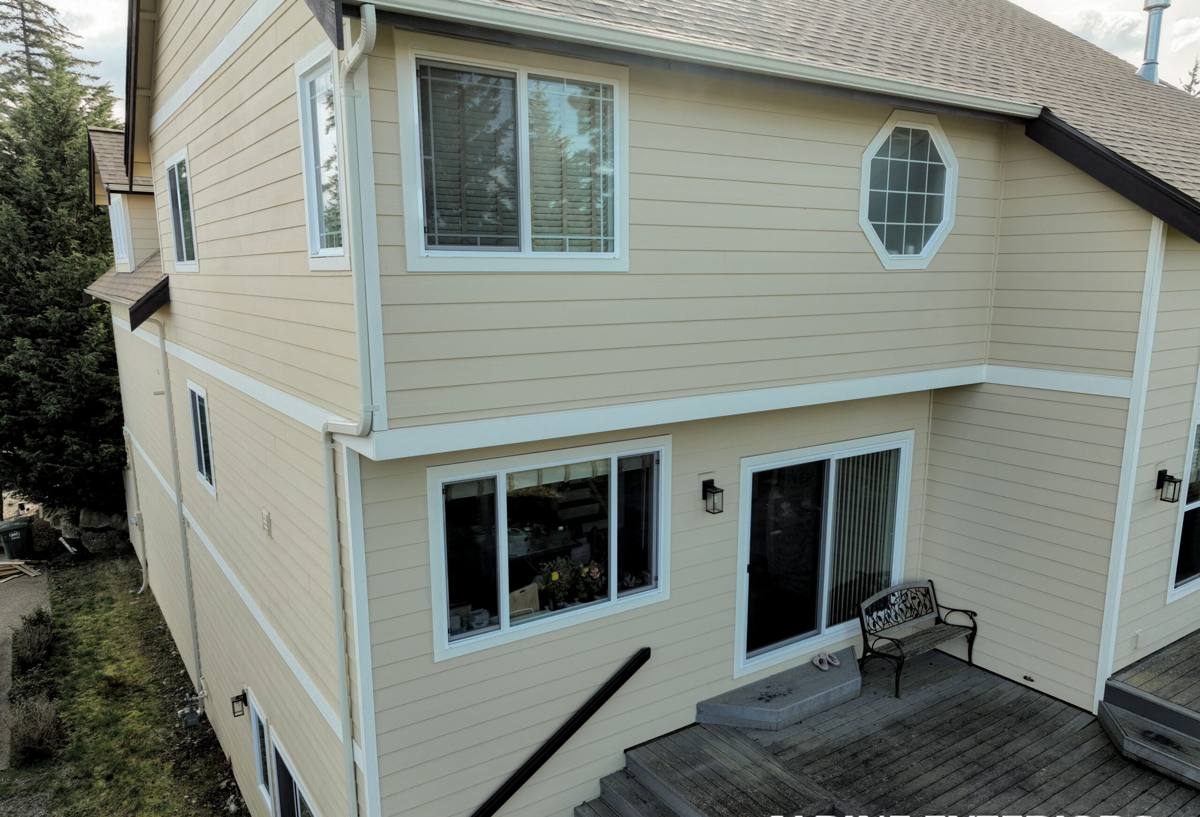
Not every tired-looking deck needs full replacement — sometimes a repair is the honest answer. But there's a point where patching stops making sense and a full rebuild is the more cost-effective, safer path. Common signs we see on Nooksack-area homes include:
- Soft, spongy spots in the decking boards, especially near the house or in shaded corners
- Rot or dark staining at the ledger board where the deck attaches to the house
- Rusted, bleeding, or loose fasteners — a strong sign moisture has been sitting against the hardware for a long time
- Noticeable bounce, sway, or movement when you walk across the deck
- Widening gaps between boards, cupping, or splintering that catches on bare feet
- Persistent moss or algae film that comes back within weeks of cleaning
- Wobbly railings or posts that have separated from the framing
Any one of these on its own might be a repair. Several at once, or anything involving the ledger board or main support posts, usually means the structure itself has been compromised and a repair would just be delaying the inevitable.
What a Correct Deck Replacement Actually Involves
Tear-Out and an Honest Structural Look
A real replacement starts with removing the old decking and railing down to the framing, then actually inspecting what's underneath — not assuming it's fine because it was hidden. This is where hidden rot at the ledger board, undersized joists, or footings that were never adequate in the first place get found. Skipping this step and just laying new boards over old framing is how a deck ends up needing to be redone again in a few years.
Ledger Board and Flashing
The ledger board — the piece that ties the deck to your house — is the single most common failure point on older decks in wet climates like this one. If it wasn't properly flashed when installed, water gets behind it and rots both the ledger and the rim joist of the house it's attached to. A correct replacement means new flashing, proper fastening, and a gap or drainage path so water sheds away from the house rather than pooling against it.
Framing, Footings, and Joist Layout
Joist spacing needs to match the decking material you're installing — composite and PVC boards generally need tighter spacing than solid wood to avoid flexing between supports. Footings need to sit below frost depth and bear on undisturbed soil, which matters on lots with the kind of persistently damp, sometimes soft ground you get around here after a wet winter.
Fasteners and Hardware
This is where a lot of decks quietly fail years down the road. Standard fasteners corrode faster in salt-influenced air and constant moisture. We use stainless steel or coated fasteners and connectors rated for exterior, wet-climate use, along with joist hangers and post bases sized correctly for the load — not just whatever was on the shelf.
Decking Material Options for This Climate
There's no single "best" decking material — there's a best material for your budget, your maintenance appetite, and how much sun or shade your deck gets. Here's how the common options actually behave in a wet, moss-prone climate:
| Material | Moisture Behavior | Maintenance | Honest Trade-Off |
|---|---|---|---|
| Pressure-treated wood | Resists rot when sealed and maintained; absorbs water if finish fails | Needs cleaning and resealing every 1-2 years, more often in shade | Lowest upfront cost, but the most maintenance-dependent option here |
| Cedar | Naturally rot-resistant but still needs a sealed finish in this climate | Similar to treated wood — regular cleaning and finish upkeep | Better look and feel than treated lumber, similar maintenance burden |
| Composite decking | Doesn't absorb water or rot, but can hold surface moisture and grow moss/algae film in shaded, damp spots | Periodic washing to keep moss and mildew from taking hold on the surface | Higher upfront cost, far less structural maintenance over time |
| Capped PVC decking | Fully moisture-sealed surface, best resistance to staining and moss growth | Lowest maintenance of the group — occasional rinsing | Highest upfront cost; some homeowners prefer the appearance of wood or standard composite |
For lots with heavy shade or tree cover — common on properties with a long moss season — we lean toward recommending composite or capped PVC simply because they hold up better against the constant damp without demanding a maintenance schedule most homeowners won't keep up with. For sunnier, more open lots, wood remains a solid, honest choice as long as the homeowner is realistic about the upkeep.
Railings and Hardware Choices That Matter Here
Railings take a lot of the same abuse as decking — more, in some ways, since vertical wood posts trap moisture at the base longer than a horizontal board that can dry out. We pay particular attention to post bases (elevated off the deck surface rather than buried in concrete, which traps water against the wood), and we use fasteners and brackets rated for the same wet, salt-influenced exposure as the rest of the structure. Composite and metal railing systems are worth considering in the shadiest, dampest spots on a property for the same reason composite decking makes sense there — less maintenance, less risk of quiet rot at the post base where nobody's looking.
Our Deck Replacement Process
- Free on-site estimate — we walk the existing deck, check the framing where we can access it, and talk through material options for your specific lot and sun/shade exposure
- Written scope and price before any work starts, including what's being torn out and what's being rebuilt
- Permitting handled as required for your project and jurisdiction
- Full tear-out and structural inspection of framing, ledger board, and footings
- Repair or rebuild of any framing, flashing, or footings that don't meet current standards
- Decking, railing, and stair installation with corrosion-resistant fasteners throughout
- Site cleanup and a final walkthrough so you know exactly what was done and how to maintain it
Why a Crew That Already Works Around Nooksack and Ferndale Matters
A lot of deck problems in this part of Whatcom County trace back to a crew that built or repaired the deck without accounting for local conditions — no proper ledger flashing, standard fasteners instead of corrosion-resistant hardware, or decking chosen without thinking about how much shade and moss it would deal with. A crew that regularly works this specific area already knows which details can't be skipped, has a feel for how the local rain and drainage patterns affect footings and grading, and understands the permitting process for this jurisdiction without it becoming a delay. That local familiarity shows up in fewer surprises during the project and a deck that's actually built for where it sits.
What It Typically Costs
Every deck is different, so treat any number as a starting point for a conversation rather than a quote. The biggest cost drivers we see on replacement projects in this area:
| Factor | Why It Moves the Price |
|---|---|
| Deck size and footprint | More square footage means more decking, framing, and labor |
| Decking material | Treated wood costs less upfront than composite or capped PVC; those cost more but need far less upkeep |
| Structural condition underneath | Rotted ledger boards, undersized framing, or inadequate footings add repair scope you often can't see until tear-out |
| Height and stairs | Elevated decks with stairs and taller railings require more framing, hardware, and labor than a low, ground-level deck |
| Railing style | Composite, metal, or cable railing systems cost more than basic wood balusters |
As a rough guide, many full deck replacements in this size range fall somewhere in the low-to-mid five figures, with the exact number depending heavily on material choice and how much of the substructure needs to be rebuilt. We'll give you real numbers once we've actually seen the deck and the framing underneath it — not a guess based on square footage alone.
Keeping Your New Deck in Good Shape
A well-built deck in this climate still needs some basic upkeep to get its full lifespan. A short annual routine goes a long way:
- Sweep off leaves and debris regularly, especially in fall — trapped debris holds moisture against the boards
- Wash off moss and algae film as soon as you notice it, rather than letting it establish
- Check fasteners and railing connections once a year for looseness or early rust staining
- Keep nearby gutters clear so overflow doesn't drain directly onto the deck surface
- Trim back overhanging branches and vegetation to cut down on shade and debris buildup
- Reseal wood decking on the manufacturer's recommended schedule — don't wait until it looks dry and gray
- Check the ledger board area at the house connection periodically for any staining or soft spots
If you're weighing whether your current deck needs a repair or a full replacement, or you're ready to plan a rebuild that's actually built for Nooksack and Ferndale conditions, we're glad to take a look. Reach out for a free, no-pressure estimate using the form below.