 Ferndale
 Why Everson Roofs Wear Differently in Whatcom County
Everson sits inland from the Ferndale coastline, but it doesn't escape the weather pattern that defines roofing work across Whatcom County. Long stretches of driving rain move through in fall and winter, humidity stays high most of the year, and shaded or tree-lined lots hold moisture on the roof deck far longer than an open, sunny property would. Add in the salt-laden air that drifts inland off Bellingham Bay during storm systems, and you get a climate that's genuinely hard on roofing materials — not through one dramatic event, but through slow, cumulative exposure year after year.
The practical result: shingles age faster here than manufacturer literature written for drier climates suggests, moss and moss-stain get a foothold on north-facing slopes and shaded valleys, and fasteners and flashing metal see more corrosion pressure over a 20-25 year roof life. None of that means Everson homes need exotic solutions. It means the details — ventilation, underlayment choice, flashing work, and moss management — matter more here than in most parts of the country, and cutting corners on any of them shows up as a leak or a premature failure within a handful of years instead of decades.
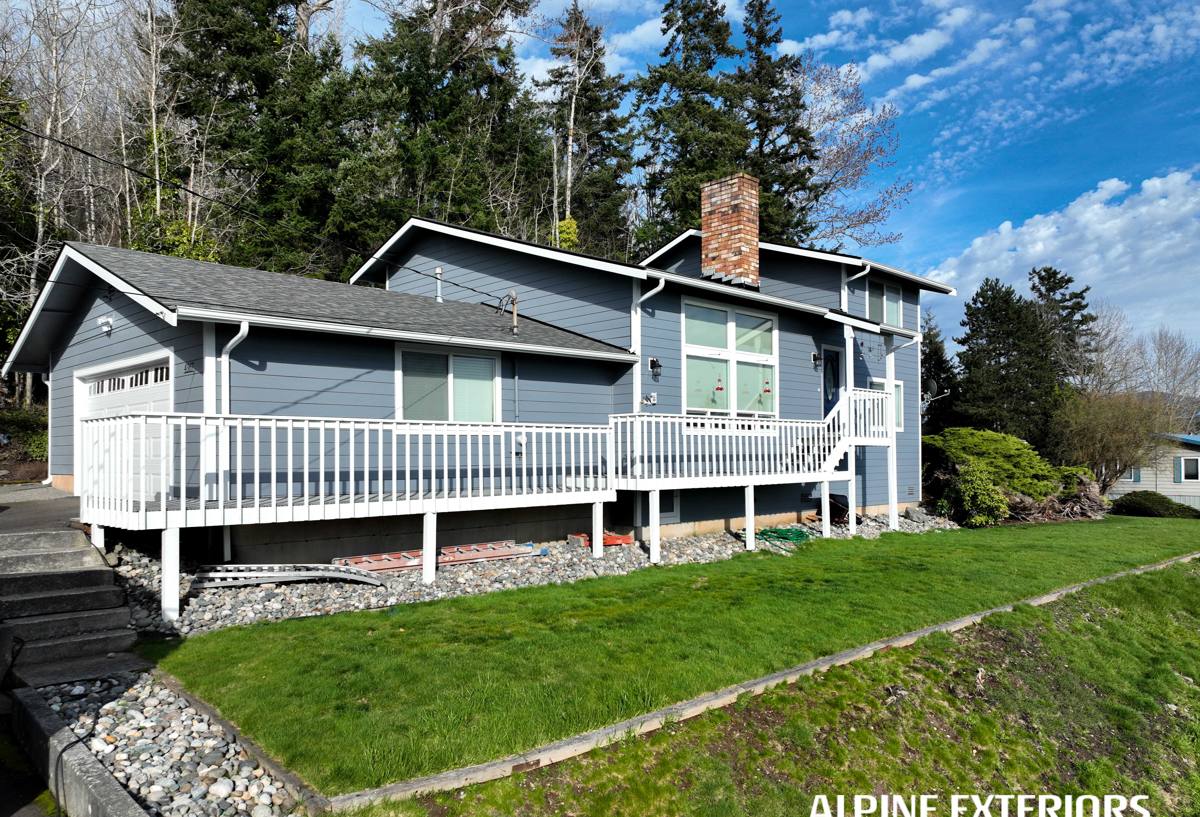
Signs an Everson Roof Needs Replacement, Not Another Repair
Most homeowners call us after noticing one obvious problem — a stain on a ceiling, a handful of missing shingles after a windstorm, moss creeping up from the eaves. The real question is whether that's an isolated repair or a sign the whole roof is past its useful life. A few honest indicators:
- Granules collecting in gutters or downspouts in noticeable amounts, not just a light dusting
- Shingles that are cupping, curling at the edges, or cracking when walked on
- Soft or spongy spots underfoot, which usually mean the decking underneath has taken on moisture
- Daylight visible through the roof deck from inside the attic
- Moss that keeps returning within a season or two of cleaning, especially on north- or east-facing slopes
- A roof that's 20+ years old and has already had two or more repair visits in the last five years
One or two of these on a roof that's otherwise sound often points to a targeted repair. Several at once, or an older roof with recurring problems, is usually a sign that continued patching is throwing money at a system that's reached the end of its service life. We'll tell you honestly which situation you're in — there's no upside for us in replacing a roof that has a few more good years left in it.
What a Correct Roof Replacement Actually Involves
"Roof replacement" gets used loosely in this trade, and the difference between a correct job and a shortcut job usually isn't visible from the ground once the shingles are down. A full replacement, done right, includes:
- Complete tear-off of the old roofing down to the deck — never a layover on top of existing shingles, which traps moisture and voids most manufacturer warranties
- Deck inspection and repair, replacing any plywood or OSB that's soft, delaminated, or water-damaged before anything new goes down
- Ice-and-water shield at eaves, valleys, and around penetrations — the areas most exposed to wind-driven rain and ice damming
- Synthetic underlayment across the full deck as the primary moisture barrier beneath the shingles
- New flashing at chimneys, skylights, sidewalls, and any roof-to-wall transitions, rather than reusing old flashing that's already corroding
- Balanced ventilation — intake at the soffits, exhaust at the ridge — sized correctly for the attic space
- Proper fastening and nail placement per manufacturer specification, which affects both wind rating and warranty validity
Skipping any one of these doesn't necessarily cause a problem in year one. It shows up in year six or seven, as a leak at a valley, premature shingle failure from trapped attic moisture, or a warranty claim that gets denied because the installation didn't meet the manufacturer's requirements. We build every replacement around this full scope, not the visible shingle layer alone.
Roofing Materials: What Actually Holds Up Here
There's no single "best" roofing material for every Everson home — it depends on budget, roof pitch, and how much moss and moisture exposure the property gets. Here's how the common options compare for this climate specifically:
| Material | Typical Lifespan Here | Moss/Moisture Behavior | Relative Cost |
|---|---|---|---|
| 3-tab asphalt shingle | 15-20 years | Lower moss resistance; algae-streaking common without treated granules | Lowest |
| Architectural (dimensional) asphalt shingle | 25-30 years | Better moisture shedding; algae-resistant granule options widely available | Moderate |
| Standing-seam metal | 40-50+ years | Sheds moss and moisture well due to smooth surface; minimal debris hold | Highest |
| Composite/synthetic shake | 30-40 years | Good moisture resistance; performance varies more by manufacturer | High |
For most Everson homes, architectural asphalt shingle with algae-resistant granules is the practical middle ground — meaningfully better moss and weather resistance than 3-tab at a cost that doesn't jump into metal-roof territory. Metal earns its price on steeper-pitch homes or properties with heavy tree cover where moss and needle buildup are a constant fight. We'll walk through the honest trade-offs for your specific roof rather than steering everyone toward the same product.
Ventilation and Moss: The Details That Determine How Long the Roof Lasts
Why Ventilation Matters as Much as the Shingles
An underventilated attic traps warm, moist air against the underside of the roof deck. In a climate as damp as Whatcom County's, that trapped moisture accelerates deck rot from the inside and can cause shingles to fail years ahead of schedule — regardless of how good the shingle itself is. Correct ventilation balances soffit intake with ridge exhaust so air actually moves through the attic space instead of stagnating. This is one of the most commonly skipped steps in budget roof replacements, because it's invisible once the job is done and doesn't affect how the roof looks from the street.
Moss Control Without Damaging the Roof
Moss on a roof isn't just cosmetic — established moss holds moisture against the shingle surface and can lift edges over time, giving wind-driven rain a place to get underneath. The right approach is prevention: algae-resistant shingles, zinc or copper strips near the ridge on shaded roofs, and periodic gentle cleaning rather than pressure-washing, which strips protective granules and shortens shingle life. If a roof already has heavy moss growth, that's often a sign the roof has been carrying excess moisture for a while — worth a closer look before assuming a simple cleaning will solve it.
Our Process, Start to Finish
Inspection and Estimate
We start with a full roof and attic inspection — not just a look from the ground — to check deck condition, ventilation, flashing, and the actual cause of any current problems. You get a written estimate that spells out materials, scope, and price, with no vague allowances that turn into change orders later.
Tear-Off and Deck Assessment
We remove the existing roofing completely and inspect the deck before installing anything new. If we find soft or damaged sheathing, we'll show you before replacing it — this is the one part of a roof job where surprises are common, and we'd rather you see it firsthand than take our word for it.
Installation
Underlayment, flashing, ventilation, and shingles go in per manufacturer specification, in the sequence that keeps water moving out and away at every layer. We work full days when weather allows and won't leave a deck exposed overnight without protection if rain moves in mid-project.
Final Walkthrough and Cleanup
We walk the finished roof and the property with you, magnet-sweep for stray nails, and confirm everything matches the estimate before calling the job done.
What to Ask Before You Hire Anyone for This Job
Roofing draws its share of storm-chasing crews who show up after a bad windstorm and disappear once the check clears. A few questions separate a legitimate local contractor from a risk:
- Are you licensed and bonded to do roofing work in Washington State, and can you provide the license number?
- Is your crew covered by liability insurance and workers' comp — can you provide a certificate?
- Is the estimate itemized (materials, labor, disposal, permit) or a single lump number?
- Does the quote specify the exact shingle brand and product line, not just "architectural shingle"?
- What's the manufacturer's material warranty versus your workmanship warranty, and what voids each?
- Do you pull the permit yourselves, or is that left to the homeowner?
- Can you provide references from roofing jobs in this area within the last year or two?
If a contractor is vague or evasive on any of these, treat that as useful information.
Why Local Experience in Everson Matters
A crew that already works this part of Whatcom County knows the practical stuff that doesn't show up in a generic estimate: how local building department permitting and inspection scheduling actually work, which weather windows are realistic for tear-off timing given fall and winter rain patterns, and how moss and moisture behave differently on a shaded, tree-lined Everson lot compared to an open, sun-exposed roof closer to the coast. That local pattern-recognition is what keeps a job from turning into a scramble when the forecast changes mid-project, and it's part of why we build every schedule with rain contingency in mind rather than hoping the weather cooperates.
If your roof is showing its age or you just want an honest read on how much life it has left, we're glad to take a look. Reach out below for a free, no-pressure estimate — no obligation, and no pressure to replace anything that doesn't need it yet.