 Ferndale
 Siding Installation for Homes Near Everson
Everson sits inland from Ferndale along the Nooksack River, but "inland" in Whatcom County doesn't mean sheltered. Homes here still take on marine moisture pushed in off Bellingham Bay and the Strait of Georgia, plus the driving rain that rolls through the lowlands most of the fall and winter. Add in a moss and mildew season that can run eight months out of the year on shaded north- and east-facing walls, and you've got a climate that is genuinely hard on exterior siding — regardless of what brand name is on it. We install siding for homeowners throughout this stretch of the county, and the calls we get from Everson follow a pattern: siding that looked fine for a decade and then failed fast, usually starting at a corner, a butt joint, or a spot where two systems meet.
This page is about one thing — siding installation done correctly for a home in this specific area — not a general overview of every siding option on the market. If you want the broader product comparison, that's covered elsewhere on our site. Here we're talking about what actually needs to happen when a crew shows up at your house in or near Everson to re-side it.
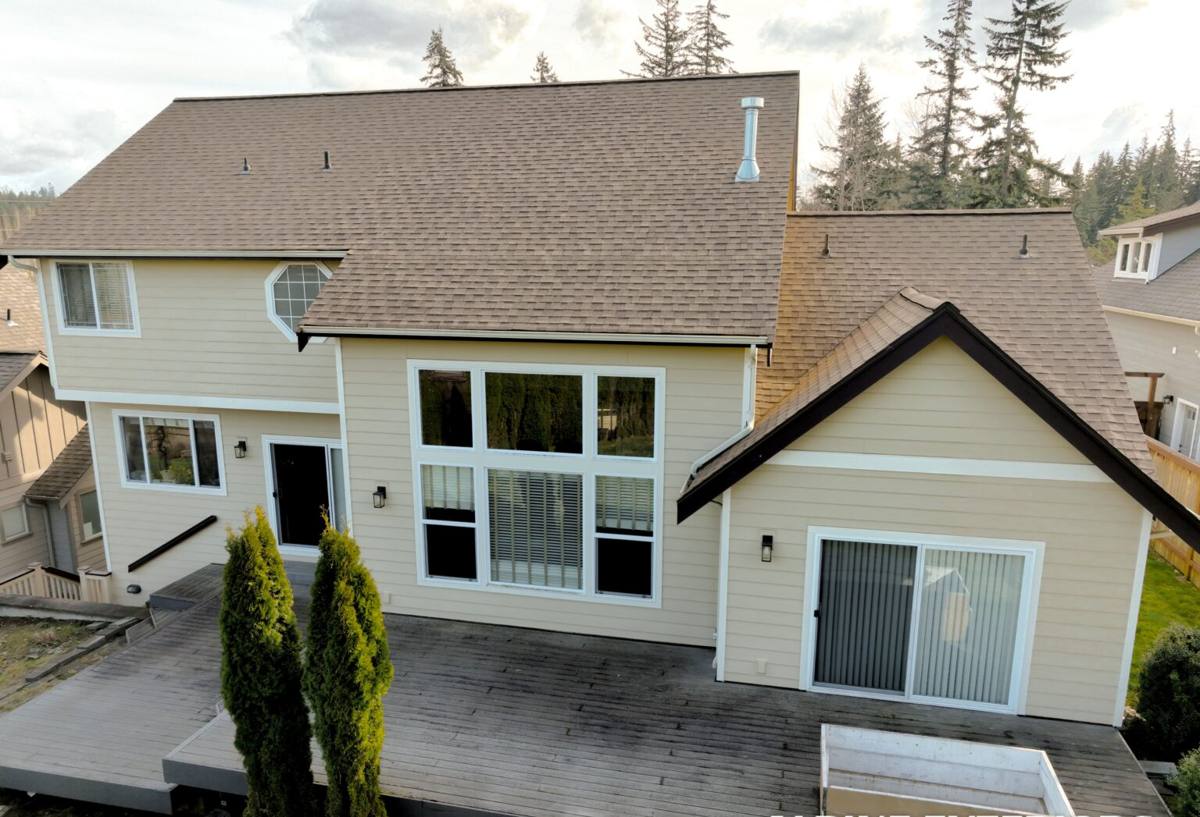
What This Climate Actually Does to Siding
Three things drive nearly every siding failure we see out here, and they compound each other:
- Salt-influenced moisture: Even away from the immediate waterfront, salt-laden air moving inland accelerates corrosion of fasteners, trim flashing, and any metal components in a siding system, and it changes how coatings weather over time.
- Driving rain: Whatcom County's weather doesn't just fall straight down — wind-driven rain gets pushed sideways into wall assemblies, which means water intrusion at seams, laps, and penetrations is a much bigger risk here than it would be in a drier, calmer climate.
- Extended moss and mildew season: Shaded, damp walls stay wet longer between dry spells. Any siding product that holds moisture, or that has a paint film prone to trapping it, will show biological growth and coating breakdown faster here than the manufacturer's marketing photos suggest.
None of this is unique to Everson — it's true across Whatcom County — but Everson's mix of tree cover, river-bottom humidity, and open farmland wind exposure means individual homes can see either problem acutely depending on their site. A house tucked against trees fights moss. A house on open ground fights wind-driven rain at every seam. Either way, the installation details matter more here than they would in a milder climate.
Why We Only Install James Hardie Fiber Cement
We made a decision as a company to install James Hardie fiber cement siding exclusively. We don't install vinyl, LP SmartSide, cedar, primed spruce, or fiber cement alternatives like Cemplank or Allura. That's not a marketing line — it's a standard we hold because of what this specific climate does to exterior materials over a 20-30 year ownership window.
Fiber cement is non-combustible, doesn't expand and contract with moisture the way wood-based products do, and holds a factory-applied finish far longer than field-applied paint on wood substrates. James Hardie specifically engineers regional product lines (their HZ5 line is built for climates like ours) and backs the material with a long transferable warranty and, when you use their ColorPlus finish, a separate finish warranty. For a homeowner near Everson dealing with salt air, driving rain, and moss for the better part of the year, that combination — a material that doesn't rot or swell, a factory finish that resists the coating breakdown we see on painted wood, and a warranty that actually accounts for real-world weathering — is why we standardized on it. We'll walk you through the honest trade-offs of other products if you ask, but we don't install them, because we don't want to hand a homeowner in this climate a product we know will need more maintenance or more repair calls in year eight than in year one.
What "Climate-Engineered" Actually Means
James Hardie's HZ5 formulation is designed for regions with more moisture cycling and freeze-thaw variability than the desert Southwest sees. In practice that means the cement formulation and the way the boards are engineered account for the wetter, wind-driven conditions common to the Pacific Northwest. It's a real distinction, not just a marketing label — but it only pays off if the installation itself is done to spec, which is the next section.
What a Correct Installation Involves
Fiber cement siding is only as good as the water management system behind it. A huge share of the siding failures we're called out to inspect in this region aren't material failures at all — they're installation failures: missed flashing, wrong fastener placement, or caulk used where flashing should have been. Here's what we make sure happens on every job:
- Weather-resistive barrier, installed correctly: A properly lapped and sealed house wrap or building paper behind the siding, with all seams taped and shingled to shed water downward.
- Flashing at every penetration and transition: Windows, doors, deck ledgers, hose bibs, and roof-to-wall intersections all need metal or self-adhered flashing — not caulk as the primary defense. In a driving-rain climate, caulk is a backup, not a strategy.
- Proper clearances: Siding held above grade, roof lines, decks, and patios per manufacturer spec, so water has somewhere to go and the bottom edge of the siding isn't sitting in standing moisture.
- Correct fastener type and placement: Corrosion-resistant fasteners, driven at the manufacturer-specified location on the board — not too high, not too low, not overdriven.
- Rain screen gap where called for: A ventilated air gap behind the siding lets moisture that does get in dry out instead of sitting against the wall sheathing — increasingly standard practice in wetter Pacific Northwest climates.
- Factory-finished field cuts sealed: Any cut edge of a ColorPlus board needs touch-up or edge sealant so the cut edge doesn't become the one unprotected spot on the wall.
Skip any one of these and you can still end up with a wall that looks great for a few years and then fails right where the shortcut was taken — usually somewhere you can't see until there's already damage behind it.
Our Process for an Everson-Area Job
1. Site Walk and Assessment
We look at your home's specific exposure — tree cover, prevailing wind and rain direction, existing moisture or moss patterns, and the condition of what's currently on the walls. A house on open ground near Everson's farmland is going to get detailed differently than one tucked into tree cover closer to the river.
2. Tear-Off and Sheathing Check
We remove the old siding and inspect the sheathing underneath. This is often where hidden moisture damage from a previous installation's shortcuts shows up. If we find soft or rotted sheathing, we address it before anything new goes up — there's no point installing a 30-year siding system over compromised wall structure.
3. Water Management Layer
House wrap, flashing, and rain screen (where applicable) go in before a single piece of siding is hung. This is the layer that actually keeps water out of your walls; the siding itself is the second line of defense.
4. James Hardie Installation
Boards, panels, or trim are installed to Hardie's published specifications and local code requirements — correct nailing, correct clearances, correct joint treatment.
5. Final Walk-Through
We review the finished work with you, including maintenance basics specific to your site (for example, whether a shaded wall will need periodic gentle cleaning to stay ahead of moss).
Cost Factors for an Everson Siding Job
Every home is different, but the same handful of factors drive the price on nearly every job we quote in this area:
| Factor | Why It Matters |
|---|---|
| Home size and wall complexity | More corners, gables, and dormers mean more cutting, flashing, and labor time. |
| Sheathing condition | Hidden rot found during tear-off adds repair work before new siding can go on. |
| Existing siding type | Removing old vinyl is different work than removing old cedar lap or stucco. |
| Product selection | Lap siding, panel siding, and shingle-profile Hardie products carry different material and install costs. |
| Trim and accent work | Detailed trim packages around windows, corners, and fascia add both material and labor. |
| Site access | Tree cover, fencing, or tight side yards near the Nooksack can slow staging and add time. |
We give you a firm, itemized quote after the site walk — not a rough phone estimate — because on a job like this, the details in that table are exactly what determine the real number.
Signs Your Current Siding Is Already Failing
If you're on the fence about whether it's time, walk your home's exterior and look for:
- Soft or spongy spots when you press on the siding, especially near the bottom courses
- Persistent dark streaking or moss growth that comes back within weeks of cleaning
- Paint that's bubbling, peeling, or chalking heavily on north- and east-facing walls
- Visible gaps at corner boards, window trim, or butt joints
- Warping, buckling, or boards that no longer sit flat against the wall
- A musty smell in interior rooms along an exterior wall — a sign moisture may already be behind the siding
Any one of these on its own might just mean a maintenance fix. Several together, especially with visible warping or soft spots, usually mean the wall assembly is already compromised and a full re-side is the honest recommendation.
Why Local Experience Matters Here
A crew that only works drier, milder markets can install James Hardie siding perfectly to the letter of the manual and still get water management wrong for a place like Everson, because the manual doesn't tell you how hard the wind drives rain into a wall on an exposed rural lot, or how fast moss establishes on a shaded gable in this particular river valley. Working Whatcom County day in and day out means we've seen where the failures actually start on homes in this specific climate, and we build the water management layer with that in mind before the first course of siding ever goes up.
If you're planning a siding project for a home in or near Everson, we're happy to come take a look, walk the exterior with you, and put together a straightforward, no-pressure estimate — no obligation, just an honest read on what your home needs.