 Ferndale
 Building a Deck That Actually Holds Up in the Fairhaven Area
A deck in this part of Whatcom County works harder than a deck almost anywhere else in the country. It sits under a marine layer that rolls in off the water, takes driving rain sideways for months at a time, and spends a good chunk of the year shaded and damp enough to grow moss on anything that isn't sloped, sealed, or ventilated properly. A deck built the way it would be built in a dry inland climate — standard fasteners, minimal flashing, tight-to-the-house framing — will show problems here in a few seasons instead of a few decades. We build decks specifically for this environment, and that shows up in details most homeowners never think to ask about until something's already gone wrong.
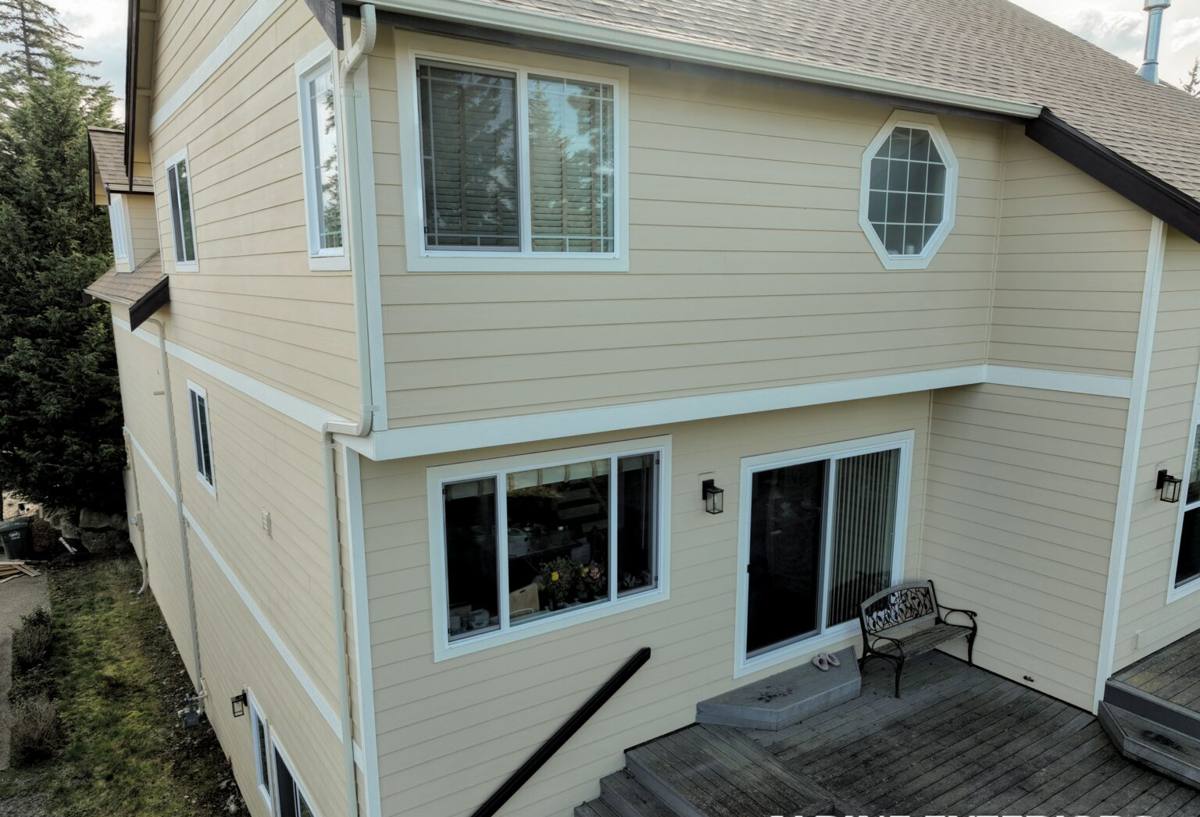
What the Local Climate Actually Does to a Deck
Salt Air and Moisture in the Air
Properties close to the water pick up airborne salt that accelerates corrosion on anything metal — fasteners, joist hangers, railing brackets, even hinges on gates and stair rails. Standard galvanized hardware can start rusting years ahead of schedule in a salt-air environment, and once a fastener corrodes inside a joist, you don't see it until the connection has already weakened.
Driving Rain
Rain here doesn't just fall — wind pushes it sideways and up under ledger boards, railing posts, and stair stringers. Any gap in flashing or any spot where water can sit instead of shed becomes a rot point. This is the single biggest cause of deck failure we see in this region, and it's almost always a framing or flashing mistake, not a decking material problem.
Moss and Algae Season
Low sun angle, shade from mature trees, and months of damp air add up to a long moss season — often eight months or more of conditions where moss and algae can establish on horizontal wood surfaces. Beyond looking bad, moss holds moisture against the deck boards and makes surfaces genuinely slick and dangerous on stairs and landings.
What a Correctly Built Deck Requires Here
None of this means a deck can't hold up beautifully in Fairhaven — it means the build has to account for these conditions from the framing stage forward, not just at the finish. A correct build for this area includes:
- Ledger board flashing that actually sheds water away from the house rim joist, not just a bead of caulk
- Joist tape or a comparable moisture barrier on top of every joist before decking goes down
- Stainless steel or heavy-duty coated fasteners and hardware rated for coastal/high-moisture exposure
- Positive drainage slope built into the frame so water runs off instead of pooling
- Adequate airflow underneath the deck so the substructure can dry out between rain events
- Footings set to the depth and bearing your local building department requires for this soil and frost line
- Decking material and gap spacing chosen to shed water and resist moss rather than trap it
Choosing a Decking Material for This Climate
There's no single "correct" decking material — it's a real trade-off between upfront cost, appearance, and how much maintenance you're willing to put in to keep moss and mildew from taking hold. Here's how the common options actually compare once you factor in our climate specifically:
| Material | How it handles moss/moisture | Maintenance | Typical lifespan here |
|---|---|---|---|
| Pressure-treated lumber | Resists rot with proper sealing; needs re-sealing to shed water well | Annual cleaning, re-sealing every 1-2 years | 10-15 years with upkeep |
| Cedar | Naturally moisture- and insect-resistant, but surface grays and can host moss if not maintained | Cleaning and re-oiling every 1-2 years | 15-20 years with upkeep |
| Composite decking | Doesn't absorb water or rot, but can still grow surface algae/moss if shaded and not cleaned | Periodic washing, no sealing needed | 25+ years, manufacturer-warrantied |
We install all three depending on the homeowner's budget and priorities. Our standard for composite is board-and-fastener systems with proper hidden-fastener spacing and drainage — installed too tight, any decking material will trap moisture underneath and defeat the whole point of choosing a low-maintenance product.
The Part of a Deck You Don't See — and Why It Matters Most
Homeowners naturally focus on the decking surface because that's what you walk on and look at. But the substructure — framing, hardware, and flashing — is what determines whether a deck lasts 10 years or 30 in this climate. We use corrosion-resistant structural connectors throughout, not just at the ledger, and we flash every point where a post, stair stringer, or ledger meets the house or ground. On homes closer to the water, we upgrade fastener specification further because standard exterior-rated hardware corrodes faster in salt air than it does even a few miles inland. It costs more up front and it's invisible once the deck is finished — but it's the difference between a deck that needs structural repair in year eight and one that doesn't.
Permits and Local Requirements
Most new decks and many substantial deck replacements in Whatcom County require a building permit, particularly for anything attached to the house, elevated above a certain height, or requiring new footings. Permit review typically checks guardrail height and baluster spacing, stair rise and run, footing depth and bearing, and ledger attachment method. We handle the permit application and inspection scheduling as part of our process so you're not the one tracking down requirements or coordinating inspector visits — we already know what the local building department expects to see on a deck submission.
Our Process for a Fairhaven-Area Deck
- On-site assessment — we look at sun exposure, drainage, proximity to water/salt air, existing structure if it's a rebuild, and how the deck will actually get used.
- Design and material selection — sized and laid out for your home, with a decking and hardware recommendation based on your budget and how much maintenance you want to take on.
- Permitting — we prepare and submit what the local jurisdiction requires and schedule inspections at the right points in the build.
- Framing and flashing — the substructure work described above, done before a single decking board goes down.
- Decking, railing, and stairs — installed to code with attention to drainage and gap spacing so the finished deck sheds water instead of holding it.
- Final walkthrough — we go over care and maintenance specific to the material you chose so moss and mildew don't get a head start.
Keeping Moss and Mildew Off a Finished Deck
Even a correctly built deck needs some seasonal attention in a climate that stays damp this much of the year. A little maintenance goes a long way toward protecting the investment:
- Sweep debris and leaves off the deck regularly, especially in fall — trapped organic matter is what moss needs to take hold
- Rinse or wash the surface a couple of times a year, more often in heavily shaded areas
- Keep gutters and downspouts clear so runoff isn't dumping extra water onto or near the deck
- Trim back overhanging branches to let more sun and airflow reach the surface
- Re-seal wood decking on the schedule appropriate to the product — don't wait until water stops beading
- Check railing hardware annually for early signs of corrosion, especially on properties closer to the water
Cost Factors to Expect
Every deck is priced around size, material, height off the ground, and site access, but a few factors tend to move the number more than homeowners expect:
| Factor | Why it affects cost |
|---|---|
| Decking material | Pressure-treated is the least expensive upfront; composite costs more but needs far less ongoing maintenance |
| Height and stairs | A deck more than a few feet off grade needs more substantial footings, framing, and guardrails |
| Site access | Sloped lots, limited equipment access, or a rebuild over an existing structure add labor time |
| Fastener and hardware spec | Upgrading to fully corrosion-resistant hardware for salt-air exposure adds cost but extends structural life |
| Permit and inspection requirements | Varies by scope — a simple ground-level deck has a lighter review than an elevated, attached deck |
We'll walk through all of this with you on-site so you know what's driving the number, not just a total at the bottom of a proposal.
Why It Matters to Hire a Crew That Already Works This Area
A contractor who builds decks all over the region, including in and around Fairhaven, already knows how this climate behaves — which fastener specs actually hold up, how the local building department reviews deck permits, and where drainage tends to cause problems on this kind of terrain. That's knowledge you don't get from a crew that mostly works somewhere drier or handles decks as a side job. We build decks in Whatcom County's marine climate every season, and we build every one of them to handle the salt air, the rain, and the moss — not just to look good on the day it's finished.
If you're planning a new deck or replacing one that's showing its age, we're happy to come take a look and put together a straightforward, no-pressure estimate. Use the form below to get started.