 Ferndale
 Fairhaven's Marine Climate and What It Asks of Exterior Siding
Fairhaven sits close to the water, and that changes the math on siding in ways that inland Whatcom County homes don't deal with. Homes here take on salt-laden air, wind-driven rain off Bellingham Bay, and a wet season that runs long enough for moss and algae to get a real foothold on north-facing walls and anything shaded by trees. Siding that would hold up fine twenty miles inland can fail early here — not because it's a bad product everywhere, but because it wasn't built for this specific combination of salt, moisture, and shade.
This is why we treat Fairhaven as its own case, not just another stop on the Ferndale Siding route. The product, the installation details, and the maintenance expectations all shift when a home is exposed to marine air on a regular basis.
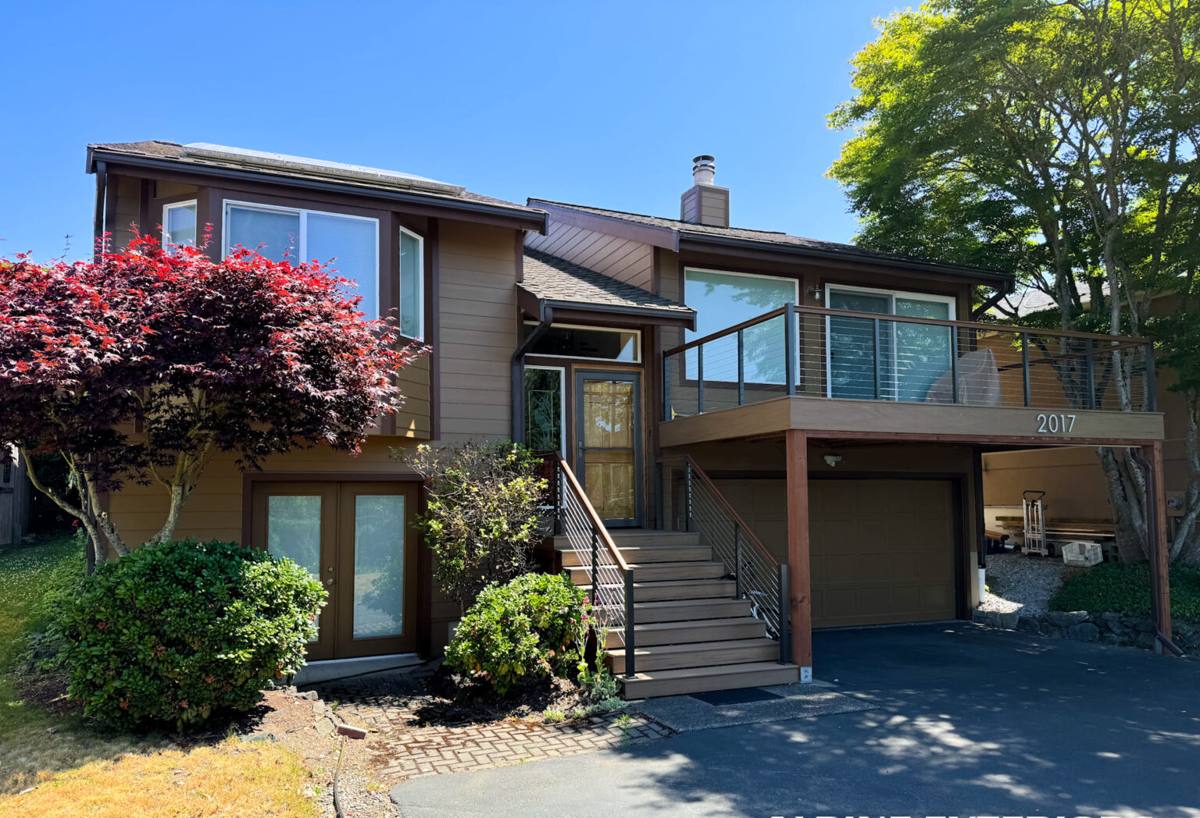
Salt Air, Wind-Driven Rain, and Moss: The Three Local Stressors
Salt Air
Airborne salt is corrosive to metal fasteners, flashing, and trim, and it accelerates the breakdown of finishes that aren't engineered to resist it. Over years, a cheap or poorly-sealed finish will chalk, fade unevenly, or let moisture behind the surface faster in a salt-air environment than it would a few miles inland.
Wind-Driven Rain
Rain that comes in sideways off the water doesn't behave like rain falling straight down. It gets pushed up under laps, into butt joints, and around trim if those details aren't built correctly. A siding job that looks fine on a calm day can leak during a winter storm if the water management behind the panels wasn't done right.
Moss and Algae
Whatcom County's wet season is long, and Fairhaven's proximity to the water and tree cover keeps humidity elevated even between rain events. Moss and algae need sustained moisture to establish, and shaded, north-facing walls here often have exactly that. Left alone, growth holds moisture against the siding surface and can accelerate wear on lower-quality materials.
Why This Company Installs Only James Hardie Fiber Cement
We don't install vinyl, LP SmartSide, Cemplank, Allura, or raw wood siding — only James Hardie fiber cement. That's a deliberate standard, not a sales preference. In a marine climate like Fairhaven's, the material matters as much as the workmanship:
- Fiber cement is non-combustible, which matters given the wildfire-smoke seasons the Pacific Northwest has seen in recent summers.
- James Hardie's ColorPlus factory finish is baked on and warranted against fading and chipping in a way field-applied paint isn't.
- Hardie engineers regional product formulations (HZ5 for the Pacific Northwest) specifically to handle moisture cycling in wetter climates.
- It doesn't rot, delaminate, or feed insects the way wood-based or wood-fiber products can when moisture gets behind them.
None of that means other products can't be installed well by someone else. We simply won't put our name on a product we don't think is the right long-term call for homes in this climate, and that includes Fairhaven's salt-air exposure.
Why We Don't Use Vinyl or Engineered Wood Here Specifically
Vinyl siding softens and can warp under sustained heat and can become brittle with age; more relevant to Fairhaven, its seams and J-channels give wind-driven rain more places to work its way behind the cladding over time. Engineered wood products (like LP SmartSide) perform well in many climates but rely on a factory coating and careful field-sealing of every cut edge to keep moisture out — a maintenance-sensitive setup in an area with this much sustained dampness and salt exposure. Fiber cement removes that particular vulnerability.
The Right Hardie Products for a Coastal Whatcom County Home
HZ5 Formulation
James Hardie makes region-specific formulations, and HZ5 is engineered for climates with more moisture cycling — which describes most of western Washington, and especially waterfront-adjacent areas like Fairhaven. It's the baseline we spec for this area.
Panel Style
Most Fairhaven homes we work on land in one of three Hardie profiles:
| Product | Look | Where It Fits Best |
|---|---|---|
| HardiePlank lap siding | Traditional horizontal lap | Most single-family homes; the default for a clean, classic exterior |
| HardieShingle | Staggered or straight-edge shingle | Craftsman and cottage-style homes wanting a shingled look without cedar's upkeep |
| HardiePanel | Vertical panel with battens | Modern builds, accent walls, gable ends |
ColorPlus Finish
For a salt-air location, we lean toward ColorPlus factory-finished products over field-painted siding whenever the color selection allows it. The factory finish is more consistent and better warranted against fading than a field-applied coat, which matters when UV and salt are both working on the surface.
What a Correct Installation Looks Like Here
Drainage Plane and Rainscreen Gap
In a high-moisture, wind-driven-rain environment, the water-resistive barrier and the gap behind the siding matter as much as the siding itself. A proper drainage plane, plus a rainscreen gap where conditions call for it, gives any water that gets past the cladding a way out instead of trapping it against the sheathing.
Flashing at Every Penetration
Windows, doors, hose bibs, light fixtures, and vents all need correctly lapped flashing — installed so water sheds outward at every layer, not just caulked over. Caulk is a backup, not a substitute for flashing done right.
Fastening and Clearances
James Hardie specifies fastener type, spacing, and minimum clearances from grade, roofing, and other transitions. Skipping these specs can void the manufacturer's warranty and is exactly the kind of detail that shows up as a problem years later, not on install day.
Joint and Butt-Seam Treatment
Butt joints are one of the more common failure points on any lap siding job. We treat them with manufacturer-approved sealant and, where the design allows, joint flashing behind the seam — not just a bead of caulk on the face.
Our Process From Estimate to Finished Wall
| Step | What Happens |
|---|---|
| 1. On-site assessment | We walk the home, check existing siding, sheathing condition, and moisture exposure specific to the lot (sun, shade, wind direction off the water) |
| 2. Product and color plan | We spec HZ5 product, profile, and ColorPlus color based on the home's exposure and the owner's preferences |
| 3. Tear-off and sheathing check | Old siding comes off; we inspect sheathing for hidden moisture damage before anything new goes up |
| 4. Water-resistive barrier and flashing | House wrap, flashing at every penetration, and rainscreen gap where called for |
| 5. Siding installation | Installed to James Hardie's fastening, spacing, and clearance specifications |
| 6. Trim, caulking, and final walk-through | Joints sealed, trim finished, and a final inspection with the homeowner before we consider the job done |
What Fairhaven Siding Projects Typically Involve
Every home is different, but a few factors consistently drive cost and scope on projects in this area:
| Factor | Why It Matters Here |
|---|---|
| Sheathing condition | Homes with prior moisture intrusion sometimes need sheathing repair before new siding goes on — this is common enough in older coastal-adjacent homes that we budget time to check for it |
| Home size and wall complexity | More corners, gables, and penetrations mean more flashing and cut work, which affects both labor time and material waste |
| Product selection | Lap, shingle, and panel profiles carry different material and labor costs |
| Exposure orientation | Sides facing prevailing wind and rain sometimes warrant extra flashing detail or a rainscreen gap even if the rest of the home doesn't strictly need it |
| Existing siding removal | Full tear-off versus siding over an existing layer (which we generally avoid on fiber cement jobs) changes labor scope |
We give a firm, itemized quote after the on-site assessment — not a ballpark over the phone — because these variables genuinely change the number.
Maintenance in a Long Moss Season
Fiber cement doesn't feed moss or algae the way wood-based siding can, but nothing is immune to organic growth sitting on a damp, shaded surface for months at a time. A little seasonal attention keeps a Hardie exterior looking like it did on install day:
- Rinse siding annually, especially shaded north- and east-facing walls, with a garden hose or low-pressure wash — avoid high-pressure washers aimed directly at joints and edges.
- Keep gutters clear so overflow isn't running down the wall face during heavy rain.
- Trim back vegetation that's shading siding and keeping it damp longer than the rest of the house.
- Check caulking at trim and penetrations every year or two and re-seal any joints that have opened up.
- Address moss or algae growth early with a mild cleaning solution rather than letting it build up over multiple seasons.
Why Hiring a Crew That Already Works This Neighborhood Matters
A contractor who mostly works drier, inland jobs can still do competent work, but they may not default to a rainscreen gap when conditions call for it, or think through flashing at every penetration the way a crew that deals with wind-driven rain and salt air on a regular basis will. Familiarity with a specific area's exposure — how the wind comes off the water, which walls take the worst of the moss, what sheathing condition tends to look like under older siding near the coast — comes from doing the work here repeatedly, not from a single job.
That's the case for hiring locally for a Fairhaven project specifically: not because the product changes, but because the judgment calls on flashing details, drainage planes, and product formulation are made correctly by default when a crew already knows what this stretch of Whatcom County throws at a house.
If you're weighing a siding replacement or repair in Fairhaven, we're happy to walk the property, look at what's there now, and give you a straight assessment — no pressure, no inflated quote to negotiate down from. Use the form below to request a free estimate.