 Ferndale
 Birch Bay Sits Right on the Water — Your Siding Has to Deal With That
Birch Bay faces the open water of the Salish Sea, and that gives homes here a version of Whatcom County weather that's noticeably harder on exterior materials than what a house a few miles inland in Ferndale deals with. The air carries salt. Storms off the water push rain sideways into walls instead of letting it fall straight down. And the shoulder seasons — fall through spring — stay damp long enough that anything holding moisture against a wall becomes a moss and algae host. None of this is unusual or extreme weather. It's just relentless, and relentless is exactly what exposes a siding job that was installed to a generic standard instead of to the site.
We work Ferndale and the surrounding Whatcom County towns regularly, and Birch Bay comes up often enough that we treat it as its own case, not a smaller version of a Ferndale job. The material has to be right, and the install details around water have to be right, or the siding will show problems years before it should.
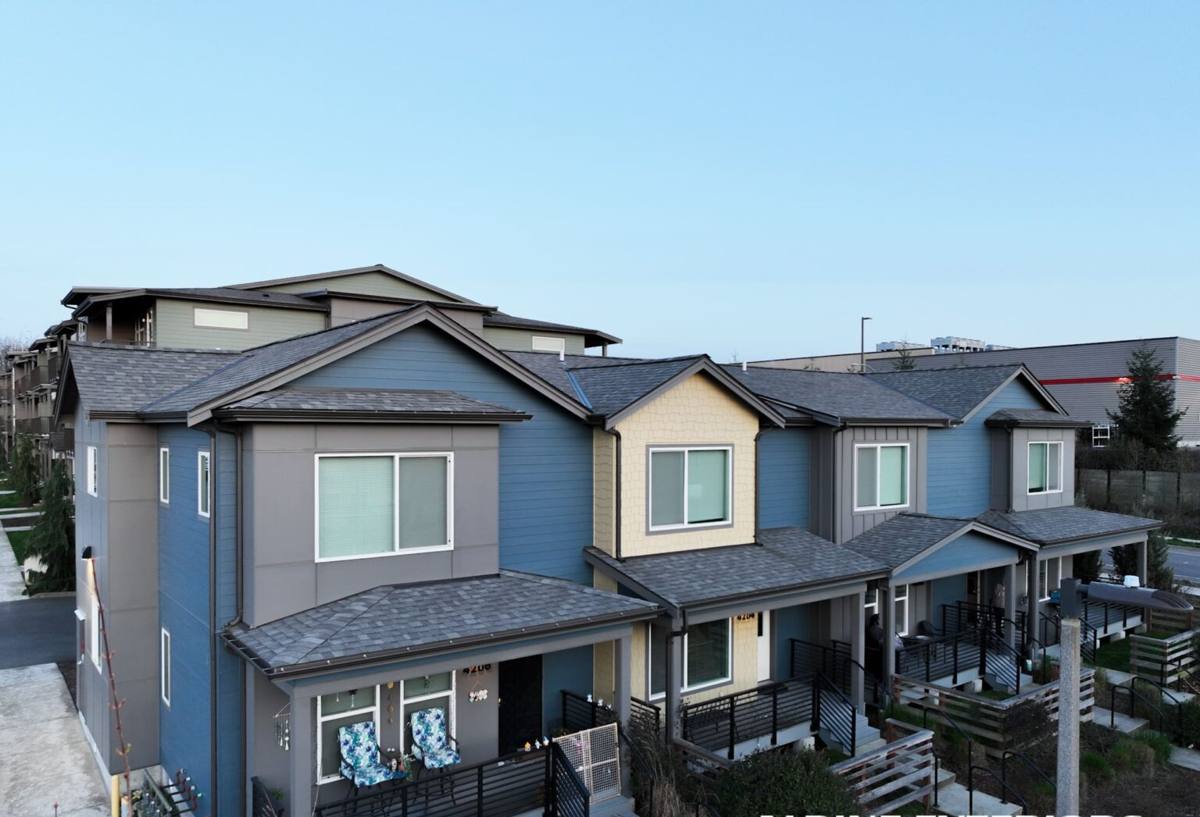
Why Fiber Cement Beats Wood and Vinyl in This Exposure
Fiber cement is cement, sand, and cellulose fiber pressed and cured into a plank or panel. It doesn't have wood's grain structure, so it doesn't absorb water the way solid wood or engineered wood products can, and it doesn't have vinyl's tendency to move, warp, or fade under sun and temperature swings. That combination matters most in a place where a house is getting hit with salt spray and wind-driven rain on a regular basis.
Wood and engineered wood siding
Real wood and engineered wood products can perform well when detailed and maintained carefully, but they depend on an intact paint or finish layer to keep water out. Once that layer is compromised — a scratch, a nail pop, a joint that opens up — water gets into the substrate itself, and in a wet climate like this one, that moisture doesn't dry out fast. Repeated wet-dry cycling is what leads to swelling, delamination, and rot at the edges and bottom courses, which are exactly the areas closest to splashback and driving rain.
Vinyl siding
Vinyl doesn't rot, but it isn't a rigid, dimensionally stable material — it expands and contracts with temperature, and high wind exposure near open water can stress panels and fastening more than it would on a sheltered inland lot. It also isn't a good match for the look most homeowners want when they're already investing in a serious re-side, and it doesn't hold up structurally the way a cement-based product does over decades of coastal exposure.
Fiber cement doesn't solve every problem on its own — installation detailing still matters enormously, which is the next section — but it starts from a material that isn't fighting the climate by design.
What a Correct Fiber Cement Install Involves Here
Fiber cement siding fails early almost exclusively because of installation mistakes, not because the material itself gave out. On a house exposed to wind-driven rain and salt air, the margin for sloppy detailing is smaller than on a sheltered inland home, because water finds the gaps faster and dries out slower once it's in.
Water management behind the siding
Correct installation starts with a weather-resistive barrier and a drainage plane behind the siding, not just under it. Flashing at every window, door, and horizontal trim transition has to be lapped correctly so water sheds outward and down, never sideways into a seam. On coastal-exposure homes, we pay particular attention to kick-out flashing at roof-to-wall intersections and to the bottom starter course, since that's where bulk water collects and where we most often find rot on older homes we tear off.
Fastening and clearances
Fiber cement has specific fastening requirements — nail placement, embedment depth, and spacing — that James Hardie publishes and that we follow to the letter, because over- or under-driven fasteners are one of the most common causes of early siding failure. Clearance from grade, roofing, and decking also matters more here: siding installed too close to the ground or to a roofline gives splashback and snow-melt runoff a direct path to soak the bottom edge of the boards.
Joints, caulking, and trim
Butt joints and trim transitions need to be caulked with a high-quality, paintable, flexible sealant rated for exterior use, and those joints need to be planned so they don't line up in ways that concentrate water. On a house that's catching driving rain regularly, a poorly placed or poorly sealed joint is where the first visible failure shows up — usually as a dark water stain or a soft spot within a few years.
James Hardie Is the Only Fiber Cement We Install — Here's Why
We don't install LP SmartSide, vinyl, Cemplank, Allura, primed spruce, or cedar. That's a deliberate standard, not a lack of options. James Hardie is the fiber cement manufacturer we've settled on because the product system — the board itself, the factory finish, and the warranty structure — is built specifically for climates like this one, and because it's the system we can stand behind fully when we tell a homeowner it's the right long-term choice.
HZ5 engineered for this exposure
James Hardie makes region-specific formulations under its HardieZone system, and the HZ5 product line is engineered for wetter, harsher climates — which describes Western Washington generally and a shoreline community like Birch Bay specifically. That's not marketing language; it reflects real differences in how the board is formulated to handle moisture cycling over time.
ColorPlus factory finish
Most of the color options we install come with Hardie's ColorPlus factory finish — a baked-on finish applied under controlled conditions, rather than field-painted after installation. In a climate where field-applied paint has to cure and bond in unpredictable weather, a factory finish is simply more consistent, and it comes with its own finish warranty separate from the substrate warranty. That two-layer warranty structure (product plus finish) is part of why we consider Hardie's backing meaningfully stronger than most alternatives on the market.
Moss, Algae, and Whatcom County's Long Wet Season
Even the right siding, installed correctly, still lives in a climate where moss and algae are a fact of life. Shaded, north-facing walls and areas under heavy tree cover hold moisture longest and are where you'll see the first green or black staining. This is largely a surface, cosmetic issue on fiber cement rather than a structural one — the board itself isn't feeding on moisture the way wood siding or wood trim can — but it's worth managing before it builds up, because heavy growth can trap moisture against caulked joints and trim over time.
Gentle exterior cleaning with a soft wash approach (not a high-pressure wash aimed directly at joints and edges) is generally the right maintenance move, along with keeping gutters clear so overflow isn't running down the wall face. Homeowners near the water tend to need this kind of upkeep on a shorter interval than homeowners a few miles inland, simply because the moisture load is higher.
How the Materials Actually Compare
This is a general comparison, not a substitute for looking at your specific home, but it reflects the honest trade-offs we weigh when we talk with homeowners about what to put on a house that's this close to the water.
| Material | Moisture behavior | Upkeep in this climate | Typical lifespan installed correctly |
|---|---|---|---|
| James Hardie fiber cement | Doesn't absorb and swell like wood; factory finish resists weathering | Occasional soft washing; repaint not usually needed for many years | Multiple decades |
| Wood / engineered wood | Depends entirely on an intact paint film to stay dry | Regular repainting and caulk inspection, more often near salt air | Shorter, especially at joints and bottom edges |
| Vinyl | Doesn't absorb water but expands/contracts with heat and can stress in high wind | Low, but limited repair options if panels crack or fade unevenly | Variable, shorter under sustained wind exposure |
The lifespan column assumes correct installation across the board. A poorly installed fiber cement job can fail faster than a well-installed alternative — the material is only half the equation.
Our Process for a Birch Bay Job
The steps don't change dramatically from house to house, but the attention paid to water detailing does, based on how exposed a given wall is to wind and rain off the water.
- On-site inspection, including checking behind existing siding where accessible for hidden moisture damage before we quote the job.
- Tear-off of old siding and inspection of sheathing, with repair or replacement of any water-damaged wood before anything new goes up.
- Installation of a weather-resistive barrier and, where called for, a rainscreen or drainage gap behind the siding for extra ventilation on high-exposure walls.
- Flashing at every penetration, window, door, and horizontal trim line, lapped to shed water outward and down.
- Installation of James Hardie fiber cement to manufacturer fastening and clearance specifications.
- Caulking, trim work, and final detailing at joints and transitions.
- Walkthrough with the homeowner and cleanup of the site.
Why Hiring a Crew That Already Works This Area Matters
A crew that regularly works Birch Bay knows what to expect before the tear-off even starts: which walls are going to have taken the worst of the wind and rain, where moisture damage tends to hide, and how much extra attention the water-management details need compared with a sheltered inland lot in Ferndale proper. That's not a marketing point — it changes the quote, the timeline, and the sequencing of the job when there's rot behind old siding that a less experienced crew might not catch until the walls are already open.
Before you hire anyone to side a home in this area, it's worth asking a few direct questions:
- Have you installed siding on homes in Birch Bay or other coastal Whatcom County exposures before?
- What's your plan for water management and flashing at roof-to-wall transitions and the bottom starter course?
- Do you install James Hardie to their published fastening and clearance specifications, and can you explain why those specs matter?
- What does the warranty actually cover — the board, the finish, and your labor — and for how long?
- Will you check behind the existing siding for hidden moisture damage before quoting a final price?
A straight answer to each of those tells you a lot more than a sales pitch will.
If your Birch Bay home's siding is showing staining, soft spots, or you're just planning ahead for a re-side, we're happy to take a look and give you a straightforward, no-pressure estimate. Use the form below to get started.