 Ferndale
 Roof Replacement for Kendall Homes
Kendall sits inland and up into the tree-covered foothill country along the North Fork Nooksack, away from the open water that shapes homes closer to Bellingham Bay. That doesn't mean Kendall roofs get an easier ride. Heavier tree cover holds moisture and shade against a roof longer than an open, sun-exposed lot would, and Kendall still sits inside the same wet, marine-influenced Whatcom County weather pattern that pushes rain sideways during winter storms and keeps moss active for most of the year. We work on roofs throughout this part of the county, and a Kendall roof replacement gets planned around that specific combination — more shade, more organic debris, and rain that doesn't always fall straight down.
This page covers roof replacement specifically, not a general overview of every exterior service we offer. If your roof is nearing the end of its life, showing damage, or you just want an honest read on what condition it's in, this is what to know before you call anyone.
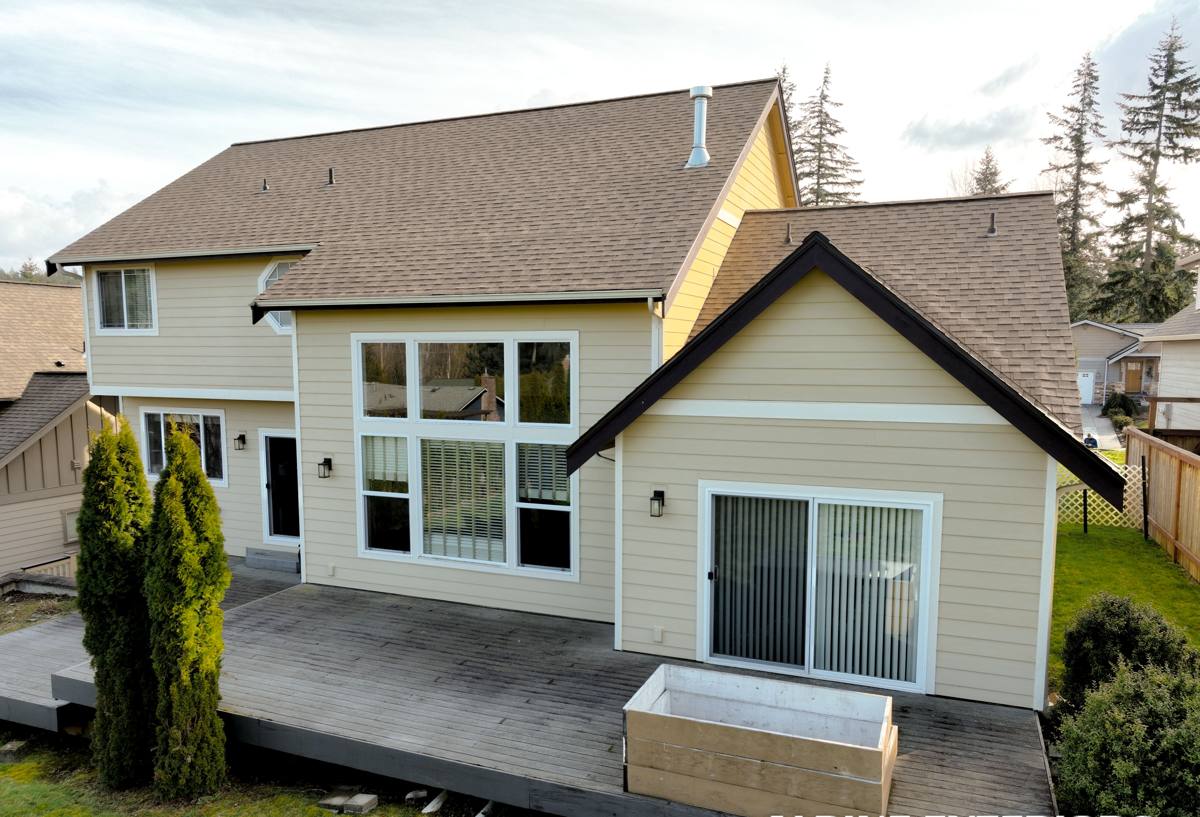
What Kendall's Weather Does to a Roof Over Time
Moss and Organic Growth Under Heavy Tree Cover
Properties with mature trees close to the house lose direct sun on parts of the roof for much of the day, and shaded roof surfaces stay damp longer after every rain. That combination is exactly what moss, lichen, and algae need to take hold. Left alone, moss doesn't just look bad — it lifts shingle edges as it grows, holds water against the roofing material long after a dry roof would have shed it, and works its way under flashing and into fastener holes over time. On a wooded Kendall lot, this cycle tends to start earlier and run longer than it would on a more open, sun-exposed property nearby.
Driving Rain and Wind Off the Foothills
Winter storm systems moving through Whatcom County don't always drop rain straight down. Wind pushes it sideways and sometimes up under shingle edges, valleys, and flashing details that a calmer climate would never test. A roof system built with the assumption that water only ever needs to run downhill tends to leak first at these spots — not because the roofing material failed, but because the underlayment, lapping, or flashing wasn't detailed to handle rain coming from the side.
Tree Debris and Gutter Overload
Needles, leaves, and small branches from surrounding trees collect in valleys and gutters faster on a wooded lot than on an open one. When debris dams up water instead of letting it drain, that water backs up under the shingle courses closest to the edge, which is a common, preventable cause of edge and fascia rot on tree-shaded homes. It's a maintenance issue as much as an installation one, but a correctly detailed roof edge and gutter system makes it far easier to manage.
Salt-Tinged Air, Even This Far Inland
Kendall isn't waterfront property, and it doesn't take the direct salt exposure that homes near Bellingham Bay or the Strait deal with. But storm winds still carry some marine-influenced moisture well inland across the county, and it's part of the reason we don't treat fastener and flashing quality as a place to cut costs anywhere in our service area, Kendall included.
Repair or Full Replacement? Signs to Watch For
Not every roof issue on a Kendall home means a full tear-off. A roof with isolated storm damage or a handful of failed shingles can often be repaired if the rest of the roof, decking, and underlayment are still sound. But once a roof is past its expected service life or showing damage in multiple areas, patching it usually just delays a larger, more expensive problem. These are the signs worth taking seriously:
- Shingles that are cupping, curling, cracking, or losing their granules in patches
- Moss or dark algae staining that returns quickly after cleaning, especially on shaded slopes
- Soft, spongy, or sagging spots when you walk the attic or look at the roof deck from inside
- Daylight visible through the roof boards from inside the attic
- Water stains on ceilings or upper walls, even faint or intermittent ones
- Granules collecting in gutters or at downspout outlets in noticeable amounts
- Flashing around chimneys, skylights, or vent pipes that's rusted, lifted, or gapped
- A roof that's approaching or past the typical lifespan for its material, especially if it was installed with older-style underlayment
If you're seeing one or two of these and the roof is otherwise in reasonable shape, a repair may genuinely be the right call. We'll tell you that directly rather than pushing a full replacement that isn't yet necessary.
What a Correct Roof Replacement Involves
Tear-Off and Deck Inspection
A full tear-off removes the old roofing material down to the deck, which is the only way to actually see what's underneath. On an older Kendall roof, especially one that's been holding moss and moisture against shaded sections for years, this is often where hidden decking damage shows up. Soft or rotted sheathing gets identified and replaced before anything new goes down, not discovered later as a leak.
Underlayment and Ice-and-Water Protection
Synthetic and self-adhered underlayment products handle wind-driven rain intrusion far better than older felt underlayment, and we use them as standard, not as an upgrade option. Extra protection at eaves, valleys, and any spot where water tends to pool or back up matters more on a shaded, debris-prone roof than it does on a simple, open one.
Flashing at Every Penetration and Transition
Most roof leaks in this climate start at flashing, not out in the open field of the roof. Chimneys, skylights, vent pipes, valleys, and wall-to-roof transitions all need flashing that's correctly lapped and sealed to shed sideways-driven rain, not just straight-down rainfall. This is detail work, and it's where a rushed installation shows its weaknesses first.
Ventilation
Proper intake and exhaust ventilation keeps the attic space at a reasonable temperature and moisture level year-round, which extends the life of the roofing material and helps prevent condensation issues inside the attic. On a shaded lot where the roof deck already stays cooler and damper longer than a sun-exposed one, ventilation that's undersized or blocked makes that moisture problem worse, not better.
Material Installation
Correct nailing patterns, proper shingle exposure, and starter courses set to spec all affect how well a roof holds up to wind. None of it is visible once the job is finished, which is exactly why it matters who's doing the work and how carefully.
Roofing Material Options for Kendall Homes
| Material | Typical Lifespan | Best Fit For |
|---|---|---|
| Standard asphalt composition shingle | 20-30 years | Most Kendall homes; cost-effective and handles wind-driven rain well with correct underlayment and flashing |
| Algae-resistant asphalt shingle | 20-30 years | Shaded, tree-covered lots where moss and algae staining develop quickly on standard shingles |
| Standing seam metal roofing | 40-60+ years | Homeowners wanting longer service life and better shedding of moss and debris, at a higher upfront cost |
| Cedar shake | 20-30 years, with regular maintenance | Homeowners set on the appearance, understanding it needs more upkeep in a damp, shaded climate to resist moss and rot |
Asphalt shingles remain the most common and cost-effective choice for Kendall homes, and algae-resistant shingle lines are worth the modest upcharge on lots with significant tree cover, since they slow the moss and staining that standard shingles develop within a few years in shade. Metal roofing costs more upfront but sheds debris and moisture more effectively and lasts considerably longer, which some homeowners on heavily wooded lots find worth the investment. We'll walk through the honest trade-offs for your specific roof rather than steering you toward whichever option is easiest to sell.
Our Roof Replacement Process, Start to Finish
- In-person inspection: We walk the roof and attic in person, not from a photo or a drive-by, and document what we find.
- Honest assessment: We tell you plainly whether you're looking at a repair, a partial replacement, or a full tear-off, and why.
- Written estimate: A clear, itemized estimate with no pressure to sign on the spot.
- Scheduling around the weather: Roof work depends on dry conditions, so we build reasonable flexibility into scheduling rather than promising a fixed date regardless of forecast.
- Tear-off and deck inspection: Old roofing comes off, the deck gets inspected, and any damaged sheathing is identified and replaced.
- Underlayment, flashing, and material installation: Installed to spec, with attention to the details that matter most in this climate.
- Cleanup and final walkthrough: Site cleaned of debris and nails, with a final walkthrough so you can see the finished work before we consider the job done.
Cost Factors for a Kendall Roof Replacement
| Factor | What It Affects | Why It Matters in Kendall |
|---|---|---|
| Tear-off vs. overlay | Labor scope and ability to inspect the deck | A full tear-off reveals hidden moisture and rot damage that's common under older roofing on shaded lots |
| Tree cover and debris load | Underlayment and flashing detail needed at valleys and edges | Heavier debris and moss exposure call for more robust water protection than an open, sun-exposed roof |
| Roof pitch and access | Labor time, staging, and safety equipment | Steeper roofs or lots with limited equipment access add real labor time |
| Material choice | Upfront cost and long-term maintenance | Algae-resistant shingle or metal options cost more but reduce moss-related maintenance over time |
| Deck and structural condition | Repair costs uncovered during tear-off | Long-term trapped moisture under moss-covered sections can rot sheathing that isn't visible until the old roofing comes off |
Exact costs depend on your specific roof and its condition, which is why we give a real number after walking the property in person rather than quoting off a generic price sheet.
Why a Crew That Already Works Kendall Matters
A contractor who works this part of Whatcom County regularly has seen what a full wet season does to a roof under heavy tree cover — which slopes hold moss longest, which debris patterns clog valleys and gutters fastest, and where flashing needs extra attention on a shaded roof compared to an open one. That's a different set of priorities than roofing a sun-exposed lot near the water, and it shapes real decisions on install day, from underlayment coverage to how much attention a valley gets before the shingles go down. A crew without that local, hands-on experience can still do competent work, but they're more likely to apply a one-size-fits-all approach that doesn't account for what a wooded Kendall lot actually deals with year-round.
If your Kendall home needs a new roof, a repair, or just an honest opinion on what condition it's actually in, we're glad to take a look. Reach out using the form below to schedule a free, no-pressure estimate.