 Ferndale
 Siding Built for Custer's Corner of Whatcom County
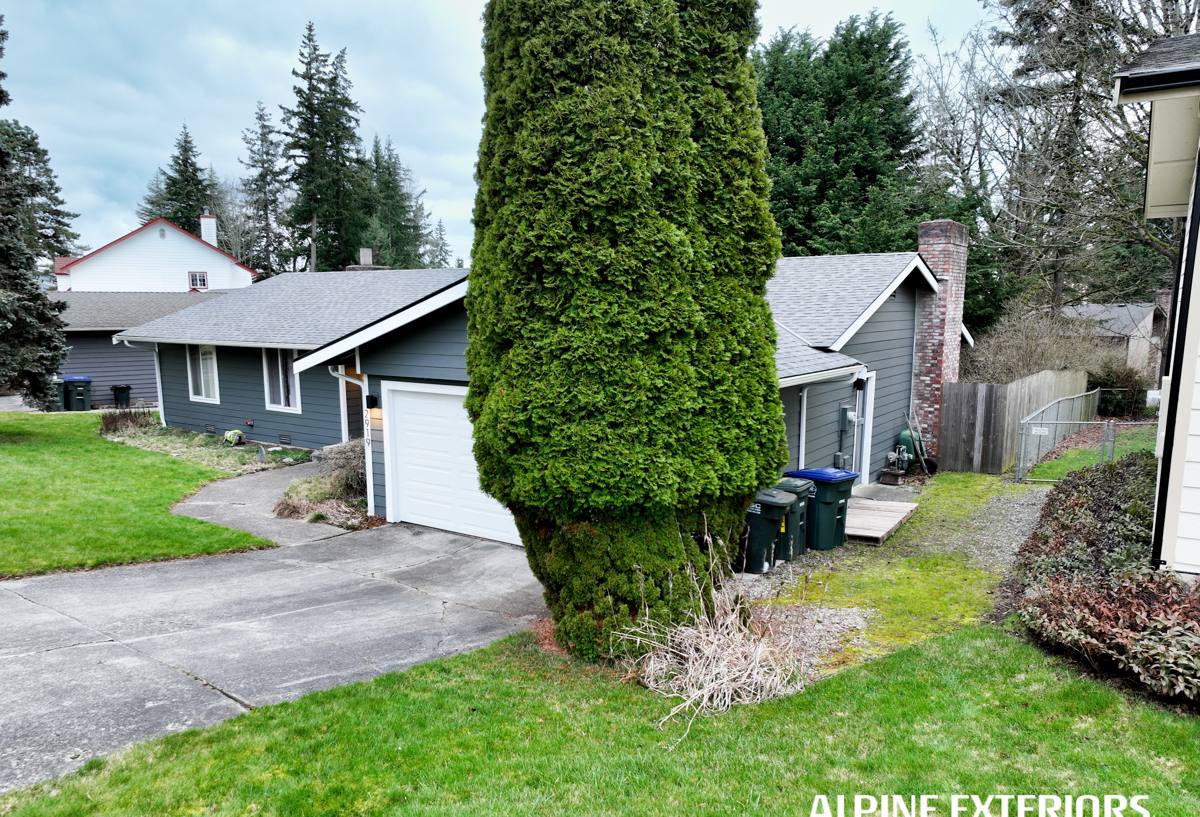
Custer sits close enough to the water and open farmland north of Ferndale that its homes take a specific kind of weathering — one that's different from what a house sees twenty miles inland. Salt-tinged air off the Strait, wind-driven rain that comes in sideways during fall and winter storms, and a moss season that can stretch from October into May all put steady pressure on exterior cladding. Siding installation here isn't just a cosmetic upgrade; it's a decision about what your walls will be fighting for the next 30-plus years.
We install siding across Ferndale and the surrounding Whatcom County communities, and Custer's mix of older farmhouses, newer developments, and rural acreage properties all show the same wear patterns: moisture intrusion at poorly flashed joints, moss and algae staining on north- and west-facing walls, and paint or coating failure on products that weren't built for this climate. A correct installation addresses all three from the start.
What Custer's Climate Actually Does to Siding
Salt Air and Corrosion
Custer isn't oceanfront, but it's close enough to Puget Sound and the Strait of Georgia that airborne salt reaches exterior surfaces, especially on homes with clear sightlines toward the water or exposure to prevailing westerly winds. Salt-laden moisture accelerates corrosion on fasteners, flashing, and any metal trim that isn't rated for coastal-adjacent exposure. It also breaks down some paint and coating systems faster than a standard inland finish would suggest.
Driving Rain
Whatcom County's winter storms frequently bring rain at an angle, not straight down. That matters because siding systems are only as good as their ability to shed water that's actively being pushed sideways into laps, seams, and penetrations. A system with generous overlap, correctly lapped house wrap, and properly flashed windows and doors handles driving rain without issue. A system installed to minimum spec, or a material that swells or wicks moisture at the edges, will eventually let water in.
Moss and Algae
Long, damp, low-light stretches are exactly what moss and algae need to establish themselves. Shaded walls, areas under tree cover, and surfaces that stay damp longer after a rain are the first to show green-black staining. This is mostly a maintenance and appearance issue rather than a structural one, but it accelerates on porous or textured surfaces and on products with finishes that don't resist biological growth well.
What This Adds Up To
- Fasteners and flashing need corrosion resistance appropriate to a coastal-influenced climate, not a generic inland spec.
- Water management details — house wrap laps, flashing at penetrations, kick-out flashing at roof-wall intersections — carry more weight here than in drier climates.
- The siding material itself needs to hold its finish and resist moisture absorption through repeated wet-dry cycles, year after year.
- Surface texture and coating matter for how much moss and algae take hold, and how easy the wall is to clean when they do.
Why We Install Only James Hardie Fiber Cement
We made the decision to install exclusively James Hardie siding, and we don't install vinyl, LP SmartSide, primed wood, or other fiber cement brands. That's not a marketing position — it's a practical one, built around what actually holds up under the conditions described above.
James Hardie's HZ5 product line is engineered specifically for cold, wet climates like the Pacific Northwest, with a formulation designed to resist moisture-related damage through repeated freeze-thaw and wet-dry cycles. The ColorPlus factory-applied finish is baked on under controlled conditions, which gives it better adhesion and UV resistance than field-applied paint — meaning it holds its color and resists the kind of chalking and fading that shows up fast on lesser-quality painted surfaces exposed to salt air and near-constant moisture. Fiber cement is also non-combustible, which matters increasingly to insurers and homeowners in this region regardless of direct wildfire exposure.
We're not going to pretend other products don't have their place. Vinyl is inexpensive and low-maintenance in mild climates. LP SmartSide and engineered wood products perform reasonably well when detailing is perfect and maintenance is kept up. But in a climate with Custer's combination of salt air, driving rain, and extended damp seasons, those products ask more of the installation and the homeowner's upkeep schedule than we're willing to gamble a client's investment on. Fiber cement's dimensional stability, moisture resistance, and factory finish take several of those risk factors off the table before installation even begins.
What a Correct Custer Siding Installation Involves
Tear-Off and Substrate Inspection
Every installation starts with removing the existing siding and inspecting the sheathing underneath for rot, soft spots, or prior water damage — common on older Custer properties where the original siding may have let moisture in for years unnoticed. Any compromised sheathing gets replaced before anything new goes on. Installing new siding over a damaged substrate just hides the problem.
Weather-Resistive Barrier
A properly lapped house wrap or weather-resistive barrier goes on next, with every seam taped and every penetration sealed. Given how much driving rain this area sees, lap direction and overlap amount aren't details to skip — water needs a continuous downward path to the exterior, not a chance to work behind the barrier.
Flashing at Every Vulnerable Point
Windows, doors, roof-wall intersections, and any deck or porch attachment points get flashed to direct water away from the wall assembly. This is where most siding failures actually originate — not from the siding material itself, but from water finding its way in at an inadequately flashed joint.
James Hardie Installation to Manufacturer Spec
Correct fastener spacing, minimum clearances from grade and roof lines, proper caulking at butt joints, and factory-finish touch-up procedures all matter for both performance and warranty validity. Installing Hardie siding without following these specs can void the manufacturer warranty even though the material itself is on the wall.
Trim, Caulking, and Final Detailing
Corner boards, trim, and caulking get finished last, with attention to keeping water shedding away from the wall rather than trapping it at any horizontal surface.
Comparing Approaches: Why Detailing Matters as Much as Material
| Factor | Minimum-Spec Installation | Custer-Appropriate Installation |
|---|---|---|
| House wrap lap direction | Sometimes inconsistent | Consistent shingle-lap, taped seams |
| Flashing at penetrations | Basic or caulk-only | Mechanical flashing plus sealant |
| Fastener corrosion resistance | Standard inland-grade | Rated for coastal-influenced exposure |
| Clearance from grade/roofline | Often minimum allowed | Built with drainage and moss risk in mind |
| Material | Varies | James Hardie HZ5, factory ColorPlus finish |
Cost Factors for Custer Siding Projects
Every home is different, and we won't quote a number without seeing the property, but a few factors consistently move the cost of a siding installation in this area:
- Tear-off condition — how much of the existing wall assembly needs repair before new siding goes on.
- Home size and complexity — square footage, number of stories, and how many corners, windows, and rooflines the crew has to work around.
- Siding profile — lap width, shingle-style panels, and trim details all affect labor time.
- Color and finish selection — ColorPlus factory finishes versus field-painted trim.
- Access — rural Custer properties with long driveways, outbuildings, or difficult staging areas can affect logistics and timeline.
Why a Crew That Already Works Custer Matters
A crew that regularly works Ferndale and Custer knows what this specific stretch of Whatcom County does to a house. We know which orientations tend to hold moss longest, which older homes in the area are likely to have outdated or damaged sheathing under their existing siding, and how local wind patterns during storm season affect where water actually ends up hitting the wall. That's the kind of judgment that doesn't come from a spec sheet — it comes from doing the work here, repeatedly, and seeing what holds up and what doesn't over years.
It also means faster response for site visits, scheduling that doesn't require a long drive for the crew, and a working knowledge of local permitting and inspection expectations. When something needs a follow-up look after a storm or a few years of weathering, we're not far away.
Maintenance After Installation
James Hardie siding is low-maintenance compared to painted wood or engineered wood products, but "low-maintenance" doesn't mean "no-maintenance" in a climate like this. A simple annual routine keeps it performing the way it's designed to:
- Rinse the exterior annually to remove salt residue and slow moss or algae buildup, especially on shaded or north-facing walls.
- Inspect caulking at trim and butt joints every year or two, and re-caulk where it's cracked or pulled away.
- Keep gutters clear so overflow doesn't run down the wall face and accelerate staining.
- Trim back vegetation that keeps a wall section shaded and damp longer than the rest of the house.
If you're planning a siding installation in Custer, we're happy to take a look at your home, walk through what your walls are actually dealing with, and put together a straightforward, no-pressure estimate. There's a request form below — reach out and we'll get you scheduled.