 Ferndale
 Roofing on an Island Changes the Math
Lummi Island sits out in the salt water off the Whatcom County mainland, reached only by ferry, and that changes what a roof has to put up with compared to a house a few miles inland in Ferndale or Bellingham. The same asphalt shingle roof that holds up fine on a sheltered inland lot can wear out years early on the island once you add constant salt-laden wind, driving rain off the water, and a moss season that barely lets up from October through May. None of that means asphalt shingles are the wrong choice for the island — they're still the most practical, cost-effective roofing material for most homes here. It means the installation, the shingle selection, and the maintenance plan all need to account for where the house sits, not just follow a generic spec.
We've done enough roofing work on Lummi Island and around the rest of Whatcom County to know the difference between a roof that's built for this environment and one that just happens to be sitting on the island. This page covers what that actually means — for the shingles themselves, the install, and the upkeep afterward.
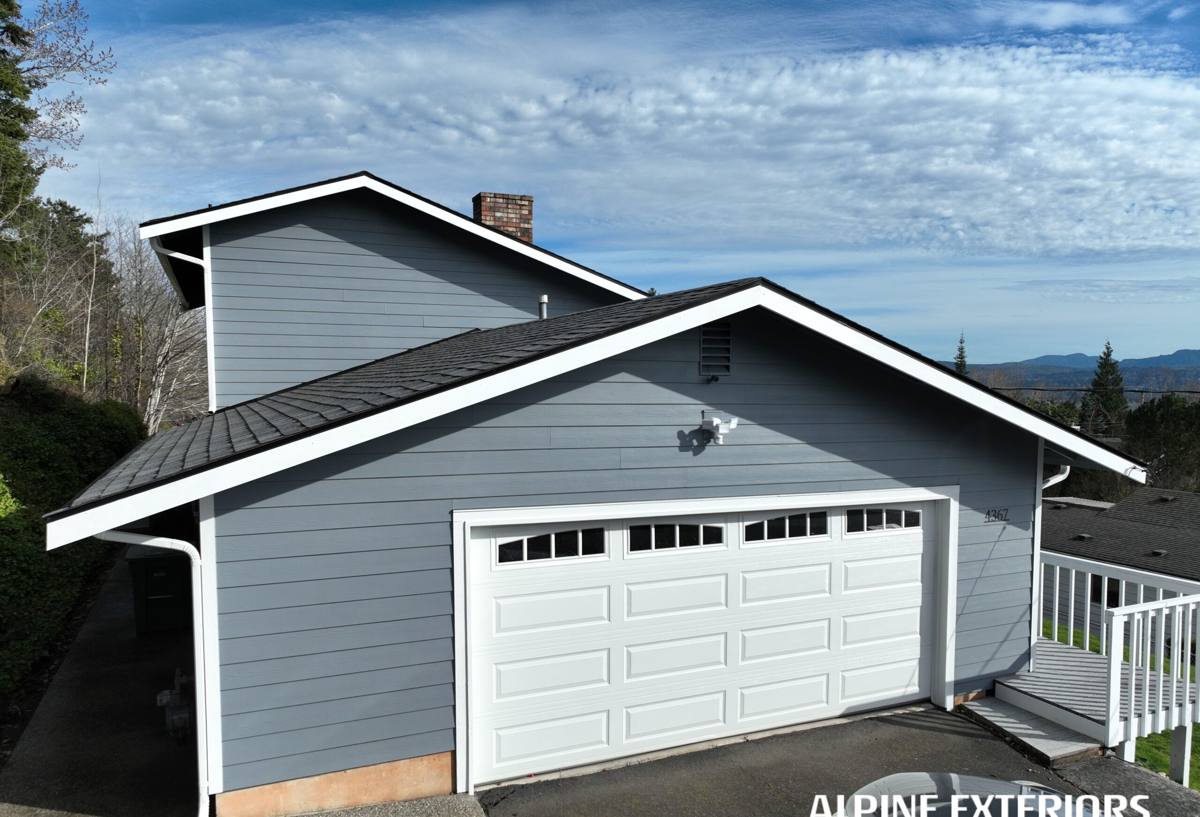
Why Lummi Island's Climate Is Hard on Asphalt Shingle Roofs
Three things do most of the damage to shingle roofs out here, and they compound each other:
Salt Air
Airborne salt from the surrounding water settles on every exterior surface, including the roof. Over time it accelerates corrosion on exposed metal — flashing, fasteners, vent caps, gutter hardware — faster than the same materials would corrode a few miles inland. A roof detailed with standard-grade fasteners and flashing in a marine environment will show rust and metal fatigue well before the shingles themselves are due for replacement.
Driving Rain
Wind off open water doesn't just drop rain straight down — it pushes it sideways and up under laps, edges, and any gap in the shingle coverage. A roof that would shed water fine in a calm rain can leak in a wind-driven storm if the underlayment, ice-and-water membrane at vulnerable points, and shingle nailing pattern weren't installed with that wind-driven exposure in mind.
A Long Moss Season
Whatcom County's wet, mild, shaded winters are already good moss-growing conditions, and north-facing or tree-shaded roof sections on the island get even less drying time between rains. Moss holds moisture against the shingle surface, works its way under tabs, and lifts granules as it grows — which shortens shingle life and, left unchecked, opens the door to actual leaks, not just cosmetic staining.
What a Correct Asphalt Shingle Installation Involves
A shingle roof is a system, not just a layer of shingles nailed to plywood. Every layer underneath the visible shingle does specific work, and skipping or shortcutting any of them is where premature failures start.
Underlayment and Water Barrier
Synthetic underlayment across the full deck is the baseline. On a coastal roof, we pay particular attention to self-adhered ice-and-water membrane at eaves, valleys, around penetrations, and along any low-slope transition — the spots where wind-driven rain is most likely to find its way under the shingle field.
Flashing and Fasteners
Given the corrosion pressure from salt air, flashing and fastener material matters more here than it would inland. We use corrosion-resistant metal at valleys, chimneys, skylights, and wall-to-roof transitions, and we don't cut corners on fastener quality just to save a few dollars on a job that's supposed to last decades.
Ventilation
Balanced intake and exhaust ventilation keeps the attic dry and temperature-regulated, which protects the underside of the deck and helps the shingles themselves last their full rated life. Poor ventilation traps moisture, which on an already damp island climate just adds another source of trouble.
Nailing Pattern and Wind Rating
Shingles are only as wind-resistant as their installation. Correct nail count and placement — not staples, not high-nailing to save time — is what actually delivers the wind rating printed on the shingle wrapper. On an exposed waterfront lot, this is not the place to cut corners.
Choosing the Right Shingle for This Environment
Not every asphalt shingle product is built the same way, and for a Lummi Island roof we generally steer homeowners away from bare-minimum 3-tab shingles toward products with better algae resistance and impact performance. Here's a general comparison of the tiers we typically discuss with island homeowners:
| Shingle Type | Typical Lifespan | Moss/Algae Resistance | Best Fit |
|---|---|---|---|
| Standard 3-tab | 15–20 years | Low unless algae-resistant granules added | Budget-driven projects, less exposed roof sections |
| Architectural / dimensional | 25–30 years | Moderate to good with algae-resistant granules | Most Lummi Island homes — better durability and wind performance |
| Impact-resistant (Class 4) | 30+ years | Good with algae-resistant granules | Exposed, wind-loaded, or storm-prone sites |
Algae-resistant granules — copper-infused granules built into the shingle — are worth specifying on any Lummi Island roof, shaded or not, given how long the island's moss season runs. It won't make a roof moss-proof, but it slows regrowth meaningfully compared to a standard shingle, which stretches the time between cleanings and extends the shingle's usable life.
Our Process for a Lummi Island Roofing Project
Working on the island means planning around the ferry, so we build that into the schedule up front rather than treating it as a surprise mid-project.
- On-site assessment — we look at the existing roof, deck condition, ventilation, flashing points, and exposure (waterfront-facing, tree cover, prevailing wind direction) before quoting anything.
- Written estimate — a clear scope covering tear-off, deck repair allowance, underlayment, flashing, shingle product, and ventilation work, with no vague line items.
- Material and crew scheduling — materials and crew logistics are planned around ferry sailing times so the job runs on the days it's scheduled, not stretched out by transportation gaps.
- Tear-off and deck inspection — old roofing removed and the deck checked for rot or soft spots before anything new goes down; deck problems get flagged and addressed, not covered up.
- Install — underlayment, ice-and-water membrane at vulnerable areas, flashing, ventilation, and shingles installed to manufacturer specification and correct nailing pattern.
- Cleanup and walkthrough — site cleared of debris and nails, and we walk the finished roof with the homeowner before calling the job done.
Maintenance That Actually Matters on Lummi Island
A well-installed asphalt shingle roof still needs upkeep in this climate — skipping it is the single biggest reason roofs here fail early.
- Keep gutters and downspouts clear so wind-driven rain has somewhere to go instead of backing up under the eaves
- Remove moss growth before it spreads across a full slope, especially on north-facing or shaded sections
- Never pressure-wash shingles — it strips protective granules and shortens shingle life; moss removal should be done with low-pressure methods appropriate to asphalt shingles
- Trim back overhanging branches to cut down shade and debris buildup that feed moss growth
- Have flashing, fasteners, and vent boots checked periodically for salt-driven corrosion, not just for leaks
- Schedule a roof check after any major windstorm, since wind-driven rain exposes weak spots that calm-weather rain won't
Signs Your Roof Needs Attention
A few warning signs are worth acting on before they become a full leak:
Granule Loss
Granules collecting in gutters or downspouts mean the shingle's protective surface is wearing away — expected in small amounts over time, but heavy loss signals the roof is aging faster than it should.
Dark Streaking or Moss Patches
Algae staining and moss patches aren't just cosmetic on a roof that's already dealing with salt air and driving rain — moss in particular holds water against the shingle and can eventually lift tabs.
Curling or Cupping Shingle Edges
Shingles that are curling at the edges or cupping in the middle have lost flexibility and are more prone to wind damage and water intrusion.
Rust Streaks Near Flashing or Fasteners
Given the corrosion pressure from salt air, visible rust at flashing seams or exposed fasteners is worth a closer look before it becomes a leak point.
Cost Factors for a Lummi Island Roofing Project
Costs vary by roof size, pitch, complexity, and access, and island logistics add a layer most inland quotes don't have to account for. In broad terms, the main factors are:
| Factor | Why It Affects Cost |
|---|---|
| Roof size and pitch | More square footage and steeper pitches mean more material and labor time |
| Existing deck condition | Rot or soft decking found during tear-off requires repair before shingles go down |
| Shingle tier selected | Standard, architectural, and impact-resistant products carry different material costs |
| Flashing and ventilation scope | Corrosion-resistant flashing and added ventilation work add labor and material |
| Ferry and access logistics | Material delivery and crew scheduling around ferry sailings factor into project timing |
| Roof complexity | Valleys, dormers, skylights, and chimneys all add flashing detail and labor |
We don't quote off square footage alone — every estimate reflects an actual look at the roof, the deck underneath it, and the site.
Why Hiring a Crew That Already Works Lummi Island Matters
Roofing work on the island isn't the same logistical exercise as roofing work on the mainland, and a contractor who hasn't worked out here before is learning that on your project. Ferry scheduling affects when materials and crew can arrive and how a job gets sequenced. Salt air exposure affects which flashing and fastener materials are worth specifying, not just for code compliance but for how long the roof actually lasts. And the island's specific moss and rain exposure affects which shingle products and ventilation details actually hold up, versus which ones just meet a generic spec sheet. A crew that's already done this work on Lummi Island isn't guessing at any of that — it's routine.
If you're planning a new roof or need an existing asphalt shingle roof assessed on Lummi Island, we're happy to take a look and put together a straightforward, no-pressure estimate — just fill out the form below.