 Ferndale
 Lummi Island's Climate Is Harder on Siding Than Most People Realize
Homes on Lummi Island sit closer to salt water, wind, and moisture than almost anywhere else in Whatcom County. That combination — salt air, driving rain, and a moss season that can stretch for months — wears siding down faster than it would on a home just a few miles inland. If you've owned a home here for more than a decade, you've probably already seen it: paint that fails years ahead of schedule, siding that stays damp long after a storm has passed, or green staining that keeps coming back no matter how many times it's cleaned off.
This page is about one thing: what it actually takes to replace siding correctly on a Lummi Island home, given what the island's weather does to a house year after year.
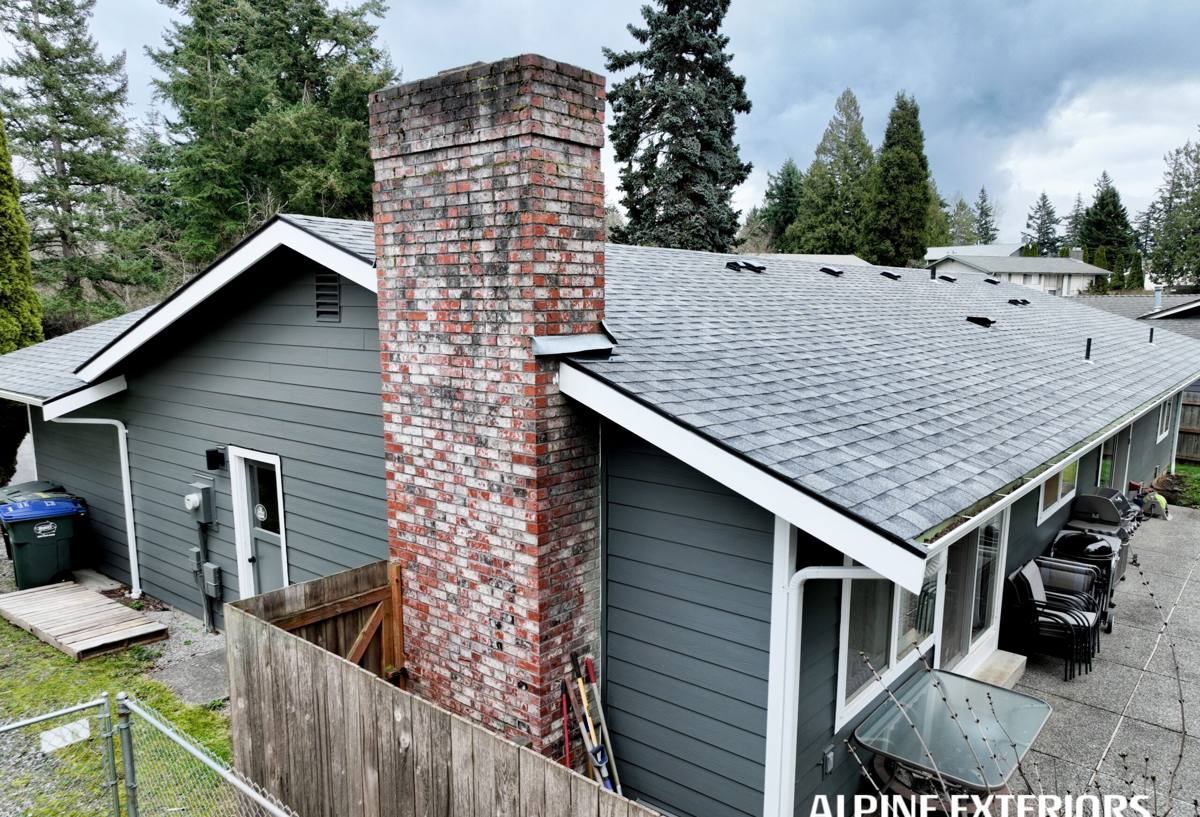
What Salt Air, Driving Rain, and Moss Season Actually Do to Siding
Salt Air
Airborne salt doesn't just sit on the surface — it works into finishes, fasteners, and any seam that isn't sealed tight. Over years, salt exposure accelerates corrosion in exposed metal fasteners and trim, and it breaks down paint and coatings faster than in inland parts of the county. Siding rated for general Pacific Northwest exposure isn't always rated for the added load of a shoreline environment.
Driving Rain
Rain that comes in sideways off open water behaves differently than a straight vertical downpour. It gets pushed into laps, butt joints, and anything that isn't properly flashed or fastened. A siding job that would hold up fine a few miles inland can fail at the seams here if the installer didn't account for wind-driven moisture during the install.
Moss Season
Whatcom County's damp season is long to begin with, and shaded, north- and west-facing walls on Lummi Island stay wet longer than the rest of the house. That extended dampness is exactly what moss and algae need to take hold. Once organic growth is established on a wall, it holds moisture against the siding surface, which speeds up whatever degradation is already happening underneath.
None of these three factors is dramatic on its own. Together, over ten or fifteen years, they're why siding on the island tends to show its age well before siding on a comparable inland home does.
Signs a Lummi Island Home Needs Siding Replacement, Not Just a Repair
- Paint or finish failing noticeably faster than the manufacturer's expected repaint cycle
- Boards that feel soft, spongy, or give slightly when pressed near the bottom edges or seams
- Visible cracking, checking, or splitting, especially on wood-based or engineered wood siding
- Moss or algae staining that returns quickly after cleaning, particularly on shaded walls
- Gaps opening up at butt joints, corners, or trim where caulking has failed or pulled away
- Rising heating bills that suggest moisture or air infiltration behind the siding
- Siding that is simply at or past the manufacturer's expected service life for the product installed
Any one of these can sometimes be spot-repaired. Several of them together, especially on a home that's taken the full brunt of shoreline exposure for years, usually means the siding system itself is done and a full replacement is the honest recommendation.
Why We Install Only James Hardie Fiber Cement Siding
We standardized on James Hardie fiber cement siding for every job we do, including on Lummi Island, and we don't install LP SmartSide, vinyl, Cemplank, Allura, primed spruce, or cedar. That's not a marketing position — it's a decision built around exactly the conditions described above.
Fiber cement doesn't absorb and swell with moisture the way wood-based and engineered wood products can, which matters directly on a site that gets more driving rain and longer damp stretches than most of the county. It's non-combustible, which matters for wildfire-adjacent insurance considerations that increasingly affect Pacific Northwest homeowners. And James Hardie's ColorPlus factory finish is baked on under controlled conditions rather than field-applied, which gives it better resistance to fading and finish failure from UV and salt exposure than a job-site-applied paint or stain.
James Hardie also engineers specific product lines — HZ5 for the Pacific Northwest — for the moisture and climate conditions of this region specifically, rather than shipping one generic product nationwide. That climate engineering, combined with a strong transferable warranty backed by a manufacturer that's been making fiber cement siding for decades, is why we put it on homes instead of the alternatives. We're happy to talk through the trade-offs of other products if you're comparing options — we just won't be the ones installing them.
What a Correct Siding Replacement Actually Involves
Replacing siding on a shoreline-exposed home is not the same job as replacing siding on a sheltered inland lot, even though the materials list looks similar. The details that matter most are the ones you won't see once the job is finished.
Tear-Off and Sheathing Inspection
Old siding comes off down to the sheathing, and the sheathing gets inspected before anything new goes up. On a home that's had years of driving rain working into seams, it's common to find soft or rotted sheathing in specific spots — usually low on walls, around window and door openings, or on the most exposed elevations. That damage needs to be repaired before new siding goes on, not covered over.
Weather-Resistive Barrier and Drainage
The house wrap or weather-resistive barrier underneath the siding has to be installed and lapped correctly — upper courses over lower courses, properly taped at seams — so that any water that does get past the siding drains down and out instead of pooling behind it. On homes with heavier wind-driven rain exposure, a drainage gap behind the siding gives bulk water somewhere to go instead of sitting against the wall assembly.
Flashing at Every Penetration
Windows, doors, hose bibs, light fixtures, vents — every penetration through the siding is a potential entry point for wind-driven rain. Correct flashing at each one, integrated properly with the weather-resistive barrier, is what actually keeps water out over the long run. This is one of the most common places corners get cut on lower-quality installs, and it's usually invisible until years later when the damage shows up.
Fastening to Manufacturer Specification
James Hardie siding has a specific fastening schedule — nail type, size, placement, and spacing — that changes based on exposure category. A home taking the full force of wind and salt spray off open water needs to be fastened according to that exposure, not a generic inland schedule. Getting this wrong doesn't just risk callbacks; it can void the manufacturer's warranty.
Joints, Gaps, and Finish Protection
Butt joints need correct gapping and sealing, factory-cut edges need to be treated so the ColorPlus finish's protection isn't compromised, and trim details need to shed water rather than trap it. These are small things individually, but they're the difference between siding that looks good for two years and siding that holds up for decades.
How Our Process Works
- On-site inspection and estimate — we look at your current siding, sheathing condition where accessible, and the specific exposure of each elevation before quoting anything.
- Material selection and ordering — we help you choose the right Hardie product line and color for your home, then schedule material delivery.
- Scheduling around island logistics — because Lummi Island is reached by ferry, we plan material delivery, crew scheduling, and disposal hauling around the ferry schedule up front, so the job isn't held up mid-project waiting on a load that didn't make the crossing.
- Tear-off and sheathing repair — old siding removed, sheathing inspected and repaired as needed before we move forward.
- Installation to manufacturer spec — weather-resistive barrier, flashing, and Hardie siding installed according to James Hardie's requirements for this exposure category.
- Final walkthrough — we review the finished work with you before calling the job complete.
- Cleanup and haul-away — old materials and debris removed from the site and off the island.
What Affects the Cost of a Siding Replacement Here
| Factor | Why It Matters |
|---|---|
| Home size and number of stories | More square footage and taller walls mean more material and more time, plus added access equipment for multi-story sections |
| Condition of existing sheathing | Rot or moisture damage found during tear-off has to be repaired before new siding goes on, which adds material and labor |
| Exposure of each elevation | Walls that take the brunt of wind-driven rain or salt spray may need a different fastening approach or drainage detail than sheltered walls |
| Trim and detail complexity | Homes with more windows, dormers, and architectural trim take longer to flash and finish correctly |
| Siding profile and color selection | Lap width, panel style, and ColorPlus color options can shift material cost within the Hardie product line |
| Access and logistics | Ferry scheduling, staging space, and site access can affect delivery timing and labor efficiency on island jobs |
We give exact numbers only after seeing the home in person — anyone quoting a firm price over the phone for a job like this is guessing.
Why Hiring a Crew That Already Works on Lummi Island Matters
Working on an island isn't the same as working on the mainland, and it shows up in ways that affect your project directly. Material deliveries and dumpster hauling have to work around ferry timing, not just a truck's availability. Crews who haven't planned for that can end up with mid-project delays waiting on materials that missed a sailing. Crews who work the island regularly build that scheduling into the plan from day one.
There's also a practical knowledge gap that comes from repetition. A crew that's replaced siding on multiple island homes has a feel for which elevations tend to take the worst of the wind and rain, where moisture problems typically turn up during tear-off, and how much extra time to budget for flashing and sealing on a shoreline-exposed wall. That experience doesn't show up as a line item on a quote, but it shows up in how the finished job holds up ten years later.
Maintaining Your New Siding After Installation
James Hardie siding installed correctly needs very little upkeep compared to wood-based alternatives, but a home in this environment still benefits from a little regular attention:
- Rinse salt residue and dust off the siding once or twice a year, especially on walls facing open water
- Trim back vegetation and tree limbs that keep siding shaded and damp longer than necessary
- Check caulking at trim, window, and door joints periodically and touch up as needed
- Keep gutters and downspouts clear so water isn't overflowing onto siding below
- Address any paint or caulk failure early rather than letting it sit through another wet season
- Have flashing and seams checked after any unusually severe wind or storm event
None of this is heavy maintenance — it's the kind of periodic attention that keeps a well-installed system performing the way it's supposed to for decades.
Get a Straightforward Estimate
If your Lummi Island home's siding is showing its age, we're glad to come take a look, explain honestly what we see, and walk you through what a correct James Hardie replacement would involve for your specific exposure and layout. There's no pressure and no obligation — just a straight answer about what your home needs. Use the form below to request a free estimate.