 Ferndale
 Building Decks for the Lummi Nation Area's Coastal Climate
A deck built in and around Lummi Nation has to earn its keep every day of the year, not just on the handful of dry summer weekends when everyone's actually using it. This stretch of Whatcom County sits right up against Bellingham Bay and the Salish Sea, which means homes here deal with a combination most inland decks never see: salt-laden air off the water, long stretches of driving rain, and a moss season that can run from October well into spring. A deck design that works fine in a drier part of the state can fail here in half the time if it wasn't built with this specific climate in mind.
We've worked on decks throughout the Ferndale area, including homes in and around Lummi Nation, and the failures we get called out to repair are almost always the same handful of issues repeating themselves. Knowing what actually causes those failures is the difference between a deck that needs real attention every year and one that just needs a rinse and an occasional check.
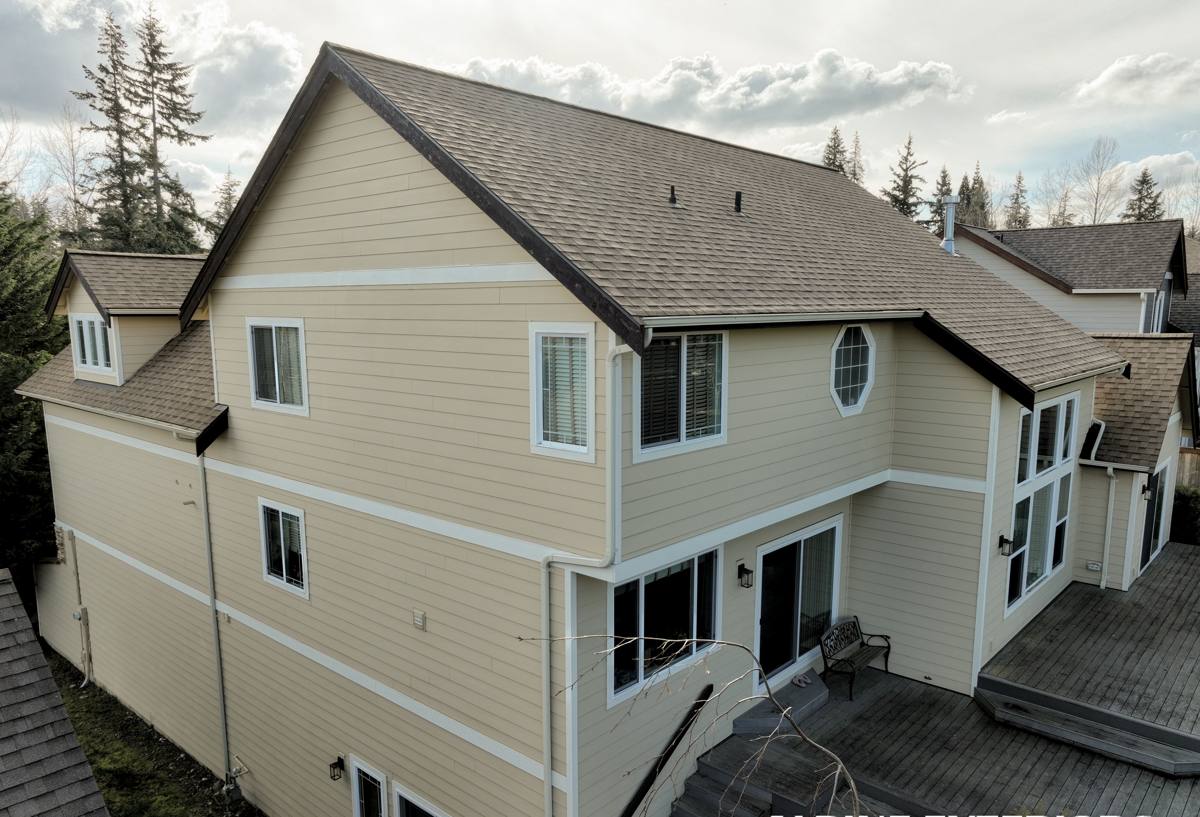
What Salt Air, Rain, and Moss Actually Do to a Deck
Salt Air and Metal Fasteners
Salt in the air accelerates corrosion on any exposed metal — nails, screws, joist hangers, bolts. On a deck close to the water, standard hardware can start showing rust within a couple of seasons. Once a fastener corrodes, it loses grip strength long before it looks obviously bad, which is part of why hardware failure is often invisible until something actually gives.
Driving Rain and Water Intrusion
This isn't gentle drizzle — wind-driven rain off the water gets pushed sideways into ledger connections, stair stringers, and any spot where boards meet a house wall. Water that gets behind flashing or into end-grain cuts doesn't dry out quickly in our climate, and that slow, repeated soaking is what rots framing from the inside while the surface still looks fine.
Moss and Sustained Moisture
A shaded deck near mature trees or facing north can stay damp for weeks at a stretch through fall and winter. Moss doesn't just make boards slippery — it holds moisture against the wood surface constantly, which is exactly the condition that breaks down finishes and eventually the wood or composite fibers underneath.
Choosing the Right Decking Material for This Climate
There's no single "best" decking material — there's a best fit for your budget, how much upkeep you're willing to do, and how exposed the deck is to salt air and standing moisture. Here's how the common options actually compare in this specific environment:
| Material | How it handles salt air & rain | Moss/moisture resistance | Upkeep |
|---|---|---|---|
| Pressure-treated fir/hem-fir | Good if sealed and re-sealed on schedule | Needs regular cleaning to prevent moss buildup | Annual inspection, re-seal every 1-3 years |
| Cedar | Naturally decay-resistant, still needs sealing near salt air | Better natural resistance than fir, still needs cleaning | Re-seal every 2-3 years, moderate |
| Composite decking | Doesn't rot or corrode from salt exposure | Resists moss better than wood but can still get slick when damp and shaded | Low — periodic cleaning, no sealing |
| PVC/capped composite | Best overall resistance to moisture and salt | Most moss- and mildew-resistant option | Lowest — cleaning only |
Composite and capped composite cost more up front, but for a deck facing prevailing wind and rain, or shaded enough to stay damp through winter, the reduced maintenance often pays for itself over the life of the deck. For a covered, well-drained deck with good sun exposure, a properly sealed cedar or treated wood deck can still be the right call and the more budget-friendly option.
Framing and Fasteners: The Part Nobody Sees But Everything Depends On
The decking boards get all the attention because they're what you see and walk on, but the framing underneath and the fasteners holding it together are what actually determine how long a deck lasts here. A correct job in this climate means:
- Stainless steel or heavy hot-dip galvanized fasteners rated for coastal/salt exposure — not standard electro-galvanized hardware, which corrodes faster near the water
- Properly flashed ledger board connections where the deck meets the house, so wind-driven rain can't work its way behind the siding
- Joist tape or a comparable moisture barrier on top of framing lumber to stop water from sitting in fastener holes and end cuts
- Adequate slope and drainage gaps between boards so water sheds instead of pooling on the surface or dripping straight onto framing below
- Ledger and post connections rated for our region's wind and seismic requirements, not just minimum code
None of this is visible once the deck is finished, which is exactly why it's the part that gets cut corners on lower-bid jobs. It's also the part that decides whether you're dealing with a soft, spongy deck in eight years or a solid one in twenty-five.
Permitting Near Lummi Nation
One thing worth sorting out early: depending on exactly where a property sits, deck construction near and within Lummi Nation may fall under a different permitting authority than a project inside Ferndale city limits or unincorporated Whatcom County. Tribal trust land and reservation property can have its own building and permitting process separate from county jurisdiction. Before any work starts, we confirm which authority governs the specific lot and make sure the permit and inspection process is handled correctly for that jurisdiction — it's a step we don't skip, and it's worth confirming with any contractor you're considering.
Our Process From Estimate to Finished Deck
1. On-Site Assessment
We look at sun and wind exposure, drainage on the lot, how close the deck will sit to salt spray or standing moisture, and what's already there if this is a rebuild or repair. This tells us which materials and fastener specs actually make sense for that specific spot, rather than defaulting to whatever's easiest.
2. Honest Material Recommendation
We'll walk through the real tradeoffs — upfront cost versus long-term maintenance, appearance versus upkeep — so you're choosing based on how you actually want to live with the deck, not just the lowest quote.
3. Permitting Confirmed
We confirm the correct permitting jurisdiction and handle the paperwork before framing starts, so there are no surprises partway through the job.
4. Build to the Climate, Not Just to Code
Framing, flashing, and fastener choices are specified for salt air and driving rain exposure, not just the minimum required to pass inspection.
5. Walkthrough and Care Guidance
Before we consider the job done, we walk the finished deck with you and go over what maintenance it actually needs going forward, specific to its exposure and material.
What a Correct Deck Repair Looks Like
Not every deck near Lummi Nation needs a full rebuild. A lot of the calls we get are for decks with isolated rot at a ledger connection, a stair stringer that's gone soft, or surface boards that have failed while the framing underneath is still sound. A proper repair means identifying how far the moisture damage has actually spread — often further than the visible soft spot — replacing framing members with correctly rated lumber and hardware, and addressing whatever let the water in to begin with, whether that's a flashing gap, a drainage problem, or boards that were never properly sealed. Patching over rotted framing with new decking on top just hides the problem for another season or two.
Maintenance Checklist for a Long-Lived Deck in This Climate
Whatever material your deck is built from, a few habits go a long way toward getting the full lifespan out of it in a salt-air, high-rain environment:
- Sweep off standing debris and leaves regularly through fall — trapped organic matter holds moisture and feeds moss growth
- Rinse salt residue off the deck surface and railings periodically if you're close to the water
- Check ledger flashing and any spot where the deck meets the house for gaps or staining at least once a year
- Re-seal wood decking on the schedule appropriate to the product — don't wait until it visibly looks dry and gray
- Clean moss off with a soft-bristle approach rather than high-pressure washing, which can drive water into seams and damage board surfaces
- Check under the deck once a year for signs of moisture, soft framing, or corroding hardware
Why a Crew That Already Works Lummi Nation Matters
A deck built by someone unfamiliar with this specific stretch of coastline tends to make the same predictable mistakes: undersized flashing, standard hardware instead of corrosion-resistant fasteners, or a material choice that looks fine in the showroom but struggles against a full winter of driving rain and moss. Working regularly in and around Lummi Nation and the greater Ferndale area means we already know which details matter here, which jurisdiction handles permitting on which properties, and which materials actually hold up against salt air rather than just being marketed as if they do. That local familiarity shows up in fewer callbacks and a deck that's still solid well past when a generic build would start needing attention.
If you're planning a new deck or dealing with one that's showing its age, we're happy to take a look and give you a straight answer on what it needs. Reach out for a free, no-pressure estimate using the form below.