 Ferndale
 Living With the Lummi Nation Climate: What It Does to a Roof
Homes around Lummi Nation sit close to Bellingham Bay and the open water of the Strait of Georgia, and that proximity changes what a roof has to deal with year-round. Salt-laden air moves in off the water and settles on every exposed surface, including your roof. Add Whatcom County's long wet season — steady, driving rain from October through March, plus wind that comes off the water with real force during storms — and you've got a roof that's under more sustained stress than one fifteen miles inland.
Then there's moss. Shade from mature trees, high humidity, and short winter daylight hours all favor moss and moisture-loving growth on roofing surfaces. On asphalt shingles, moss works its way under tabs and holds water against the deck. On a properly installed metal roof, moss has a much harder time taking hold, but the roof still needs the right slope, drainage, and edge details to keep debris and organic buildup from collecting in valleys and at the eaves.
None of this makes metal roofing wrong for this area — it's actually one of the better answers to it. But it does mean the installation details matter more here than they would in a drier, calmer climate, and cutting corners shows up faster.
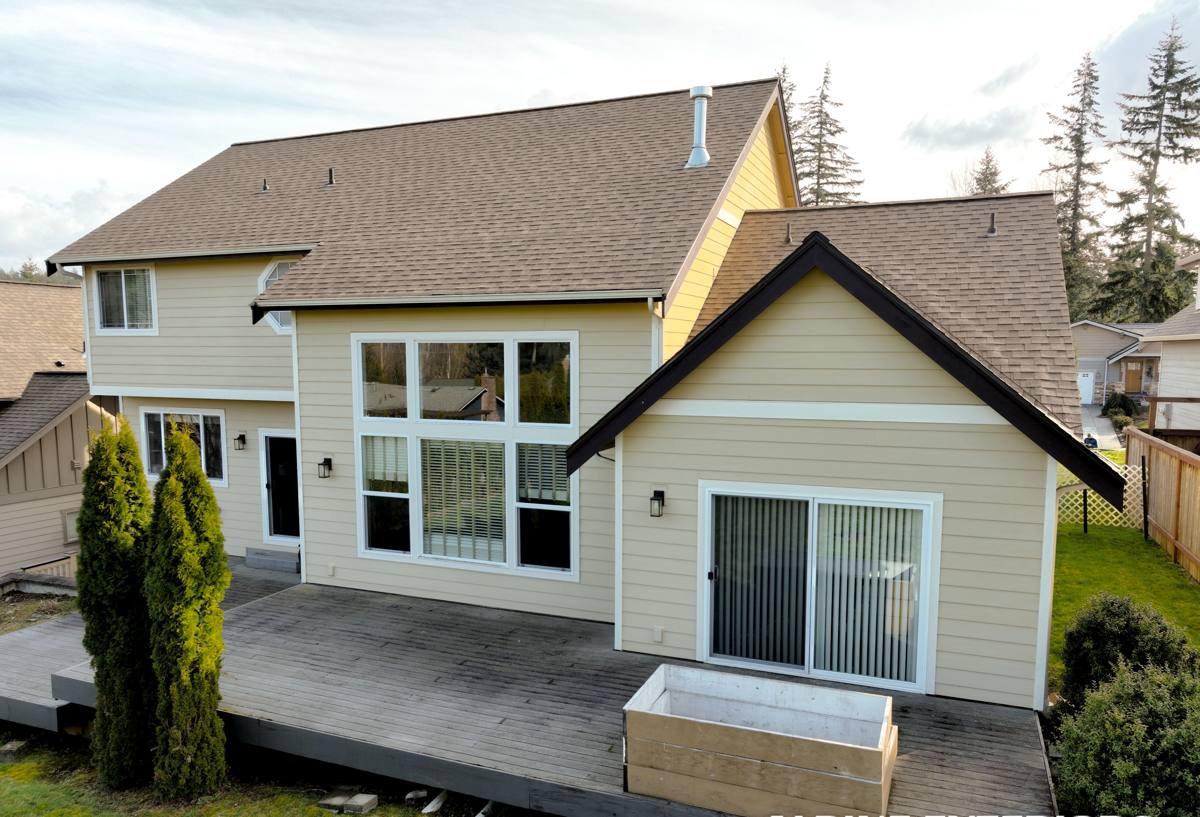
What a Correct Metal Roofing Installation Actually Involves
Underlayment and Moisture Barrier
A metal roof is only as good as what's underneath it. In a climate with this much sustained rain, we use a full synthetic underlayment (not felt, which breaks down faster under repeated wetting) and pay close attention to self-adhered ice-and-water membrane at eaves, valleys, and any low-slope transitions where wind-driven rain can back up under the panels.
Fastening and Flashing
Every penetration — vent stacks, chimneys, skylights — is a place water can find its way in. Flashing has to be formed and lapped correctly, not just caulked and hoped for. Fasteners matter too: the wrong fastener material next to certain metal panels sets up galvanic corrosion, which shows up as rust streaks and failed seals years down the road, well after the crew that installed it is gone.
Ventilation
Metal roofs need proper ridge and soffit ventilation to manage condensation on the underside of the panels, especially in a marine climate where indoor and outdoor humidity swings are constant. Skipping this is a common shortcut that causes problems that don't show up until well after installation.
Picking the Right Metal System for a Coastal Whatcom County Home
Not all metal roofing is the same product wearing different colors. The two systems homeowners in this area typically choose between are standing seam and exposed-fastener panels, and the right one depends on budget, roof pitch, and how long you want to go before any maintenance.
| Factor | Standing Seam | Exposed Fastener |
|---|---|---|
| Fasteners | Hidden, clipped under seams | Visible screws through the panel face |
| Maintenance | Very low — no exposed gaskets to fail | Fastener gaskets need periodic inspection |
| Upfront cost | Higher | Lower |
| Best fit | Long-term ownership, coastal exposure | Outbuildings, tighter budgets |
| Typical lifespan | 40-70 years with correct install | 25-40 years, tied to gasket condition |
For a primary residence near the water, we generally steer homeowners toward standing seam. The exposed screws on a fastener-style panel are the first thing to loosen or corrode under repeated wet-dry cycling and salt exposure, and replacing failed gaskets one at a time isn't a job most people want to revisit every decade.
Salt Air and Corrosion: Material Choices That Matter
Not every metal panel or fastener holds up the same way near open water. Bare or lightly coated steel will show surface rust faster in this environment than a properly coated panel will. We spec panels with a coating rated for coastal exposure, and we use fasteners and flashing metals that are compatible with the panel material to avoid galvanic reaction between dissimilar metals — a detail that's easy to overlook but shows up as premature corrosion at every screw and seam if it's ignored.
Aluminum is worth discussing for homes closest to the water, since it doesn't rust the way steel can if a coating is ever breached. Steel with a quality factory finish is still a solid, cost-effective choice for most of the area; we'll walk through the trade-offs based on how exposed your specific property is, rather than defaulting to one answer for every job.
Moss, Drainage, and Roof Pitch
Metal sheds moss far better than shingles because there's no rough surface or overlapping tabs for spores and debris to catch on. But a metal roof still needs help in a few spots:
- Valleys and low-slope sections need enough pitch and properly sized flashing to keep water moving instead of pooling
- Gutters and downspouts need to stay clear — a metal roof can shed a heavy rain load fast, and clogged gutters back that water up under the drip edge
- Overhanging limbs near the roofline should be trimmed back so debris and shade don't build up moisture in one area
- Panel seams and end laps need consistent, correct overlap so wind-driven rain off the water doesn't get pushed backward under a seam
Our Process From Estimate to Cleanup
We keep the process straightforward and walk you through each stage before we start:
- On-site assessment — we look at your current roof, deck condition, pitch, and exposure to wind and salt air off the water, then talk through system options that fit your home and budget.
- Tear-off and deck inspection — old roofing comes off and we check the decking underneath for any rot or soft spots before anything new goes down, since covering a bad deck with new material just hides the problem.
- Underlayment, flashing, and panel installation — installed in the sequence and with the overlaps that actually shed water in this climate, not just what's fastest.
- Final walkthrough and cleanup — we go over the finished roof with you, check that trim and flashing are tight, and clear the site of debris and old material.
Why Hiring a Crew That Already Works in Lummi Nation Matters
A roofing crew that regularly works this part of Whatcom County knows what wind-driven rain off the water does to flashing details, how fast moss reestablishes on a shaded lot near the trees, and which coatings and fasteners actually hold up under sustained salt exposure — because we've gone back and looked at how our own work performs years later, not just at install day. That local track record matters more here than it does in milder inland conditions.
It also matters for practical reasons: being nearby means a shorter wait if you ever need a warranty check or a fastener re-torqued after a big storm, and we're familiar with whatever permitting process applies to your specific property, whether that runs through the county or another local authority. You're not dealing with a crew that has to relearn the area's conditions on your roof.
Cost Factors to Expect
Metal roofing costs more upfront than asphalt shingles, but the gap narrows when you factor in how much less maintenance and how many fewer replacement cycles it needs over the life of the roof. What actually moves the price on a given job:
| Factor | Why It Matters |
|---|---|
| Roof size and pitch | More surface area and steeper, more complex pitches take more material and labor |
| Tear-off vs. overlay | Removing old roofing and checking the deck adds labor but is usually the right call |
| Panel profile and gauge | Heavier gauge and standing seam profiles cost more than lighter exposed-fastener panels |
| Coating and material grade | Coastal-rated coatings and corrosion-resistant fasteners cost more but pay off in this climate |
| Roof complexity | Valleys, dormers, skylights, and multiple penetrations all add flashing labor |
| Access | Steep sites or limited equipment access can add time to a job |
We give you a clear, itemized estimate before any work starts, so you know exactly what you're paying for and why.
Maintenance Checklist for Metal Roofs Near the Water
A correctly installed metal roof needs very little upkeep, but a little attention goes a long way in a salt-air, high-rainfall climate:
- Rinse accumulated salt spray and debris off the roof surface once or twice a year if your property is close to the water
- Keep gutters, downspouts, and valleys clear of leaves and needles, especially heading into the fall rains
- Check sealant and flashing around any roof penetrations every year or two, since sealant is the one component that ages faster than the metal itself
- Look for scratches or chips in the coating after any storm with falling branches, and touch up promptly to prevent localized corrosion
- Trim back tree limbs that overhang the roofline to reduce shade and debris buildup that encourage moss
- Have the roof looked at after any major windstorm to confirm fasteners and seams are still tight
If you're weighing metal roofing for a home in Lummi Nation or anywhere else around Ferndale, we're happy to take a look and give you a straightforward, no-pressure estimate — just fill out the form below and we'll get in touch.