 Ferndale
 Siding Installation Built for Lummi Nation's Marine Climate
Lummi Nation sits on a peninsula bordered by Bellingham Bay and Lummi Bay, just west of Ferndale in Whatcom County. That waterfront position gives homes here a different exposure profile than siding installations even a few miles inland — more salt in the air, more wind-driven rain during fall and winter storms, and a longer moss-growing season thanks to shade, humidity, and mild temperatures that rarely dry things out for long. None of that makes siding installation here impossible or exotic. It just means the job has to be done with those specific conditions in mind, not treated like a generic re-side.
We've installed siding on homes throughout this part of Whatcom County long enough to know which details actually matter for a house exposed to salt air and standing moisture, and which are just extra steps that don't pay off. This page covers what that means in practice — for the materials, the installation itself, and the ongoing care a home in this environment needs.
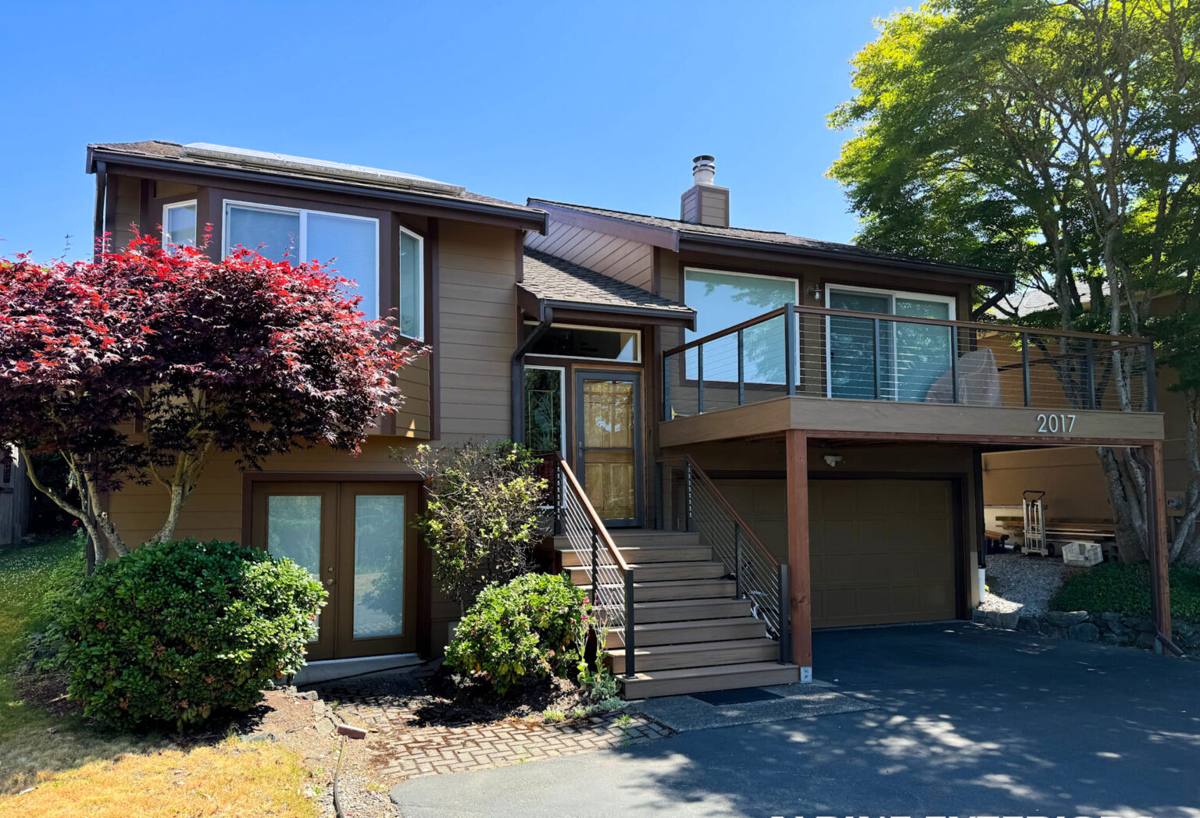
What Salt Air, Driving Rain, and Moss Actually Do to a Wall System
Salt Air and Corrosion
Air carrying salt from the bay accelerates corrosion on anything metal — fasteners, flashing, hose bibs, light fixtures, even HVAC components mounted on an exterior wall. On a siding job, that shows up first at the fastener heads and at any exposed metal trim. Cheap or mismatched fasteners can start bleeding rust through the face of the siding within a few years in this kind of exposure, long before the siding material itself would show any wear.
Wind-Driven Rain
Rain that falls straight down is fairly easy for any wall system to shed. Rain that's being pushed sideways by wind off the water is a different problem — it finds horizontal laps, butt joints, and anything less than a clean seal and works its way behind the siding rather than running down the face of it. Over time, wind-driven rain is what turns a small installation shortcut into a moisture problem inside the wall cavity, usually long before it's visible from the outside.
Moss and Prolonged Dampness
Between tree cover, marine humidity, and a wet season that runs long even by Pacific Northwest standards, north-facing and shaded walls here can stay damp for days after a storm passes. That's exactly the environment moss and algae need to establish. On its own, surface moss is mostly a cosmetic issue — but it holds moisture against the siding face longer than it would otherwise sit there, and on materials that aren't dimensionally stable or moisture-resistant, that prolonged dampness is what eventually leads to swelling, delamination, or rot at the edges.
What a Correct Siding Installation Looks Like in This Environment
A siding job that's going to hold up here needs a few things done right that are easy to skip and impossible to see once the siding is up:
The Weather-Resistive Barrier and Drainage Plane
Behind every board, there needs to be a continuous, correctly lapped weather-resistive barrier and a drainage gap that lets any water that does get past the siding find its way back out instead of sitting against the sheathing. In a wind-driven rain climate, this layer is doing more work than in a drier region, and it's the single most important part of the installation you'll never see again once the project is finished.
Flashing at Every Penetration
Windows, doors, hose bibs, vents, light fixtures — every place something interrupts the siding is a place water can get behind it if the flashing isn't installed correctly and lapped in the right order. This is one of the most common places we find prior installation mistakes on older homes in this area, and it's usually the reason for a moisture problem that otherwise seems to come from nowhere.
Fastening and Manufacturer Clearances
Corrosion-resistant fasteners, the correct fastener pattern, and proper clearance between the siding's bottom edge and the ground, roofline, and deck surfaces all matter more in a salt-air environment than they would elsewhere. Manufacturer clearance specs exist specifically to keep splash-back moisture and ground moisture away from the siding's edge, which is where damage typically starts.
A correct installation, at minimum, includes:
- A continuous, properly lapped weather-resistive barrier with no gaps or reverse laps
- A drainage gap or rainscreen behind the siding so incidental moisture can escape
- Correctly sequenced flashing at every window, door, and wall penetration
- Corrosion-resistant fasteners driven to the manufacturer's specified pattern and depth
- Proper clearance at grade, roof lines, decks, and patios
- Factory-finished or correctly sealed cut edges, with no exposed raw material
- Manufacturer-approved caulking and sealant at trim and joints, not general-purpose substitutes
Why We Only Install James Hardie Fiber Cement Here
We install James Hardie fiber cement siding exclusively — not vinyl, not LP SmartSide, not Cemplank or Allura, not primed spruce or cedar. That's a standard we hold across every job, and it matters even more in an environment like this one.
Fiber cement doesn't absorb and swell with moisture the way wood-based products can, and it doesn't soften, warp, or become brittle from long-term sun and salt exposure the way vinyl can. James Hardie's ColorPlus factory finish is baked on and warranted against fading and peeling, which counts for more here than in a drier inland climate, because a coastal environment is harder on any exterior finish. It's also non-combustible, which isn't a climate factor specific to Lummi Nation, but it's part of why we standardized on it everywhere we work.
| Factor | James Hardie Fiber Cement | Vinyl / Engineered Wood |
|---|---|---|
| Moisture response | Dimensionally stable; engineered to resist moisture-related swelling | Wood-based products can swell or delaminate if moisture reaches the substrate; vinyl doesn't absorb water but can trap it behind panels |
| Salt air / UV exposure | Factory ColorPlus finish warranted against fading and peeling | Vinyl can chalk, fade, and become brittle over time; painted wood-based siding needs repainting on a shorter cycle |
| Fire resistance | Non-combustible core material | Vinyl softens and melts under heat; wood-based siding is combustible |
| Maintenance | Periodic rinsing; repainting not required with ColorPlus finish | Regular repainting (wood-based) or replacement of brittle/cracked sections (vinyl) |
| Warranty | Long, transferable manufacturer warranty when installed to spec | Warranties vary widely and are often prorated or voided by common installation shortcuts |
Our Process for Siding Projects in This Area
The steps don't change dramatically from house to house, but how carefully we execute the water-management details does, because this environment doesn't forgive shortcuts the way a drier region might.
- On-site assessment: We look at sun and shade exposure, wind direction relative to the water, existing moss or moisture staining, and the condition of the current siding and substrate.
- Tear-off and substrate check: Once the old siding is off, we inspect the sheathing for rot or hidden moisture damage — common on older homes here at trim, window returns, and low clearance points — and repair anything compromised before new siding goes on.
- Weather barrier and flashing installation: The drainage plane and flashing go in first, sequenced correctly at every opening and penetration, before a single piece of siding is hung.
- James Hardie installation to manufacturer spec: Fastening pattern, clearances, and joint treatment follow Hardie's published installation requirements, not shortcuts.
- Final inspection and warranty registration: We walk the finished job, address anything that needs adjustment, and register the manufacturer warranty in your name.
Maintenance in a Moss-Prone, Salt-Air Environment
Correctly installed James Hardie siding is low-maintenance, not no-maintenance, and homes in this area benefit from a bit more attention than the same siding would need a few miles inland.
- Rinse siding annually, and more often on shaded, north-facing walls where moss and algae take hold fastest
- Keep tree limbs and shrubs trimmed back from siding to reduce shade and improve airflow
- Check and clear gutters regularly — overflow during heavy rain is one of the most common causes of avoidable water damage at the wall line
- Inspect caulking at trim, windows, and joints every year or two, and have any cracked or missing sealant replaced promptly
- Watch for rust streaking at fastener heads or metal trim, which can signal it's time for a closer inspection
Cost Factors for Siding Installation in Lummi Nation
Every project is different, but the same handful of factors drive most of the cost variation we see on homes in this area:
| Factor | Why It Matters |
|---|---|
| Home size and wall complexity | More square footage and more corners, gables, and trim details mean more material and labor |
| Existing siding removal | Tear-off of old wood, vinyl, or damaged siding adds time and disposal cost |
| Substrate repair | Rot or moisture damage found at tear-off has to be repaired before new siding goes on |
| Trim and detail work | Homes with extensive trim, window casing, or architectural detail take longer to finish correctly |
| Site access | Waterfront lots, steep grades, or limited staging space can affect labor time |
| Siding profile and color | Lap width, shingle-style siding, and custom ColorPlus colors vary in material cost |
The only way to get an accurate number is a walk-through of the actual house — anyone quoting a firm price without seeing the home and the substrate condition underneath the existing siding is guessing.
Why Local Experience Matters for This Job
A contractor who mostly works drier, inland areas can install siding correctly on paper and still get water management wrong for a site exposed to salt air and wind-driven rain off the water. Knowing which walls take the worst weather, how long moss season really runs here, and where older homes in this area tend to have hidden moisture damage isn't something you learn from a manual — it's something you learn from doing the work here repeatedly.
There are also practical, site-specific considerations that come up on some properties in this area — including permitting steps that can differ from the standard Whatcom County process depending on where a property sits. A crew that already works in Lummi Nation knows to check that early, rather than discovering it mid-project.
If you're planning a siding project in Lummi Nation or anywhere else around Ferndale, we're happy to take a look and give you a straight, no-pressure estimate — use the form below to get started.