 Ferndale
 Marietta Is a Different Deck-Building Environment Than Most of Whatcom County
Marietta sits close to the water on Bellingham Bay, and that proximity changes what a deck has to survive. Homes a few miles inland in Ferndale deal with rain and moss like everywhere else in Whatcom County, but a deck built near the bay also has to shrug off salt-laden air moving in off the water. Salt accelerates corrosion in metal hardware, degrades some finishes faster than manufacturers' labels suggest, and it works in combination with our long wet season rather than on its own. A deck that would hold up fine on the east side of Ferndale can fail years early a short distance closer to the bay if it wasn't built with that difference in mind.
We're not describing a theoretical problem. It shows up as rust bleeding through fastener heads, hardware that seizes or snaps when you try to remove it years later, and finishes that chalk and fade faster than expected. None of that is a reason to avoid building a deck in Marietta — it's a reason to build it with the right materials and details from the start.
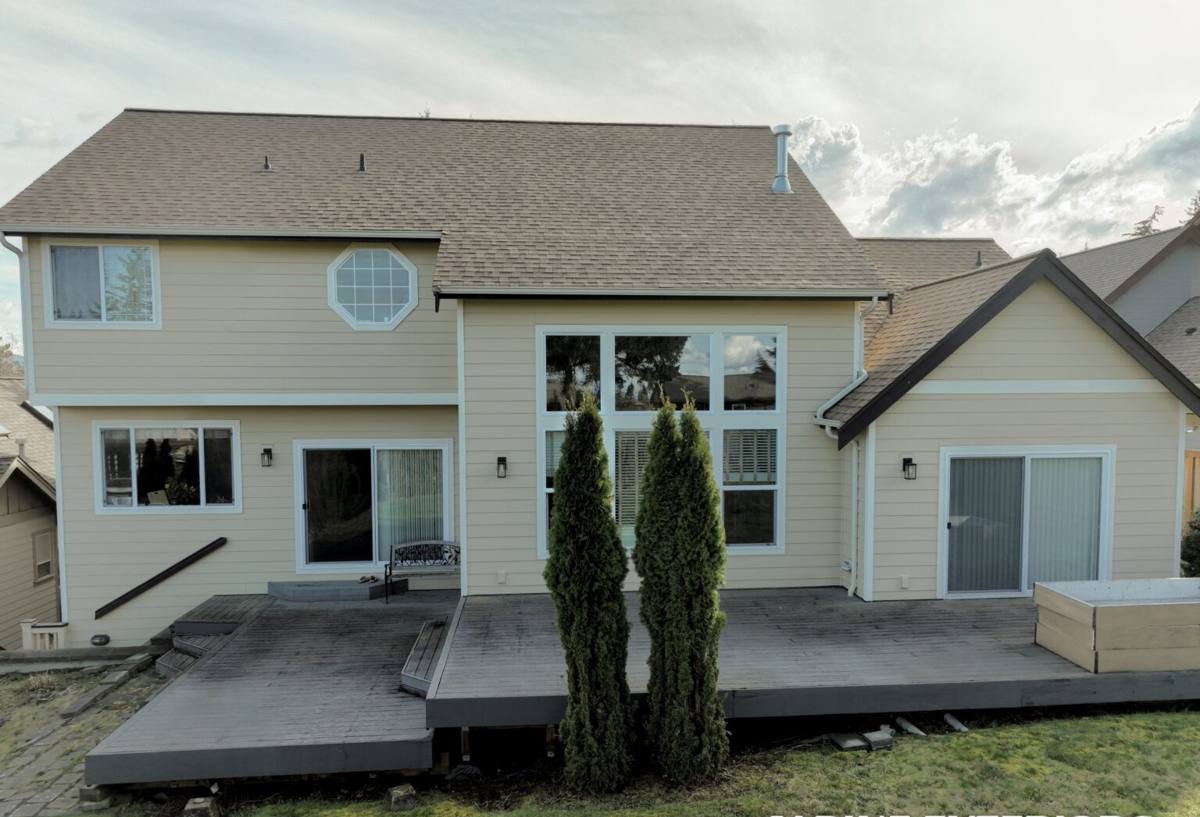
What a Correctly Built Marietta Deck Actually Requires
Fasteners and Hardware Rated for Coastal Exposure
Standard hot-dip galvanized fasteners are fine in a lot of inland applications, but near salt air we treat stainless steel or heavy-duty coated fasteners (rated for ACQ-treated lumber and coastal exposure) as the baseline, not an upgrade. This matters most at structural connections — joist hangers, ledger bolts, post bases — because those are the hardest parts to inspect or replace once the decking is down. Cutting corners on hardware to save a small amount up front is the single most common reason we see decks in this area develop problems within the first five to eight years.
Framing That Drains and Dries
Whatcom County's wet season is long, and a deck's frame spends much of the year damp whether it's near the bay or not. Salt air just adds another variable on top of that moisture load. Correct framing means joist spacing that doesn't trap water, proper flashing tape on joist tops, gapped decking boards for airflow and drainage, and ventilation underneath the structure so the frame actually gets a chance to dry out between storms instead of staying saturated all winter.
The Ledger Connection — Where Decks and Siding Meet
The ledger board is where a deck attaches to the house, and it's also one of the most common sources of hidden water damage. A poorly flashed ledger lets water track behind it and into the wall assembly, rotting sheathing and framing that you won't see until siding comes off or a wall starts to feel soft. Because we work on siding as much as decks, we pay particular attention to this connection — proper flashing, correct spacing off the wall, and sealing details that keep water moving away from the house rather than into it.
Choosing Materials: What Actually Holds Up Here
There's no single "best" decking material — the right choice depends on budget, maintenance tolerance, and how close to the water the home sits. Here's how the common options compare for Marietta's conditions specifically.
| Material | Salt Air Behavior | Moss/Moisture Behavior | Maintenance |
|---|---|---|---|
| Pressure-treated lumber | Performs well with stainless/coated fasteners | Needs periodic cleaning and re-sealing to resist moss and graying | Moderate — annual cleaning, re-seal every 2-3 years |
| Cedar | Naturally rot-resistant but finish needs upkeep near salt air | Sheds water well if gapped and sealed properly | Higher — periodic staining/sealing to hold appearance and protection |
| Composite decking | Doesn't corrode; check fastener/hardware compatibility | Resists rot but can still grow surface moss/algae if shaded and damp | Low — occasional washing, no staining or sealing |
| Standard (non-marine-grade) hardware, any material | Corrodes and stains faster than rated hardware | N/A | Leads to early repairs regardless of decking choice |
Whatever decking material you choose, it's only as good as the framing and hardware underneath it. We've seen plenty of composite decks with excellent surfaces sitting on frames that were fastened with the wrong hardware — the surface looks fine while the structure underneath is quietly failing.
Moss Is a Maintenance Issue, Not Just an Appearance Issue
Ferndale's long moss season affects decks the same way it affects roofs and siding — anywhere moisture sits without airflow or sunlight, moss and algae take hold. On a deck, that's more than cosmetic. Moss holds moisture against the board surface, and on wood decking that accelerates rot underneath a layer that looks fine from a few feet away. On composite decking, surface growth is mostly cosmetic but can make boards slick and should still be cleaned off.
Good design reduces how much moss you'll ever deal with: adequate board spacing, avoiding designs that trap standing water in low spots, and keeping nearby vegetation trimmed back so more light and air reach the deck surface. No design eliminates moss entirely in this climate, but the difference between a deck that needs occasional washing and one that needs yearly repair usually comes down to these details being handled correctly during the build.
Footings and Ground Conditions Near the Bay
Ground conditions near Marietta can run wetter and softer than sites farther inland, which affects how footings need to be set. Undersized or shallow footings in soil that stays saturated for months at a time are a common cause of decks that develop a noticeable lean, bounce, or separation from the house over a few years. We evaluate the actual soil and drainage on each site rather than assuming a standard footing depth will work everywhere in the area — what's adequate on well-drained ground a mile away isn't automatically adequate closer to the water.
Our Process for a Marietta Deck Build
- On-site assessment — we look at soil conditions, sun/shade exposure, proximity to the water, and how the deck will tie into your siding and roofline.
- Material and design conversation — honest trade-offs between wood and composite, layout options, and what fits your budget and maintenance preference.
- Permitting — most custom decks in Whatcom County require a building permit; we handle that process rather than leaving it to you.
- Footings and framing — set to the actual ground conditions on your lot, not a generic minimum.
- Ledger flashing and structural connections — done to keep water out of your wall assembly, not just out of sight.
- Decking, fastening, and finish work — installed with hardware rated for the exposure your home actually sees.
- Walkthrough — we go over basic maintenance so the deck holds up the way it's built to.
Permits and Code Basics You Should Know
Custom decks above a certain height or attached to the house generally require a permit and inspection in Whatcom County, and the requirements can differ slightly depending on your specific lot and whether the deck is attached or freestanding. We pull permits as part of the job rather than treating it as optional paperwork — an unpermitted deck can complicate things later if you sell the home or file an insurance claim. If you're not sure whether your planned project needs one, that's a question worth asking before any lumber gets ordered, not after.
Signs an Existing Deck Needs Attention
- Rust streaks bleeding from fastener heads or hardware
- Soft or spongy spots in decking boards, especially near the house
- Visible gap, movement, or separation where the deck meets the ledger board
- Persistent moss or algae that returns quickly after cleaning
- Discoloration or staining on siding directly above or behind the deck connection
- Wobble in railings or posts that wasn't there when the deck was newer
Any of these can be an early sign of a problem worth having looked at before it turns into a larger repair — particularly the ledger connection and siding staining, since those point to moisture getting into places you can't see.
Why a Crew That Already Works Marietta Makes a Difference
General deck-building advice online is written for a national audience, and it often glosses over exactly the conditions that matter here — salt air corrosion, a moss season that runs most of the year, and ground near the bay that behaves differently than it does a few miles inland. A crew that regularly works in Marietta and the surrounding Ferndale area has already seen which fastener grades hold up, which footing depths actually work in local soil, and which ledger details prevent water intrusion into siding — because we've gone back and fixed the ones that were done wrong. That local track record is worth more than a generic deck-building checklist.
If you're planning a custom deck in Marietta, we're happy to take a look at your site, talk through material options honestly, and put together a free, no-pressure estimate — just fill out the form below.