 Ferndale
 Building New in Cordata? The Window Package Deserves Real Attention
Cordata sits in the growth corridor between Ferndale and Bellingham, and we see a steady mix of new single-family builds, infill lots, and small multi-unit projects in the area. When a house is going up from the ground, the windows aren't a retrofit problem — they're a framing-stage problem. Get the window openings, flashing, and water-resistive barrier integration right the first time, and the house stays dry for decades with almost no attention. Get it wrong, and you're chasing rot, mold, and callback repairs behind brand-new siding within a few years. New construction is the one point in a building's life where doing this correctly costs almost nothing extra — the crew is already there, the walls are already open, and the sequencing is already in motion.
This page is specifically about new-construction window installation — windows installed during framing, before siding goes on — for homes in and around Cordata. It's a different job than replacing an old window in an existing wall, and it calls for different skills, sequencing, and attention to detail.
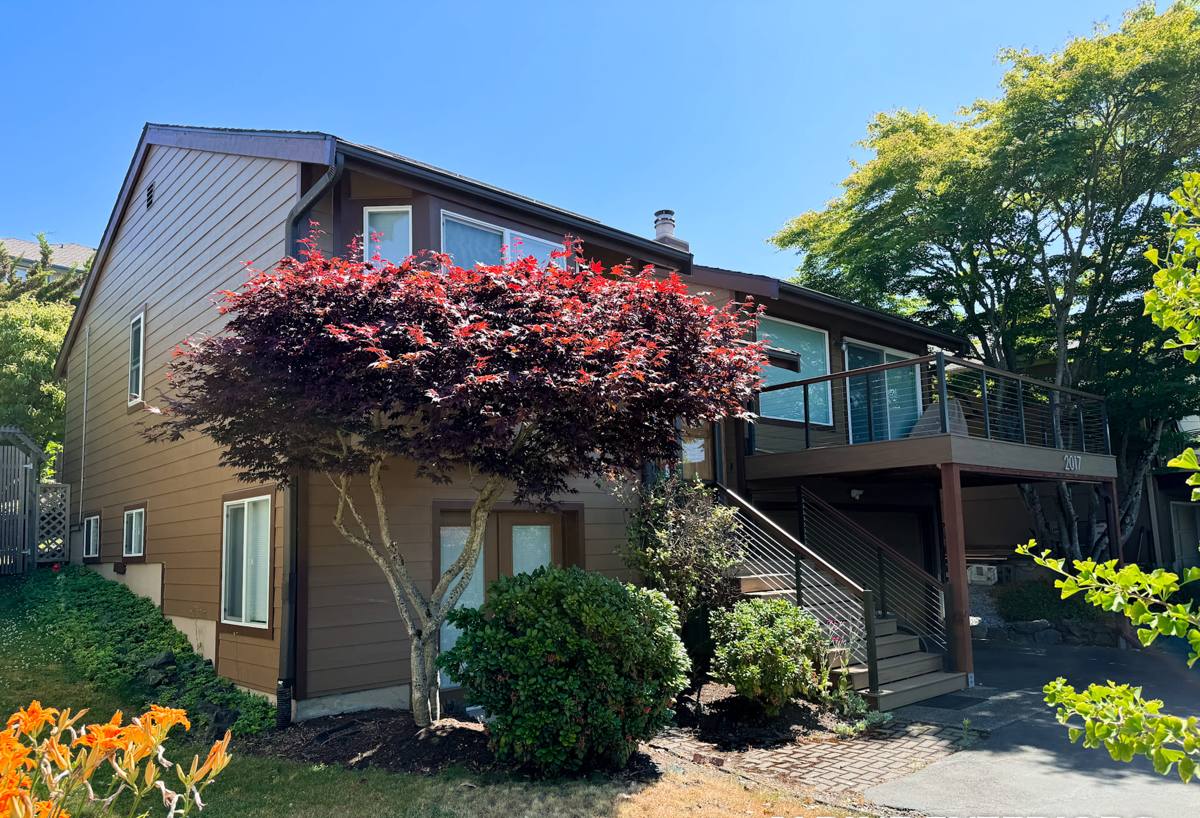
New Construction vs. Replacement: Why the Distinction Matters
People often ask us why we quote "new construction windows" separately from "replacement windows." The short answer is that they're installed completely differently.
- New construction (nail-fin) windows have a flange around the perimeter that gets integrated directly into the wall's water-resistive barrier (WRB) and flashing system before siding is applied. This is the correct approach whenever the wall is open.
- Replacement (insert or full-frame) windows go into an existing, already-sided wall, working around finished trim and cladding that can't easily be removed.
Installing a nail-fin window correctly gives you the strongest, most durable water management system available — because the flashing laps in the right order, shingle-style, with no shortcuts forced by an existing wall. That's the advantage of doing it right at the new-construction stage, and it's why we treat this as its own specialty rather than an add-on to a siding job.
What Whatcom County's Climate Demands From a Window Installation
Cordata isn't right on the water, but it's close enough to Bellingham Bay and the Strait of Georgia that salt-laden air reaches this area regularly, especially with westerly weather. Combine that with Whatcom County's driving winter rain — wind-driven storms that push water sideways into wall assemblies, not just straight down — and a long stretch of the year where surfaces stay damp enough for moss and algae to take hold, and you have a climate that is genuinely hard on window openings that aren't detailed correctly.
Salt Air
Airborne salt accelerates corrosion on fasteners, flashing metals, and hardware. On new builds we spec corrosion-resistant fasteners and flashing materials rather than whatever is cheapest, because a fastener failure behind siding is invisible until it isn't.
Driving Rain
Wind-driven rain finds any gap in a flashing sequence, especially at the sill and at the head flange where water wants to run behind the window rather than over it. Sill pan flashing and correctly lapped house-wrap tape aren't optional extras here — they're the difference between a dry wall cavity and a slow leak nobody notices for years.
Long Moss Season
Whatcom County's damp season runs long, and north- and west-facing walls in particular stay shaded and moist for much of the year. That doesn't just affect siding — it affects sill details and trim, where standing moisture and organic growth can degrade sealants and wood trim faster than in a drier climate. Detailing that sheds water quickly, rather than trapping it against the wall, matters more here than in most parts of the country.
Our New-Construction Window Installation Sequence
The order of operations is what separates a window that performs for 30+ years from one that leaks within five. On new builds in the Cordata area, our sequence is:
- Verify rough openings are square, plumb, and correctly sized before the window ever shows up on site.
- Install sill pan flashing that slopes slightly outward and turns up the sides — this is the single most important detail for stopping sill leaks.
- Set the window plumb, level, and square, shimmed correctly so the frame isn't stressed and sashes operate smoothly for the life of the window.
- Fasten through the nail fin per the manufacturer's schedule — skipping fastener locations to save time is a common corner-cutting move we won't do.
- Integrate the WRB and flashing tape in proper shingle-lap order: sill first, then sides, then head — so every layer sheds water onto the layer below it, never behind it.
- Seal and back-caulk where the manufacturer specifies it, and only there — over-sealing a window can trap moisture just as badly as under-sealing it.
- Final check for operation, weep hole clearance, and visible gaps before siding crews close the wall up.
Every one of these steps is easy to inspect while the wall is open and essentially impossible to fix cheaply once siding is on. That's why we treat the framing-stage walkthrough as a checkpoint, not a formality.
Choosing the Right Window Frame for a Cordata New Build
Frame material matters more in a salt-air, high-rain climate than it does inland. Here's how the common options compare for new construction in this area:
| Frame Material | Moisture & Salt Air Performance | Maintenance | Typical Fit |
|---|---|---|---|
| Vinyl | Good — won't corrode or rot; seams are the main point to detail well | Low — occasional cleaning | Most cost-effective; strong all-around choice for new builds |
| Fiberglass | Excellent — very stable, resists warping and doesn't corrode | Low | Higher upfront cost, longer expected service life |
| Wood-clad | Good on the exterior-clad face; interior wood needs protection from any moisture intrusion | Moderate — depends on cladding integrity over time | Chosen mainly for interior wood appearance |
| Aluminum | Prone to corrosion in salt air unless properly coated; thermally less efficient | Moderate to high | We use this selectively, not as a default in this climate |
For most new builds in the Cordata area, we steer homeowners and builders toward vinyl or fiberglass because both hold up well against salt air and repeated wetting without the corrosion risk aluminum carries or the maintenance burden of unprotected wood. Whatever frame material you choose, the installation detailing matters more than the frame material itself — a well-installed vinyl window will outperform a poorly-flashed premium window every time.
Mistakes We See on New-Construction Sites
Most window failures we get called out to inspect trace back to sequencing errors made during the original build, not a defective product. The recurring issues:
- Sill pan flashing skipped or installed flat instead of sloped, so water pools instead of draining out.
- House wrap taped in the wrong order (head before sides, or sides before sill), so laps run backward and funnel water into the wall instead of away from it.
- Windows fastened before the opening was checked for square, leading to operational problems and stress cracks later.
- Siding crews closing up a wall before the window install was inspected, hiding a problem until it shows up as an interior stain years later.
- Caulk used as a substitute for proper flashing rather than as a supplement to it.
None of these are exotic problems. They're all sequencing and attention-to-detail issues, which is exactly why coordination between the window crew, the framer, and the siding crew matters as much as the window product itself.
How We Work With Builders and General Contractors
On new construction, we're one trade in a sequence, and timing matters. We coordinate directly with framers and GCs on rough opening tolerances before openings are even framed, schedule our install between dry-in and siding start, and do a walkthrough with photos of every flashing detail before the wall closes up — so there's a record if a question ever comes up later. For builders working multiple lots in the Cordata and greater Ferndale area, we can work from a standard window schedule across a project rather than re-deriving specs house by house, which keeps timelines predictable.
What This Typically Costs
Pricing for new-construction window packages depends on window count, size, frame material, and how many stories the crew is working at. Rough factors that move the number:
| Factor | Impact on Cost |
|---|---|
| Frame material (vinyl vs. fiberglass vs. wood-clad) | Fiberglass and wood-clad run higher than standard vinyl |
| Window size and glazing package (double vs. triple pane) | Larger openings and upgraded glazing add cost per unit |
| Number of stories | Second-story and higher installs require more staging time |
| Total window count on the project | Per-unit cost typically improves with a full-house package vs. a handful of units |
| Flashing and WRB detailing complexity | Homes with more corners, offsets, and roof-to-wall transitions take more time to detail correctly |
We don't quote a flat per-window number until we've seen the plans, because those factors genuinely change the labor involved. What we can say honestly: paying for correct flashing and sequencing up front is far cheaper than repairing water damage behind finished siding later.
A Quick Checklist Before Your Windows Go In
- Confirm rough openings are checked for square and correct sizing before windows arrive.
- Confirm sill pan flashing is specified and sloped outward, not just "caulked and hoped."
- Confirm the WRB/flashing lap order is sill, then jambs, then head — every time, no exceptions.
- Ask whether the installer photographs flashing details before the wall is closed up.
- Match frame material to this climate — salt air and driving rain favor vinyl or fiberglass over uncoated aluminum.
- Confirm fastener schedule and corrosion-resistant hardware are being used, not whatever is on hand.
Why a Crew That Already Works Cordata Matters
New-construction window installation done correctly isn't complicated in principle, but it depends on a crew that treats flashing sequence as non-negotiable and understands what this specific climate does to a wall assembly over time. A crew that regularly works new builds in the Ferndale and Cordata area already knows how local framers typically size openings, how to sequence around our wet season without holding up a build schedule, and what details actually matter when salt air and driving rain are part of daily conditions rather than an occasional storm. That local familiarity translates into fewer surprises during the build and a wall assembly that stays dry for the long run.
If you're building new in the Cordata area and want your window package installed right the first time, we're happy to walk the plans with you and give you a straightforward, no-pressure estimate — just fill out the form below.