 Ferndale
 Roofing in Sandy Point Comes With Its Own Rules
Sandy Point sits close enough to the water that every roof in the area is doing a different job than a roof ten miles inland in Ferndale or Bellingham. Salt-laden air moves through constantly, wind-driven rain finds its way under anything that isn't properly flashed and sealed, and the tree cover that gives the neighborhood its character also means moss, needle debris, and shade that keeps roof decks damp longer than they'd like to be. A new roof installation here isn't just "put shingles on a house" — it's a decision about materials, fasteners, ventilation, and detailing that either holds up to that combination or slowly fails because of it.
We install roofs across Ferndale and the surrounding Whatcom County waterfront communities, and Sandy Point is one of the areas where cutting corners shows up fastest. A roof that would look fine for years in a drier, more sheltered part of the county can develop moss colonies, corroded fasteners, or soft decking within a few seasons out here if it wasn't built for the exposure.
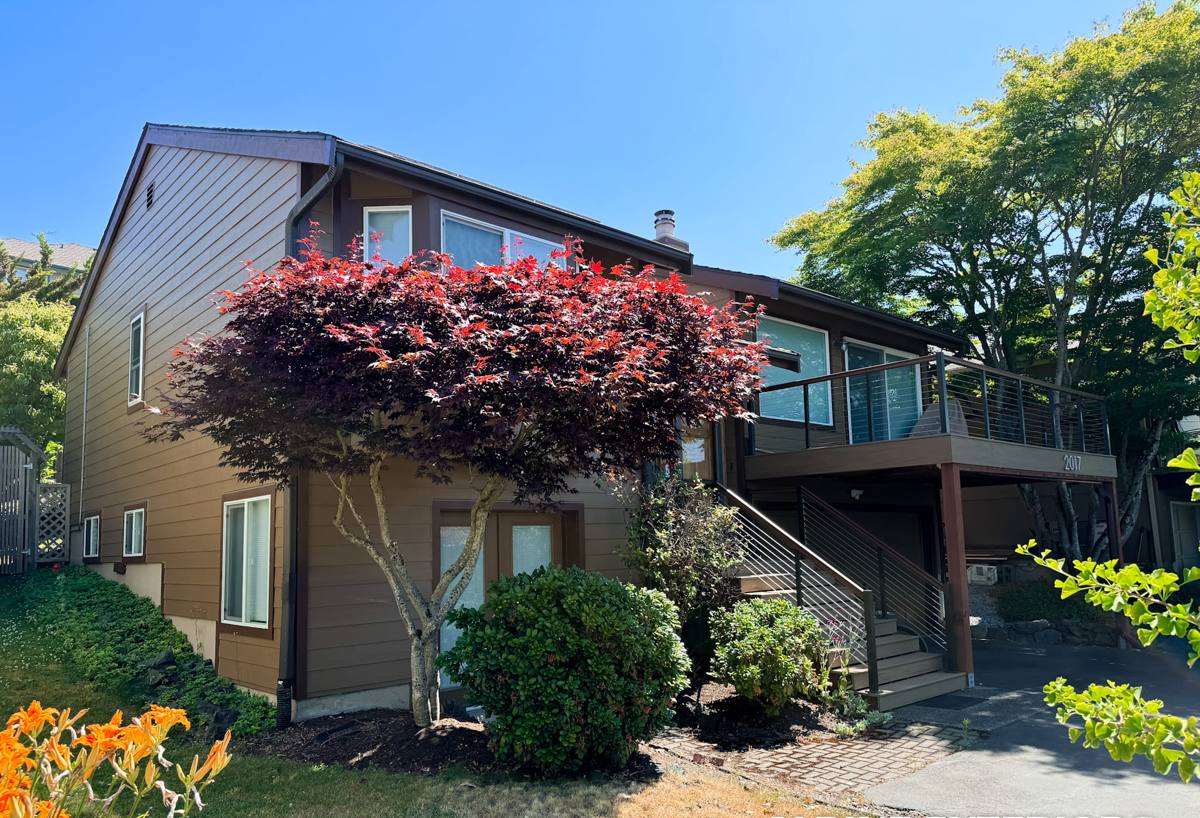
What the Sandy Point Climate Actually Does to a Roof
Salt Air and Metal Components
Every roof has metal in it somewhere — flashing, fasteners, vent stacks, drip edge. Near the water, that metal is exposed to airborne salt on a near-constant basis. Bare or poorly coated steel fasteners and flashing corrode faster here than they would even a short distance inland. The fix isn't complicated, but it does require choosing the right materials up front rather than defaulting to whatever's cheapest at the supply house.
Driving Rain, Not Just Rain
Whatcom County gets plenty of straight-down rain, but Sandy Point's exposure means wind-driven rain is a bigger factor — water pushed sideways and upward under laps, around penetrations, and into any gap in the flashing detail. A roof system built for calmer conditions can pass fine for years and still fail here, because the water is attacking from angles a standard install doesn't account for.
Moss Season Runs Long
Shade from mature trees, marine humidity, and mild winters add up to a moss season that starts earlier and lasts longer here than in drier parts of the county. Moss isn't just cosmetic — it holds moisture against the roofing material, lifts shingle edges, and works its way into seams over time. A new roof should be specified with that in mind, not treated as a maintenance problem to deal with later.
What a Correctly Built New Roof Looks Like Out Here
A new roof installation in Sandy Point should be built as a system, not a stack of shingles. That means every layer — deck, underlayment, flashing, fasteners, ventilation, and the finish material itself — is chosen and installed to work together under this specific exposure.
- Corrosion-resistant fasteners and flashing rated for coastal or marine-adjacent exposure, not standard-grade hardware
- A high-quality synthetic or self-adhering underlayment at eaves, valleys, and penetrations to stop wind-driven water before it reaches the deck
- Balanced intake and exhaust ventilation sized correctly for the roof, so moisture doesn't sit trapped under shaded, damp conditions
- Zinc or copper strips at ridge areas where moss pressure is heaviest, where the homeowner wants a long-term moss deterrent built into the install
- Proper deck inspection and any necessary sheathing repair before new material goes down — covering a soft deck just creates a hidden problem
- Flashing details at every wall intersection, chimney, and penetration sealed for wind-driven rain, not just gravity-fed runoff
Roofing Material Options for a Sandy Point Home
There's no single "right" roofing material for every house — it depends on the home's style, budget, and how much long-term maintenance the owner wants to take on. What matters more than the brand name is whether the material and its installation account for salt exposure, wind-driven rain, and moss pressure.
| Material | How It Handles This Climate | Maintenance Reality |
|---|---|---|
| Architectural asphalt shingle | Solid performance when paired with proper underlayment and ventilation; algae-resistant granules help with moss and moisture staining | Periodic moss and debris removal; typical 25-30 year lifespan in this exposure |
| Standing seam metal | Sheds wind-driven rain very well and resists moss better than most materials due to its smooth surface; needs coastal-rated fasteners and finish | Low maintenance once installed correctly; longer service life |
| Wood shake | Traditional look but naturally more moisture-absorbent, which is a real liability in a long moss season and marine humidity | Higher upkeep — regular treatment and moss control needed to avoid rot |
| Composite/synthetic shingle | Doesn't absorb moisture the way wood does; performs consistently under salt and rain exposure | Moderate; less prone to moss than wood, still benefits from periodic cleaning |
Our Installation Process
1. On-Site Assessment
We start with a walk of the roof and attic space where accessible, checking deck condition, existing ventilation, flashing points, and any signs of past moisture intrusion. In Sandy Point specifically, we're also looking at tree cover and roof orientation relative to prevailing wind and rain direction, since that shapes where flashing and underlayment need extra attention.
2. Tear-Off and Deck Inspection
Old roofing comes off down to the deck so we can actually see what's underneath. Any soft, delaminated, or water-damaged sheathing gets replaced before anything new goes down — installing a new roof over a compromised deck just hides the problem instead of solving it.
3. Underlayment and Flashing
This is where most of the long-term weather resistance actually comes from. We install underlayment rated for the exposure, with extra attention at eaves, valleys, and every roof penetration, and build flashing details that account for wind-driven rain rather than assuming water only ever moves straight down.
4. Ventilation Check and Correction
We confirm intake and exhaust ventilation are balanced for the roof's size and shape. Under-ventilated roofs trap moisture, which accelerates deck rot and gives moss more of a foothold — a problem that's already elevated by Sandy Point's shade and humidity.
5. Material Installation
Whatever material the homeowner has chosen goes down to manufacturer specification, using coastal-rated fasteners and hardware throughout — not a mix of whatever was in the truck.
6. Final Walkthrough
We walk the finished roof and the property line with the homeowner, review what was done, and go over any moss-prevention or maintenance steps specific to the site.
Cost Factors Worth Understanding Before You Get Quotes
Roofing quotes can vary widely, and the difference usually comes down to specific, explainable factors rather than one contractor simply being cheaper across the board.
| Factor | Why It Moves the Price |
|---|---|
| Roof size and complexity | More valleys, dormers, and penetrations mean more flashing detail and labor time |
| Deck condition | Discovering rotten or soft sheathing during tear-off adds repair work not visible from the ground |
| Material choice | Asphalt, metal, and composite systems have different material and labor costs |
| Fastener and flashing grade | Coastal-rated hardware costs more than standard-grade, but it's what actually holds up near the water |
| Ventilation corrections | Adding or rebalancing intake/exhaust vents is sometimes needed and adds labor |
| Access and site conditions | Tree cover, steep pitch, or limited staging area near the water can affect labor time |
Homeowners should expect a written estimate that breaks down these factors rather than a single lump number, so it's clear what's driving the price.
Why It Matters That We Already Work in Sandy Point
A roof installed by a crew that hasn't worked this specific stretch of coastline before isn't necessarily a bad install — but it's more likely to miss something, because the failure points here are different from what shows up in a typical inland job. Knowing which fastener grades actually hold up, where wind-driven rain tends to find its way in on homes with this kind of exposure, and how aggressive the moss pressure gets under the tree cover in this neighborhood all come from having done the work here before, not from a general roofing background alone.
We're a Ferndale-based crew, and Whatcom County's waterfront neighborhoods, including Sandy Point, are a regular part of our work — not an occasional trip out. That matters for things like warranty follow-up and being available if a question comes up after the job is done, since we're not driving in from somewhere else.
Signs Your Sandy Point Roof May Already Need Replacement
- Granule loss showing up in gutters or at downspout outlets
- Moss established across multiple sections of the roof, not just isolated patches
- Soft or spongy spots noticeable when walking the roof deck
- Daylight visible through the roof deck from inside the attic
- Curling, cracking, or missing shingles concentrated on the sides facing prevailing wind and rain
- Rust staining around flashing, vents, or fasteners
- Water stains on interior ceilings, especially near chimneys or valleys
Get a Straightforward Look at Your Roof
If you're weighing a new roof for a Sandy Point property, we're happy to come take a look, walk you through what we're seeing, and put together a clear, itemized estimate — no pressure, no hard sell. Use the form below to get started.