 Ferndale
 Why Bellingham-Area Roofs Wear Differently
Roofs in the Bellingham area take a different kind of beating than roofs a few hundred miles inland. Being this close to Bellingham Bay and the broader Puget Sound means salt-laden air is a constant, low-grade stressor on metal flashing, fasteners, and vent components. Add in driving rain that comes sideways during winter wind events, plus a moss season that can run from October clear through May in shaded or north-facing sections of a roof, and you've got three separate aging processes working on the same roof at the same time. A roof repair here has to account for all three, not just patch the spot that's visibly leaking.
None of this means Bellingham and Whatcom County roofs fail faster than average — most hold up fine for their expected lifespan when they're built and maintained correctly. But "correctly" here means details that don't matter as much in drier climates: proper flashing metal, real moss control, and underlayment that can handle sustained wet weeks rather than the occasional afternoon shower.
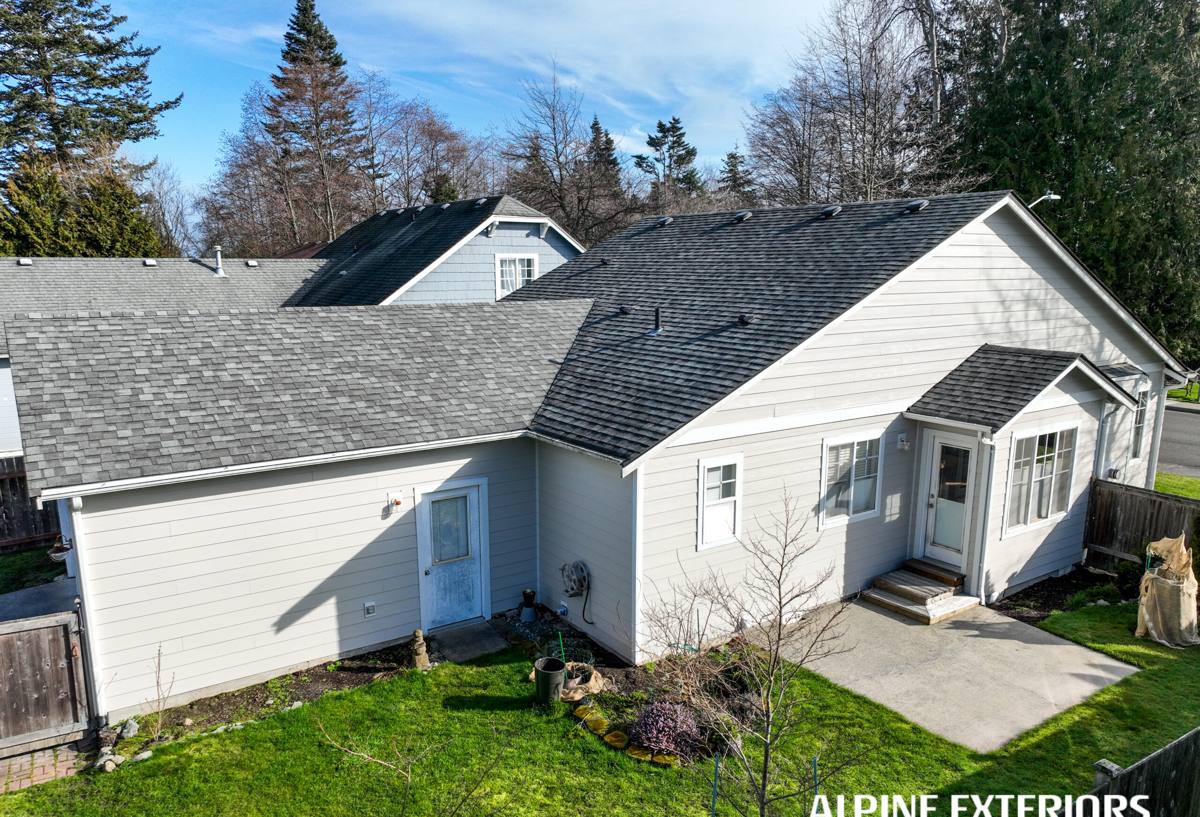
The Roof Repair Issues We See Most Often Locally
- Moss and algae colonies on shaded slopes, especially north- and east-facing sections that don't get direct sun to dry out between rain events
- Flashing failures around chimneys, skylights, and roof-to-wall transitions, where metal has corroded or sealant has broken down from years of damp cycling
- Lifted or cracked shingle tabs from wind-driven rain forcing water sideways and up under the shingle edge instead of straight down
- Clogged or failing gutters and downspouts that back water up under the roof edge during heavy rain
- Soft or stained sheathing at valleys and eaves where water has been finding a slow path in for longer than anyone noticed
- Nail pops and fastener corrosion, more common near the coast where salt air accelerates metal breakdown
Most of these don't show up as an obvious leak right away. They show up first as a dark streak on the ceiling, a musty smell in an attic, or moss creeping past the ridge line. By the time water is visibly dripping inside, the damage usually extends further than the point where it's showing.
What a Correct Roof Repair Actually Involves
Diagnosis Before Patching
A repair that just seals the spot where water is showing up inside the house is often treating the symptom, not the source — water travels along the underside of roofing material before it drips through, so the entry point can be a foot or more from the stain. A proper repair starts with tracing the actual path: pulling back shingles or roofing material around the suspect area, checking the underlayment condition, and confirming whether the sheathing underneath is still sound or has started to soften.
Tear-Back, Not Just Overlay
Cheap fixes involve smearing roofing cement over a crack or gap and calling it done. That buys a season, maybe two, before it fails again — usually worse. A correct repair removes the damaged section back to solid material, replaces any compromised sheathing, and reinstalls new roofing material and underlayment properly lapped so water sheds the way it's supposed to.
Flashing Done Right
Flashing is where most Whatcom County roof leaks actually originate — chimneys, skylights, plumbing vents, and roof-to-wall intersections. Given the salt air and sustained moisture here, we favor durable flashing metal and proper step-and-counter-flashing techniques over caulk-heavy shortcuts. Caulk fails; correctly lapped and fastened metal doesn't need to rely on a sealant bead to keep water out.
Matching Existing Materials
On a repair, matching the existing shingle or roofing profile, color, and exposure matters both for appearance and for how the new section performs alongside the old. A mismatched patch can actually create a new water path if the overlap and exposure aren't consistent with the surrounding roof.
Roof Repair or Roof Replacement?
Not every roof problem calls for a full tear-off, and not every leak should be treated as "just a repair" if the underlying roof is near the end of its service life. Here's how we generally think about the decision:
| Situation | Repair Usually Makes Sense | Replacement Worth Discussing |
|---|---|---|
| Age of roofing material | Under 15-20 years, isolated issue | Approaching or past expected lifespan |
| Extent of damage | Localized — one valley, one flashing point, a small section | Multiple areas failing independently across the roof |
| Moss/algae condition | Surface growth, treatable | Granule loss and mat buildup under the moss |
| Sheathing condition | Solid, dry once uncovered | Soft, delaminating, or repeatedly wet |
| Interior damage | None or minor staining | Recurring leaks, insulation soaked, mold concerns |
We'll always tell you honestly which category your roof falls into. A repair that's likely to fail again within a year or two isn't a good use of your money, and we'd rather say that upfront than sell a patch we don't believe will hold.
Our Process for a Bellingham Roof Repair
- Inspection. We get on the roof (or use a ladder and camera where pitch or access doesn't allow safe foot traffic) and look at the whole roof, not just the reported problem area — moss coverage, flashing condition, gutter function, and any secondary trouble spots.
- Written estimate. You get a clear explanation of what we found, what we recommend, and why — including whether we think repair is the right call versus a longer conversation about replacement.
- Scheduling around weather. Roof work needs a dry window. In Whatcom County that sometimes means working around a rain forecast rather than a fixed date, and we'll communicate that plainly rather than rushing a repair into wet material.
- The repair itself. Tear-back of the damaged section, sheathing replacement if needed, correct flashing and underlayment, and matched roofing material installed to proper exposure and fastening specs.
- Cleanup and walk-through. Debris and old material hauled off, and we'll show you what was done and answer questions before we consider the job finished.
Materials and Products We Use — and Why
For most Bellingham-area roof repairs we're matching into existing composition (asphalt) shingle roofs, which make up the large majority of homes in the area, though we also work on cedar shake and metal roofing repairs. A few standards we hold regardless of material:
- Self-adhered ice-and-water membrane at valleys, eaves, and around penetrations — even though Whatcom County doesn't see heavy ice damming, this membrane also does the job of stopping wind-driven rain intrusion, which is the more relevant threat here
- Metal flashing over sealant-dependent fixes wherever the roof geometry allows it, since sealant alone breaks down faster in a sustained-moisture climate
- Matched shingle products from the same or a comparable manufacturer line to keep warranty coverage and appearance consistent
We're generally cautious about repair approaches that rely heavily on exposed sealant or mastic as the primary water barrier rather than as a secondary detail. It's not that these products don't have a place — they do, for small fastener heads and minor detail work — but leaning on sealant as the main defense against water intrusion is a maintenance burden that doesn't hold up well through a Whatcom County wet season, and it's a shortcut we try to avoid on any repair we're putting our name on.
What Affects the Cost of a Roof Repair
| Factor | Why It Matters |
|---|---|
| Roof pitch and access | Steep or high roofs take longer and need more safety setup |
| Extent of sheathing damage | Rotten decking has to be cut out and replaced before anything goes back on |
| Size and location of the repair area | A single flashing point costs far less than a full valley or slope section |
| Material match availability | Discontinued or unusual shingle profiles can add cost and lead time |
| Moss/organic growth removal | Heavy buildup needs careful removal before repair work can even start |
We don't quote roof repairs sight unseen over the phone — too many of these factors only show up once someone's actually on the roof. What we can promise is a written estimate before any work starts, with no pressure to upgrade to a full replacement if a repair is genuinely the right call.
Maintenance That Extends the Life of a Repair
A well-done repair should last, but a few maintenance habits make a real difference in this climate:
- Clean moss and debris off the roof surface at least once a year, more often on heavily shaded slopes
- Keep gutters and downspouts clear so water isn't backing up under roof edges during heavy rain
- Trim back overhanging branches that keep sections of the roof shaded and slow to dry
- Check attic ventilation — poor airflow traps moisture underneath the roof deck and accelerates rot from the inside
- Have flashing points (chimney, skylights, vents) looked at every couple of years, since these fail well before the field of the roof does
Why Hiring a Crew That Already Works Bellingham Matters
A roof repair crew that's used to working around Bellingham and the rest of Whatcom County already knows how local weather windows behave, what moss and algae growth actually looks like at different stages, and which flashing and underlayment choices hold up against salt air and driving rain over years, not just in a showroom. That's different from general knowledge — it's the kind of judgment that comes from doing this work in this specific climate repeatedly.
Being local also means we're realistically available if something needs a follow-up look after the next storm, rather than being a crew that did one job and is now three counties away. We're not going to tell you a repair is bigger than it is to run up the bill, and we're not going to tell you a small patch will hold if we don't believe it will — either way, you get a straight answer from a crew that has to stand behind its work in the same community it lives in.
If you've got a leak, a stained ceiling, or a roof section that's been bothering you, we're glad to take a look and give you an honest read on what it needs. Fill out the form below for a free, no-pressure estimate — there's no obligation, and no upsell pitch attached to it.