 Ferndale
 Why Custer Roofs Wear Differently Than Roofs Inland
Custer sits close enough to Bellingham Bay and the Strait of Georgia that salt-laden air is a daily fact of life, not an occasional weather event. Add Whatcom County's long, wet winters and the shaded, tree-lined lots common throughout the area, and you get a roofing environment that's genuinely harder on materials than what a shingle warranty is tested against. Salt air accelerates corrosion on exposed fasteners and metal flashing. Driving rain off the water finds every weak lap, nail pop, and undersized flashing detail. And because temperatures rarely get cold enough or dry enough to fully halt biological growth, moss and algae get a head start every fall and don't really let go until late spring.
None of that means a roof in Custer is doomed to fail early. It means the roof has to be built correctly for this specific exposure, with the right underlayment, the right fastener hardware, and enough attic ventilation to keep moisture from working against the roof deck from underneath as well as from above. A roof that would perform fine in a drier part of the state can struggle here if it was installed to a generic spec instead of a coastal Whatcom County one.
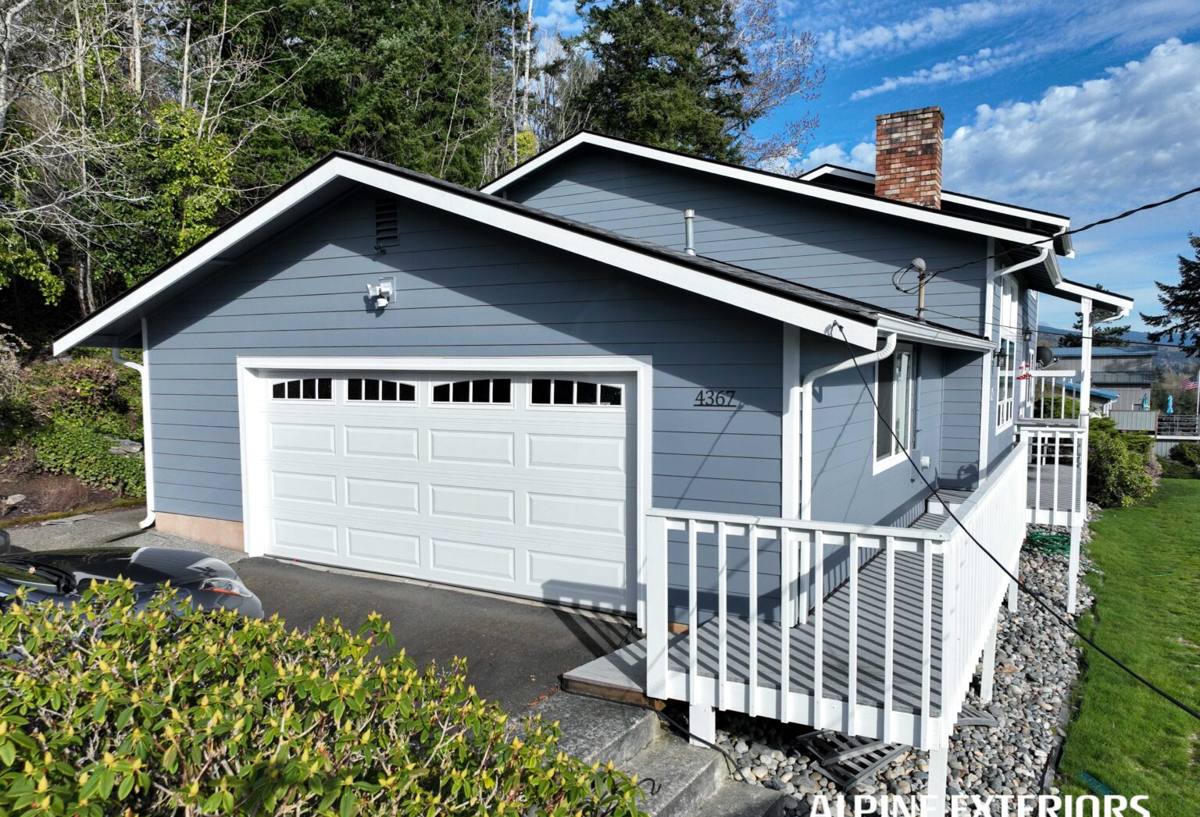
Signs a Custer Roof Needs Replacement, Not Another Repair
Roof repair has its place, but repeated patching on an aging roof usually costs more over a few years than one correctly done replacement — and it doesn't solve the underlying moisture or ventilation problem. Here's how we tell homeowners the difference during an inspection.
Repair Is Usually Enough When
The damage is isolated — a handful of storm-lifted shingles, one failed flashing detail, a single vent boot that's cracked from UV exposure — and the rest of the roof still has good granule coverage, flat-lying shingles, and a sound deck underneath.
Replacement Is the Honest Answer When
You're seeing granules collecting in gutters and downspouts, shingles that are curling or cupping at the edges, soft spots when walking the roof, daylight through the attic decking, recurring moss growth that keeps lifting shingle tabs no matter how often it's cleaned, or a roof that's simply reached the back half of its expected service life with multiple prior repairs already on record. In Custer specifically, we also weigh how much of the roof faces the prevailing wind and rain — a roof that's taken the brunt of weather off the water for 20+ years often shows its age faster on that exposure than the rest of the field.
What a Correct Roof Replacement Actually Involves
A roof replacement is more than swapping old shingles for new ones. Done right for this climate, it's a full system:
Tear-Off and Deck Inspection
Full removal down to the decking, not a layover. This is the only way to actually see the plywood or OSB underneath and catch soft, delaminated, or water-stained sheathing before it's covered up again. Any bad decking gets replaced — patched sections don't hold fasteners reliably and they show up later as soft spots.
Ice and Water Shield at Vulnerable Areas
Valleys, eaves, and any low-slope transitions get a self-adhering waterproof membrane underneath the field underlayment. This is the detail that matters most against driving rain — it's a second line of defense exactly where wind-driven water is most likely to get pushed backward under the shingle courses.
Synthetic Underlayment Across the Field
Synthetic underlayment resists moisture absorption and holds up to the extended exposure a roof sometimes sees mid-project when weather doesn't cooperate — a real consideration on a job site this close to the water.
Flashing Done in Metal, Not Shortcuts
Step flashing at walls and chimneys, proper drip edge at eaves and rakes, and correctly lapped valley metal. Flashing failures — not shingle failures — are the single most common cause of roof leaks we find on older Custer homes, and they're almost always fixable only by doing the flashing over, not caulking over it.
Balanced Attic Ventilation
Intake at the soffits, exhaust at the ridge, sized to actually balance — covered in more detail below, because it's one of the most overlooked parts of a replacement and one of the most consequential in this climate.
Corrosion-Resistant Fasteners and Hardware
Given the salt air, we use fastener and flashing hardware rated for coastal exposure rather than standard-grade hardware that's more prone to premature rust staining and weakening near the coast.
Material Options for a Salt-Air, High-Moss Climate
There's no single "best" roofing material for Custer — the right choice depends on your budget, your roof's exposure, and how much long-term maintenance you're willing to take on. Here's an honest comparison of the main options we install and discuss with homeowners in this area.
| Material | Moss/Algae Resistance | Salt-Air Durability | Typical Lifespan | Relative Cost |
|---|---|---|---|---|
| Architectural asphalt shingle (algae-resistant) | Good, with granules formulated to resist algae staining | Good when fasteners/flashing are corrosion-resistant | 25–30 years | $ |
| Standard 3-tab asphalt shingle | Fair — more prone to moss taking hold in shaded areas | Fair | 15–20 years | $ |
| Metal (standing seam or panel) | Excellent — moss and algae have little to hold onto | Very good with the right coating and stainless or coated fasteners | 40–50+ years | $$$ |
| Cedar shake | Poor without diligent, ongoing maintenance | Fair — needs regular treatment near salt air | 20–30 years with upkeep | $$ |
For most Custer homes, we lean toward algae-resistant architectural asphalt shingle as the balance point of cost, appearance, and performance, and metal for homeowners who want to largely take moss and long-term maintenance off their plate in exchange for a higher upfront cost. We're honest with homeowners about cedar shake: it can look great, but in a climate this wet and shaded, it demands a maintenance commitment that most people underestimate before they've lived with it a few winters — that's a fair trade-off to weigh, not a reason to rule it out if you're prepared for the upkeep.
Ventilation and Moisture: The Part You Can't See
A new roof surface can still fail early if the attic underneath it isn't breathing correctly. In a climate as wet as Whatcom County's, trapped attic moisture condenses on the underside of the decking, which rots plywood and OSB from the inside out — often long before it's visible as a leak from the outside. It also feeds the same moss and algae you're trying to keep off the shingles, since a warm, damp attic can push extra moisture up through the roof deck.
Correct ventilation balances intake air at the soffits with exhaust air at the ridge, sized to the square footage of the attic. We check and correct this as part of every replacement — it's not an upsell, it's a condition for the new roof to actually reach its expected lifespan.
Our Roof Replacement Process
- On-site inspection and estimate. We walk the roof, check the attic, and photograph problem areas so you can see exactly what we're seeing before any decisions get made.
- Written scope and material selection. You get a clear, itemized scope — tear-off, decking, underlayment, flashing, ventilation, and material — so there's no ambiguity about what's included.
- Scheduling around weather windows. We plan tear-off days for realistic dry windows and keep the roof protected if conditions turn, rather than leaving a deck exposed overnight.
- Tear-off and deck repair. Full removal, deck inspection, and replacement of any compromised sheathing before anything new goes down.
- Underlayment, flashing, and ventilation installed to spec. Every detail above, done in the order that actually keeps water out.
- Final walk-through. We review the finished roof with you, including gutters and any debris cleanup, before calling the job complete.
Homeowner Maintenance Checklist for a New Custer Roof
A correctly installed roof still benefits from a little seasonal attention, especially given how long moss season runs here. A few habits go a long way toward protecting your investment:
- Clean gutters and downspouts at least twice a year — clogged gutters back water up under the eaves
- Trim back overhanging branches to reduce shade and debris buildup, both of which encourage moss
- Have moss physically removed rather than pressure-washed, which can strip granules and shorten shingle life
- Check attic ventilation isn't blocked by insulation piled over soffit vents
- Schedule a quick visual inspection after any major windstorm off the water
- Address small leaks or lifted shingles promptly rather than waiting for the next dry season
Why It Matters That We Already Work in Custer
Roofing crews that mostly work drier, inland areas sometimes under-spec ventilation or skip the extra ice-and-water membrane because it simply isn't necessary where they usually build. A crew that regularly works Custer and the surrounding Ferndale area knows which exposures take the worst of the wind and rain off the water, how aggressively moss establishes itself under the tree cover common on local lots, and which flashing details tend to fail first on homes of a given age in this area. That local pattern recognition shows up in fewer callbacks and a roof that's actually built for the conditions it has to survive, not a generic spec sheet.
We also understand the practical side of working here — permitting through Whatcom County, coordinating around the wetter months so tear-off days land in realistic weather windows, and being reachable afterward if a question comes up, rather than being a crew that did one job in the area and moved on.
Ready for a Straight Answer on Your Roof?
If your roof is showing its age, or you just want an honest read on how many years it realistically has left, we're happy to take a look. Fill out the form below for a free, no-pressure estimate — we'll tell you what we actually see, not just what sells a job.