 Ferndale
 Sandy Point Sits Right at the Edge of the Weather — and Siding Feels It First
Sandy Point is one of the more exposed places to own a home in Whatcom County. Sitting out on the water with open exposure to wind off the Strait of Georgia, homes here take a different kind of beating than a house a few miles inland in Ferndale. Salt-laden air moves across these lots constantly, driving rain comes in sideways during winter wind events instead of falling straight down, and the long Pacific Northwest wet season keeps north and shaded walls damp enough, long enough, for moss and algae to take hold and stay there for months at a time.
None of that is unusual for this stretch of Washington coastline. But it does mean the siding on a Sandy Point home is doing more work than siding on a typical inland property, and it will show wear faster if the material or the installation isn't built for it. This page is about what a proper siding installation actually needs to account for on a Sandy Point home, and how we approach that job.
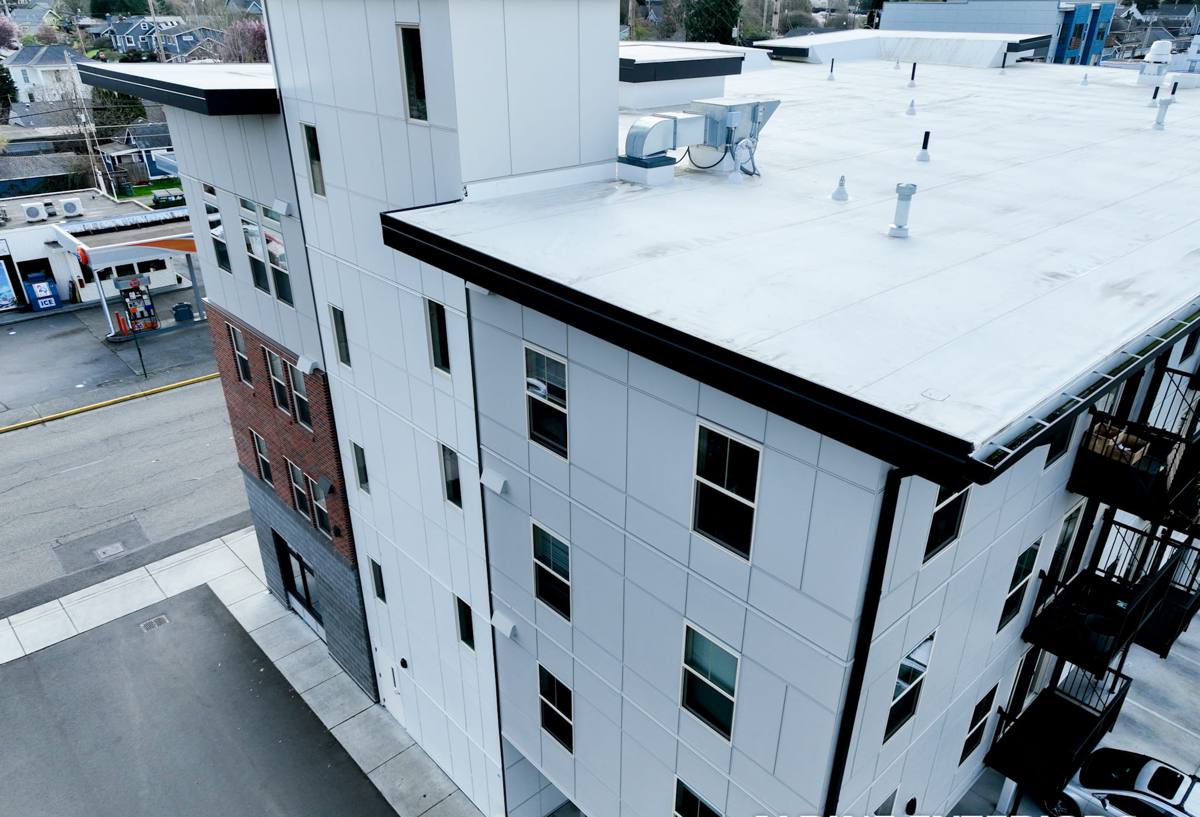
What Salt Air, Driving Rain, and Moss Actually Do to Siding
These three stresses attack siding in different ways, and they compound each other. Salt air accelerates corrosion on any exposed metal — fasteners, flashing, trim hardware. Wind-driven rain doesn't just wet the surface of a wall; it tests every seam, joint, and piece of flashing behind the siding, finding any gap in the water management system. And a long moss season keeps organic growth fed with moisture on any surface that doesn't dry out quickly or resist it in the first place.
| Material | Salt Air Exposure | Wind-Driven Rain | Moss / Algae Resistance |
|---|---|---|---|
| Cedar / primed spruce | Absorbs moisture, accelerates rot over time | Prone to swelling and cupping at joints | Organic surface feeds growth without regular treatment |
| Vinyl | Can become brittle and chalky under salt/UV exposure | Water can get behind panels at seams | Growth sits on the surface but panels can warp, opening gaps |
| Engineered wood (LP SmartSide) | Edges vulnerable if seals fail | Sensitive to sustained moisture at cuts and joints | Wood-based substrate can support growth if finish is compromised |
| Fiber cement (James Hardie) | Non-combustible, doesn't rust or corrode | Dimensionally stable; doesn't swell or rot from water exposure | Factory finish resists mildew growth better than field-applied paint |
The material matters, but so does the installation. Even the best siding product will fail early if the water management behind it isn't done right — and in a place like Sandy Point, there's very little margin for a shortcut.
Why We Install James Hardie Fiber Cement Here
We install James Hardie fiber cement siding exclusively, and a waterfront property like a Sandy Point home is exactly the situation that standard was built around. Fiber cement doesn't rot, swell, or provide fuel for pests the way wood-based products can, and it holds up to repeated wetting and drying cycles without losing its shape at the joints and edges — which is where driving rain does the most damage to lesser materials.
ColorPlus Finish and Moss Resistance
James Hardie's ColorPlus finish is baked on in a factory-controlled process rather than brushed or sprayed on site. That finish holds color longer under UV and salt exposure than field-applied paint, and it resists the kind of surface breakdown that gives moss and algae something to grip onto. On a wall that stays shaded and damp for months of the year, that finish quality is the difference between a wall that stays clean-looking with normal washing and one that needs repainting well ahead of schedule.
Climate-Engineered for This Region
James Hardie makes region-specific product lines engineered for different climate exposures, and the HZ5 line is built for areas like ours — places with sustained damp weather and freeze-thaw cycling, rather than the hot, dry, or hard-freeze climates other HZ lines are engineered around. For a Sandy Point home facing open water, we install to the HZ5 specification because it's built for exactly this kind of exposure.
What Correct Installation Involves at Sandy Point
Water Management Behind the Siding
The siding itself is the last line of defense, not the only one. A correct installation starts with a weather-resistant barrier properly lapped and sealed, flashing integrated at every window, door, and penetration, and — where the wall assembly calls for it — a rainscreen gap that lets any water that does get behind the siding drain and dry out instead of sitting against the sheathing. On an exposed waterfront lot, skipping or shortcutting this layer is where most premature siding failures actually start, regardless of what material is on the outside.
Fasteners and Hardware
Salt air corrodes standard fasteners faster than it does a few miles inland. We use corrosion-resistant fastener and trim hardware specifications appropriate to that exposure, because a rusted fastener head eventually stains the siding face and can compromise the hold long before the siding itself wears out.
Clearances and Sealant Details
Proper clearance from grade, decks, roofs, and other transitions keeps water from wicking up into the siding or pooling against the bottom edge. Sealant choices and joint detailing also need to hold up to sustained damp conditions rather than drying out and cracking after a season or two.
Our Installation Process for Sandy Point Homes
- On-site inspection — we look at current siding condition, sheathing underneath where accessible, and the home's specific wind and moisture exposure.
- Scope and product selection — we confirm the correct James Hardie HZ5 products, profiles, and ColorPlus color for the home.
- Removal and substrate check — old siding comes off and we check the sheathing underneath for moisture damage before anything new goes on, since covering a wet or compromised substrate defeats the purpose of a new install.
- Water barrier and flashing — weather-resistant barrier, flashing, and rainscreen detailing installed to manufacturer specification.
- Siding installation — installed to James Hardie's fastening, clearance, and joint specifications, which is also what keeps the manufacturer warranty intact.
- Trim, caulking, and final detailing — appropriate for coastal exposure.
- Walkthrough and cleanup — before we consider the job done.
Before You Sign a Siding Contract at Sandy Point, Make Sure It Includes:
- A written product spec — line, profile, and color — not just "Hardie siding" as a generic line item
- Corrosion-resistant fasteners and trim hardware called out specifically, not left to whatever's on the truck
- A described water-management plan: house wrap, flashing details, and rainscreen where applicable
- A sheathing inspection step, with a plan for what happens if moisture damage is found underneath the old siding
- Disposal of old siding and debris included in the scope
- Manufacturer-compliant installation, since installation errors are the most common reason a Hardie warranty claim gets denied
Cost Factors for a Sandy Point Siding Project
| Factor | Why It Affects Cost |
|---|---|
| Home size and wall complexity | More square footage and more corners, gables, and trim details mean more material and labor |
| Condition of existing siding and sheathing | Moisture damage found during tear-off may require sheathing repair before new siding goes on |
| Product line and profile | HZ5 lap siding, panel siding, and trim/accent boards vary in material cost |
| Trim and accessory scope | Corner boards, window and door trim, and fascia detailing add labor and material |
| Site access and exposure | Waterfront lots can involve tighter access or more careful staging for equipment and material |
We give a firm number after seeing the actual home — condition of what's underneath the current siding is the biggest variable on any older coastal property.
Living With Fiber Cement Siding in This Climate
James Hardie siding is low-maintenance compared to wood or engineered wood siding, but "low-maintenance" doesn't mean "no maintenance" — especially this close to the water. A periodic gentle rinse (a garden hose, not a pressure washer aimed directly at the siding) removes salt residue and surface grime before it has a chance to build up and give moss something to hold onto. Keeping gutters clear and grading and drainage working correctly around the foundation reduces the amount of standing moisture the lower courses of siding are exposed to. Caulking and sealant joints are worth a visual check every year or two, since coastal exposure works those joints harder than an inland location would.
Why Hiring a Crew That Already Works Sandy Point Matters
A siding crew that hasn't worked waterfront properties in Whatcom County can still do competent general siding work, but they're learning the site-specific lessons — wind exposure, salt corrosion patterns, moisture behavior at this kind of location — on your house. A crew that already works Sandy Point and the surrounding Ferndale area knows which details fail first in this exposure, plans logistics for waterfront-lot access ahead of time, and installs to the product specification that actually holds up here rather than a generic one. That familiarity shows up years later in how the siding is still performing, not just in how it looks on installation day.
If you're planning a siding project for a Sandy Point home, we're glad to take a look and walk you through what your specific house needs. Reach out for a free, no-pressure estimate — there's no obligation, and you'll get a straight answer about condition, scope, and cost before you decide anything.