 Ferndale
 Siding Built for the Lummi Nation Area's Coastal Climate
Homes in and around Lummi Nation sit close enough to the water that siding takes a different kind of beating than it would twenty miles inland. Salt-laden air off the bay, wind-driven rain that comes in sideways more often than straight down, and a moss season that can stretch from October well into spring all work on a house's exterior at the same time. Siding that's rated for a "Pacific Northwest climate" in general marketing copy doesn't always hold up to this specific combination of salt, moisture, and shade. This page is about what a correct siding replacement looks like for homes in this part of Whatcom County, and why the details matter more here than they would in a drier, inland neighborhood.
We're a Ferndale-based crew, and Lummi Nation is part of our regular service area — not a stretch assignment we take once a year. That matters for a job like this, where the difference between siding that lasts and siding that fails early usually comes down to details a crew only gets right through repetition in this exact climate.
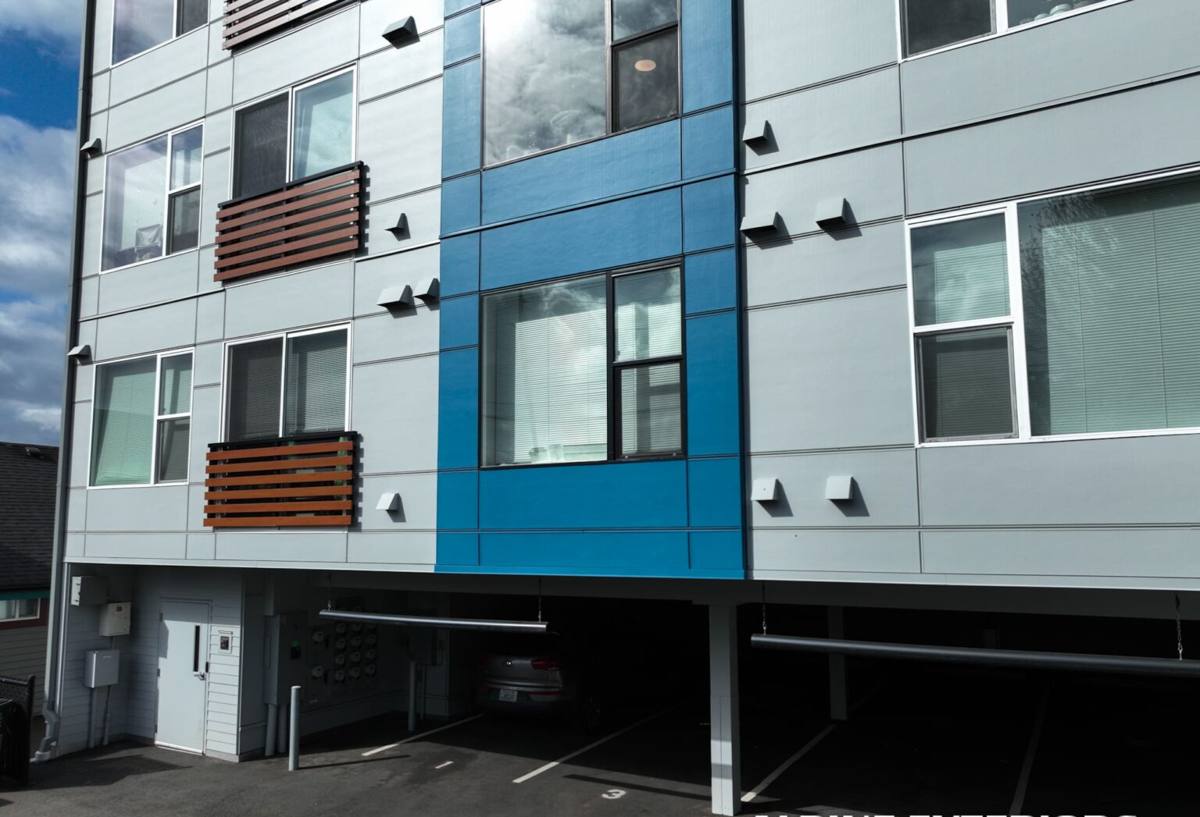
What Salt Air, Rain, and Moss Actually Do to Siding
Each of these three conditions attacks siding differently, and a lot of premature siding failure in this area comes from products or installations that only accounted for one or two of them.
Salt Air
Airborne salt accelerates corrosion on any exposed metal — fasteners, flashing, trim edges — and it settles into porous or lightly finished siding surfaces, where it draws moisture back in even on dry days. Over years, that cycle of drawing in moisture and drying out again stresses paint film, caulking, and any wood-based product far more than it would in a low-salinity inland climate.
Driving Rain
Wind off the water pushes rain sideways into wall assemblies, not just down. That means lap siding, window and door flashing, and the water-resistive barrier behind the siding have to work as a system — not just shed water off the face of the wall, but manage what gets forced up and under laps and around penetrations. A siding job that looks fine on a calm day can still let water in during a wind-driven storm if the flashing details were rushed.
Moss and Algae
Shade from mature trees, combined with a long wet season, gives moss and algae months at a time to establish themselves on north- and west-facing walls. Beyond the cosmetic issue, moss holds moisture against the siding surface far longer than open air would, which is exactly the condition that rots wood-based siding and breaks down cheaper factory finishes.
Signs Your Siding Has Reached the End of Its Useful Life
Homeowners in this area often wait too long to replace siding because early failure signs look cosmetic rather than structural. Worth checking for:
- Soft or spongy spots when you press on the siding, especially near the bottom courses and around windows
- Paint that's peeling or bubbling rather than just fading — a sign moisture is trapped behind the finish
- Persistent moss or dark streaking that comes back within weeks of cleaning
- Visible gaps, warping, or buckling at the seams and laps
- Rust staining below nail heads or metal trim
- A musty smell or discoloration on interior walls that share an exterior wall with visibly aged siding
- Siding that's original to a home built more than 20-25 years ago, particularly if it's wood-based
Any one of these on its own might just need a repair. Several together, especially on the same wall, usually mean the siding and the moisture barrier behind it are both compromised and a full section — or the whole house — needs replacing rather than patching.
What a Correct Siding Replacement Involves
Replacing siding correctly in this climate is less about the siding material itself and more about everything that goes on before it's hung. The material choice matters, but a great product installed carelessly will fail faster here than a good product installed right.
Tear-Off and Sheathing Inspection
Old siding has to come off far enough to expose the sheathing underneath, and that sheathing needs to be inspected — not assumed to be sound. Salt-air climates hide rot behind intact-looking siding longer than dry climates do, because the surface doesn't visibly crack the way it might elsewhere. Any soft or delaminated sheathing gets replaced before anything new goes back on.
Water-Resistive Barrier
A new, continuous weather barrier goes over the sheathing, lapped correctly from bottom to top so water is always directed outward and down, never trapped behind a seam. This layer is invisible once the job is done, which is exactly why it's the step corners get cut on with lower-cost installs.
Flashing at Every Penetration
Windows, doors, hose bibs, vents, and any other wall penetration need proper flashing integrated with the weather barrier — not just caulked over. Given how much wind-driven rain this area sees, flashing shortcuts show up as leaks within a few wet seasons, not decades.
Fastening and Clearances
Fiber cement siding has manufacturer-specified fastener patterns, and correct ground and roof clearances matter more in a moss-prone, high-moisture area than the minimum code numbers might suggest. Siding installed too close to grade or a roofline stays damp longer and moss takes hold faster.
Why We Install Only James Hardie Fiber Cement Here
We standardized on James Hardie fiber cement siding for every home we work on, including in the Lummi Nation area, and the reasoning is climate-driven, not brand loyalty. Hardie's HZ5/HZ10 product lines are engineered specifically for wetter, cooler climates like this one — they're formulated to resist moisture absorption and swelling in ways that wood-based and some engineered wood siding products are not built to handle over the long term. The factory-applied ColorPlus finish is baked on under controlled conditions, which holds up better against the peeling and fading that salt air and moss accelerate on field-applied paint.
Fiber cement is also non-combustible, which matters to some homeowners independent of the coastal weather concerns. And because Hardie backs the product with a strong, transferable warranty, it protects the investment for whoever owns the home next, not just the person who paid for the job. We don't install vinyl, LP SmartSide, or primed wood siding — not because those products have no place anywhere, but because we've made a professional call that Hardie is the product that holds up best to what this specific climate does to a house, and we'd rather stand behind one system we know inside and out than offer several we're less confident in.
Our Process, Start to Finish
- Walkthrough and assessment — we look at the current siding, sheathing condition where accessible, drainage around the foundation, and any trouble spots like recurring moss or past water staining.
- Written estimate — scope, product line, color, and timeline laid out before any work starts, with no pressure to sign on the spot.
- Tear-off and sheathing repair — old siding removed, sheathing inspected and repaired or replaced as needed.
- Weather barrier and flashing — new barrier installed and lapped correctly, flashing integrated at every window, door, and penetration.
- Hardie installation — siding installed to manufacturer fastening and clearance specs, not just "close enough."
- Trim, caulking, and finish details — the parts that determine how the house actually looks up close, not just from the street.
- Final walkthrough and cleanup — job site cleared, and we walk the finished exterior with the homeowner before calling it done.
Cost Factors for a Lummi Nation Area Siding Replacement
Every home is different, so we don't quote prices without seeing the house, but these are the factors that most affect scope and cost on jobs in this area:
| Factor | Why It Matters Here |
|---|---|
| Extent of hidden sheathing damage | Salt-air climates hide rot longer; damage found during tear-off can change scope |
| Number of window and door openings | Each one needs individual flashing work, which is labor-intensive but critical for wind-driven rain |
| Home height and access | Multi-story or difficult-access walls take longer and need more equipment |
| Amount of trim and detail work | Corner boards, fascia, and accent trim add material and labor beyond flat wall siding |
| Existing moss or moisture damage extent | Heavier remediation on shaded, north-facing walls can add time |
| Siding profile and color selection | Custom ColorPlus colors and wider plank reveals can affect material lead time |
Why a Crew That Already Works This Area Matters
Siding crews that only occasionally work near the water tend to apply the same details they'd use on an inland home — because that's what they're used to. In a salt-air, high-moss climate, that shows up later as premature flashing failure, moss coming back fast on shaded walls, or fasteners that corrode ahead of schedule. A crew that regularly works the Lummi Nation area and greater Ferndale knows which walls on a typical home in this area take the worst weather exposure, where moss tends to establish first, and which flashing details actually get tested by a real wind-driven storm rather than just a code inspection.
Local also means practical things: a crew based in Ferndale can respond quickly if something needs a follow-up look, and is familiar with the permitting process through Whatcom County for exterior work in this area. None of that replaces a careful, honest assessment of your specific house — but it means fewer surprises during the job.
Caring for Your New Siding in This Climate
Fiber cement siding is low-maintenance compared to wood, but "low-maintenance" doesn't mean "no maintenance" in a salt-air, moss-prone climate. A few habits go a long way toward getting the full lifespan out of the investment:
- Rinse siding with a garden hose once or twice a year to clear salt residue and organic buildup, especially on walls facing the water or shaded by trees
- Trim back trees and shrubs that keep siding shaded and damp longer than necessary
- Check caulking around windows, doors, and trim annually and have any cracked or gapped sections resealed
- Address moss at first sign rather than letting it establish — a soft wash is gentler on the finish than pressure washing
- Keep gutters clear so overflow doesn't run down and pool against siding at the roofline
- Watch for any soft spots or discoloration after major storms and have them checked promptly
If you're weighing a siding replacement for a home near Lummi Nation or elsewhere in the Ferndale area, we're happy to take a look and give you a straightforward, no-pressure estimate — no obligation, just an honest read on what your siding actually needs.