 Ferndale
 Roof Damage After a Whatcom County Storm Isn't Always Obvious
Marietta sits close enough to Bellingham Bay and the Nooksack delta that homes here take a different kind of weather beating than roofs further inland. Wind off the water, driving rain that comes in sideways during a fall or winter blow, and salt-laden air all work on a roof in ways that aren't always visible from the ground. A storm rolls through, the yard gets cleaned up, and the roof looks fine — until a stain shows up on a ceiling three weeks later, usually after the next round of rain.
We get calls from Marietta homeowners after wind events, after a heavy limb comes down, and after weeks of steady rain finally find a weak spot that's been building for a while. Storm damage repair isn't just patching what's obviously broken — it's finding what the storm exposed, fixing it correctly, and making sure the next storm doesn't find the same weakness again.
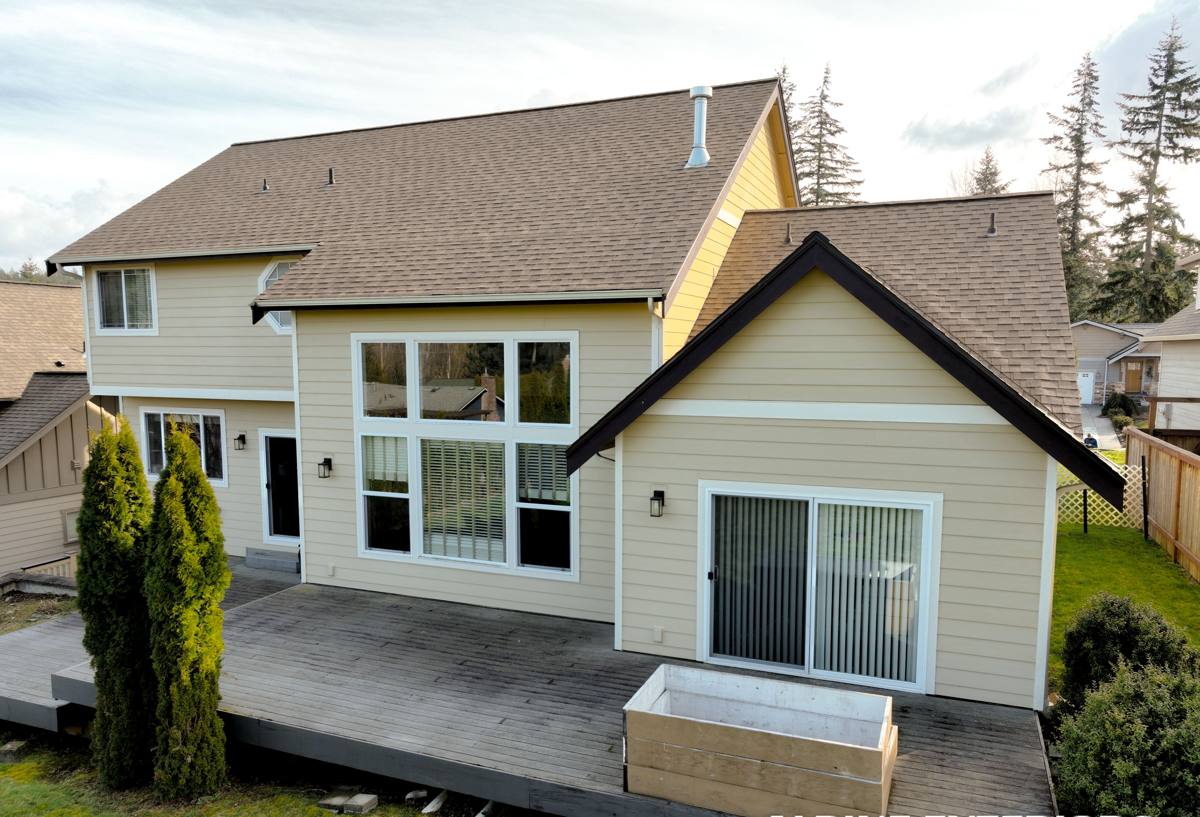
What Whatcom County Weather Actually Does to a Roof
Every roofing market has its own damage patterns based on climate, and this corner of Washington has a few that show up again and again.
Wind and Uplift
Storms moving through the Strait of Georgia and off the bay can generate sustained wind and gusts strong enough to lift shingle edges, work fasteners loose, or peel back ridge and hip caps. Once a shingle's seal is broken, it doesn't always blow off completely — it can sit there looking mostly normal while water gets underneath it every time it rains.
Driving Rain
Rain that comes in at an angle, rather than falling straight down, finds every gap a straight-down rain would never reach — lifted shingle tabs, marginal flashing, old nail pops. This is why a roof that's held up fine for years can suddenly start leaking after one particular storm with wind-driven rain from an unusual direction.
Salt Air and Corrosion
Proximity to the bay means metal roof components — flashing, fasteners, vent boots, gutter hardware — corrode faster here than they would twenty or thirty miles inland. A storm can expose corrosion that's been quietly weakening a flashing seam for years, turning a minor leak point into an active one.
Moss and Trapped Moisture
Whatcom County's long, damp moss season means moss and organic debris build up in valleys, behind chimneys, and along north-facing slopes for much of the year. That growth holds moisture against the roof surface and can lift shingles slightly over time, which is exactly the kind of pre-existing weak point a storm will find first. Post-storm damage often shows up worst in the same spots where moss has been established longest.
What a Proper Storm Damage Inspection Covers
A rushed inspection misses things. We walk the roof (weather and safety permitting) or use a ground and ladder assessment when conditions don't allow foot traffic, and check every area a storm typically damages:
- Shingle or shake condition — lifted tabs, cracked or missing pieces, granule loss from wind-driven debris
- Flashing around chimneys, skylights, and roof-to-wall transitions
- Ridge and hip cap integrity
- Vent boots and pipe collars for cracking or separation
- Valleys and gutter lines for debris, moss buildup, and standing water evidence
- Fascia and roof edge for wind lift or water staining
- Attic and interior ceiling checks for moisture intrusion, even without a visible active leak
- Decking condition where damage is exposed, checking for soft spots or rot
We document what we find with photos and a written summary before recommending anything, so you know exactly what's damaged, what's simply aged, and what can wait.
Repair vs. Replacement: How We Make the Call
Not every storm-damaged roof needs a full replacement, and not every roof that "looks okay" from the ground is actually fine. The honest answer depends on a few factors.
| Factor | Favors Repair | Favors Replacement |
|---|---|---|
| Roof age | Under 12–15 years, otherwise sound | Nearing or past expected service life |
| Extent of damage | Isolated to one section or slope | Widespread across multiple slopes |
| Underlying decking | Solid, no rot found | Soft spots or water-damaged sheathing |
| Storm history | First significant event in years | Repeated damage pattern over recent seasons |
| Moss/moisture history | Minimal prior growth or trapped moisture | Long-term moss damage already present |
Our default recommendation is always the least invasive fix that actually solves the problem. If a roof can be correctly repaired, that's what we'll propose. If the damage or underlying condition means a repair would just be a short-term patch, we'll say so plainly and explain why.
What a Correct Storm Repair Actually Involves
A storm repair that's done right isn't just swapping out the shingles you can see are missing. It includes:
- Removing and replacing damaged shingles or shakes with matching materials where possible
- Inspecting and repairing underlayment in the affected area — a torn or exposed underlayment is often the real cause of an ongoing leak, not just the missing shingle above it
- Resealing or replacing compromised flashing, particularly around chimneys and wall transitions where salt-air corrosion is common
- Checking and clearing moss and debris from valleys and gutters as part of the same visit, since trapped moisture undermines a fresh repair just as easily as an old one
- Verifying decking is dry and sound before any new material goes down — covering wet decking with new shingles just seals the moisture problem in
- Confirming proper fastening and seal-strip adhesion so the repaired section can actually withstand the next wind event
Skipping any of these steps is how a "fixed" roof ends up leaking again in the next storm.
Our Process for Marietta Homeowners
We keep the process straightforward, especially since storm damage already comes with enough stress:
- Inspection and documentation. We assess the damage, take photos, and check for less obvious secondary damage like underlayment or decking issues.
- Clear explanation. We walk you through what we found, what caused it, and what the repair options are — including if a repair isn't the right long-term call.
- Written estimate. No verbal guesses. You get a clear scope of work and price before anything starts.
- Insurance documentation support. If you're filing a claim, we provide the photos and written findings your adjuster will need. We don't handle the claim for you, but we make sure you're not walking into that conversation without solid documentation.
- The repair itself. Done with matching materials where available and proper technique underneath, not just on the visible surface.
- Final check. We confirm the repair is sealed and sound before we consider the job finished.
Why a Crew That Already Works Marietta Matters
Storm damage repair is one of those jobs where local knowledge changes the outcome. A crew that already knows how wind moves off the bay through this part of Whatcom County knows where to check first — the chimney-side flashing, the north-facing valleys, the ridge lines that catch the worst of a gusty pass. A crew unfamiliar with the area is starting from zero on all of that.
There's also a simple logistics advantage. After a widespread storm, roofing crews get booked up fast, and the ones already working this area are the ones who can get to a Marietta roof quickly instead of adding a long drive to an already full schedule. A tarped roof or an active leak isn't something that should sit for two weeks waiting on a crew from out of the area.
What Homeowners Can Check Before Calling
You don't need to get on the roof yourself — and in windy or wet conditions, you shouldn't. But a few ground-level and interior checks help us understand what we're dealing with before we arrive:
- New or spreading ceiling stains, especially near chimneys, skylights, or exterior walls
- Shingle pieces or granules in the yard or gutters after a storm
- Visible sagging or a section of roof that looks uneven from the street
- Gutters overflowing in a spot they didn't before, which can point to a blocked valley or damaged flashing
- Any musty smell in the attic, which often shows up before a visible leak does
None of these confirm storm damage on their own, but any of them are worth a call.
Let's Take a Look at Your Roof
If a recent storm has you wondering whether your roof took damage, or you've noticed a stain, a stray shingle in the yard, or anything else that doesn't look right, we're happy to come take an honest look. We'll tell you plainly what we find, what it means, and what your options are — no pressure, no upsell. Fill out the form below to request a free estimate.