 Ferndale
 Siding That Has to Work Around Sudden Valley's Trees, Rain, and Shade
Sudden Valley sits close to Lake Whatcom, and most lots there share the same three challenges: heavy tree cover, sloped ground, and long stretches where siding just doesn't get a chance to dry out between storms. Add in the broader Whatcom County pattern of driving rain off the water and a moss season that can run from fall through spring, and you've got a climate that is genuinely hard on exterior materials — not because any one storm is extreme, but because the moisture never fully lets up.
Homes closer to Ferndale and the coast deal with more direct salt air off the bay; homes back in Sudden Valley deal more with shade, standing dampness under the canopy, and moss creeping up from the north side of the house. Both are moisture problems, just from different directions. Either way, the siding on a Whatcom County home is doing more defensive work over a year than siding on a drier-climate house ever will.
What This Means for a Siding Choice
A material that looks fine on a sales brochure can still fail here if it wasn't built with this kind of sustained moisture exposure in mind. Homeowners in Sudden Valley are better served asking "how does this hold up wet, shaded, and untouched for six months" than "how does this look on a sunny installation day."
What Correct Fiber Cement Installation Actually Involves
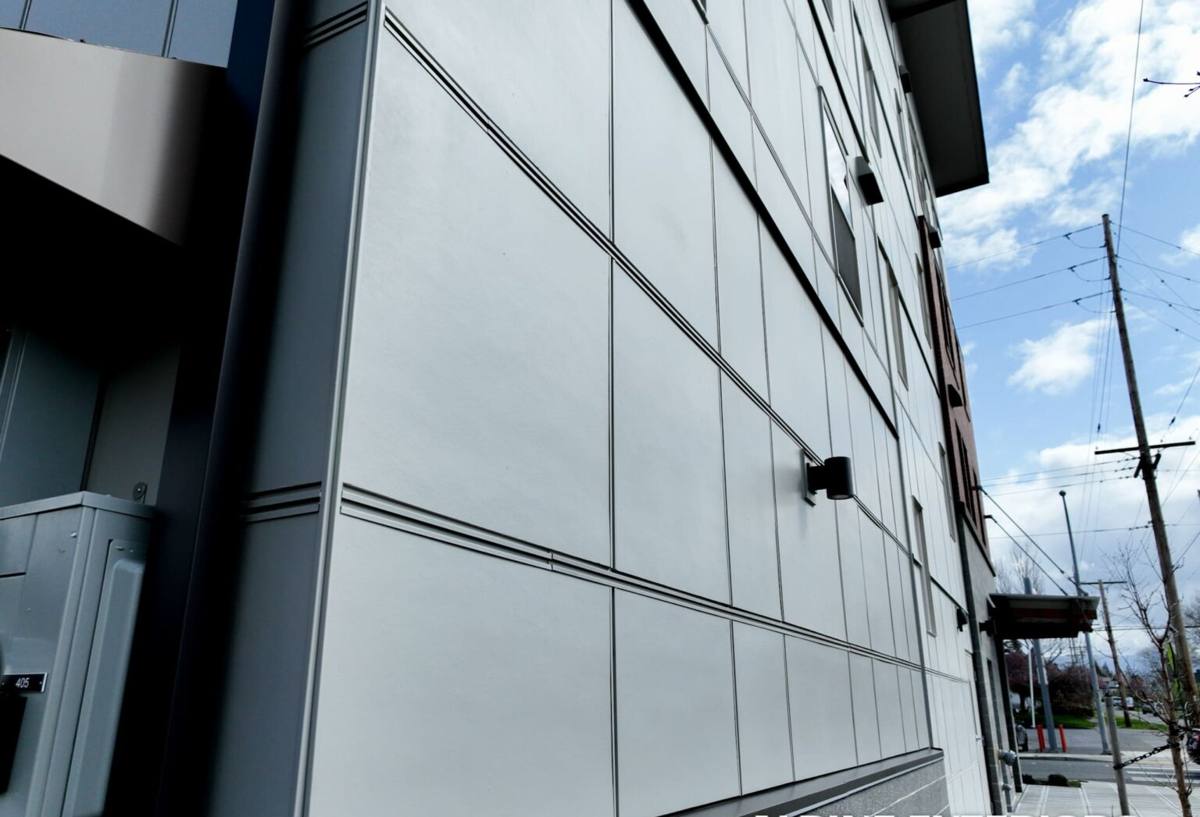
Fiber cement siding has a strong track record in the Pacific Northwest, but that reputation depends entirely on the installation being done right. Fiber cement is not a forgiving product to install poorly — get the details wrong and you trade one set of problems for another.
The Details That Matter Most in This Climate
- Proper clearances: siding kept off decks, roofs, and grade by the manufacturer's minimum gap so water has somewhere to go instead of wicking into the board.
- Flashing and water management: correctly lapped flashing at windows, doors, and any horizontal trim so water sheds outward instead of pooling behind the siding.
- Fastener pattern and depth: fasteners set to the manufacturer's spec — not overdriven, not underdriven — so panels stay secure without cracking the board.
- Sealed and painted cut edges: every field cut, especially at joints and penetrations, primed and sealed before it goes up, not caulked over afterward.
- Joint treatment: butt joints backed and sealed correctly so they don't become the first place moss and moisture take hold.
Skip any one of these on a shaded, damp lot like the ones common in Sudden Valley, and the consequences show up faster than they would in a drier part of the state — usually as staining, soft spots at trim, or moss getting a foothold at a seam within the first couple of wet seasons.
Why We Only Install James Hardie
We don't install LP SmartSide, vinyl, Cemplank, Allura, or bare cedar or spruce siding. That's not a marketing position — it's a standard we hold ourselves to because we've seen what holds up on homes in this climate and what doesn't.
What Sets Hardie Apart
James Hardie fiber cement is non-combustible, dimensionally stable in wet-dry cycling, and available with a factory-applied ColorPlus finish that's baked on rather than field-painted — which matters a great deal on a house that spends half the year damp, since factory finishes resist the fading and peeling that field-applied paint struggles with under constant moisture. Hardie also engineers its products by climate zone (its HZ product lines), meaning the boards specified for the Pacific Northwest are built for freeze-thaw and sustained wet exposure rather than a one-size-fits-all formulation. Backed by a strong, transferable manufacturer warranty when installed to spec, it's the product we're comfortable standing behind on Sudden Valley homes.
Other fiber cement products on the market aren't necessarily bad — some are reasonable options. We simply made a decision to specialize in one system, install it correctly every time, and know it inside and out, rather than stock five products and be mediocre at all of them.
Fiber Cement vs. the Alternatives, for a Home Like This
| Material | How It Handles Sustained PNW Moisture | Long-Term Consideration |
|---|---|---|
| James Hardie fiber cement | Dimensionally stable wet or dry; factory finish resists fade in shaded, damp conditions | Higher upfront cost, offset by warranty and low repaint frequency |
| Vinyl siding | Won't rot, but can warp with heat/cold swings and traps moisture behind it if not detailed carefully | Lower cost, but shorter realistic lifespan and limited repair options when panels crack |
| LP SmartSide (engineered wood) | Wood-based core is more vulnerable to prolonged wet exposure than cement-based siding | Depends heavily on caulking and paint maintenance being kept current |
| Cedar / primed wood | Natural material that moves with humidity; needs consistent refinishing to resist moss and rot | Attractive look, but highest ongoing maintenance burden in a wet, shaded climate |
None of these are unreasonable products in the right setting. But on wooded, shaded Sudden Valley lots where siding stays damp longer than average, the products that depend most on perfect ongoing maintenance are the ones most likely to disappoint an owner five or ten years in.
Our Process for Sudden Valley Siding Projects
1. On-Site Assessment
We walk the property, check the siding's current condition at trim, corners, and any north- or shade-facing walls, and look for existing moisture damage before we talk products or pricing. On sloped, tree-covered lots, we also check how close vegetation sits to the siding, since trimmed clearance affects how fast walls dry.
2. Tear-Off and Sheathing Check
Once old siding comes off, we inspect the sheathing and house wrap underneath. This is the point where hidden moisture damage from a prior installation — often the result of missing flashing or poor clearances — actually gets found and fixed, rather than sealed back up behind new siding.
3. Water Management First, Siding Second
Flashing, house wrap, and drainage details go in before a single piece of Hardie siding is hung. This step is the one most often shortchanged on rushed jobs, and it's the one that determines whether the siding lasts twenty years or five.
4. Installation to Manufacturer Spec
Panels are cut, primed at the cut edge, fastened to spec, and joints are treated correctly — the details covered above, applied consistently rather than as an afterthought.
5. Final Walkthrough
We review the finished work with the homeowner, including where caulking was used, how trim was finished, and what routine maintenance to expect going forward.
Living With Fiber Cement Siding in This Climate
One reason we recommend Hardie for Sudden Valley homes is that it asks less of the homeowner over time than most alternatives — but "less" isn't "none." A little seasonal attention keeps a correctly installed job looking right for decades.
A Simple Seasonal Checklist
- Rinse siding once or twice a year, especially on shaded or north-facing walls where moss tends to establish first
- Keep gutters clear so overflow doesn't run down the siding face during heavy rain
- Trim back branches and shrubs that keep a wall damp or block airflow
- Check caulking at trim and joints annually and touch up if it's cracked or pulling away
- Watch for any soft or discolored spots near the bottom courses, which can indicate a clearance or flashing issue worth a look
None of this is heavy labor — it's the kind of maintenance most homeowners can do in an afternoon, which is part of why fiber cement holds up so well against the moss and moisture that define a Whatcom County winter.
Cost Factors on a Sudden Valley Job
Every home is different, but a few things consistently move the price on projects in this area:
| Factor | Why It Affects Cost |
|---|---|
| Existing moisture damage | Rotted sheathing or trim found during tear-off has to be replaced before new siding goes on |
| Access and lot slope | Steep or wooded Sudden Valley lots can require more setup time for scaffolding and material staging |
| Board profile and trim complexity | Lap siding, panel siding, and detailed trim packages all price differently based on labor and material |
| Color and finish | Factory ColorPlus finishes cost more upfront than field paint but avoid a repaint cycle down the road |
We give straightforward, itemized estimates rather than a single vague number, so homeowners can see exactly what's driving the cost on their specific home.
Why It Matters to Hire a Crew That Already Works Sudden Valley
Siding installed to the same written spec can still perform differently depending on whether the crew understands the site. A crew unfamiliar with Whatcom County's moisture patterns might treat clearance, flashing, and joint sealing as boxes to check rather than the actual reasons a wall stays dry for thirty years. A crew that regularly works wooded, damp, sloped lots around Ferndale and Lake Whatcom already knows where moss forms first, which walls need extra attention, and how to sequence a tear-off so a home isn't sitting open during a wet stretch.
That local pattern recognition doesn't show up on a price sheet, but it's usually the difference between a siding job that just meets code and one that actually holds up through Whatcom County's long, damp winters.
If you're considering new siding for a Sudden Valley home, we're happy to take a look and give you a straightforward, no-pressure estimate — including an honest read on your home's current condition, not just a quote for new siding.