 Ferndale
 Building a Deck That Holds Up in Sumas
A deck in Sumas doesn't fail because of one bad storm. It fails slowly, from months of standing moisture, moss creeping into joints, and wood-to-wood contact points that never fully dry out between rains. Whatcom County's weather pattern — long stretches of driving rain, humid air moving in off the water, and short, cool summers that don't give lumber much time to dry — is hard on any outdoor structure, but decks take the worst of it because they're horizontal. Flat surfaces hold water and debris. Vertical siding sheds it.
We build and repair decks specifically with this climate in mind, not a generic build sheet pulled from a drier region. That shows up in the fasteners we choose, how we frame around ledger boards, and how much slope we build into the deck surface itself.
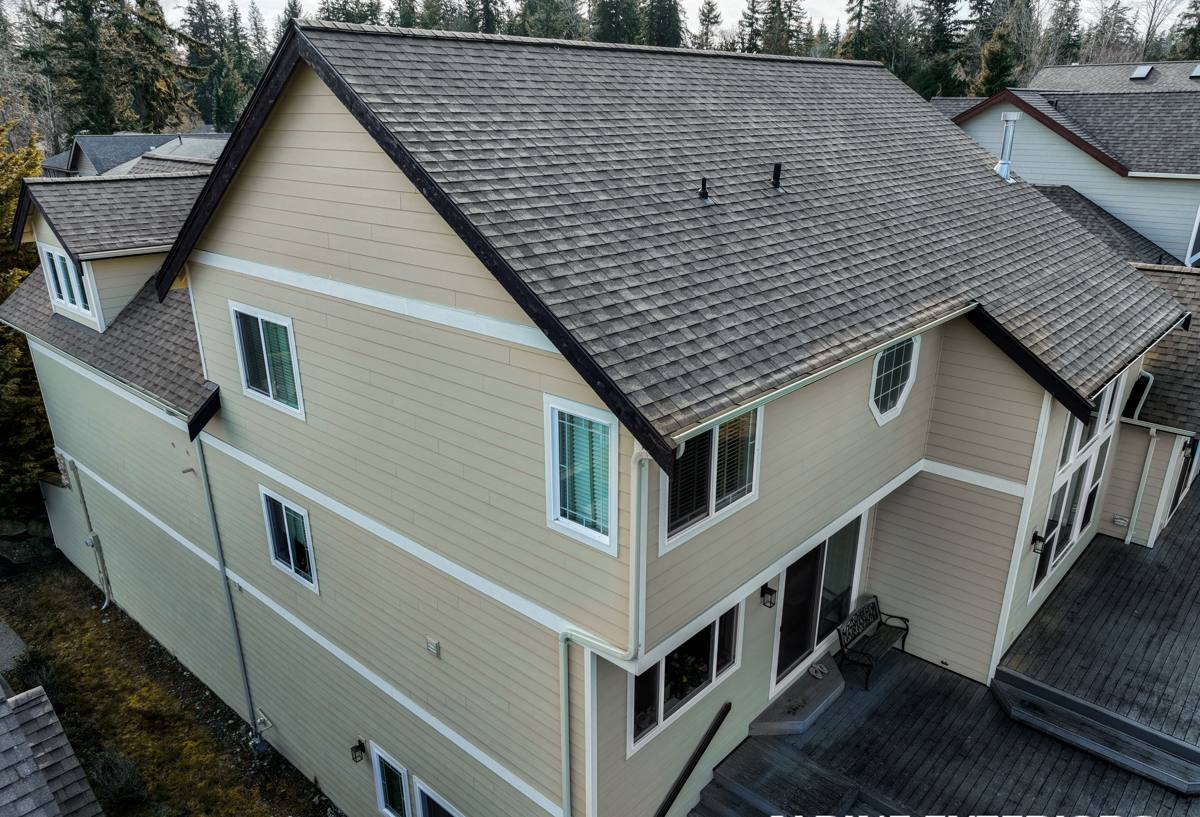
What Local Homes Actually Need From a Deck
Most of the deck problems we get called out for in this area come down to a handful of repeat offenders:
- Moss and algae buildup on decking boards that stay shaded or under tree cover most of the day
- Soft or rotted framing where the deck ledger meets the house, usually from missing or failed flashing
- Rusted or corroding fasteners that streak the decking and eventually lose their grip
- Standing water at the base of posts or along low spots where the deck wasn't sloped correctly
- Railings that have loosened because the post-to-frame connection was never engineered for wet, swelling wood
None of these are exotic problems. They're the predictable result of building a deck without accounting for how much water this region actually sees over a year, and how long that moisture lingers before the next dry stretch.
Choosing Decking Material for Whatcom County Conditions
There's no single "right" decking material — every option is a trade-off between upfront cost, maintenance, and how it behaves under constant moisture. We'll walk through the honest pros and cons for your budget and the amount of upkeep you're willing to do, rather than pushing one product line.
| Material | How It Handles This Climate | Maintenance Reality |
|---|---|---|
| Pressure-treated wood | Affordable and structurally solid, but absorbs moisture and needs a sealed surface to resist moss and graying | Re-stain or seal every 1-2 years; inspect for soft spots annually |
| Cedar | Naturally rot-resistant and handles wet weather well, but the surface still needs protection from standing moisture | Periodic oiling or sealing; moss removal in shaded areas |
| Composite decking | Doesn't absorb water like wood, resists rot, but can still grow surface moss or algae if never cleaned | Occasional washing; no staining or sealing needed |
| PVC decking | Fully resists moisture absorption and rot; performs consistently through wet winters | Lowest maintenance; periodic cleaning only |
For decks with heavy shade, tree cover, or a north-facing exposure — common on wooded Sumas lots — we usually steer clients toward composite or PVC on the visible decking, even if the substructure underneath is standard framing lumber. It's the surface that takes the daily beating from moisture and moss; the frame just needs to be built and protected correctly.
Framing Lumber Still Matters
Whatever decking you choose on top, the frame underneath should be pressure-treated lumber rated for ground contact where it's close to soil, with all cut ends and drilled holes field-treated before assembly. Skipping that step is one of the most common shortcuts we see on older decks, and it's exactly where rot starts first — invisible until the frame is already compromised.
Framing and Structure: Where Deck Failures Actually Start
A deck surface can look fine for years while the frame underneath is quietly failing. The two spots we check hardest on every project:
The Ledger Board Connection
This is where the deck attaches to the house, and it's the single most important structural and moisture detail on the whole build. It needs proper flashing that directs water away from the house sheathing, correct lag bolts or through-bolts rated for the load, and a small air gap or flashing detail that keeps the ledger from trapping moisture against the wall. Get this wrong and you're not just risking the deck — you're risking water intrusion into the house itself.
Post Footings
Footings need to sit below frost depth and on solid, well-drained soil, not just poured into whatever grade exists on-site. On sloped or clay-heavy lots, which show up around Sumas and the surrounding foothills, poor drainage under a footing can lead to shifting or heaving over time. We evaluate soil and drainage before we ever set a post.
Drainage and Grading Around the Deck
Water needs somewhere to go, and a deck built without that in mind will hold moisture against the house, the posts, and the ground underneath indefinitely. A correctly built deck accounts for:
- Slight slope built into the decking surface so water sheds off rather than pooling
- Grading beneath the deck that channels water away from the foundation, not toward it
- Gaps between boards sized to let water and debris pass through instead of collecting on top
- Clearance between the ground and the underside of the frame so air can circulate and lumber can dry between storms
On decks that sit low to the ground or enclose the space underneath, we also look at ventilation — a sealed, damp crawlspace under a deck is a moss and rot generator no matter how good the materials on top are.
Fasteners, Flashing, and the Small Details That Prevent Rot
The parts of a deck that fail first are rarely the big structural members — they're the connectors. Standard fasteners corrode fast under constant damp exposure, and once a fastener starts rusting, it weakens and can stain the surrounding wood or composite. We use fasteners and hardware rated for treated lumber and coastal-adjacent moisture exposure, and we flash every point where two materials meet — ledger to house, post to footing, stair stringer to landing. Flashing is inexpensive compared to the cost of repairing rot damage later, and it's one of the details that's easy to skip and hard to notice until something's already wet underneath.
Railings, Stairs, and Code Requirements
Railings and stairs are both a safety requirement and a common point of long-term failure if the connections aren't built right. Wood swells and contracts through wet winters and dry summers, and a railing post that isn't through-bolted or properly blocked will loosen within a few seasons. We build to current local code for railing height, baluster spacing, and stair rise/run, and we make sure every post connection is engineered to stay tight through repeated wet-dry cycles, not just at installation.
Our Deck Building Process
- On-site assessment — we look at sun exposure, drainage, soil conditions, and how the deck will tie into your home before recommending materials
- Material and layout discussion — honest trade-offs between wood, composite, and PVC based on your maintenance preference and budget
- Permitting — we handle the paperwork and inspections required for the structure and railings
- Footings and framing — built to depth and spec for this soil and climate, with treated lumber and properly flashed connections
- Decking, railings, and stairs — installed with attention to fastener choice, spacing, and slope
- Final walkthrough — we go over care and maintenance specific to whatever material you chose
Maintenance Checklist for a Long-Lasting Deck
Even the best-built deck needs some seasonal attention in this climate. A short list worth keeping:
- Sweep debris off the surface regularly, especially in fall when leaves and needles collect between boards
- Clean moss or algae off shaded sections before it spreads across the whole surface
- Check fastener heads and railing connections once a year for looseness or rust staining
- Re-seal or re-stain wood decking on the schedule appropriate to that product — don't wait until it's visibly gray
- Confirm gutters and downspouts near the deck aren't dumping extra water onto or under it
- Look underneath the deck occasionally for standing water or soft framing, not just at the visible surface
Why Local Experience Matters for This Job
Deck building looks straightforward from a distance — posts, frame, boards — but the details that make a deck last fifteen-plus years in Whatcom County are specific to this climate: how much slope to build in, which fasteners actually hold up under constant damp, where moss will collect based on sun exposure, and how to flash a ledger board so water never gets behind it. A crew that mostly builds in drier regions doesn't carry that knowledge by default. We do this work regularly in and around Sumas and Ferndale, and we build every deck assuming it will face a full wet season in its first year, because it will.
If you're planning a new deck or dealing with an existing one that's showing its age, we're happy to take a look and give you a straightforward assessment — no pressure, no hard sell. Use the form below to request a free estimate.