 Ferndale
 Sumas Roofs Take a Different Kind of Beating
Sumas sits at the edge of Whatcom County where the low farmland meets the base of Sumas Mountain, right up against the Canadian border. It's a spot with its own weather personality. In addition to the steady marine rain that soaks the whole region, this area catches cold outflow wind funneling down from the Fraser Valley gap in the winter months — gusts that come through hard and fast and don't always give much warning. Add in salt-tinged air drifting inland off the Sound on a west wind, driving rain that finds every gap in aging flashing, and a moss season that runs long into the wet months, and you've got a roof that's working harder than most people realize.
None of that means a roof in Sumas needs anything exotic. It means the ordinary maintenance and repair work — flashing, valleys, moss control, ventilation — actually matters here, and skipping it costs homeowners more than it would somewhere drier.
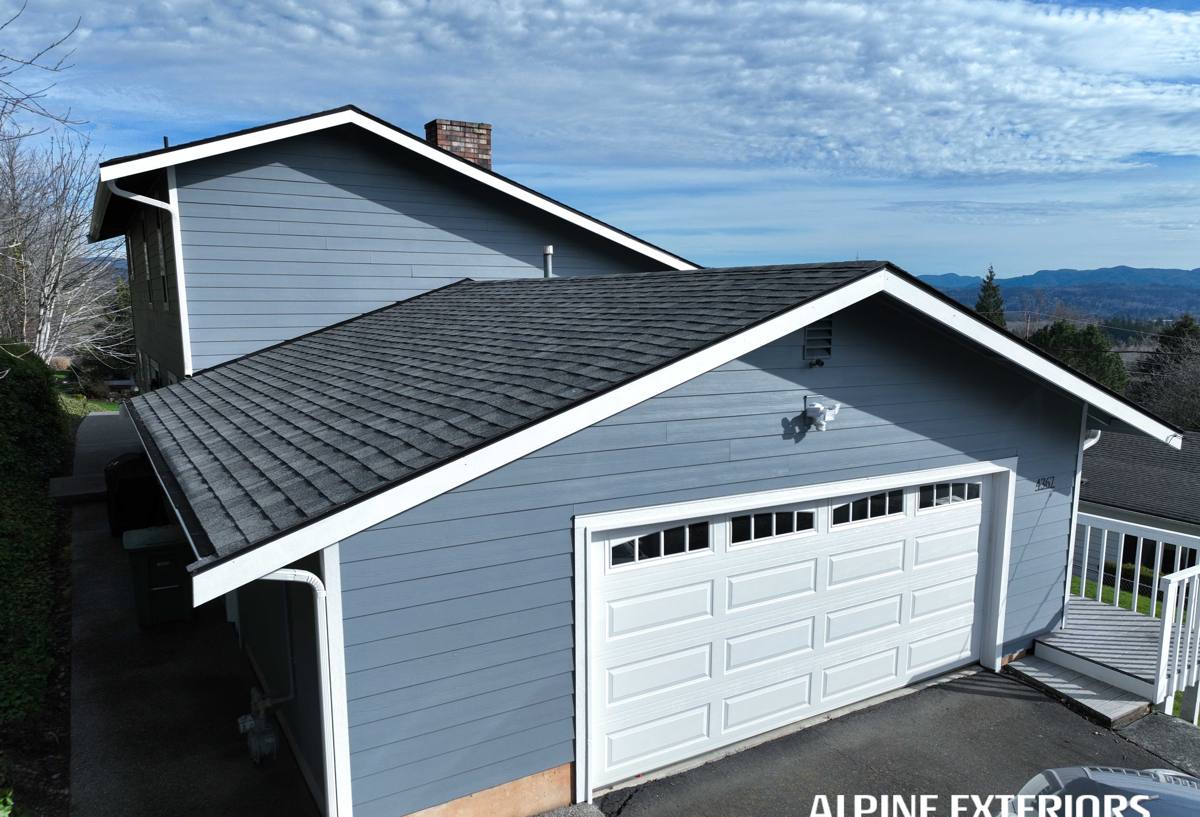
The Roof Problems We See Most Often on Sumas Homes
Wind-Lifted Shingles and Loose Flashing
When outflow wind funnels through the gap, it doesn't hit a roof evenly — it catches edges, ridges, and any shingle tab that's already lost some adhesive from age or heat. Once a corner lifts, wind gets underneath it and works the problem wider with every gust. The same wind loosens step flashing and counter-flashing around chimneys and walls, which is often where a "roof leak" is actually starting even though the shingles look fine.
Moss, Moisture, and Slow Leaks
Moss doesn't just look bad. It holds water against the roof surface long after the rain stops, and on shaded or north-facing slopes in this climate, that can mean weeks of near-constant dampness. Over time moss works its rootlike structures under shingle edges and lifts them slightly, which is enough to let wind-driven rain track sideways underneath. By the time a homeowner sees a stain on the ceiling, the moisture has usually been getting in for a while.
Valley and Chimney Flashing Failures
Roof valleys concentrate a lot of water fast, especially during the heavy rain events this region gets in fall and winter. Flashing in valleys and around chimneys, skylights, and roof-to-wall intersections is the piece most likely to fail first, because it's cut, bent, and fastened by hand rather than manufactured as one continuous piece. A repair that only replaces a few shingles but ignores worn flashing underneath is a repair that will leak again.
What a Correct Roof Repair Actually Involves
Diagnosing the Real Problem, Not Just the Symptom
A stain on a ceiling doesn't tell you where the water actually entered — water travels along rafters and sheathing before it shows itself indoors. A proper repair starts by tracing the leak to its actual source, which often means checking the attic side first, then the roof surface, rather than just patching the spot that looks worst from the ground.
Matching Materials the Right Way
Shingles fade and weather over time, so a patch using brand-new material next to a 10-year-old roof will always stand out somewhat — there's no way around that with asphalt shingles. What matters more is that the repair uses the correct weight and style of shingle, proper nailing pattern, and new underlayment and flashing where the old material has failed, not just whatever's closest to the damaged spot. A repair that's sound underneath but slightly visible on top is a better outcome than one that blends perfectly and fails again in a year.
Ventilation Isn't Optional
A lot of roof problems in this climate trace back to poor attic ventilation as much as to the roofing material itself. Trapped moist air condenses on the underside of the roof deck, which rots sheathing from the inside and encourages the exact kind of moss and algae growth that shortens a roof's life outdoors too. Any repair on an older Sumas home is a chance to check whether intake and exhaust venting are actually doing their job.
Repair or Replace? How We Help You Decide
Not every roof problem calls for a full replacement, and not every leak can be permanently solved with a patch. The honest answer usually comes down to the roof's age, how widespread the damage is, and what's happening underneath the surface.
| Factor | Leans Toward Repair | Leans Toward Replacement |
|---|---|---|
| Roof age | Under 12-15 years, isolated wear | Approaching or past expected shingle lifespan |
| Damage spread | Localized to one slope, valley, or flashing point | Multiple areas, widespread granule loss or curling |
| Decking condition | Sheathing solid, no soft spots | Soft, spongy, or visibly rotted decking |
| Leak history | First occurrence or clearly single-cause | Repeated leaks in different spots over time |
| Moss/algae extent | Surface growth, roof otherwise sound | Heavy, long-term growth with shingle degradation underneath |
When we're on your roof for a repair estimate, we'll tell you plainly which side of that table your situation falls on — including if the honest answer is that a repair is the right call and a full replacement would be spending money you don't need to spend yet.
Our Roof Repair Process
- Inspection from both the roof surface and, when accessible, the attic side to trace the actual leak path.
- A written explanation of what's causing the problem and what it will take to fix it correctly — before any work starts.
- Removal of damaged shingles, moss, and failed flashing down to sound decking.
- Repair or replacement of underlayment and flashing at valleys, chimneys, and wall intersections as needed.
- Shingle replacement matched as closely as reasonably possible in weight and style.
- A final check for ventilation issues or other contributing factors so the same spot doesn't fail again next season.
Materials and the Trade-offs We're Honest About
Most Sumas homes we work on are roofed in asphalt composition shingle, and for repair work that's usually the right call to match existing roofing rather than mixing materials. Algae-resistant shingle lines can help slow moss and streak growth on shaded slopes, which is worth discussing if you're replacing a full slope rather than patching a small area. Metal roofing and specialty products come with their own maintenance profile and fastener considerations, and we'll talk through those honestly if it's relevant to your home rather than pushing an upgrade that isn't needed for a repair job.
What we won't do is talk you into a full tear-off when a targeted repair will hold up fine, or patch over a flashing problem with sealant as a shortcut. Sealant-only fixes fail faster in this climate than almost anywhere — the combination of UV exposure, driving rain, and freeze-thaw swings in winter breaks down surface sealants well before properly installed flashing would need attention.
Timing Repairs Around Whatcom County Weather
Late spring through early fall is the most reliable window for roof repair work here, simply because there are more dry, low-wind days to work safely and let materials seal properly. That said, a wind-damaged section or an active leak shouldn't wait for ideal weather — a temporary, correctly installed cover can protect a home through a wet stretch until a full repair can be done right. What we try to avoid is doing permanent repair work during a heavy rain event or high-wind advisory, since shingle adhesive and flashing sealants need calm, dry conditions to bond properly.
Why Hire a Crew That Already Works in Sumas
Roofing crews that mostly work in drier or more sheltered parts of Whatcom County sometimes underestimate how much wind exposure and moisture this particular area sees. A crew that's already familiar with Sumas conditions knows to check flashing and fastening more closely on wind-exposed slopes, knows which shaded roof lines tend to hold moss longest, and isn't guessing at how the local climate affects material choice and repair timing. That familiarity shows up in fewer callbacks and repairs that actually hold through the next windy winter, not just through the next dry season.
A Simple Maintenance Checklist for Sumas Homeowners
- Clear moss buildup on shaded or north-facing roof slopes before it thickens into late winter.
- Check gutters and downspouts before the heavy fall rains — clogged gutters push water back under roof edges.
- After any high-wind event, look for lifted or missing shingle tabs from the ground with binoculars rather than climbing up yourself.
- Watch attic spaces for musty smells, dark staining, or condensation, which often show up before ceiling stains do.
- Have flashing around chimneys, skylights, and wall intersections checked every few years, since these fail before the shingle field usually does.
- Don't ignore a small stain — trace it early, since a slow leak in this climate rarely stays small for long.
Get a Straight Answer on Your Roof
If you've got a leak, storm damage, or a roof that's just showing its age, we're glad to take a look and give you an honest read on what it actually needs — repair, partial replacement, or nothing urgent at all. Reach out for a free, no-pressure estimate using the form below, and we'll walk you through exactly what we find.