 Ferndale
 Why Sandy Point Puts Windows to the Test
Sandy Point sits about as close to the water as a residential neighborhood in Whatcom County gets, and that location shapes everything about how windows perform there. Wind comes off the Strait with little to break it up, driving rain sideways into window walls that would stay dry a few miles inland. Salt-laden air settles on glass, frames, and hardware year-round, not just during storms. And like most of western Whatcom County, Sandy Point gets a long stretch of damp, low-light months where moss and algae find a foothold on anything that stays wet — including window sills, trim, and the caulk lines around a window unit.
None of that means windows can't last in Sandy Point. It means the installation has to account for conditions a standard suburban Ferndale job doesn't see as intensely. A window that's a perfectly good choice a few blocks from the water can underperform right on it if the frame material, flashing details, and sealants weren't chosen with salt air and wind-driven moisture in mind.
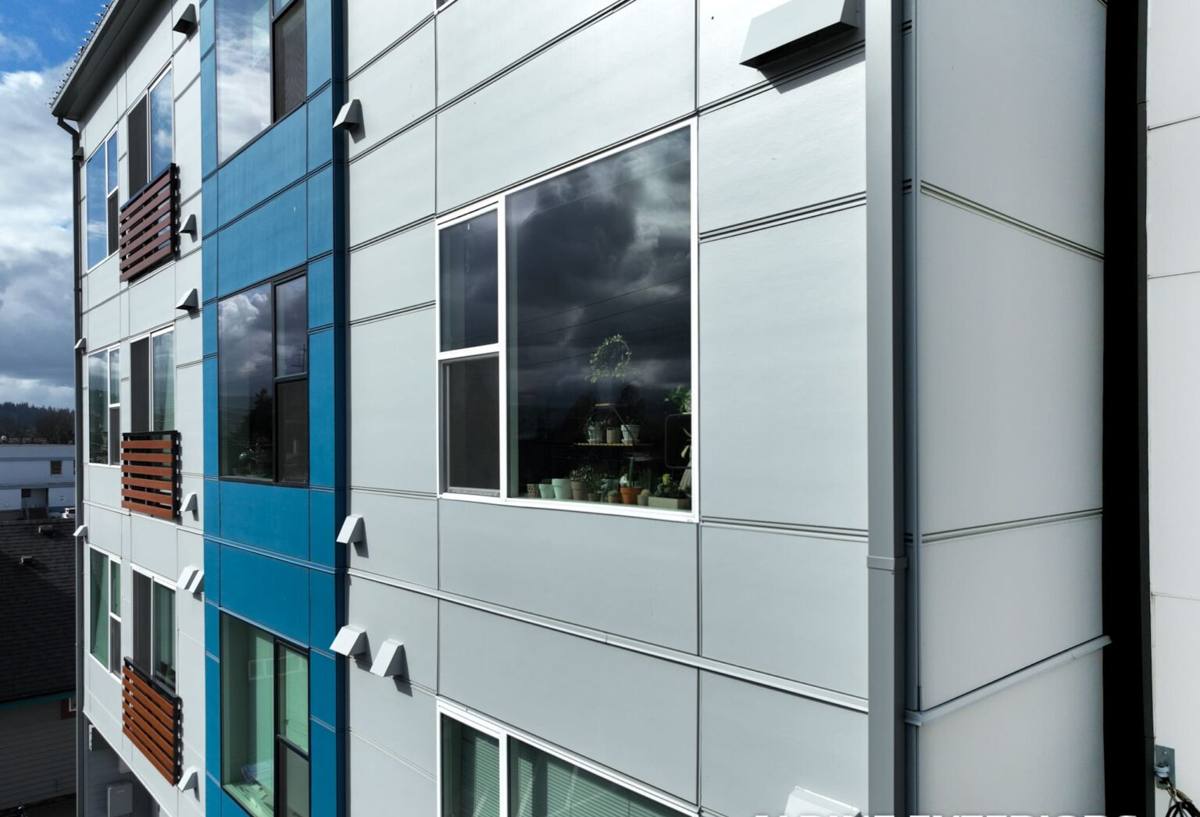
What Salt Air and Coastal Moisture Actually Do to a Window Over Time
Corrosion at the Hardware Level
Locks, hinges, balance systems, and screen frames all have metal components, and salt air accelerates oxidation on anything that isn't rated for coastal exposure. Once corrosion starts on a lock or crank mechanism, the window gets harder to operate, and eventually the hardware fails outright — often well before the glass or frame shows any problem.
Seal Failure and Fogging
Modern double- and triple-pane windows rely on a sealed gap between panes filled with insulating gas. Constant humidity and temperature swings stress that seal faster near the water than inland. When the seal lets go, moisture gets between the panes and you get permanent fogging that no amount of cleaning fixes — it's a sign the insulated glass unit itself needs replacing.
Trim, Casing, and Sill Rot
Moss and algae hold moisture against wood surfaces long after the rain stops. On a window that gets driving rain and stays shaded or damp for stretches, that moisture works into any gap in the caulk or paint film and starts breaking down wood trim and sills from the inside. By the time rot is visible on the surface, it's usually further along underneath.
Signs Your Sandy Point Windows Are Losing the Battle
- Fogging or a milky haze between the panes that won't wipe away
- Windows that are noticeably harder to open, close, or lock than they used to be
- Visible rust or white corrosion on hinges, cranks, or screen frames
- Soft, discolored, or crumbling wood at the sill or bottom corners of the frame
- A cold draft near the window edge even when it's fully latched
- Green or black staining on the trim that keeps coming back after cleaning
- Condensation forming on the inside of the glass regularly, even in mild weather
Any one of these on its own might just mean routine maintenance. Several at once, especially on a window facing the water or prevailing wind, usually means the window has reached the end of what caulk and touch-up paint can fix.
What a Correct Installation Actually Involves
The window unit itself gets most of the attention, but in a location like Sandy Point, the installation details around the window matter just as much — often more, since a good window installed poorly will still leak.
Flashing and Water Management
Every window opening needs a flashing system that directs water down and out, never into the wall cavity. That means correctly lapped house wrap, sill pan flashing under the window, and flashing tape at the jambs and head that's compatible with both the window and the wall's existing weather barrier. On a wind-driven-rain site, sill pan flashing in particular isn't optional — it's the backstop that catches any water that gets past the exterior seal.
Sealing and Insulation
The gap between the window frame and the rough opening needs to be sealed with a product that stays flexible through temperature swings and doesn't compress or crack over time, plus low-expansion foam or backer rod and sealant to control air movement. Overfilling that gap with the wrong foam can actually bow the frame and cause the window to operate poorly for the life of the installation.
Fastening and Structural Fit
The window has to be shimmed level, plumb, and square before it's fastened, and fastened at the points the manufacturer specifies to hold up to wind load. A window that's slightly out of square will bind, won't seal evenly, and puts uneven stress on the hardware — which shows up as premature wear in exactly the corrosion-prone parts already under pressure from salt air.
Choosing Frame Materials for a Waterfront Property
There's no single "best" window material for every situation, but some hold up to salt air and constant moisture better than others with less upkeep. We walk homeowners through the real trade-offs rather than pushing one product line.
| Frame Material | How It Handles Salt Air & Moisture | Maintenance |
|---|---|---|
| Vinyl | Doesn't corrode or rot; performs consistently near the water | Low — occasional cleaning, no painting |
| Fiberglass | Very stable in temperature swings and moisture; strong long-term option | Low — durable finish, minimal upkeep |
| Wood, unclad | Attractive but most vulnerable to rot and moss staining on this site | High — regular painting/sealing needed |
| Wood with aluminum or vinyl cladding | Good exterior protection if cladding and seals are installed correctly | Moderate — cladding low-maintenance, interior wood still needs attention |
| Aluminum | Strong but prone to corrosion and condensation without a thermal break rated for coastal use | Moderate to high near salt water |
For most Sandy Point homes, we lean toward vinyl or fiberglass on faces that take direct wind and rain, and reserve unclad wood for sheltered elevations where the look matters more and exposure is lower. That's a recommendation based on how these materials behave in this specific environment, not a knock on wood windows generally — they just ask more of a homeowner in a spot like this.
How We Approach a Sandy Point Installation
- On-site assessment — we look at each opening's exposure, current flashing and framing condition, and any existing moisture or rot damage before quoting anything.
- Product selection based on exposure — windows facing the water or prevailing wind get different recommendations than sheltered elevations on the same house.
- Removal and opening inspection — once the old window is out, we check the framing and sheathing underneath for hidden water damage before anything new goes in.
- Flashing and sealing per opening — sill pans, house wrap laps, and flashing tape installed to shed water down and out, not patched around the new unit.
- Install, shim, and fasten to spec — level, plumb, square, and fastened per manufacturer requirements for our wind exposure.
- Interior and exterior finish work — trim, caulking, and touch-up done to shed water and match the home, not just look finished from the street.
- Final walkthrough — every window opened, closed, and locked with the homeowner before we call the job done.
Cost Factors Worth Knowing Before You Get a Quote
| Factor | Why It Moves the Price |
|---|---|
| Frame material | Vinyl is typically the most budget-friendly; fiberglass and clad-wood cost more up front but often less over time in this environment |
| Number and size of openings | More or larger windows mean more labor and material, straightforward but worth budgeting for accurately |
| Condition behind the old window | Hidden rot or water damage found during removal adds repair work before the new window can go in correctly |
| Exposure of each opening | Water-facing or wind-exposed windows may warrant upgraded flashing details or glass packages compared to sheltered walls |
| New construction vs. retrofit | Replacing within an existing opening is usually simpler than resizing or reframing an opening |
Broad ballpark: straightforward replacement of an existing vinyl window in good framing tends to run in the low-to-mid four figures per opening installed; larger units, fiberglass or clad-wood options, or openings needing framing repair push higher. Exact numbers depend on what we find once we're on site — we don't quote sight unseen.
What to Ask Before You Hire Anyone for Window Work
- Do they install sill pan flashing on every opening, or only "if needed"?
- Will they show you what's behind the old window before closing it back up?
- Are they licensed and insured for work in Washington, and can they show proof?
- Do they explain frame material trade-offs, or just push whatever they stock?
- What's covered under warranty — labor and installation, not just the manufacturer's product warranty?
- Have they worked on homes in exposed, water-facing locations like Sandy Point before?
Why a Crew That Already Works Sandy Point Matters
A contractor who mostly works inland jobs in Ferndale or elsewhere in Whatcom County isn't wrong for the trade, but they may not automatically account for wind-driven rain hitting a window wall or the way moss holds moisture against trim near the water. A crew that's done this work on Sandy Point homes already knows which elevations typically take the worst of it, what flashing details actually hold up here, and which materials are worth the extra cost versus which ones are overkill for a sheltered wall. That's not a marketing point — it's the difference between an installation that looks right on day one and one that still performs correctly five winters from now.
If your windows are fogging, sticking, drafting, or just showing their age faster than you'd expect, we're happy to take a look and give you a straight assessment — no pressure, no upsell. Fill out the form below for a free estimate on window installation for your Sandy Point home.