 Ferndale
 Why Birch Bay Homes Wear Siding Differently Than Homes Inland
Birch Bay sits right on the water, and that changes what siding has to survive. Homes a few miles inland in Ferndale or Lynden deal with Whatcom County's wet winters and mossy shade, but they don't get the salt air rolling in off the bay day after day. Salt-laden air accelerates corrosion on fasteners and trim, and it settles into any crack or seam in a siding system and stays there. Combine that with driving rain that comes in sideways off the water during winter storms, and you have a siding assembly that's under constant pressure from two directions: moisture trying to get behind the cladding, and salt working on anything metal or organic on the surface.
Then there's the moss and algae season, which in this part of Whatcom County can run most of the year on north-facing or shaded walls. Persistent damp shade grows moss and mildew on any siding surface that holds moisture at the surface, and it works into seams, laps, and caulk lines faster near the water than it does a few miles inland. A siding replacement in Birch Bay isn't just a cosmetic upgrade — it's a chance to correct a water-management system that was never built for this exposure in the first place.
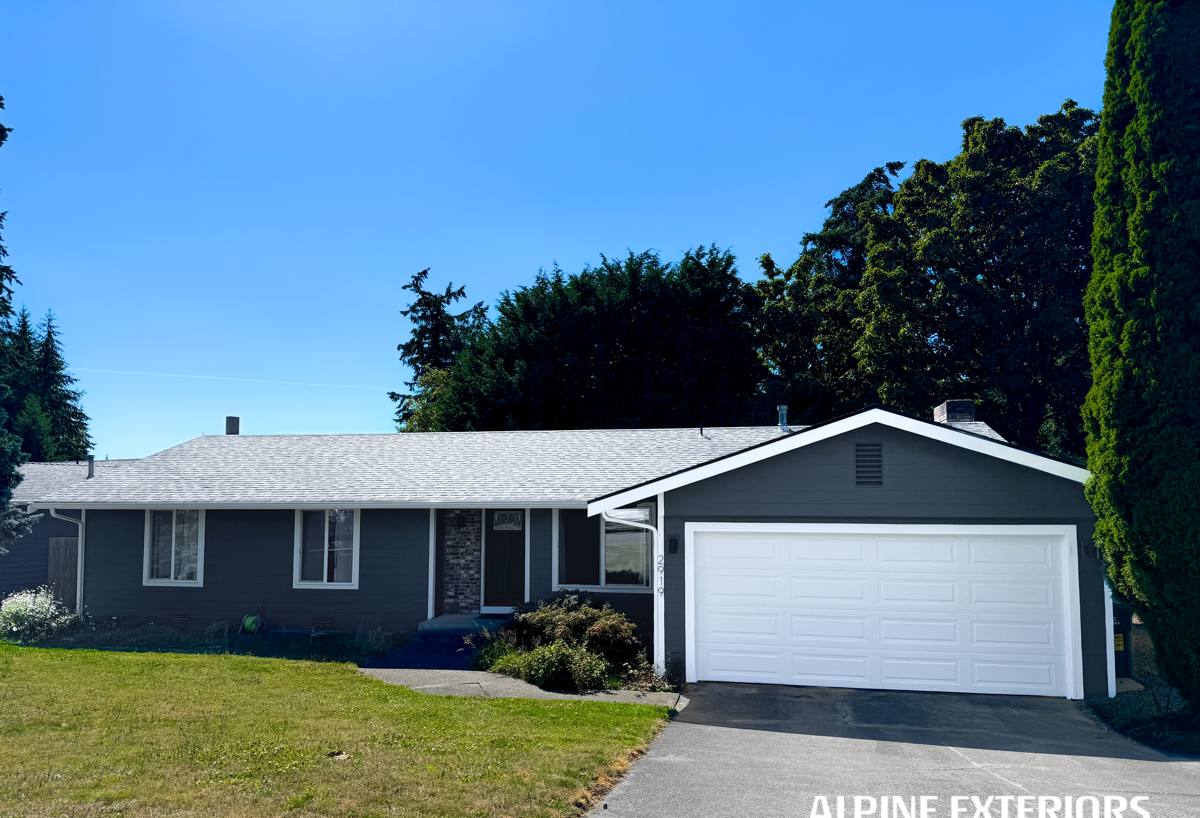
Signs a Birch Bay Home Needs Siding Replaced, Not Patched
Coastal exposure hides damage well at first. Paint can look fine on the surface while the substrate underneath is already failing. Here's what we look for when we walk a Birch Bay property:
- Soft or spongy spots when you press on the siding, especially near the bottom courses and around window trim
- Paint that's bubbling, peeling, or chalking faster than a normal repaint cycle would explain
- Persistent black or green streaking that comes back within a season of cleaning
- Visible warping, cupping, or separation at panel seams and butt joints
- Corroded or rust-stained fasteners and trim pieces, common where salt air reaches unprotected metal
- Musty smell or moisture staining on interior walls that share an exterior wall
- Siding that was never back-primed or sealed on cut edges, now visibly deteriorating at every seam
Any one of these can sometimes be spot-repaired. Several of them together, especially on a home with older wood, LP SmartSide, or aging vinyl, usually means the siding system as a whole has reached the point where full replacement costs less over time than another round of patch-and-paint.
What a Correct Siding Replacement Involves Near the Water
Water Management Comes Before Cladding
The siding you see is the last layer of a system, not the whole system. Before any new siding goes up, the wall needs a continuous weather-resistive barrier, properly lapped and taped at every seam, with flashing integrated at windows, doors, and any penetration. On a bay-front or near-water property, we pay extra attention to sill flashing and kick-out flashing at roof-wall intersections — these are the details that let driving rain find its way behind the siding on a poorly built wall, and they're invisible once the job is finished and covered.
Ventilation and Drainage
A rainscreen gap or properly furred-out installation lets any moisture that does get past the cladding drain and dry instead of sitting against the sheathing. In a climate with this much sustained dampness, that gap is what keeps a wall assembly healthy for decades instead of years.
Fastener and Trim Selection
Near salt air, fastener choice matters more than most homeowners realize. Corrosion-resistant fasteners rated for coastal exposure, and trim details that don't trap water against end grain, are the difference between a wall that looks good at year three and one that still looks good at year twenty.
Why We Install Only James Hardie Fiber Cement Siding
We made a standard for our company: James Hardie fiber cement, full stop. We don't install vinyl, LP SmartSide, cedar, primed spruce, Cemplank, or Allura. Not because those products have no merit — some of them do specific things well — but because after years of siding work in this exact climate, we don't want our name on a wall assembly we don't fully trust to hold up to salt air, driving rain, and a moss season that barely ends.
| Material | What It Gets Right | Why It's a Tougher Fit for Birch Bay |
|---|---|---|
| Vinyl siding | Low upfront cost, low maintenance in mild climates | Can warp or become brittle with temperature swings; seams and J-channels give wind-driven rain a path in; doesn't stop moss and algae growth |
| Cedar / wood siding | Classic look, renewable material | Needs regular refinishing to resist rot in sustained damp shade; organic material is exactly what moss and mildew feed on |
| LP SmartSide | Engineered wood, lighter than fiber cement, easier installation in some cases | Still a wood-based product — edge sealing and caulk maintenance are critical, and lapses show up as swelling in high-moisture zones |
| James Hardie fiber cement | Non-combustible, factory-cured ColorPlus finish, engineered for Pacific Northwest moisture (HZ5 product line) | Requires correct fastening and trim detailing at installation — which is exactly what a specialized crew is for |
Fiber cement doesn't feed mold or moss the way wood does, doesn't warp with temperature and humidity swings the way vinyl can, and Hardie's ColorPlus factory finish is baked on and warrantied against fading and peeling — which matters when the surface is dealing with salt air and UV off open water. It's not that the alternatives are junk products; it's that for a bay-front or near-water Ferndale-area home, we think the trade-offs aren't worth it, and we'd rather install one product we know cold than four we're only okay with.
Choosing the Right Hardie Product for a Birch Bay Home
James Hardie makes several distinct product lines, and picking the right one is part of doing the job correctly:
- HardiePlank lap siding — the most common choice for traditional home profiles, available in several exposure widths and textures
- HardiePanel vertical siding — often used for accent sections, gable ends, or a more modern look
- HardieTrim — matched trim boards that keep the whole exterior finished in one durable system rather than mixing materials at the edges
- HZ5 engineered formulation — Hardie's climate-specific engineering for regions with freeze-thaw cycles and sustained moisture, which fits Whatcom County's weather profile
ColorPlus finishes come in a range of factory colors that hold up better than field-applied paint, which matters on a home getting steady salt exposure — fewer repaint cycles, less maintenance, and a warranty that covers the finish itself, not just the substrate.
Our Process for a Birch Bay Siding Replacement
- On-site assessment — we walk the exterior, check for hidden moisture damage at trim, corners, and penetrations, and confirm whether full replacement or targeted repair is the honest answer
- Scope and product selection — we walk you through Hardie product lines, profiles, and colors that fit the home and the budget
- Tear-off and substrate check — old siding comes off and we inspect sheathing for rot or damage before anything new goes up; any compromised sheathing gets addressed, not covered over
- Weather-resistive barrier and flashing — installed and lapped correctly at every window, door, and penetration before cladding starts
- Hardie installation to manufacturer spec — correct fastener spacing, gapping, and caulking, done the way Hardie's own installation guidelines require to keep the warranty valid
- Trim, caulk, and final detailing — the small work that determines whether water sheds away from the wall or finds a way in
- Walkthrough — we go over the finished work with you before calling the job done
What Siding Replacement Costs Depend On in Birch Bay
| Factor | Why It Moves the Price |
|---|---|
| Home size and wall complexity | More corners, dormers, and trim details mean more labor and material waste |
| Extent of substrate repair | Rotted sheathing found during tear-off adds material and labor beyond the siding itself |
| Siding profile and finish | Lap width, texture, and ColorPlus color selection affect material cost |
| Trim scope | Full HardieTrim replacement versus reusing sound existing trim changes the total |
| Access and site conditions | Waterfront lots, tight setbacks, or steep grades can affect staging and labor time |
Every Birch Bay home is different, and the only honest way to give a number is to see the walls in person. We'll give you a clear, itemized estimate before any work starts — no surprise change orders for things we could have caught during the initial walk.
Why Hiring a Crew That Already Works Birch Bay Matters
Coastal siding work isn't the same trade as siding an inland subdivision home. A crew that's used to typical suburban installs may not think twice about fastener corrosion resistance, kick-out flashing at a roofline that channels water toward a specific wall, or how much drying time a shaded, salt-exposed wall actually gets between rain events. Experience working this stretch of Whatcom County coastline means fewer surprises during tear-off and a finished wall that's built for the exposure it's actually going to face — not a generic install that happens to be located near the water.
If your Birch Bay home's siding is showing its age — soft spots, failing paint, persistent moss staining, or just years past its expected service life — we'd be glad to take a look and give you a straightforward, no-pressure estimate for a James Hardie replacement built for this exact climate. Use the form below to get started.