 Ferndale
 Composite Decking Built for Everson's Climate, Not Just Any Climate
Everson sits in the same wet, green stretch of Whatcom County as Ferndale, and it deals with the same seasonal pattern: long stretches of low, steady rain from fall through spring, humid air that lingers under tree cover, and a moss season that seems to start earlier every year. A deck built here does not fail because of one big storm. It fails slowly, from months of dampness that never fully dries between rain events. Composite decking was designed for exactly that kind of slow, grinding exposure, which is why it has become the default choice for homeowners in this part of the county who are tired of re-staining and patching wood decks every year or two.
This page is specifically about composite decking for homes in and around Everson. The climate factors, the installation details, and the maintenance realities below are written for this area's rain totals, tree cover, and soil moisture — not a generic national description of composite decking.
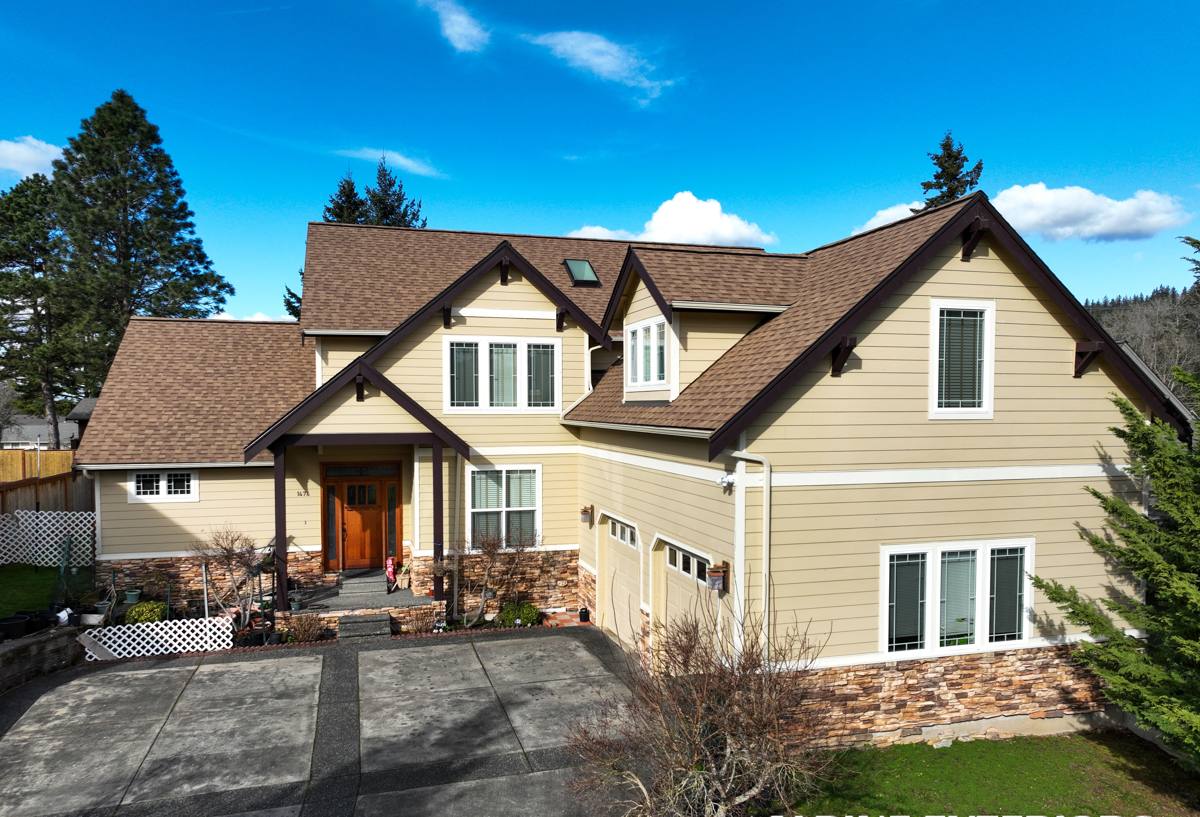
What Whatcom County Weather Actually Does to a Deck
Moss and Algae Growth
Shaded yards and covered porches in Everson rarely get the sustained sun exposure needed to dry a wood deck surface between rain events. Moss and algae take hold in the board grain, in fastener holes, and in the gaps between boards. On wood, that growth holds moisture against the fibers and accelerates rot from the inside out. On composite, there is no wood grain for spores to root into, so growth mostly sits on the surface and rinses or scrubs off without leaving a soft spot behind.
Moisture Cycling
The bigger issue in this region isn't any single rainstorm — it's the constant wet-dry cycling that runs from October through May. Wood expands when it absorbs water and contracts as it dries, and that repeated movement is what eventually splits boards, pulls fasteners loose, and cups the deck surface. Composite boards absorb far less moisture, so they move less and stay dimensionally stable through the wet season.
Salt-Tinged Marine Air
Whatcom County's proximity to the Salish Sea means the air carrying rain inland often has a faint salt component to it, especially during onshore weather patterns. That salt-laden moisture is part of why exposed metal fasteners, hinges, and railing hardware corrode faster here than they would in a drier inland climate. It's a small factor compared to standing moisture, but it's one more reason to use fastening hardware rated for coastal exposure, not standard interior-grade screws.
Composite vs. Wood: The Honest Trade-Offs for This Climate
We install both wood and composite decking, and we're upfront with every Everson customer about what each material actually asks of you over a Whatcom County wet season.
| Factor | Pressure-Treated Wood | Composite Decking |
|---|---|---|
| Annual maintenance | Cleaning, sanding, and re-staining or sealing, typically every 1-2 years | Occasional wash-down; no sealing or staining required |
| Moisture behavior | Absorbs water, swells and contracts, prone to splintering and rot over time | Minimal absorption; stays dimensionally stable through wet-dry cycles |
| Moss/algae resistance | Growth roots into grain, holds moisture against fibers | Growth stays mostly surface-level, rinses off more easily |
| Upfront material cost | Lower | Higher |
| Typical lifespan here | 10-20 years with consistent upkeep | 25-30+ years with minimal upkeep, per most manufacturer warranties |
| Appearance over time | Requires refinishing to keep original look | Color is embedded through capped boards; fades gradually, doesn't require refinishing |
Neither material is wrong. Wood costs less upfront and some homeowners genuinely prefer the look and feel of real lumber. But for Everson's climate specifically — the shade, the humidity, the long wet season — composite removes the maintenance burden that wood decks in this area demand, and that's the main reason most of our local customers choose it.
What a Correct Composite Deck Installation Involves
Substructure First
A composite deck is only as good as what's underneath it. We use pressure-treated or, where the budget allows, corrosion-resistant framing for joists and beams, because the composite boards themselves don't rot — but a wet, undersized, or poorly ventilated substructure underneath them absolutely will. This matters more in Everson than in drier climates because ground moisture and tree shade keep the underside of a deck damp longer through the year.
Drainage and Airflow
Low decks built tight to the ground, or decks in shaded yards with poor grading, trap moist air underneath the frame. We build in ventilation gaps and check that water has somewhere to go — away from the house foundation, not pooling under the joists. Skipping this step is one of the most common corner-cutting mistakes we see on older decks we're asked to repair or replace.
Fastening and Hardware
Given the region's salt-tinged marine air, we use stainless steel or coated fasteners rated for coastal or high-moisture exposure rather than standard-grade hardware. Hidden fastener systems are also worth considering on composite decks — they keep the board surface free of exposed screw heads, which both looks cleaner and removes another spot where moisture and grime can collect.
Flashing at the Ledger Board
Where a deck attaches to the house, proper flashing is what keeps rainwater from working its way behind the siding and into the wall structure. This is one of the most consequential — and most commonly skipped — steps in deck construction anywhere in Western Washington. We treat it as non-negotiable.
Choosing the Right Composite Board for an Everson Property
"Composite decking" isn't one product — board quality and construction vary a lot between tiers, and the right choice depends on your yard's sun and shade pattern, your budget, and how the deck will be used.
Capped Composite vs. Capped Polymer/PVC
Most composite boards today are capped — a protective outer shell bonded over a wood-fiber and plastic core — which is what gives them their stain and fade resistance. Fully capped polymer (PVC) boards take that a step further with no wood fiber at all, offering the highest moisture resistance, which can be worth the added cost on heavily shaded Everson lots where a deck rarely gets a full dry-out between rains.
Color and Heat Considerations
Darker composite boards absorb more heat in direct sun and can also show water spotting more visibly after rain than lighter, mid-tone colors. For decks with real afternoon sun exposure, we'll talk through color options that balance the look you want against practical heat and glare on bare feet.
Board Profile and Grip
Uncovered decks in a wet climate benefit from a board surface with texture or grain built in for slip resistance, especially on stairs. We steer customers toward textured profiles for any deck section that stays shaded or damp for long stretches of the day.
Our Process, Start to Finish
- On-site assessment — we walk the property, check drainage, sun/shade exposure, and the condition of any existing structure being replaced.
- Honest scope and estimate — a written estimate that lays out material tier options, substructure work needed, and a realistic cost range, with no pressure to upsell a tier you don't need.
- Permitting — we handle the Whatcom County or local permit paperwork required for the project.
- Demolition and substructure work — removal of the old deck if applicable, and framing, flashing, and drainage work done to code.
- Composite board installation — boards, fascia, and hardware installed per manufacturer spec to keep warranty coverage intact.
- Final walkthrough — we go over the finished deck with you, including basic care guidance specific to your yard's sun and shade pattern.
Living With a Composite Deck Through an Everson Wet Season
Composite decking is low-maintenance, not no-maintenance. A little seasonal attention goes a long way toward keeping it looking and performing like new.
- Sweep leaves, needles, and debris off the surface regularly in fall — trapped organic matter holds moisture and feeds moss growth even on composite.
- Rinse the deck with a garden hose every few weeks during the wettest months to keep pollen film and early moss spores from settling in.
- Use a soft-bristle brush and mild soap-and-water solution for general cleaning; avoid pressure washers on high settings, which can damage the board's cap layer.
- Keep planters and rugs up off the deck surface occasionally so trapped moisture underneath doesn't sit for weeks at a time.
- Check railing hardware and fasteners once a year for early signs of corrosion, especially after storm-heavy winters.
- Clear gutters and downspouts near the deck so runoff isn't draining directly onto or under the boards.
Why a Crew That Already Works in Everson Matters
Deck problems in this part of Whatcom County tend to show up in predictable places — under tree cover, along north-facing walls that never dry out, and at ledger connections that weren't flashed correctly the first time. A crew that works this area regularly has already seen those failure points on other local homes and builds to avoid them from day one, rather than treating every deck as a generic install. We also know which permitting steps and inspection expectations apply locally, so there are no surprises mid-project.
We're a Ferndale-based crew that works throughout Whatcom County, including Everson, and we build composite decks to hold up against the specific combination of rain, shade, and moss pressure this region delivers year after year — not a one-size-fits-all national spec.
Get a Free, No-Pressure Estimate
If you're considering a new composite deck or replacing an aging wood deck in Everson, we're happy to take a look, walk you through your options honestly, and give you a straightforward estimate — no pressure, no upsell. Use the form below to get started.