 Ferndale
 Building New in Everson: What the Climate Actually Asks of Your Windows
Everson sits inland from the salt water but still gets plenty of what makes Whatcom County exteriors demanding: long stretches of driving rain off the Pacific, damp air that lingers under tree cover, and a moss season that seems to start earlier every year. If you're framing a new home or addition out here, the windows you choose and how they're installed on day one will decide how that structure performs for the next twenty or thirty years. New construction gives you one real chance to get the flashing, the sealant, and the water management right before the siding closes everything up. There's no do-over once the wall is finished.
We're a Ferndale-based crew, and Everson is part of our regular service area — not a stretch job we take once and never see again. That matters more with new construction than almost any other exterior work, because a bad install doesn't show up as a leak until years later, often after the warranty window has passed and the original crew is long gone.
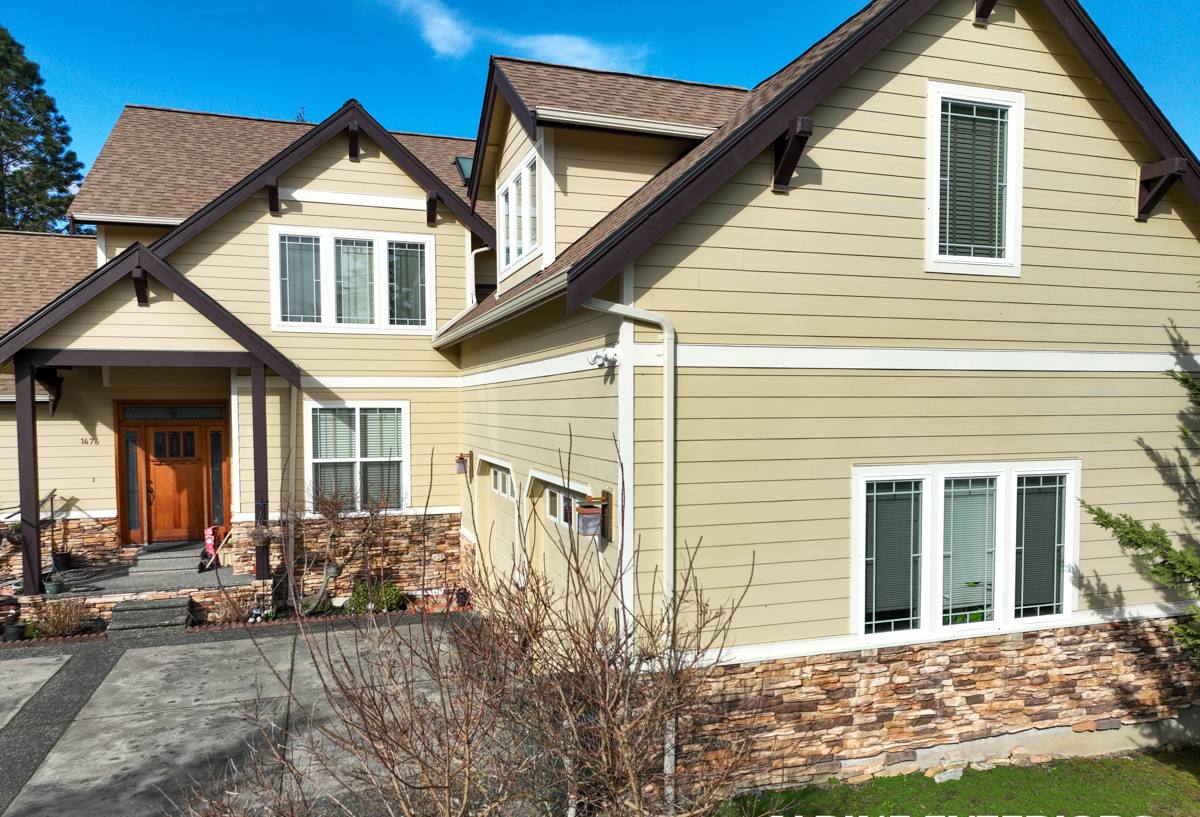
Why New-Construction Windows Are a Different Job Than a Replacement
A lot of homeowners assume "window installation" is one skill. It isn't. Replacement windows go into an existing, already-flashed opening — the work is mostly about the unit itself and the interior finish. New-construction windows go into a raw rough opening, before the weather-resistive barrier and siding are on. That means the installer is responsible for building the entire water management system around the window, not just setting the unit.
New-construction windows typically have a nailing fin around the perimeter that gets fastened directly to the sheathing, then integrated with the house wrap and flashing tape in a specific shingle-lap sequence — bottom to top, so every layer sheds water onto the layer below it, never up into a seam. Get that sequence backward, or skip a step because the framing crew is in a hurry to close in the house, and you've built a hidden path for water straight into the wall cavity. In a climate that sees rain sideways off a stiff onshore wind, that's not a hypothetical.
What a Correct New-Construction Window Install Involves
The Sill Pan
Before the window ever goes in, the rough opening sill should get a sloped, sealed pan — flashing membrane or a rigid pan product — that directs any water that gets past the window back outside the wall rather than letting it pool on the framing. This is the step most often skipped on production builds, and it's the one that causes the most damage over time because rot at the sill often isn't visible until the trim comes off.
Flashing the Jambs and Head
Flashing tape at the side jambs needs to overlap the sill pan below it, and the head flashing needs to overlap the jamb flashing and tuck under the weather-resistive barrier above the window — never over it. Every layer overlaps the one below, shingle-style, so gravity does the work.
Sealant, Not Just Tape
Backer rod and a quality sealant at the right joints, plus continuous — not spot — sealant under the nailing fin where the manufacturer calls for it, close off the gaps that tape alone can't reach around corners and mitered flashing joints.
Fastening and Squaring
The window has to be shimmed level, plumb, and square in the opening before it's fastened, with fasteners at every location the manufacturer specifies. A window that's slightly racked in the opening won't operate correctly and puts uneven stress on the frame and glazing seals for the life of the unit.
Choosing the Right Window for an Everson Build
Frame material and glazing package both affect how a window handles years of damp Whatcom County weather, not just its upfront cost. We steer builders and homeowners toward vinyl or fiberglass frames for new construction in this area — both resist moisture absorption and don't require repainting, which matters when a house sits under tree cover and stays damp longer after a storm. We generally don't recommend bare wood frames for exterior exposure here unless they're clad, because the maintenance burden of keeping raw wood sealed against this much sustained moisture is significant, and a lapse in upkeep shows up as rot faster than most owners expect.
| Frame Material | Moisture Behavior | Maintenance | Typical Fit for Everson Builds |
|---|---|---|---|
| Vinyl | Won't rot or absorb water; dimensionally stable | Low — occasional cleaning | Strong everyday choice, wide price range |
| Fiberglass | Very stable in wet/dry cycling, low expansion | Low | Good for larger openings or higher-exposure walls |
| Aluminum | Durable but conducts cold, can condense in damp climates | Low | Usually reserved for specific architectural styles |
| Wood (uncladded) | Absorbs moisture, needs sealed finish | High — regular repainting/sealing | Only where owner commits to upkeep |
On glazing, double-pane with a low-E coating and argon fill is the practical baseline for this climate — it cuts heat loss through the glass and helps control condensation on cold, wet mornings, which is common when indoor humidity meets a cold glass surface. Triple-pane is worth discussing for north-facing walls or rooms with especially large glass areas, but it's not a blanket requirement for every opening.
Our Process From Rough Opening to Final Seal
- Verify rough openings against window schedule before units arrive on site, catching sizing issues before install day instead of during it.
- Install sloped sill pan flashing at every opening.
- Set the window plumb, level, and square in the shimmed opening.
- Fasten per manufacturer specification, then flash jambs and head in proper shingle-lap order, tied into the weather-resistive barrier.
- Seal interior and exterior per manufacturer detail, including backer rod and sealant at trim joints.
- Photograph flashing and sealant work at each opening before siding closes it in, so there's a record of what's behind the wall.
- Final operational check — every sash opens, closes, and locks correctly before we call the opening done.
Common Mistakes We See in New Construction
Most window failures we get called to diagnose years later trace back to a handful of repeatable errors: sealant used in place of proper flashing rather than alongside it, flashing tape applied in the wrong order so water gets trapped instead of shed, fasteners skipped to save time, or a window set out of square and forced to fit. None of these show up on a walkthrough. They show up as a soft spot in the drywall, a musty smell, or visible staining on the siding below a window two or three winters later. Building it right the first time costs less than any of those repairs, by a wide margin.
A Quick Checklist Before You Sign Off on Window Rough-In
- Sill pans installed and sloped to drain outward at every opening
- Flashing tape overlapped bottom-to-top, tucked properly under the WRB at the head
- Every fastener location filled per the manufacturer's install instructions
- Windows shimmed level, plumb, and square — not just tacked in place
- Photos taken of flashing details before siding covers them
- Sash operation tested on every unit, not just a sample
Cost Factors for New-Construction Window Projects
| Factor | Why It Moves the Price |
|---|---|
| Number and size of openings | More glass area and more units means more labor hours and material |
| Frame material | Vinyl is generally the entry point; fiberglass and specialty finishes cost more |
| Glazing package | Triple-pane and specialty low-E coatings add cost per unit |
| Site access and building stage | Coordinating around framing and other trades can affect scheduling and labor time |
| Custom shapes or sizes | Non-standard openings require special-order units, which cost more and take longer to arrive |
We don't quote a flat per-window number over the phone because these factors genuinely change the total — an accurate number needs a look at the plans or the framed openings.
Why Hiring a Crew That Already Works Everson Matters
New-construction window work depends on getting the sequence right with the framing and siding crews on the same job — the window installer has to coordinate the weather-resistive barrier and flashing steps with whoever's running those trades, and timing matters. A crew that regularly works Everson and the greater Ferndale area already understands the moisture load this part of Whatcom County deals with and builds the flashing details accordingly, rather than defaulting to a drier-climate standard. Being local also means we're a short drive away if a question comes up mid-build, and we're still here — not a crew that finished up and left the county — if you have a question about the work years down the road.
If you're framing a new home or addition in the Everson area and want the window openings done right the first time, we're happy to take a look at your plans or your framed rough openings and give you a straightforward, no-pressure estimate. Use the form below to get in touch.