 Ferndale
 Storm Damage Roof Repair for the Fairhaven Area
Homes near Fairhaven sit close enough to the water that the weather behaves differently than it does even a few miles inland. Wind off the Strait of Georgia and Bellingham Bay drives rain sideways into roof edges and wall-roof intersections that were never designed to shed water horizontally. Add a long, wet moss season and a steady dose of salt-laden air, and a roof here ages on a different timeline than a roof in a dry, inland neighborhood. When a storm comes through and does damage, the repair has to account for all of that, not just patch the visible hole.
This page covers what storm damage actually looks like on homes in and around Fairhaven, what a correct repair involves, and how our crew — based in Ferndale and working properties across Whatcom County — approaches the job.
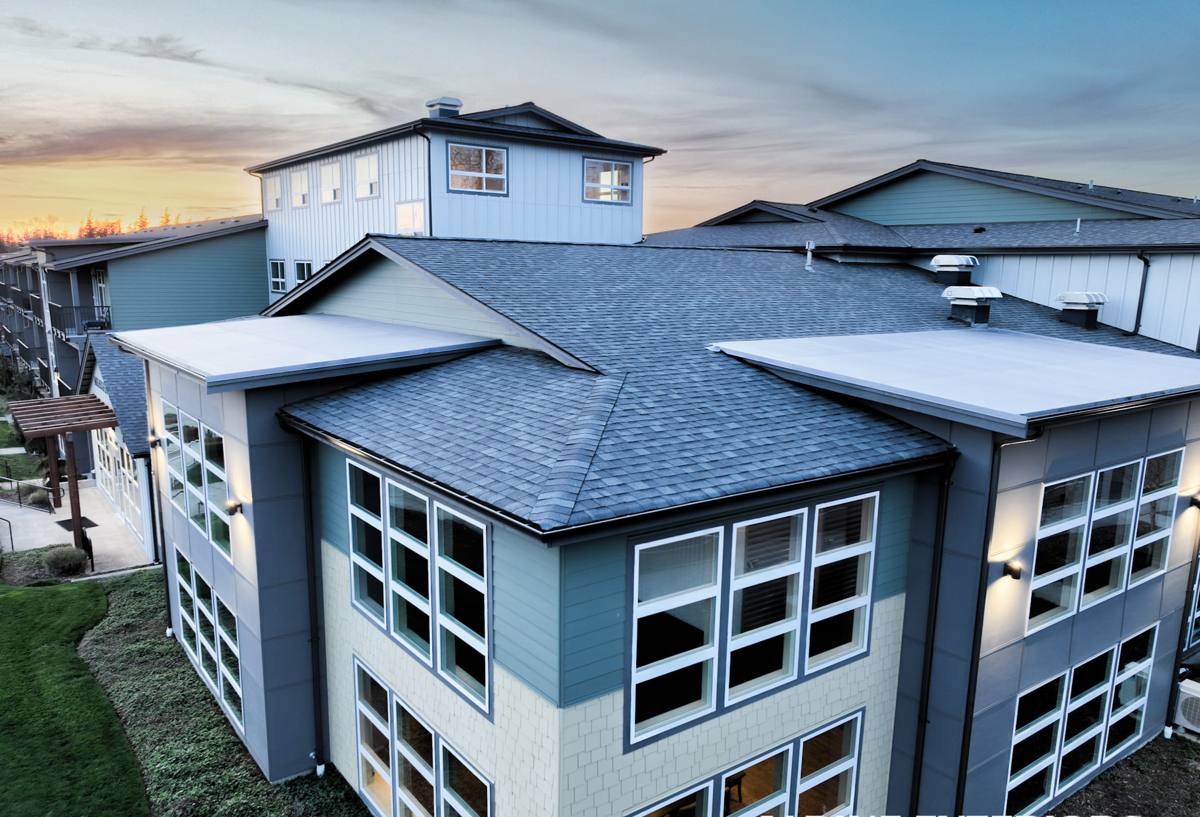
Why Storms Hit Fairhaven-Area Roofs Harder
Wind-Driven Rain
Most roofing underlayment and flashing details are built to handle water running downhill. Wind-driven rain doesn't run downhill — it gets pushed up and under shingle edges, around chimney flashing, and into any gap in the roof-to-wall transition. On exposed, elevated, or waterfront-adjacent lots, this is the single biggest cause of interior leaks after a storm, and it's often damage that looks minor from the ground but has already soaked the decking underneath.
Salt Air
Proximity to saltwater accelerates corrosion on exposed metal — nails, flashing, vent caps, and gutter hardware all corrode faster here than they would twenty or thirty miles inland. A storm that would just crack a shingle on an inland roof can tear loose a fastener that was already weakened by years of salt exposure, turning a small problem into a bigger one during a single windstorm.
Moss and Moisture
Whatcom County's moss season runs long — mild, wet winters and shaded, tree-lined lots common near Fairhaven give moss plenty of time to establish itself. Moss holds moisture against the roof surface year-round, which softens shingles, lifts edges, and works its way under flashing over time. A roof with an existing moss problem is more vulnerable to storm damage than a clean one, because the moss has already been prying up the material the wind and rain later exploit.
What Storm Damage Actually Looks Like
Homeowners often expect storm damage to be obvious — a missing shingle, a visible hole. Sometimes it is. Often it isn't. What we look for:
- Lifted, cracked, or missing shingles, especially along ridges and edges facing the prevailing wind
- Torn or loosened flashing around chimneys, skylights, and roof-to-wall joints
- Granule loss showing up as grit in gutters or downspouts after a storm
- Soft spots or discoloration on interior ceilings near exterior walls
- Damaged or clogged gutters that let water back up under the roof edge
- Debris impact damage from wind-thrown branches, especially under overhanging trees
- Moss-lifted shingle edges that were weak before the storm and failed during it
Some of this is visible from the ground. Some of it isn't. That's part of why a storm damage inspection needs to include the attic, not just a look at the roof surface from the yard.
What a Correct Storm Damage Repair Involves
1. Full Inspection Before Any Repair
We check the roof surface, flashing, gutters, and attic. Wind-driven rain damage frequently shows up first as a stained rafter or wet insulation in the attic, before it ever shows on a ceiling. Skipping the attic check is how repairs miss the actual entry point of the leak.
2. Identify the Real Cause, Not Just the Symptom
A cracked shingle over a soft spot in the decking isn't fixed by replacing the shingle alone. If water has already reached the plywood underneath, that section needs to be dried out and, if compromised, replaced before new roofing goes back down. Patching over wet decking traps moisture and guarantees a repeat failure.
3. Match the Repair to the Existing Roof
Where possible, we match shingle type, color, and exposure to the surrounding roof so the repair doesn't stand out as a patch. On older roofs where exact matches aren't available, we talk through the honest trade-offs with you rather than promising an invisible fix that isn't realistic.
4. Address the Underlying Vulnerability
If the damage happened because of an underlying issue — corroded flashing, moss buildup, undersized gutters for the amount of runoff the roof sees — we flag it. Repairing the hole without addressing why it failed just sets up the next storm to cause the same damage again.
Repair, Partial Replacement, or Full Replacement?
Not every storm-damaged roof needs the same scope of work. The right call depends on the roof's age, how widespread the damage is, and what condition the rest of the roof is in.
| Situation | Typical Approach | What to Watch For |
|---|---|---|
| Isolated damage, roof under 10 years old, no decking issues | Targeted repair of the damaged section | Shingle color/lot matching on newer roofs is usually straightforward |
| Damage in multiple areas, roof 10-20 years old | Repair now, but plan for replacement timeline | Repeated storm damage on an aging roof is often a sign the whole roof is past its reliable service life |
| Widespread damage, decking wet or rotted, roof near end of life | Full replacement | Patching an end-of-life roof after storm damage is often a short-term fix that costs more over time |
| Storm damage plus long-term moss/moisture wear | Case-by-case — often repair plus moss treatment and gutter correction | Fixing the storm damage without addressing moss just invites the next failure |
We'll give you a straight answer on which category your roof falls into, along with what we actually see up there — not just an estimate for the largest possible job.
Materials That Hold Up Near the Water
In a salt-air, high-moisture environment, material choice matters more than it does inland. We favor corrosion-resistant flashing and fasteners for any repair work in this area, since standard hardware corrodes faster this close to the water and leads to repeat failures. On full replacements, we talk through underlayment and ventilation options that are built for sustained moisture exposure rather than defaulting to whatever is cheapest. This isn't about upselling — it's about not doing a repair that we know will fail again in a few years because the hardware wasn't rated for the environment.
Our Process, Start to Finish
- Inspection — roof surface, flashing, gutters, and attic, with photos so you can see what we see.
- Honest assessment — repair, partial, or full replacement, explained in plain terms with the reasoning behind it.
- Written estimate — clear scope, materials, and timeline before any work starts.
- Repair or replacement — done with materials suited to a marine, moss-prone climate, not generic inland specs.
- Cleanup — debris, old material, and fasteners cleared from the property and gutters.
- Follow-up — a straightforward look-back if you have questions once the repair has been through a few storms.
Why a Crew That Already Works This Area Matters
A contractor who works Fairhaven and the rest of the Ferndale and Whatcom County area regularly already knows what wind-driven rain does to roof-wall transitions here, how fast moss re-establishes in this climate, and which hardware actually holds up against salt air over years, not months. That's the difference between a repair that's built for this coastline and one that's built for a roof somewhere with milder, drier weather. It also means we can usually get to a storm-damaged roof quickly, since we're not traveling in from out of the area — and a fast tarp-and-assess response after a storm often prevents a repair job from turning into a much bigger one.
After a Storm: What to Check Before You Call
- Look for granules collecting in gutters, downspouts, or on the ground below downspouts
- Check ceilings and upper walls near exterior corners for new stains or soft spots
- Note any visible missing or displaced shingles from the ground — don't get on the roof yourself
- Check the attic (if safely accessible) for damp insulation, daylight through the roof deck, or musty smell
- Photograph anything you notice, with a date, for your own records
- Avoid walking on a wet or storm-damaged roof — loose material and wet moss make footing unreliable
If you see any of these signs, it's worth having it looked at before the next storm rather than waiting for a small leak to become a bigger repair.
Preventing the Next Storm From Doing the Same Damage
Once a storm-damaged roof is repaired, a little ongoing attention keeps the next storm from causing a repeat. Keeping gutters clear so wind-driven rain has somewhere to go, treating moss before it lifts shingle edges, and having flashing checked periodically rather than only after a leak shows up all extend the life of the repair and the roof around it. None of this requires a large annual commitment — it's mostly about catching small issues in a climate that doesn't give a roof much of a break between wet seasons.
If a recent storm has left you with a leak, missing shingles, or just a nagging feeling something's not right up there, we're happy to come take an honest look. Estimates are free, there's no pressure, and you'll get a straight answer about what the roof actually needs — use the form below to get started.