 Ferndale
 Roofing in Kendall Isn't the Same Job as Roofing Somewhere Dry
Kendall sits far enough into Whatcom County that homeowners here deal with a mix of conditions most roofing crews never have to think through at the same time: marine-influenced moisture rolling in off the Salish Sea corridor, long stretches of driving rain through fall and winter, and shaded, tree-lined lots that barely dry out between storms. Add in periodic wind events and the salt-tinged air that reaches this far inland on the wrong weather pattern, and you've got a roofing environment that punishes shortcuts. An asphalt shingle roof installed the way it would be in a dry climate simply doesn't hold up the same way out here.
That's the whole point of a page like this. We're not selling "a roof." We're talking about what an asphalt shingle roof specifically needs to do its job on a Kendall property, year after year, without turning into a moss farm or a slow leak nobody notices until there's a stain on the ceiling.
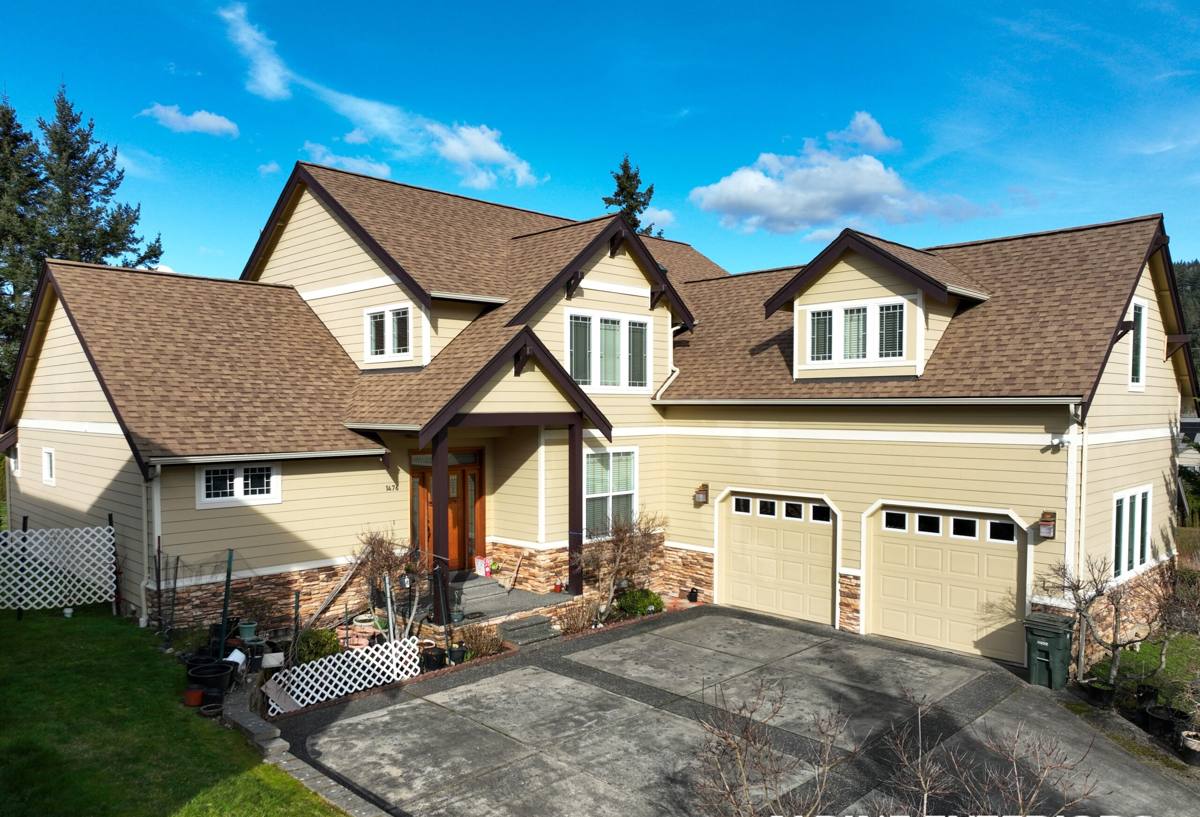
What Kendall's Climate Actually Does to a Roof
Three things drive almost every asphalt shingle problem we see on homes in this area:
Sustained, Driving Rain
It's not the occasional downpour that causes trouble — it's weeks of steady, wind-driven rain that finds every weak seam, every under-lapped shingle, every place where flashing was installed to save time instead of to shed water. Roofs here need underlayment and flashing details that assume water will hit the surface sideways, not just fall straight down.
Shade and Slow Drying
A lot of Kendall properties sit among mature trees, which is great for privacy and terrible for a roof's ability to dry out. Shaded roof sections stay damp far longer after a storm than a roof in full sun, and that extended dampness is exactly what moss, moss, and algae need to establish themselves in the granule surface of a shingle.
Salt Air and Corrosion
Whatcom County's proximity to Puget Sound means salt-laden air reaches inland properties more than people expect, especially during certain wind patterns. Over years, that salt content accelerates corrosion on unprotected metal — nails, flashing, vents — which is one reason we don't cut corners on fastener and flashing material out here.
None of this means an asphalt shingle roof is a bad choice for Kendall. It remains one of the most cost-effective, widely available, and repairable roofing systems on the market. It just means the installation has to account for these conditions from the start, not get patched around them later.
What a Correctly Installed Shingle Roof Actually Includes
A lot of roofing problems in this region trace back not to the shingle itself but to what's underneath it and around its edges. On every job we treat these as non-negotiable:
- Ice-and-water membrane at vulnerable points — eaves, valleys, and roof-to-wall transitions get a self-adhering waterproof membrane, not just felt, because those are the spots wind-driven rain and any winter freeze-thaw exploit first.
- Synthetic underlayment across the field — a water-resistant secondary barrier under the shingles themselves, so a single damaged or wind-lifted shingle doesn't mean an instant leak.
- Balanced ventilation — intake at the eaves, exhaust at the ridge, sized to the attic. Poor ventilation traps moisture underneath the roof deck, which shortens shingle life from below just as fast as weather shortens it from above.
- Correct nailing pattern — the right number of nails, placed in the manufacturer's nailing zone, not high or low. This single detail is one of the most common causes of both wind damage claims and voided warranties.
- Properly lapped, corrosion-resistant flashing — at chimneys, skylights, vent pipes, and wall intersections, installed in the correct shingle-over-flashing sequence so water is always directed down and out, never trapped.
Skip any one of these and the shingles on top can be top-shelf material and the roof will still underperform in this climate.
Choosing the Right Shingle for a Kendall Home
Not every asphalt shingle is built the same, and the differences matter more here than in a milder climate. The two main categories homeowners choose between:
| Shingle Type | Typical Lifespan | Wind Rating | Best Suited For |
|---|---|---|---|
| 3-Tab (standard) | 15-20 years | Lower | Budget-focused projects, secondary structures, flat resale-only situations |
| Architectural / Laminate | 25-30+ years | Higher | Primary residences, wind- and rain-exposed lots, most Kendall homes |
We steer most Kendall homeowners toward architectural shingles, not because 3-tab is a bad product, but because the thicker, layered construction handles wind uplift and driving rain better, and the extra material gives algae-resistant granule treatments more surface to work with over the shingle's life. On a heavily shaded lot, we also recommend shingles with algae-resistant (AR) granules, which contain copper or zinc compounds that slow moss and algae growth — it won't make a roof moss-proof, but it meaningfully extends the time between cleanings.
Color and Heat Considerations
Darker shingles hide streaking longer but can run slightly warmer in the rare stretches of direct summer sun; lighter shingles show algae staining sooner but stay cooler. Neither is objectively "better" here — it's a tradeoff worth talking through based on how much shade a particular roof gets and how the home is oriented.
Our Installation Process
Every roof is a little different, but the sequence we follow on a Kendall re-roof or new install stays consistent:
- On-site inspection and measurement — we walk the roof, check the deck condition, note valleys, penetrations, and shaded zones that will need extra moss protection.
- Written estimate — materials, labor, ventilation plan, and any deck repair allowance spelled out before work starts, no vague line items.
- Tear-off and deck inspection — old roofing removed down to the deck, with any soft or water-damaged sheathing identified and replaced before anything new goes down.
- Underlayment and membrane installation — ice-and-water membrane at eaves and valleys, synthetic underlayment across the field.
- Flashing installation — new corrosion-resistant flashing at all penetrations, chimneys, and wall transitions.
- Shingle installation — laid to manufacturer spec with correct nailing pattern and exposure.
- Ventilation check — intake and exhaust confirmed balanced for the attic space.
- Final walkthrough — site cleanup, magnetic sweep for stray fasteners, and a review of the finished roof with the homeowner.
We don't skip steps to shave a day off a job. In a climate that gives water this many chances to find a way in, the steps that don't show up in a photo are usually the ones that matter most five years down the road.
Moss, Algae, and Keeping a Roof Ahead of Kendall's Wet Season
Even a well-installed, algae-resistant shingle roof in this area will eventually see some moss or algae growth, especially on north-facing or heavily shaded slopes. Left unaddressed, moss holds moisture against the shingle surface, works its way under tabs, and can lift shingles enough for wind and rain to get underneath. A few habits go a long way:
- Keep overhanging branches trimmed back so more sun and air reach the roof surface.
- Clear gutters and valleys of debris before the fall rains set in — clogged water backs up under shingle edges.
- Have moss physically removed (not just chemically treated) every couple of years on shaded sections, using methods that don't strip the granule surface.
- Watch for granule buildup in gutters, which signals a shingle surface that's starting to wear.
We're straightforward about this: no shingle roof in Whatcom County stays moss-free forever without some maintenance. The goal of good material choice and good installation is to stretch out the time between cleanings and make sure moss growth stays a cosmetic issue instead of a structural one.
Signs a Kendall Roof Needs Repair or Replacement
A lot of roofs get replaced too early, and just as many get patched too long. Before deciding either way, it's worth checking for these:
- Granules collecting in gutters or at downspout outlets in noticeable amounts
- Shingles that are curling, cupping, or cracking, especially on sun- or wind-exposed slopes
- Visible daylight or staining in the attic near roof penetrations
- Soft or spongy spots when walking the roof (deck damage underneath)
- Moss growth thick enough to hold visible moisture days after rain stops
- Flashing that's rusted, lifted, or separating from the roof surface
- A roof approaching or past the 20-25 year mark with no major work done
One or two of these usually means a repair. Several at once, or a roof past its expected service life, usually means it's time to talk replacement before a small problem becomes a deck-level one.
What Drives the Cost of a Shingle Roof in This Area
We don't post fake pricing calculators — every roof is different — but these are the factors that actually move the number on a Kendall job:
| Factor | Why It Matters Here |
|---|---|
| Roof pitch and complexity | Steeper pitches and multiple valleys take longer to flash correctly and add labor time |
| Deck condition | Rot or soft sheathing found at tear-off requires repair before new material goes down |
| Shingle class | Architectural shingles cost more upfront but reduce wind and moss-related callbacks |
| Ventilation upgrades | Adding proper intake/exhaust venting where none exists is a worthwhile add, not a nice-to-have |
| Access and tree cover | Tight or heavily wooded lots common in Kendall can add setup and cleanup time |
The honest range for most standalone re-roofs is broad enough that a real number only comes from seeing the actual roof — anyone quoting a firm price sight unseen is guessing.
Why It Matters to Hire a Crew That Already Works in Kendall
A crew that mostly roofs in drier parts of the state can put shingles on straight and still get the underlayment, flashing, and ventilation details wrong for this climate — because those details aren't the ones that cause visible problems in year one. They show up as leaks, moss damage, or premature aging in year five or ten, long after the invoice is paid. Working regularly in Kendall and the surrounding Whatcom County communities means knowing which slopes stay shaded longest, which valley details actually shed our kind of rain, and which shortcuts simply don't survive a full wet season here. That local pattern recognition is worth more than any brand name on the shingle wrapper.
If you're weighing a repair, a full replacement, or just want a straight answer on where your current roof stands, we're happy to take a look and walk you through it — no pressure, no upsell. Reach out for a free estimate using the form below.