 Ferndale
 Roof Repair for Kendall's Wooded, Wet Corner of Whatcom County
Kendall sits in one of the shadier, wetter pockets of Whatcom County. Tucked among tall conifers and closer to the foothills than the coastline, homes here deal with a different mix of roofing problems than a house in downtown Ferndale or along the water. Less direct sun, more standing shade, and a longer window of wet weather each year mean roofs in Kendall age differently — and they need repair work that accounts for that, not a one-size-fits-all patch job.
We work roofs across Whatcom County, and Kendall calls tend to share a pattern: moss and organic debris doing slow damage long before a homeowner notices a leak, flashing that's failed quietly around a chimney or vent stack, and valleys or low-slope sections that never quite dry out between rain events. This page covers what that means for roof repair specifically in Kendall, and what a correct repair actually involves.
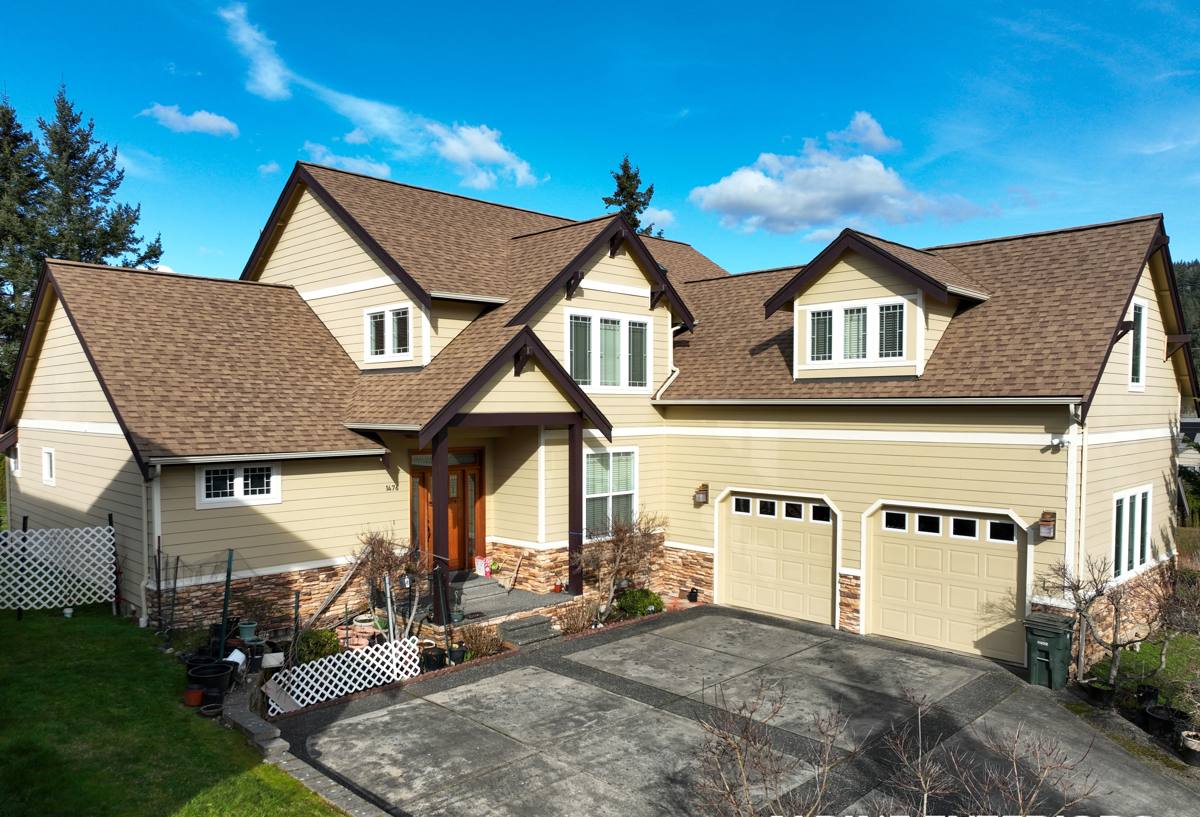
What Kendall's Roofs Are Up Against
Every roof in this region deals with driving rain and a long moss season, but Kendall's tree cover and inland setting change the emphasis:
Shade and Moisture That Doesn't Let Up
Homes surrounded by conifers get less afternoon sun on the roof plane, which means shingles, moss, and lichen stay damp longer after every rain. That extended dampness is the single biggest driver of premature roof wear we see out this way — it's not usually one big storm that causes the damage, it's months of a roof surface that never fully dries.
Needle and Debris Buildup
Conifer needles and cones collect in valleys, behind chimneys, and along gutter lines faster here than in more open parts of Ferndale. That debris holds water against the roofing material and clogs the drainage paths that are supposed to move it off the roof, which is a direct setup for leaks at seams and flashing.
Regional Rain and Salt-Influenced Air
Whatcom County as a whole gets driving rain off the Strait and a marine-influenced climate that keeps humidity high for much of the year. Even away from the immediate coastline, that damp regional air contributes to the same moss growth and slow material breakdown that coastal Ferndale properties deal with — Kendall just adds tree shade on top of it.
Freeze-Thaw Swings
Kendall sits a bit closer to the foothills and can see harder frosts and the occasional snow load that coastal Ferndale misses. Water that's worked its way under a shingle or around old flashing can freeze, expand, and turn a small problem into a bigger one overnight.
Common Roof Repair Needs We See in Kendall
Most repair calls we run in this area fall into a handful of categories:
- Moss-related shingle damage — moss roots lift shingle edges and hold moisture against the granule surface, accelerating wear in spots long before the rest of the roof is due for attention.
- Flashing failures — around chimneys, skylights, and vent pipes, where sealant and metal flashing degrade and open a path for water without any obvious sign from the ground.
- Valley leaks — valleys collect the most water and the most debris, making them the first place a marginal roof starts to fail.
- Gutter and edge backup — clogged gutters push water back up under the roof edge (the fascia and lowest course of shingles), which shows up as interior staining well before the roof itself looks obviously bad.
- Wind and storm damage — lifted or missing shingles after a wind event, especially on roof planes exposed above the treeline.
Signs You Need a Repair, Not Just a Cleaning
- Interior ceiling stains, especially near a chimney, skylight, or exterior wall
- Granules collecting in gutters or at downspout outlets
- Visible daylight or gaps around flashing when viewed from the attic
- Shingles that are cupping, curling, or missing entirely
- Moss thick enough that you can see it lifting shingle edges, not just staining the surface
- A musty smell in the attic or visible mold on the underside of the roof deck
What a Correct Roof Repair Actually Involves
A roof repair that actually solves the problem — rather than covering it up for a season — follows the same basic sequence every time, whether the job is a single flashing fix or a larger section repair.
Diagnosis Before Anything Gets Touched
We start by tracing the leak to its actual source, not just the spot where water is showing up inside. Water travels along the roof deck and framing before it drips somewhere visible, so the stain on your ceiling is often several feet from where the roof is actually failing. That means a real inspection of the roof surface, the flashing details, the attic underside, and — in Kendall's case — a look at how much moss and debris buildup is contributing to the problem.
Matching Materials Correctly
A patch that doesn't match the existing roofing in type, weight, and profile creates its own weak point — a new seam that behaves differently than the surrounding material under sun, rain, and freeze cycles. We match the existing roofing where the roof is sound enough to warrant a patch, and we're upfront when a section has degraded enough that patching it isn't the honest recommendation.
Flashing and Underlayment Get the Same Attention as the Shingles
Most leaks trace back to flashing and underlayment failures, not the shingles themselves. A repair that replaces surface shingles but reuses old, cracked flashing or degraded underlayment is a repair that's going to leak again. We replace flashing and underlayment as part of the repair whenever they're compromised, not just the visible layer on top.
Moss and Debris Removal Done Without Damaging the Surface
Moss removal matters here more than in most parts of the county, but it has to be done carefully — aggressive scraping or pressure washing can strip granules and shorten the life of an otherwise sound roof. We remove moss and debris using methods that clear the growth without damaging the roofing material underneath, and we treat the surface to slow regrowth.
Repair vs. Replacement: How We Help You Decide
Not every roof problem in Kendall needs a full replacement, and not every leak is fixable with a patch. The right call depends on a few factors:
| Factor | Leans Toward Repair | Leans Toward Replacement |
|---|---|---|
| Age of roof | Under 15–20 years, depending on material | Near or past expected material lifespan |
| Extent of damage | Localized — one valley, one flashing point, one section | Widespread moss damage, multiple leak points, granule loss across the roof |
| Underlying deck condition | Solid, no rot or soft spots | Soft decking or visible rot from long-term moisture |
| Number of past repairs | First or second repair on this roof | Repeated patches in the same areas — a sign of a bigger underlying issue |
| Moss/algae history | Recent buildup, caught early | Years of untreated moss with visible shingle lifting |
We'll always give you the repair option when it's the honest answer, and we'll tell you plainly when a repair is just going to buy a season or two on a roof that needs more.
Our Process for Kendall Roof Repair Calls
- Initial contact and estimate. We get a description of the problem — a leak, a stain, visible damage — and schedule a look at the roof.
- On-roof and attic inspection. We check the roof surface, flashing points, valleys, and the attic underside to trace the actual source of the problem, not just where it's showing up.
- Written scope and price. You get a clear explanation of what's wrong, what we recommend, and what it costs before any work starts — no surprise add-ons mid-job.
- Repair work. Moss and debris removal, flashing and underlayment replacement where needed, and matched shingle or roofing material work on the affected section.
- Site cleanup. Old material, debris, and moss removed from the property — including gutters, since a repair that leaves gutters clogged just sets up the next problem.
- Follow-up. We check back after the next significant rain to confirm the repair is holding, especially on jobs where the original leak was hard to pin down.
Materials and Methods We Use
Most Kendall repairs involve composition (asphalt) shingle roofing, since that's the majority material in the area, though we also work on metal roofing repairs. Our standard is to use materials that match the performance and appearance of what's already on the roof, and to avoid shortcuts that create maintenance headaches down the line — for example, we don't rely on sealant alone to fix a flashing problem that actually needs the flashing itself replaced. Sealant-only fixes fail faster in a climate this wet, and they tend to mask a problem rather than solve it. Our standard is to address the actual failure point, even when that means a slightly bigger scope than a quick caulk job.
Why Local Experience in Kendall Matters
A roof in Kendall doesn't behave like a roof three miles away in a more open, sunnier part of Ferndale. The moss pressure is heavier, the debris load from surrounding trees is higher, and the drying time between rain events is longer. A crew that works this specific area regularly recognizes those patterns quickly — which flashing details tend to fail first under heavy tree cover, which roof orientations hold moss the longest, and which repairs actually hold up through a full Whatcom County wet season instead of needing a redo the following winter.
That local pattern recognition is what separates a repair that lasts from one that's just cosmetic. We're not guessing at how a roof in this setting will hold up — we've seen how it plays out.
Maintenance That Extends the Life of a Repaired Roof
A repair holds longer when it's backed up with basic upkeep, especially on a shaded, tree-surrounded property:
- Clear gutters and valleys of needles and debris at least twice a year — more often on heavily treed lots
- Have moss growth treated before it thickens enough to lift shingle edges
- Trim back overhanging branches that keep sections of the roof in constant shade
- Check the attic after major storms for new staining or daylight around flashing
- Address small leaks promptly — a fast repair on a small problem is far cheaper than a slow repair on a rotted deck
If you're dealing with a leak, a stain, or a roof that's collecting more moss than it should, we're happy to come take a look. We'll give you an honest read on what's actually going on and a straightforward repair recommendation — no pressure, and no upsell to a replacement you don't need. Reach out for a free estimate using the form below.