 Ferndale
 Building Decks for an Island Climate
Lummi Island sits out in Bellingham Bay, and that location changes what a deck has to survive. Homes here deal with a level of salt exposure, wind-driven rain, and shaded moisture that most inland Whatcom County properties never see. A deck built with mainland assumptions — standard fasteners, no salt-air-rated hardware, minimal drainage planning — tends to show its age fast on the island. Composite decking, installed correctly for this environment, is one of the more sensible answers to that problem, but "composite decking" covers a wide range of products and installation approaches, and not all of them hold up the same way out here.
This page is about composite decking specifically for Lummi Island homes: what the local climate actually does to a deck, what a correctly built composite deck looks like in this setting, and how our process accounts for the realities of working on an island.
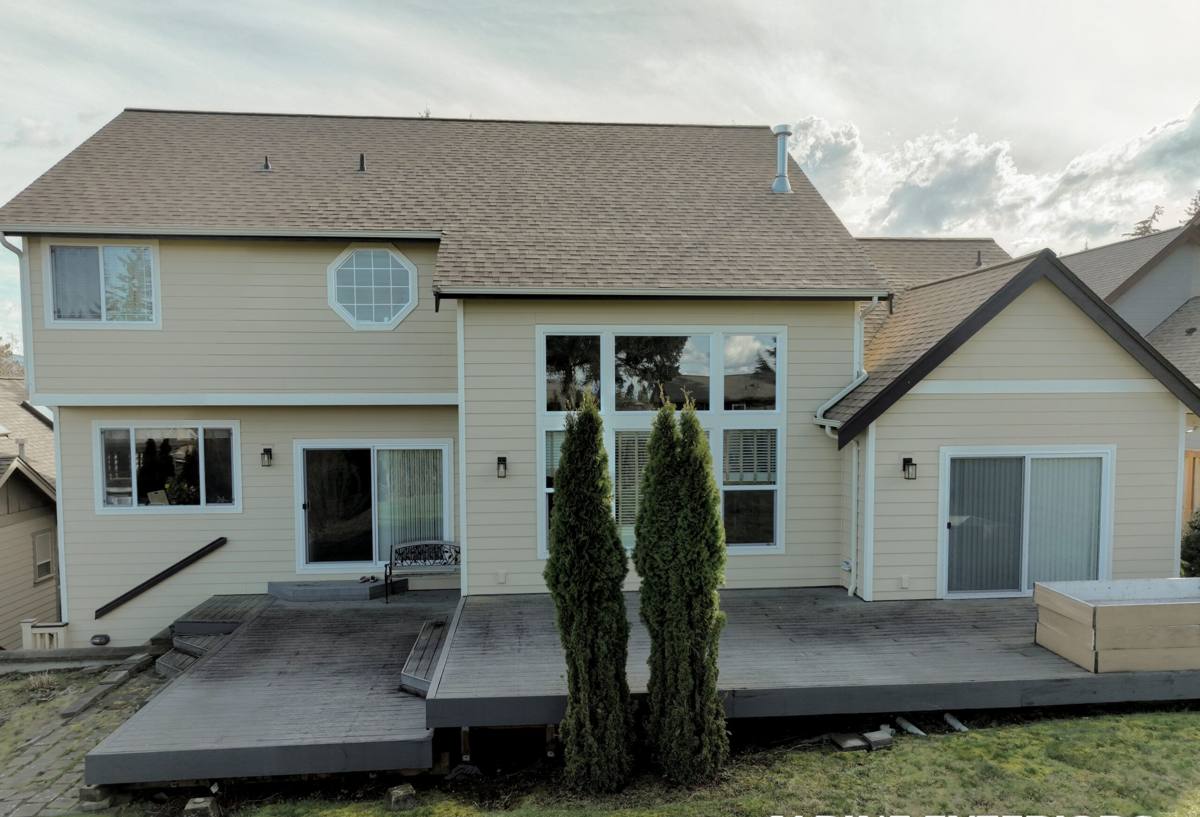
What Salt Air, Rain, and Moss Actually Do to a Deck
It helps to be specific about the forces at work, because they don't all attack a deck the same way.
Salt Air and Corrosion
Airborne salt from the surrounding water settles on every exposed surface, including the deck itself and everything holding it together. The boards may be unaffected, but standard steel fasteners, brackets, and ledger hardware corrode faster near the water than they would a few miles inland. Corrosion at a ledger connection or a joist hanger is a structural issue, not a cosmetic one.
Driving Rain
Storms coming off the water tend to arrive with wind behind them, which pushes rain sideways into ledger boards, fascia, and any gaps in flashing. A deck built without proper ledger flashing and a slight drainage slope will trap water against the house rather than shedding it.
Moss and Shade
Whatcom County's long wet season, combined with tree cover common on wooded island lots, keeps many deck surfaces damp for extended stretches. Moss and algae need exactly that — shade and moisture — and they'll colonize any surface that stays damp long enough, composite or wood. The difference is how easily the surface sheds that growth and how much damage it does while it's there.
Why Composite Makes Sense Here — With Caveats
Composite decking's main advantage in this climate is that the boards themselves don't rot, splinter, or need annual staining. A quality capped composite board resists moisture absorption far better than wood, which matters when a deck is wet more often than it's dry for several months of the year. That said, composite isn't maintenance-free, and it isn't immune to the climate — it just fails differently than wood does, usually more slowly and more predictably.
Where Composite Still Needs Attention
- Moss and algae will still grow on composite surfaces that stay shaded and damp — the boards need periodic cleaning, not zero cleaning.
- Uncapped or older-generation composite boards can absorb some moisture at cut ends and fastener points if those areas aren't properly sealed or protected during installation.
- Color and finish vary by manufacturer — lighter colors show pollen and organic buildup faster; darker colors show less growth but run hotter in direct sun.
- The substructure underneath (joists, ledger, flashing, fasteners) does not become salt-air resistant just because the boards on top are composite — it has to be specified and built for that separately.
Capped vs. Uncapped Composite: Why It Matters More Near Water
Composite boards generally fall into two categories, and the difference matters more on Lummi Island than it does inland.
Capped Composite
These boards have a polymer shell wrapped around a wood-plastic composite core. The cap is what actually resists moisture, staining, and surface wear. In a salt-air, high-rain environment, that outer cap is doing most of the work of keeping moisture out of the core, so it's worth prioritizing on an island property.
Uncapped Composite
Older or budget composite products expose the wood-plastic core directly. They can still perform reasonably well inland, but on a property with this much moisture exposure, an uncapped product is more likely to show fading, staining, and surface roughening sooner. We're upfront with clients about this trade-off rather than installing a lower-cost product and letting the climate expose the difference in a few years.
The Substructure Is Where Decks Actually Fail
Most deck failures we see, on the island or anywhere in the county, start below the boards, not in them. On a salt-air property, three things get extra attention:
Ledger Flashing
The connection where the deck meets the house is the single most common point of water intrusion into a structure. Correct flashing — installed in the right order relative to the house's siding or trim — keeps wind-driven rain from tracking behind the ledger and into the wall framing.
Fasteners and Hardware
Near the water, we specify stainless steel or marine-rated coated fasteners and hardware for structural connections, not standard galvanized hardware that's adequate inland but corrodes faster here. This is a small cost difference at build time and a significant difference in how the deck holds up over 10-15 years.
Joist Protection and Drainage
Joist tape or an equivalent moisture barrier over the top of the joists keeps rain that gets between the boards from soaking directly into the framing lumber. Combined with a proper slope away from the house, this keeps water moving off the deck instead of sitting on the structure.
How We Approach a Lummi Island Composite Deck
- Site visit and assessment — we look at sun/shade exposure, prevailing wind and rain direction, tree cover, and the existing structure if we're replacing a deck.
- Board and hardware selection — matched to how exposed the site is, not a one-size-fits-all spec.
- Framing and flashing — ledger flashing, joist protection, and corrosion-resistant hardware built in from the start.
- Composite board installation — proper spacing for drainage and expansion, hidden or manufacturer-approved fastening systems, clean end cuts.
- Final walkthrough — we go over basic care so the deck actually gets the lifespan it's built for.
Comparing Decking Materials for This Climate
| Factor | Capped Composite | Pressure-Treated Wood | PVC Decking |
|---|---|---|---|
| Salt air / moisture resistance | Strong | Moderate, needs sealing | Very strong |
| Annual maintenance | Periodic cleaning | Staining/sealing, regular inspection | Periodic cleaning |
| Moss/algae resistance | Moderate — needs cleaning | Low, absorbs moisture | Moderate to high |
| Upfront cost | Mid to upper | Lower | Highest |
| Typical lifespan with proper install | 25-30+ years | 10-15 years before major repair | 25-30+ years |
Every material on this table can work on Lummi Island if it's specified and installed correctly for the site. Composite tends to be the best balance of upfront cost, appearance, and long-term durability for most homeowners here, which is why it's what we install most often — but we'll walk through the honest trade-offs for your specific lot before recommending anything.
Living With the Moss Season: Realistic Maintenance
No decking material on Lummi Island is truly maintenance-free once you factor in the region's long wet season. What composite buys you is less maintenance and less consequence when maintenance slips. A composite deck that goes uncleaned for a season will look dull and may develop some moss in shaded corners — it won't rot, cup, or splinter the way an unsealed wood deck can. Basic seasonal care is enough to keep it in good shape:
- Sweep off leaves, needles, and debris regularly, especially in fall and through the wet months.
- Rinse the surface periodically to clear salt film and organic buildup before it sets in.
- Clean shaded, damp corners more often — that's where moss and algae take hold first.
- Check the gaps between boards once or twice a year to make sure drainage paths aren't clogged with debris.
- Have the substructure and ledger connection inspected every few years, even though the boards themselves need little attention.
Why a Crew That Knows Lummi Island Matters
Lummi Island is only reachable by ferry, which changes how a project has to be planned. Materials, equipment, and crew all need to be scheduled around ferry availability, and a contractor who hasn't accounted for that ahead of time can turn a straightforward deck build into a series of delays. We plan Lummi Island jobs with that logistics reality built in from the start — material orders staged in advance, crew time scheduled efficiently around ferry runs, and a realistic timeline given to the homeowner up front instead of one that assumes mainland conditions.
Beyond logistics, working this stretch of Whatcom County regularly means we've seen firsthand how salt air and shade affect decks built with different levels of care, which shapes what we recommend and what we won't cut corners on.
Signs Your Current Deck May Need Replacing
- Soft, spongy, or visibly rotted boards, especially near the ledger or in shaded areas.
- Rust staining around fasteners or visible corrosion on brackets and hangers.
- Persistent moss or algae that returns quickly after cleaning.
- Gaps, cupping, or splintering boards that have gotten worse over the past year or two.
- Water pooling on the surface instead of draining off.
- Any looseness or movement where the deck connects to the house.
If any of these sound familiar, it's worth having the deck looked at before it becomes a safety issue rather than a maintenance one.
If you're planning a new composite deck or replacing one that hasn't held up to Lummi Island's climate, we're happy to take a look and give you a straightforward, no-pressure estimate. Fill out the form below and we'll follow up to schedule a visit.