 Ferndale
 Lummi Island's Climate Asks More of Your Siding
Lummi Island sits out in the marine layer, and that changes the math on siding compared to a house a few miles inland in Ferndale or Bellingham. Homes here take a steady diet of salt-laden air off the water, wind-driven rain that hits walls sideways instead of just falling on the roof, and long stretches of shade and dampness that let moss and algae take hold on north- and west-facing walls. None of that is exotic weather — it's just more of it, more often, for more months of the year than most siding products were designed to shrug off indefinitely.
The practical result: siding that's marginal on a protected inland lot fails faster out here. Paint film breaks down sooner from salt exposure. Seams and butt joints that aren't sealed correctly let moisture in and it doesn't dry out quickly in our humidity. Wood-based products swell, split, and rot at the edges years ahead of schedule. This page is about what actually needs to happen — product choice and installation both — to get siding that holds up on Lummi Island instead of just holding up in a showroom.
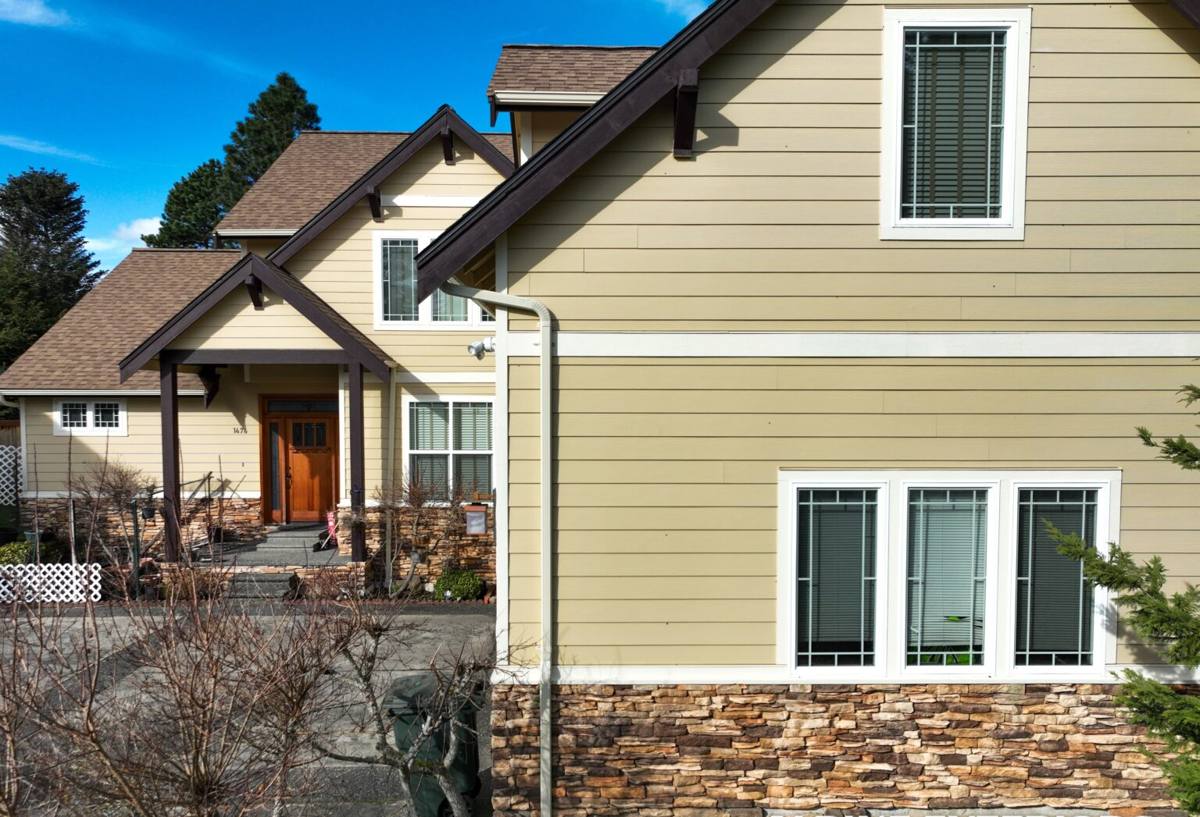
What "Correct" Siding Installation Means on This Island
Good siding installation is mostly invisible work that happens before the first plank goes up. On a marine-exposed island lot, skipping any of it shows up as a problem within a few winters, not a few decades.
The water-management layer comes first
Every wall gets a weather-resistive barrier installed as a continuous drainage plane, lapped correctly from the bottom up so water sheds outward instead of behind the siding. Where that barrier is torn, stapled sloppily, or interrupted at penetrations, that's where rot starts — usually years later, hidden behind the siding, which is exactly why it has to be done right the first time.
Flashing at every transition
Windows, doors, deck ledgers, roof-to-wall intersections, and any place two materials meet need proper flashing that directs water out and down, never into the wall assembly. On a house taking driving rain off the water, a shortcut here is the single most common cause of siding failure we see, regardless of what material is on the wall.
Fastening and gapping to spec
Fiber cement has to be fastened per the manufacturer's nailing pattern, with the correct gap at butt joints, corners, and penetrations to allow for expansion and to let caulk actually do its job. Face-nailing where blind-nailing is called for, or tight-butting boards with no gap, are small-looking mistakes that cause big problems in a wet climate.
Clearances that keep water moving
Siding needs a minimum gap above roof lines, decks, and grade so it isn't sitting in standing water or trapped moisture. On island lots with mature trees and a lot of shade, that clearance also matters for airflow — the difference between a wall that dries out after a storm and one that stays damp long enough to grow moss.
Why We Only Install James Hardie Fiber Cement Here
We don't install vinyl, LP SmartSide, Cemplank, Allura, or primed wood siding — on Lummi Island or anywhere else we work. That's not a marketing line, it's a standard we apply because of what we've seen these materials do over time in exactly this kind of coastal, wet, shaded environment.
Vinyl can look fine for years, but it's a plastic product that expands and contracts with temperature swings, can warp or become brittle with UV and salt exposure, and it's not fire-rated. In a marine climate with driving rain, water finds its way behind vinyl panels more easily than most homeowners expect, and there's no factory finish protecting the substrate underneath because there isn't one — it's the material itself.
LP SmartSide and engineered wood products are wood-based (strand or fiber, resin-bonded) and, done well, can perform reasonably in moderate climates. But wood-based siding depends on cut edges, seams, and fastener penetrations staying sealed for the life of the product. In a place with this much sustained moisture and shade-driven dampness, that's a maintenance commitment most homeowners don't sign up for, and the failure mode when it's missed — edge swelling, then rot — is expensive to catch late.
Cedar and primed spruce are honest, attractive materials, but they're the most maintenance-intensive option on the table: repainting or restaining on a cycle, ongoing caulk maintenance, and real vulnerability to the moss and algae growth that shaded, damp island walls are prone to. We've simply seen too many of these products end up costing homeowners more in upkeep and premature replacement than the upfront savings were worth.
James Hardie fiber cement is cement, sand, and cellulose fiber — it doesn't rot, it isn't a food source for moss and mildew the way wood is, and it's non-combustible. The ColorPlus factory finish is baked on under controlled conditions, which holds color and resists the salt-air fading and chalking that field-applied paint struggles with on this coastline. That combination is why it's the only product we put on a wall.
HZ5: The Line Built for This Kind of Exposure
James Hardie engineers its siding by climate zone, and Whatcom County — including Lummi Island — falls in the HZ5 zone, engineered for wet, marine, freeze-prone conditions. That's not a marketing tier, it's a real difference in the product's moisture and freeze-thaw engineering versus the HZ10 line sold in the hot, dry Southwest. Installing the right zone product matters as much as installing it correctly — an HZ5 board handles our climate's wet-dry cycling in a way a mismatched product won't.
| Factor | James Hardie (HZ5) | Vinyl | LP SmartSide / Engineered Wood | Cedar / Primed Wood |
|---|---|---|---|---|
| Moisture / rot resistance | Cement-based, does not rot | Doesn't rot, but water can track behind panels | Vulnerable at cut edges and seams if not sealed | Vulnerable without diligent maintenance |
| Fire rating | Non-combustible | Not fire-rated | Combustible (treated, not non-combustible) | Combustible |
| Finish durability in salt air | Factory-baked ColorPlus finish | Can chalk / fade, brittle over time | Field-applied finish, needs upkeep | Needs repainting/restaining on a cycle |
| Moss / algae resistance | Not an organic food source | Resistant but can trap moisture | Wood-based, more susceptible | Most susceptible, needs regular cleaning |
| Typical maintenance | Periodic wash, occasional caulk check | Low, but repairs are hard to color-match | Sealant/paint maintenance on cut edges | Repaint/restain cycle, ongoing caulk |
Our Process for Working on the Island
Being based in Ferndale, we're one of the few crews that already builds Lummi Island jobs into a normal week rather than treating them as a special trip. That matters more than people expect, because island work has real logistics attached to it.
- Material and equipment loads are planned around the ferry schedule, not squeezed in as an afterthought — that means fewer delays waiting on a missed sailing.
- We scope the full material list up front so a forgotten flashing detail or extra box of trim doesn't turn into a lost half-day round trip.
- Crew scheduling accounts for the ferry's fixed run times, so your project isn't competing with commute traffic for a slot.
- We're familiar with the wind and weather patterns specific to the island's exposure, which affects sequencing — some walls get prioritized ahead of a forecasted blow.
On site, the sequence is the same rigor we apply anywhere: tear-off and inspection of the existing wall assembly, repair of any rot or damaged sheathing found underneath (common on older island homes that have taken decades of this exposure), correct weather-barrier and flashing installation, then Hardie siding installed to manufacturer spec with the right fastener pattern and gapping for HZ5 product.
What to Expect Before Work Starts
A proper estimate starts with a walk-around of the exterior, checking for soft spots, existing moisture damage, and how exposed each elevation is to prevailing wind and rain. We look at trim, window and door flashing condition, and whether the current siding shows signs of the seam or edge failures common on wood- and vinyl-clad island homes. That inspection is what a real quote is based on — not a flat per-square-foot number that ignores the condition of what's underneath.
Signs your current siding is past due
- Soft or spongy spots when pressed, especially near the bottom courses or under windows
- Visible warping, cupping, or gaps opening up at seams
- Persistent moss or algae growth that returns quickly after cleaning
- Paint or finish that's chalking, peeling, or fading unevenly, especially on the weather-facing side
- Cracked or missing caulk at trim and penetrations
Keeping Moss and Algae in Check
Even the right siding benefits from a little seasonal attention on a shaded, damp island lot. A soft wash (not high pressure, which can drive water behind boards and damage the finish) once a year on north- and west-facing walls keeps moss from getting a foothold. Trimming back vegetation that keeps a wall in permanent shade helps more than any product choice. And a quick annual check of caulk lines at trim and penetrations catches small gaps before they become moisture problems — cheap insurance against the kind of damage that's expensive to fix once it's behind the wall.
If your Lummi Island home is due for new siding, we're happy to come out, walk the exterior, and give you a straightforward, no-pressure estimate — no guessing over the phone, and no push toward a product we wouldn't put on our own homes.