 Ferndale
 Roofing in Marietta's Marine Environment
Marietta sits close enough to Bellingham Bay and the Nooksack estuary that its roofs live under different conditions than homes just a few miles inland. Salt-laden air off the water, near-constant winter rain, and long stretches of shade from mature evergreens combine to shorten the useful life of a roof that wasn't built with this specific exposure in mind. When we install a new roof for a Marietta homeowner, we're not just laying shingles to a manufacturer's spec sheet — we're accounting for the salt air, the driving rain, and the moss season that define this stretch of Whatcom County.
A roof that would perform fine in a drier part of the state can fail early here, not because the materials are bad, but because the installation didn't plan for how water, wind, and organic growth actually behave on this coastline. That's the gap we work to close on every new roof install in this neighborhood.
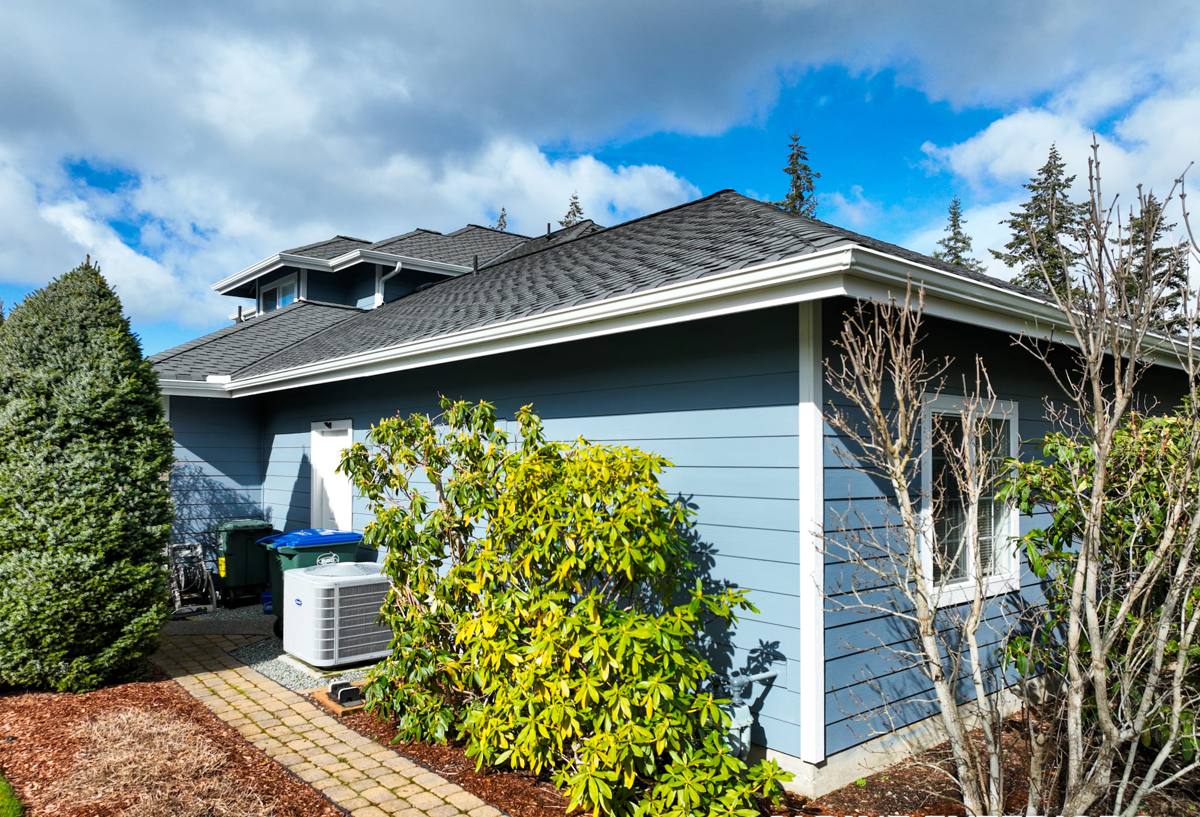
What Marietta's Climate Actually Does to a Roof
Salt Air and Metal Fasteners
Airborne salt from the bay accelerates corrosion on any exposed metal — nail heads, flashing edges, gutter fasteners, and vent boots. Standard-grade fasteners can start showing rust streaks years before the shingles themselves are due for replacement. We spec corrosion-resistant fasteners and flashing metals for Marietta jobs as a default, not an upgrade, because the alternative is repeat service calls for staining and premature flashing failure.
Driving Rain and Wind-Driven Water
Storms coming off the water tend to push rain sideways rather than straight down. That matters because a roof can be watertight against vertical rain and still leak under wind-driven rain if the underlayment, valleys, and flashing details aren't built for lateral water intrusion. Ridge caps, valley metal, and step flashing all need tighter tolerances here than they would on a calmer, more sheltered lot.
The Long Moss Season
Whatcom County's wet season stretches long, and Marietta's tree cover and shaded rooflines keep surfaces damp for extended periods. That combination is exactly what moss and algae need to establish. Once moss takes hold on a roof, it holds moisture against the surface, lifts shingle edges, and works its way under the granule layer — turning a cosmetic issue into a functional one if it's not addressed at the design and material stage, not just with occasional cleaning.
What a Correct New Roof Install Involves Here
A new roof is only as good as what's underneath the visible layer. For Marietta homes, we treat the following as non-negotiable parts of the job, not optional add-ons:
- Full tear-off and deck inspection — hidden rot or soft sheathing from years of moisture exposure gets found and replaced before anything new goes down
- Ice-and-water shield or high-performance synthetic underlayment at eaves, valleys, and penetrations, sized for our rain volume rather than a bare-minimum spec
- Corrosion-resistant flashing and fasteners at every metal-to-roof transition
- Zinc or copper strips, or algae-resistant shingle granules, positioned to reduce future moss and algae growth on shaded slopes
- Proper ridge and soffit ventilation sized to the attic, so trapped moisture doesn't condense against the underside of the new deck
- Gutter and drip-edge details that actually shed wind-driven water instead of letting it wick back under the shingle edge
Skip any one of these and the roof may look fine for a season or two before the local climate finds the weak point.
Choosing Roofing Materials for This Location
There's no single "best" roofing material for every home — the right choice depends on the roof's pitch, tree exposure, and how much shade and moisture it deals with. Here's how the common options stack up for a Marietta property specifically:
| Material | Moss/Algae Resistance | Salt Air Durability | Typical Lifespan Here |
|---|---|---|---|
| Standard architectural asphalt shingle | Moderate — benefits from algae-resistant granules | Good with corrosion-resistant fasteners | 20-25 years |
| Algae-resistant (AR) architectural shingle | Better — copper-infused granules limit growth | Good with corrosion-resistant fasteners | 25-30 years |
| Metal roofing (standing seam) | Very good — smooth surface sheds moss | Excellent with proper coating/alloy choice | 40+ years |
| Wood shake | Poor in shaded, damp areas without upkeep | Fair — needs regular maintenance | Highly maintenance-dependent |
For heavily shaded Marietta lots, we generally steer homeowners toward AR shingles or metal, and explain honestly why we don't recommend wood shake on damp, tree-covered rooflines: it demands a level of ongoing maintenance that most homeowners don't want to keep up with, and the moisture-retention behavior of shakes is a poor match for a climate that already keeps roofs wet for long stretches. That's a maintenance and moisture-management tradeoff, not a knock on the material itself — it just isn't the right fit for this specific exposure.
Our Installation Process
1. On-Site Assessment
We walk the roof and the attic, not just the exterior. Tree coverage, slope orientation, existing moss or algae staining, gutter condition, and attic ventilation all factor into the plan before we quote a material or method.
2. Tear-Off and Deck Repair
Old roofing comes off down to the deck so we can see what's actually there. Any sheathing that's soft, delaminated, or stained from long-term moisture gets replaced — patching over a compromised deck just relocates the problem.
3. Underlayment and Flashing
This is where a roof earns its resistance to driving rain. We install underlayment rated for our wind and rain conditions, with extra attention at valleys, chimneys, skylights, and any wall-to-roof transition.
4. Roofing Material Installation
Shingles, panels, or other chosen material go down to manufacturer spec, with fastener patterns and exposure adjusted for wind exposure common in this area.
5. Ventilation and Final Details
Ridge and intake ventilation get checked and corrected if the existing setup was inadequate — a well-installed roof with poor attic airflow still fails early from trapped moisture.
6. Walkthrough and Cleanup
We walk the finished roof with the homeowner, cover care and maintenance specific to their tree coverage and slope, and do a full magnetic sweep and site cleanup before we consider the job done.
Signs a Marietta Roof Needs Replacing, Not Patching
- Granule loss heavy enough to see bare shingle mat, especially on south or west-facing slopes exposed to weather off the water
- Moss growth that returns quickly after cleaning, or has visibly lifted shingle edges
- Dark streaking or rust bleeding from fastener heads and flashing
- Soft spots or sagging in the roof deck when walked, particularly near valleys
- Daylight visible through the attic at roof boards, or damp insulation after storms
- Repeated interior water stains near chimneys, skylights, or exterior walls
Any one of these on its own might be repairable. Several together usually mean the underlying materials have reached the end of their service life for this environment.
Why Local Experience Matters for This Job
A roofing crew that hasn't worked this specific stretch of Whatcom County can still install a technically correct roof — but they may not know, without being told, that a given Marietta lot sits in a wind corridor off the bay, or that a particular tree line keeps a north slope wet well into summer. We already know these patterns because we've worked them before. That shows up in small decisions: where we add extra underlayment, which flashing detail we tighten up, and which material we steer a homeowner away from based on their specific lot rather than a generic recommendation.
It also shows up after the install. A crew that knows the area understands what normal maintenance looks like here — when moss treatment should happen, how gutters perform under our rain volume, and what an early warning sign looks like versus a false alarm.
Maintaining Your New Roof in Marietta's Climate
A correctly installed roof still benefits from some basic upkeep in this climate:
- Clear gutters and downspouts at least twice a year — clogged gutters push water back under the roof edge during heavy rain
- Have moss and algae growth treated early, before it lifts shingles or granules
- Trim back tree limbs that shade the roof or drop debris onto valleys
- Schedule a periodic roof check after major windstorms, especially ones with heavy rain off the water
- Watch for granule buildup in gutters, which signals accelerated shingle wear
Getting Started
If your roof in Marietta is showing its age, or you're planning ahead rather than waiting for a leak, we're happy to take a look and walk you through honest options for your specific home — no pressure, no upsell. Reach out for a free estimate using the form below, and we'll assess your roof with this area's salt air, rain, and moss season in mind from the start.