 Ferndale
 Why Point Roberts Windows Take More Punishment Than Most
Point Roberts sits on its own peninsula at the southern tip of the Tsawwassen headland, surrounded by water on three sides and cut off from the rest of Whatcom County by the Canadian border. That geography is part of what makes it a great place to live, and it's exactly why windows there age faster than windows fifteen miles inland in Ferndale or Bellingham. Salt-laden air comes off the Strait of Georgia and Boundary Bay pretty much constantly, wind-driven rain hits window walls straight-on with nothing to break it up, and the long, damp shoulder seasons here mean moss and algae get a foothold on anything that stays wet — including window sills, trim, and cladding around openings.
None of that is a reason to avoid big windows or water-facing glass — most people move to Point Roberts specifically for the views. It's a reason to be deliberate about product selection, flashing detail, and sealant choice, because a window that's fine in a sheltered Ferndale neighborhood can fail early on an exposed Point Roberts lot.
What "Custom" Actually Means Here
Non-Standard Openings
A lot of homes on the peninsula were built or added onto in stages over the decades, which means rough openings that don't match current standard sizes. Custom windows aren't a luxury add-on in these cases — they're the only way to get a proper fit without reframing the wall. We measure and order to the actual opening rather than forcing a stock size and packing the gap with trim.
View-Driven Layouts
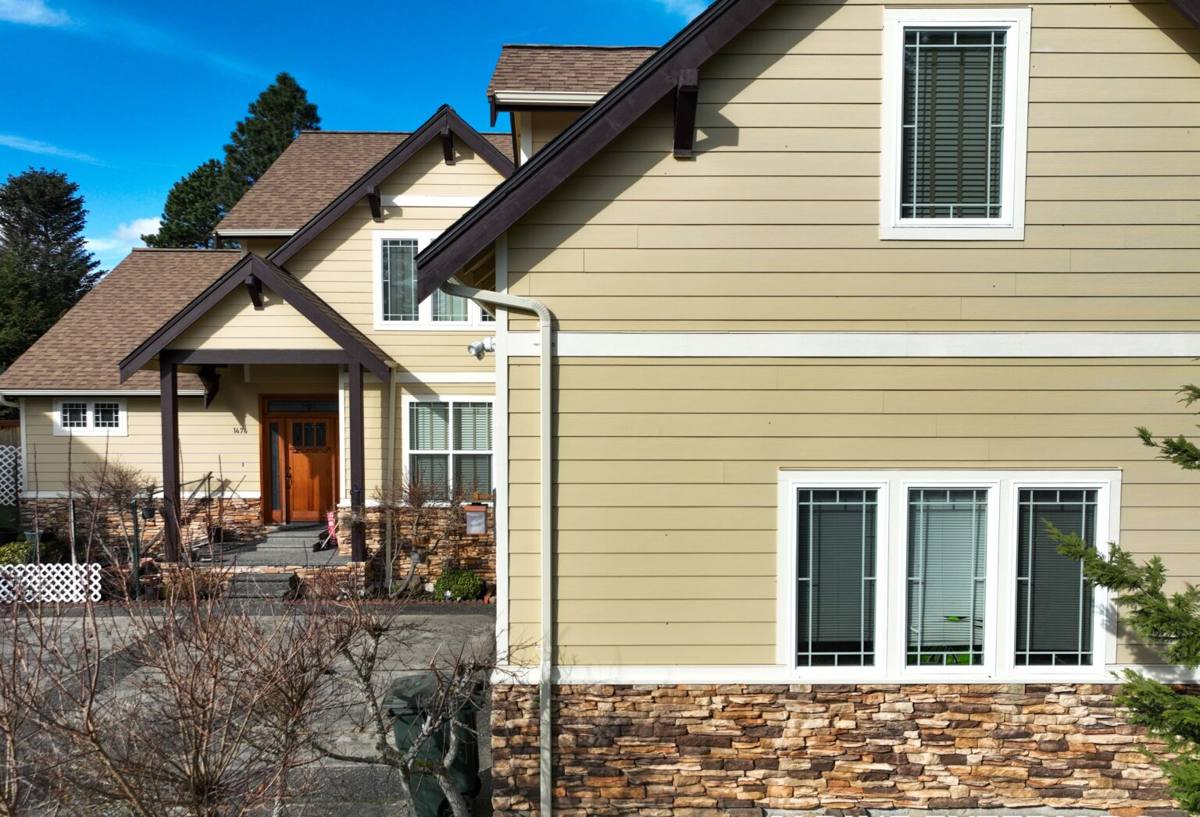
Many Point Roberts homes are oriented toward the water, with larger glass areas or window walls facing directly into the weather. Custom sizing lets us balance that view with structural and moisture realities — bigger units need better anchoring, wider sightlines need careful frame selection, and a wall that takes direct rain needs different flashing than a sheltered one.
Matching Older Construction
Replacing one or two windows on an older home means matching sightlines, trim profiles, and sometimes odd shapes (arched tops, angled bays) so the new units don't look bolted on. Custom orders handle that; off-the-shelf boxes usually can't.
Material and Glass Choices for a Salt-Air, High-Rain Site
Every window material handles moisture and salt exposure differently. There's no single "best" answer for every house — it depends on budget, exposure, and how the home is used — but here's how the common options actually perform in this environment.
| Material | Salt/Moisture Behavior | Maintenance | Best Fit |
|---|---|---|---|
| Vinyl | Won't corrode; performs well in salt air; can chalk over many years of UV exposure | Low — occasional rinse | Budget-conscious replacements, rental/secondary homes |
| Fiberglass | Excellent — dimensionally stable, resists both moisture and salt corrosion | Low | Larger openings, water-facing walls, long-term owners |
| Aluminum-clad wood | Good exterior protection, but interior wood core is only as good as the seal; any breach lets moisture in | Moderate — interior finish upkeep | Homeowners who want a wood interior look and are committed to upkeep |
| Bare wood | Poor in direct salt/rain exposure without disciplined repainting and caulking | High | Sheltered elevations only, not recommended for water-facing walls here |
For window walls or openings that take rain straight off the water, we generally steer customers toward vinyl or fiberglass because there's no exposed wood substrate to fail if a seal ages out. That's not a knock on wood-clad products — it's an honest tradeoff between appearance and maintenance burden, and we'll walk through it with you rather than just picking for you.
Glass Packages
Double-pane, low-E glass is the baseline we'd recommend for any Point Roberts install — it cuts down on condensation on cold, damp mornings and helps with the wind off the water. Argon-filled units are worth the modest upcharge on water-facing rooms where you're running the heat against a colder outside wall much of the year.
Installation Details That Actually Matter on This Site
The window unit itself is maybe half the job. The other half is how it's flashed, sealed, and tied into the wall — and that's where a lot of premature failures on the peninsula actually start.
Flashing and Water Management
On a wall that takes direct, wind-driven rain, flashing has to shed water down and out, not just seal the gap. We use sill pans and properly lapped flashing tape so that any water that does get past the exterior trim has a path out instead of pooling against the rough sill.
Sealant Selection
Standard caulk breaks down faster under constant salt spray and UV than it would in a more sheltered spot. We use exterior sealants rated for marine/coastal exposure around window perimeters, and we don't rely on sealant alone to do a flashing detail's job — sealant is the backup, not the primary water barrier.
Fastening for Wind Exposure
Open water frontage means real wind load on larger units. We follow manufacturer fastening schedules for the actual exposure category rather than a generic pattern, which matters more here than it would on a wall tucked behind trees inland.
Working in an Exclave: Why Local Experience Matters
Point Roberts is a U.S. exclave — the only way to drive there is through Canada. That's a logistics detail, not a footnote, and it affects how a window project actually runs. Crews and material deliveries have to clear a border crossing, which means scheduling has less room for "we'll swing by this afternoon" flexibility than a job in Ferndale proper. A crew that's done multiple jobs out there already has that routine down: they plan crossing times, stage materials so a full crew and a full truckload cross together, and build in the extra day of buffer that first-timers usually don't account for.
It also means warranty callbacks and follow-up work carry real friction if the contractor treats it as a one-off trip. Ask any Point Roberts contractor directly how many jobs they've actually completed out there and how they handle a callback — the honest answer tells you a lot about whether your project will get the attention it needs after the invoice is paid.
Our Process for a Point Roberts Window Project
- On-site assessment — we look at exposure (which walls take direct water and wind), existing frame condition, and any moisture damage already present around openings.
- Measurement and product selection — custom sizing to the actual opening, with a material and glass recommendation matched to that wall's exposure.
- Scheduling around the crossing — we plan the trip, crew, and materials as one coordinated trip rather than piecemeal visits.
- Removal and inspection — old units come out, and we check the framing and sheathing underneath for hidden rot or moisture before anything new goes in.
- Flashing, install, and seal — sill pans, flashing tape, proper fastening, and marine-grade sealant at the perimeter.
- Trim and finish — matched to the home's existing exterior detailing wherever possible.
- Walkthrough — we show you the finished work and go over basic upkeep for the specific product installed.
Living With the Climate After Install: Moss Season and Salt Film
Even a well-installed window needs a little seasonal attention here. The long moss season in Whatcom County means algae and moss can build up on sills, trim, and the wall surface around windows if it's shaded or doesn't dry out between rains. A build-up of organic material against trim holds moisture longer than bare wood or vinyl would on its own, which shortens the life of whatever's underneath it.
- Rinse salt film off frames and glass a few times a year, especially after storms — plain water is usually enough
- Keep gutters and downspouts clear so runoff isn't sheeting directly across window walls
- Clear moss and organic debris off sills and trim ledges before it packs in and holds moisture
- Check exterior sealant lines annually for cracking or separation, particularly on the most exposed elevation
- Trim back vegetation that keeps a window wall shaded and slow to dry
- Report any soft trim, staining, or interior condensation increase early — it's cheaper to address a small leak than a rotted rough opening
Cost Factors to Expect
Every project is different, but the same handful of factors drive most of the cost swing on a Point Roberts window job. We'll give you real numbers once we've seen the site — this is just what typically moves the price.
| Factor | Why It Matters |
|---|---|
| Opening size and shape | Custom or oversized units cost more than stock sizes, and non-rectangular shapes add fabrication time |
| Material choice | Vinyl is the most economical; fiberglass and clad-wood cost more but bring different maintenance profiles |
| Wall exposure | Direct water-facing walls need more flashing detail and labor time than sheltered elevations |
| Hidden damage | Rot or moisture damage found in the rough opening during removal adds repair scope |
| Number of openings | Doing several windows in one visit is more efficient per-unit than single, isolated replacements |
Questions Worth Asking Before You Hire Anyone
Whoever you hire for a window project out on the peninsula, it's worth asking a few direct questions before signing anything:
- How many jobs have you actually completed in Point Roberts, and how recently?
- What's your plan for scheduling around the border crossing, and what happens if a delivery is delayed?
- What flashing and sealant products do you use on water-facing walls specifically?
- How do you handle a warranty callback given the location?
- Can you show me the material and glass options in person, not just a catalog page?
If you're weighing a window project in Point Roberts — whether it's one leaking unit or a full water-facing wall — we're happy to come take a look and give you a straightforward, no-pressure estimate. Use the form below to get started.